

Asia School of Business

Global Inquiry, Local Heart

ASEAN Research Center

Endowed by Maybank, the ASEAN Research Center (ARC) positions itself as the intellectual hub in Southeast Asia, focusing on impactful research about emerging markets in the ASEAN region.

ARC extends our gratitude to Maybank for their endowment and support in making our work possible.
Our Mission

01

Conduct rigorous and impactful research to inform policy-making and improve lives of ASEAN citizens, especially in emerging markets.

02

Research and publish publicly-available reports on topics related to ASEAN, including long-term “flagship” research programs developed in-house.

03

Host public events for ASEAN-based research programs to foster intellectual dialogue and public interest, advancing knowledge generation.

04

Host visiting scholars and students to lecture and conduct research in the region, enhancing academic exchange and collaboration.

Research Pillars

Economic Resilience

ARC’s economic resilience research explores strategies to withstand shocks, adapt, and thrive in the ASEAN region’s dynamic market conditions and policies that foster stability and growth.
  • RYSE
    • A program designed to empower Malaysian youths through entrepreneurship and employability initiatives. Learn more
  • Roadside Economy Research Project
    • An extensive study on Malaysia’s hawker economy and the impact of the COVID-19 pandemic on their operations and their livelihoods.

Sustainability and Society

ARC’s Sustainability and Society research pillar works with various public and private organizations to analyze ways to balance economic growth with environmental stewardship and social equity for a thriving future in the ASEAN region and beyond.
  • ESG Policies in ASEAN
    • In 2023, ARC was commissioned by the AKC to publish the “ESG Practices in ASEAN & Korea: Pathways Towards Sustainability” guidebook which highlights green and responsible business practices in ASEAN & Korea.
  • Palm Oil
  • MOF Case Study

Inclusivity

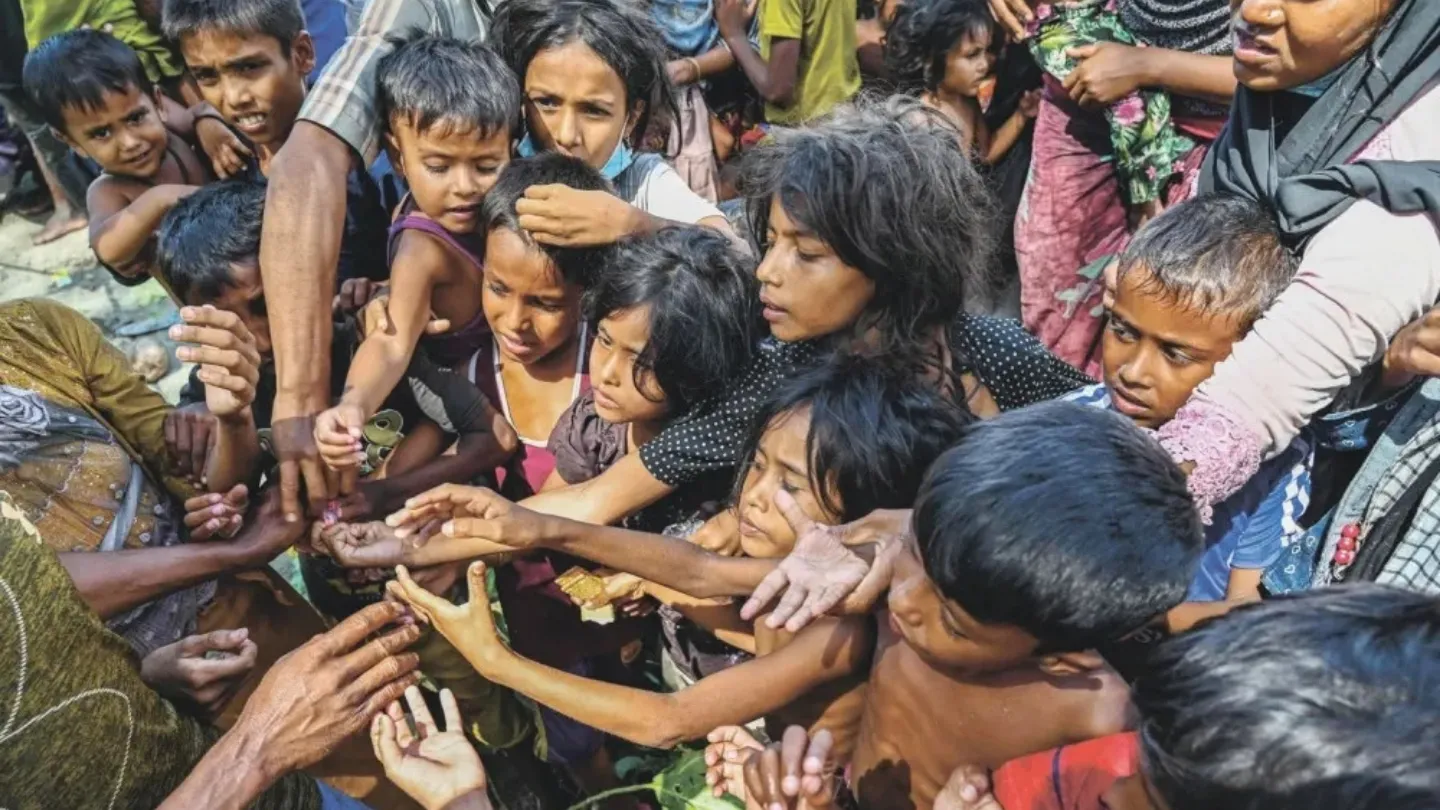
The Inclusivity pillar promotes equity, ensuring that diverse voices are heard, valued, and protected. ARC partners with organizations such as UNHCR and SUHAKAM on research concerning statelessness, forced migration, and beyond.
  • SUHAKAM
  • UNHCR
  • Covid-19 Mortality
  • Public Perception on Refugees

Rapid Youth Success Entrepreneurship/Employability

Rapid Youth Success Entrepreneurship and Employability (RYSE) is a research and outreach initiative aimed at empowering youth through entrepreneurship and employability programs by providing exposure, skills training, and support.

Our Research Projects

ARC-UNHCR Conference on Refugee Studies and Forced Displacement
Hosted in collaboration with UNHCR, our annual academic conference aims to platform and address developments in refugee rights and forced migration on a global scale.

Learn more

Our Research Projects

Building a Malay Language Curriculum for Adult Refugees in Malaysia: Preliminary Findings
This project, a collaboration between ARC and UPM, along with funding partners UNHCR and Uniqlo Malaysia, aims to close the language gap between refugees and their hosts through an immersion-based Bahasa Malaysia curriculum.

Learn more

Our Research Projects

Understanding Youth Entrepreneurship and Employability
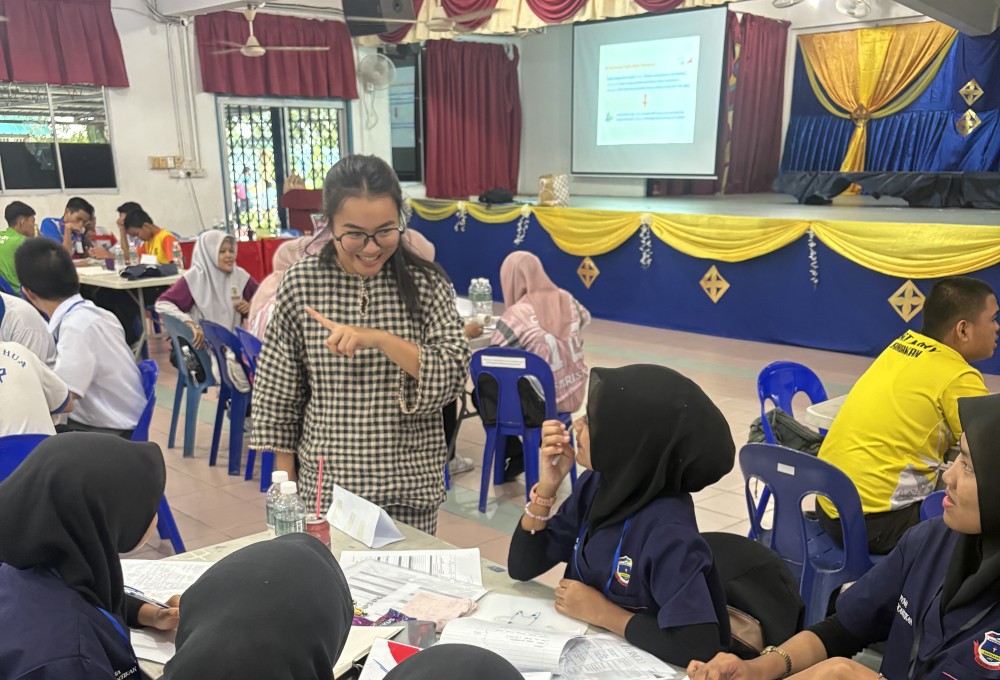
Using RYSE as a platform for research, the methodology employed is based on two principles: (1) The integration of research and programs, leading to a two-way feedback system, and (2) Holistic Understanding towards Youth Entrepreneurship.

Our Research Projects

Ethnography on Palm Oil Labour
We conducted a labor ethnography study through semi-structured interviews with palm oil workers and smallholders in Johor, Negeri Sembilan, Perak, and Selangor. The research explores and compares labor conditions between unionized estate workers and independent smallholders.

Our Research Projects

Focus Group Discussions conducted for Public Perception on Refugees in Malaysia Study
The research aims to understand public perception of refugees and asylum seekers in Malaysia, as well as the factors that influence such perceptions.

Our Research Projects

Understanding the Role of AI in Enhancing Research
With the ongoing evolution of artificial intelligence (AI), particularly Large Language Models (LLMs) like those employed in ChatGPT, what impact will it have on the future of research? This is the question ARC aims to address through our AI projects.

Our Research Projects

Advancing Corporate Environmental, Social and Governance (ESG) Goals Through the Enhancement of Financial Literacy Amongst Refugees in Malaysia
This study examines a recent initiative by Touch ’n Go (TnG), PayNet, and Visa to expand financial access for refugee communities in Malaysia. The project highlights private sector leadership in promoting financial inclusion and aims to publish insights in both a practitioner journal in the vein of the MIT Sloan Management Review,and an international peer-reviewed journal, while also exploring essential financial education for the program’s success.

Our Research Projects

ASEAN Talent Compendium & Mobility Facilitation Study
This study, funded by TalentCorp Malaysia, aims to examine cross-border talent mobility across ASEAN, with a specific focus on internships and work placements for university students and recent graduates. It explores the challenges associated with cross-border internships in the region, highlights best practices that have supported labour mobility, and proposes recommendations to facilitate increased movement of young talent within ASEAN.

Our Research Projects

Financial Literacy As A Tool Of Empowerment: A Pilot Program
This programme aims to empower 500 youths from low-income households with essential financial literacy skills through a comprehensive 3-month curriculum, consisting of a 3-day immersive boot camp and community service. Upon successfully completing the programme, students will receive a RM3,000 grant in savings or as a fixed deposit.

Our Research Projects

Crisis and Continuity: An Ouroboros Model of Refugee Coping Strategies
This ongoing paper utilizes a unique data set collected over the two-year period of the COVID-19 pandemic to examine the coping strategies employed by refugee communities in Malaysia during times of crisis. A central concept, the “survival loop” (i.e., the ouroboros of crisis and continuity), is used to illustrate how individuals from low-resource backgrounds navigate crises through interconnected, adaptive coping mechanisms.

Our Research Projects

Research Ethics for Vulnerable Populations in Climate Crises
This is an ongoing research initiative aimed at mapping and analyzing ethical methodologies for conducting research with vulnerable populations who are disproportionately affected by the impacts of climate change across the ASEAN region.

Our Research Projects

Tiny Titans of Southeast Asia
Tiny Titans is a project that engages business and management students to partner with micro and small businesses across Southeast Asia to produce short case studies documenting the landscape the business is operating in, the challenges they’ve faced, and how they’ve overcome them.

Learn more
Previous slide
Next slide

Events

Research Publication

NoTitleYearType
1An Independent Analysis of the 13th Malaysia Plan2025Research Paper
2‘Jostling for right of way’: Hawker discourse, legitimation, and politics in post-independence Malay(si)a, 1957–19692025Research Paper
3Malaysia's Covid-19 Economic Stimulus Packages2025Book Chapter
4Subjective norms towards entrepreneurship and Malaysian students’entrepreneurial intentions: does gender matter?2024Research Paper
5Conditions of Precarity and Strategies of Resilience: The Malaysian Hawker Community and COVID-19 Pandemic2024Book Chapter
6Tiny Titans of Southeast Asia2024Research Project
7Modul Bertutur Bahasa Melayu : Aras Permulaan (Kemaskini 2024) (A Basic Conversational Malay Language Curriculum for Non-Native Adult Speakers (2024 Edition))2024Book
8The formation of youth entrepreneurial intention in an emerging economy: the interaction between psychological traits and socioeconomic factors 2023Research Paper
9Do proactive students benefit more from university support for entrepreneurship when it comes to choosing entrepreneurship as a career choice? An examination of Ghanian and Malaysian students 2023Research Paper
10Perceptions of Entrepreneurship and Online Learning During the Coronavirus-2019 (COVID-19) Pandemic 2023Research Paper
11Dreams vs Reality: Urban and Rural Female Youth Aspirations 2023Research Paper
12Conditions of Precarity and Strategies of Resilience: The Malaysian Hawker Community and COVID-19 Pandemic 2023Book Chapter
13Recruitment of Participants from Vulnerable Groups for Social Research: Challenges and Solutions 2023Book Chapter
14Human Rights and Statelessness in Peninsular Malaysia 2023Report
15Modul Bertutur Bahasa Melayu: Aras Permulaan (A Basic Conversational Malay Language Curriculum for Non-Native Adult Speakers)2023Book
16Social expectations and government incentives in Malaysia’s COVID-19 vaccine uptake2022Research Paper
17A voice for the silent: uncovering service exclusion practices2022Research Paper
18Identity, trust, and the experiences of refugees during a COVID-19 lockdown2022Research Paper
19Refugee community-based organizations: Resources, power, and dependency2022Research Paper
20A textual analysis of the effect of short-term volunteering on attitudes toward refugees in Malaysia2022Research Paper
21Reclaiming agency: A case study on refugee community organisations in Malaysia2022Book Chapter
22Translating entrepreneurial intention to behaviour amongst micro and small entrepreneurs 2022Research Paper
23An agency mapping of marginalized communities and aid providers during the COVID-19 pandemic in Malaysia 2022Research Paper
24Understanding the impact of the COVID-19 outbreak on vulnerable populations in Malaysia through an ethical lens: A study of non-state actors involved in aid distribution 2022Research Paper
25Trust, Norms, and Increasing COVID-19 Vaccination Registration in Malaysia – Preliminary Results 2021Report
ASEAN Research Center (ARC) Faculty Director

Dr Melati Nungsari is an Associate Professor II of Economics, the Deputy CEO and Deputy Dean of Research and Academics, and the Faculty Director of ASEAN Research Center (ARC). She is an applied microeconomist specializing in industrial organization, public economics, market design, and economic education. She received her Bachelors of Arts in Mathematics and Economics (Magna Cum Laude) with Honors in Mathematics from Knox College, and her Ph.D. in Economics from the University of North Carolina at Chapel Hill.

Her research focuses on two-sided matching platforms with search, and how firms use pricing to correct for negative externalities on the platform. She also studies public policy issues such as the labor market integration of refugees, policy design for retirement markets in Chile and Malaysia, and labor market discrimination. Additionally, she has published research on pedagogy in economic education, services marketing, and refugee studies. While at UNC-Chapel Hill, Dr Melati was a Chancellor’s Fellow with the Royster Society.

She has won multiple teaching awards throughout her career, and is also a member of Phi Beta Kappa, the most prestigious academic honor society in the United States. She is an active Op-Ed writer, public scholar, and public speaker. Prior to joining ASB, Dr Melati was a professor of economics at Davidson College and Butler University. She has given research and classes all over the world, and is originally from Penang, Malaysia.

For a full list of her research publications, presentations, and most up-to-date CV, please visit her website at www.melatinungsari.com.

Dr Melati Nungsari

Associate Professor II of Economics, Deputy CEO and Deputy Dean of Research and Academics, Faculty Director of ASEAN Research Center (ARC)

Jeron Joseph

Postdoctoral Research Associate
Kirstine Rahma Stroeh Varming

Postdoctoral Research Associate
Chin Jia Wei

Principal Research Associate

Fatimah Zahra Ros’azam

Senior Research Associate

Sharon Wah Yue Qing

Research Associate​

Lauren Brodie Tsen

Research Associate​

ASB–UNHCR Conference on Refugee Studies and Forced Displacement 2026
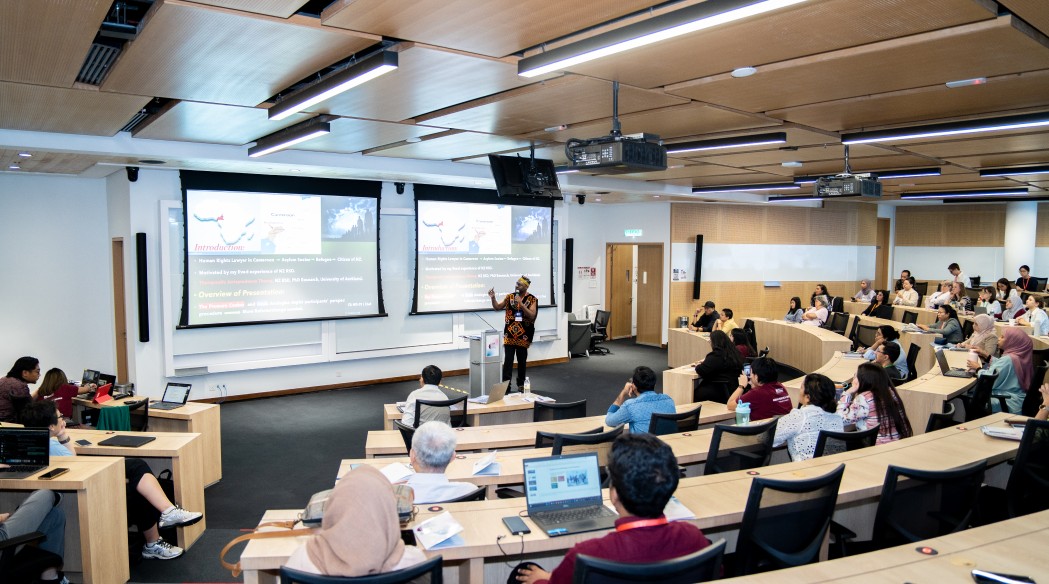
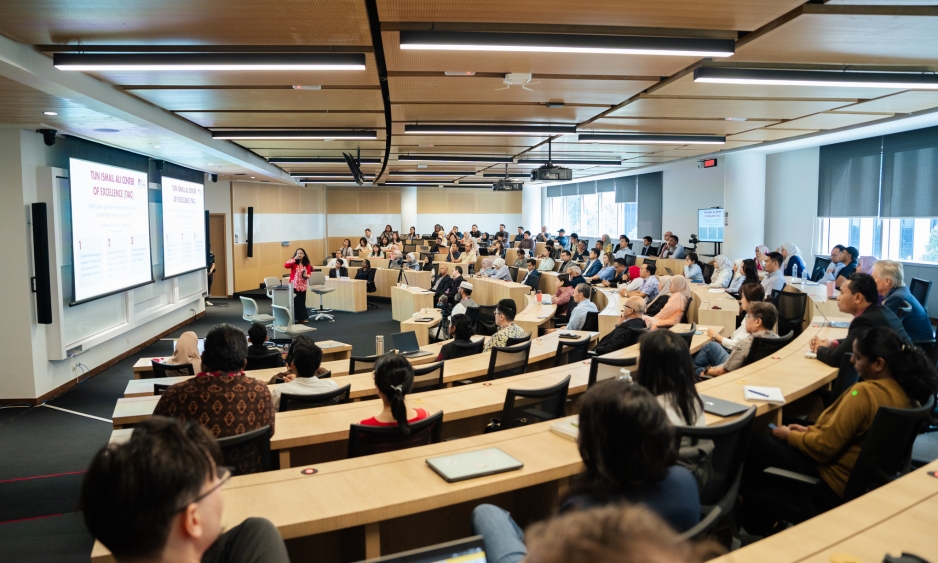
For the sixth consecutive year, on 9–10 June 2026, the ASB ASEAN Research Center (ARC) at the Asia School of Business (ASB) hosted the ASB–UNHCR Conference on Refugee Studies and Forced Displacement 2026 (REFCON 2026).
 
Held in partnership with the UN Refugee Agency (UNHCR), this annual conference is dedicated to advancing and sharing scholarly research on refugee issues and forced displacement. The 2026 edition placed a strong emphasis on translating academic insights into real-world impact, featuring community-driven initiatives and capacity-building workshops.
 
The conference aimed to foster collaboration and knowledge exchange among researchers, policymakers, civil society organizations, refugee communities, and the wider public. This year’s edition also placed a special focus on statelessness, highlighting its challenges and implications within the broader displacement landscape.
ARC Open Day 2025

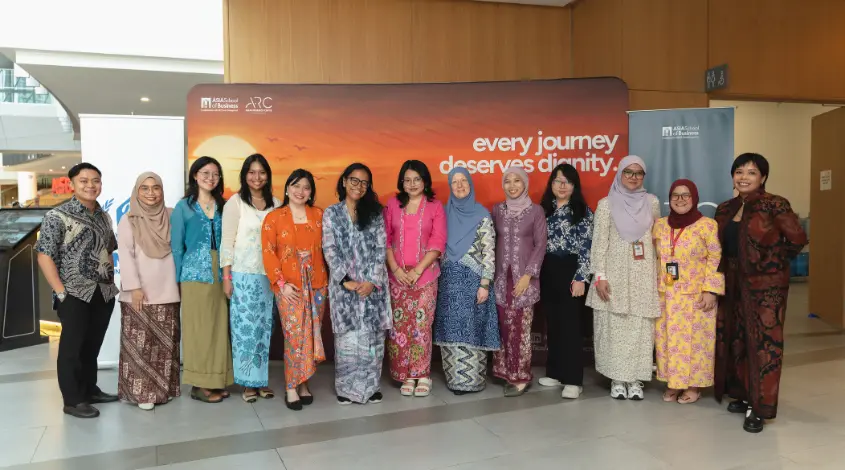
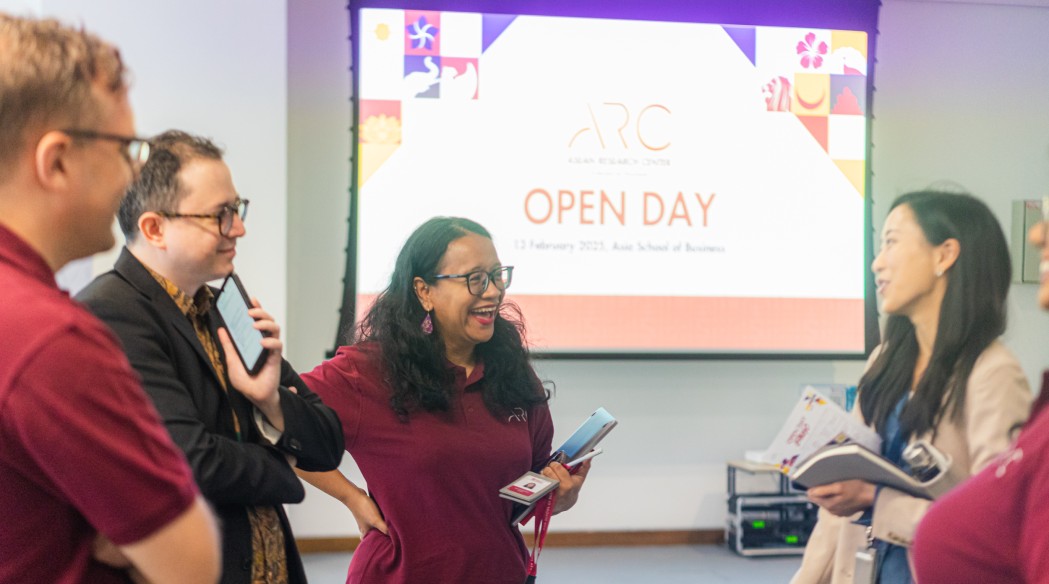
The ARC Open Day 2025 featured research presentations from ARC, including exploring the anxieties of Malaysian household labor during the 1950s-60s, and an ongoing ESG policy paper across the ASEAN region. This was followed by the Tiny Titans Case Studies launch, where ASB MBA students presented challenges and opportunities for small businesses across ASEAN. Participants also had the chance to explore various research initiatives and collect exclusive merchandise. Presentations from RYSE Programme showcased efforts to upskill Malaysian youth and how these initiatives translate into research and insights. The event was concluded with an exciting Pitching Workshop by ASB Hive, ASB’s hub for innovation and entrepreneurship.

ARC-UNHCR Conference on Refugee Studies and Forced Displacement 2025

On June 11 and 12, 2025, the ASB ASEAN Research Center (ARC) at the Asia School of Business (ASB) hosted the ASB-UNHCR Conference on Refugee Studies and Forced Displacement 2025. Held in partnership with UNHCR, the UN Refugee Agency, this annual event focuses on sharing and expanding scholarly work related to refugee issues and forced displacement. The 2025 edition emphasized turning academic insights into practical impact by featuring community-driven projects and capacity-building workshops. The goal was to promote collaboration and knowledge exchange among researchers, policymakers, civil society groups, refugee communities, and the wider public.