




ASB Research Series
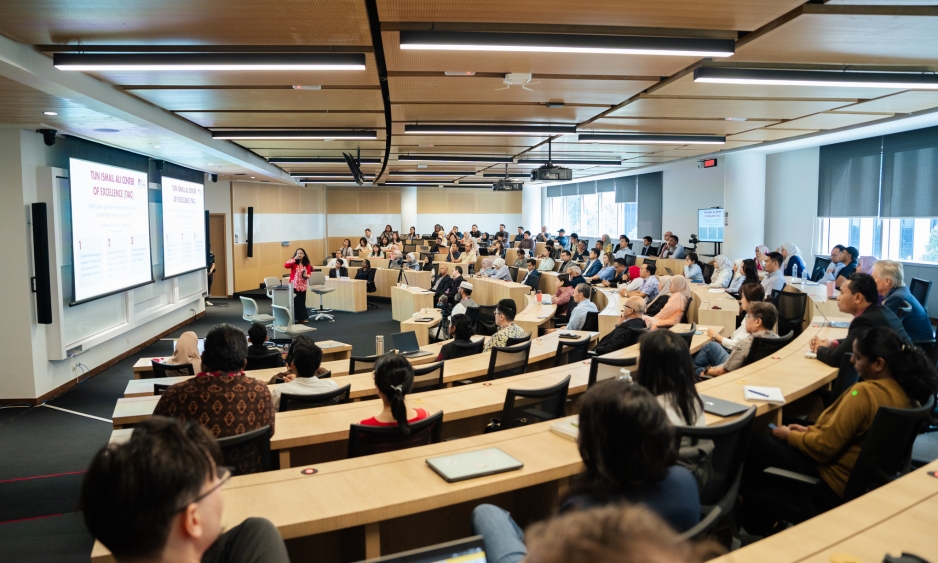
The ASB Research Seminar Series (RSS) is a monthly series hosted by ASB that invites academics and professors from various universities worldwide to give talks and share insights about their research and ongoing work. They engage in discussions on various research topics with ASB’s esteemed researchers and faculty members, receiving feedback and comments on their work.
ASB RSS are now in hybrid mode and are usually held at lunchtime.
If you would like to present at and/or attend the ASB RSS please contact the Research Office: research@asb.edu.my
Upcoming Talks
Date/Time
Speaker
Title & Abstract
(Oct 22): If you run a small business in Malaysia, Budget 2027 has handed you two things at once — a lighter tax bill and a heavier wage bill. Whether that trade works in your favour depends on a question no budget can answer on its own. Will the people you employ produce more value next year than they did this year?
That question sits beneath almost every line of the RM510 billion envelope the government has just tabled.
Credit first, because it is due. Growth is projected at 4.2% to 5.2% in 2027, and the fiscal deficit is set to narrow from 3.6% to 3.3% of gross domestic product (GDP). Supporting growth, cushioning households and consolidating the public finances are goals that rarely sit comfortably together. Pursuing all three amid global uncertainty is no trivial achievement, and the Malaysian civil service deserves recognition for it.
But Malaysia has become remarkably good at surviving shocks. The next test is generating sustained productivity growth. Resilience keeps us in the game. Productivity is how we win it.
Start with capital. Research recently presented by two Bank Negara Malaysia economists at an Asia School of Business seminar finds preliminary evidence that expanding bank lending to the corporate sector, particularly to small and medium enterprises (SMEs), can translate into measurable gains in GDP. This is consistent with an International Monetary Fund working paper (2015) on emerging markets, which estimates that a 10-percentage-point positive shock to corporate credit’s contribution to overall credit growth is associated with an increase of approximately 0.3 percentage point in real GDP growth. The implication is straightforward. Make it attractive for banks to lend, and for SMEs to put that money into productive projects aimed at markets well beyond our own postcode.
In the mid-2010s, I was involved in a study that helped inform what eventually became Singapore’s Variable Capital Companies (VCC) Act of 2018. We estimated that US$500 million (RM2.04 billion) in investment funds could generate about US$1.2 billion in additional GDP and create between 900 and 3,400 high-value jobs. Today, Singapore has more than 1,400 VCCs comprising over 3,400 sub-funds, while its asset management industry has grown to a record S$6.7 trillion (RM21.4 trillion). These figures are not a direct measure of the VCC’s contribution, but they show what well-designed regulatory architecture can help support.
Malaysia could pursue similar ambitions in Islamic finance, with Kuala Lumpur as the hub of an Islamic international financial centre and Penang, Johor and Labuan as complementary spokes.
Then there is targeting. I am probably among the least deserving people in my postcode to receive a diesel subsidy, yet I could if I wished. Subsidies should reach those who need them, not those who can afford to go without. That is not only sound economics. It is good governance.
The same logic applies to the social floor. Budget 2027 raises the minimum wage, increases individual tax relief and lowers selected middle-income tax rates. These are welcome measures, as money placed in the hands of lower- and middle-income households moves through the real economy faster than relief for those already comfortable. In the longer term, retirement income security, including inflation-indexed life annuities through the Employees Provident Fund (EPF), deserves sustained attention.
Yet we cannot raise wages indefinitely without raising the value of what workers produce. If productivity does not follow, businesses, particularly smaller ones, face hard choices on prices, margins, hiring and investment. Malaysia’s MSMEs employ more than eight million people, nearly half the workforce. This Budget’s tax cuts and incentives give them breathing room. What they need next is the capacity to innovate, adopt technology, improve management, move up the value chain, and expand their market.
Here, the government deserves credit. Malaysia runs one of the more proactive state-backed training agendas in Asia, from AI and digital transformation to TVET and agritech upskilling. Budget 2027 continues that with RM8 billion for TVET initiatives.
Having worked much of my adult life in Boston and New York, I can say that Malaysia does not lack hardworking or talented people. What it lacks are enough opportunities for those people to become dramatically more productive.
Which brings me to AI. It is an extraordinary opportunity, but technology without talent is just expensive equipment. AI will not automatically make Malaysia more productive. Malaysians who know how to deploy it intelligently, with sound judgement about where the machine ends and the human begins, will. That means rethinking how we educate, manage, govern and make decisions.
The next generation of leaders will be those who combine technological fluency with analytical rigour, entrepreneurial instinct and ethical responsibility.
A budget is ultimately an allocation of resources. It is not, by itself, an economic transformation. That part is on all of us — government, business and educators alike — and there is a great deal of work still to do.
So spend wisely. Invest boldly. Execute relentlessly. And measure outcomes and milestones, not giddy announcements, blueprints and launches.
Joseph Cherian is the president, dean and distinguished professor (finance) of the Asia School of Business in Kuala Lumpur. He previously served as the global head and chief investment officer of the Quantitative Strategies Group at Credit Suisse Asset Management in New York, and has advised governments and think tanks internationally on asset management, pension systems and capital market reforms.
Originally published by The Edge.
Opinion: A Good Budget 2027. Now Comes the Hard Part
IF you are in your 50s and watching your Employees Provident Fund (EPF) balance climb, you have probably been asking the question most Malaysians ask.
Have I saved enough? The question that will decide how your later years feel is a different one. How long will it last?
Too many Malaysians approaching retirement focus on the size of their EPF nest egg.
The real question is how much inflation- adjusted monthly income those savings can support – and for how many years before the money runs out.
Budget 2027 nudges Malaysians in this direction.
Every citizen will now be registered with the EPF at 18 years old.
And members reaching the age of 55 or 60 are being encouraged to consider i-Emas, which pays their savings out monthly while the remainder keeps earning dividends.
This is a step in the right direction, but hardly a cure-all.
Spreading withdrawals over time neither eliminates the risk of outliving one’s savings, nor protects against inflation.
A dozen eggs costing RM5 today could cost RM10 in 20 years, assuming an average inflation of 3.5% a year.
The better product is an inflation-adjusted life annuity, which converts savings into a guaranteed income for life, with payments rising over time to preserve purchasing power.
It addresses the twin risks of longevity and inflation at once.
A Malaysian man turning 60 this year can expect to live another 18.9 years, and a woman another 21.7 years. Those are averages, so roughly half of us will live longer.
Planning to the average is, in effect, accepting a coin toss on whether your money outlives you.
Households should plan for a lifetime, budgeting for healthcare costs that rise with age and treating part-time work in their 60s as a sensible option, not a failure.
As of May 2026, 38.3% of active members aged 18 to 60 had reached the Basic Savings level for their age, up from 35% a year earlier. Progress, but six in 10 remain behind.
So, what should someone aged 55 or 60 weigh up before choosing?
Three things. First, their essential monthly costs, and whether anything else – a spouse’s savings, rental income or part-time work – will cover them.
Second, their health and family history.
Third, and most underrated, their own behaviour.
A large lump sum invites overspending, lending to relatives and, increasingly, online and cryptocurrency scams.
A monthly payment is less susceptible.
Yet, the lump sum remains alluring worldwide.
Economists call it the “annuity puzzle”.
Part of the explanation is psychological – money feels more like ours when we can see the entire balance.
Part is what economists call “money illusion”, the tendency to focus on nominal amounts rather than real purchasing power.
What helps is showing members their savings as a monthly income, not just a lump sum.
Under the EPF’s own Retirement Income Adequacy framework, the Basic Savings level of RM390,000 supports monthly withdrawals rising from RM1,625 in the first year to RM4,434 by year 20.
Sounds reassuring, until one realises the money is projected to run out after year 20.
What happens if the retiree lives another five, 10 or 15 years?
For many Malaysians in their 40s, the pressure comes from both directions, with school fees on one side and ageing parents on the other.
Think of the airline oxygen mask. Put yours on first.
A parent who reaches age 60 with little savings becomes the next burden on their children.
Protecting your own contributions breaks the cycle.
For the 18-year-old registered for the first time, the greatest asset is time.
Small contributions made early can compound for four decades.
The most useful thing a young person can do is start the habit and leave it alone.
Gig and self-employed workers face the hardest test, because no payslip does the saving for them.
Behavioural science shows that automatically enrolling workers into a retirement plan sharply increases participation compared with asking them to sign up.
For gig workers, that points to small, automatic deductions built into platform payouts, matched where possible.
The government’s i-Saraan Plus matching for e-hailing and p-hailing drivers is a step in that direction.
In the 2025 Mercer CFA Institute Global Pension Index, on whose Advisory Board I serve, Singapore became the first Asian system to earn an A grade, while Malaysia scored a C+.
The gap is less about how much people save, than what happens when they stop working.
Singapore’s CPF LIFE (Central Provident Fund Lifelong Income for the Elderly) turns part of members’ savings into a monthly income for life, though it is not inflation- indexed in the traditional sense.
Malaysia has already built one of the region’s largest pools of retirement savings.
The next frontier is helping retirees convert those savings into an inflation-indexed income that lasts as long as they do.
The ultimate measure of retirement security is not how much one has saved, but whether it can sustain a dignified life to the very end.
Joseph Cherian is President, Dean and Distinguished Professor (Finance) of the Asia School of Business in Kuala Lumpur. The views expressed here are the writer’s own.
Originally published by The Star.
You’ve Saved Enough for Retirement, but Will It Last?
Congratulations to our faculty member, Alexander Eng, Associate Professor I of Organizational Behavior, on his recent recognition!
We are proud to share that Alexander’s paper,“Artificial Intelligence and Machines Are Capable of Harm, but Not of Experiencing Punishment,” co-authored with Kai Chi Yam, has been selected as an Editor’s Choice by the Journal of Experimental Psychology: General, published by the American Psychological Association (APA).
Artificial intelligence and machines are capable of harm, but not of experiencing punishment.
Journal of Experimental Psychology: General
(Eng, Alexander), (Yam, Kai Chi)
The Editor’s Choice distinction recognizes papers for their potential to make a significant impact on the field or advance an important future direction for science. Only one paper per issue is selected, placing Alexander’s work among roughly the top 6% of published papers in the journal.
His research explores how people respond when artificial intelligence and machines cause harm, including whether punishing machines can restore the same sense of justice as punishing human wrongdoers. The findings offer important perspectives on accountability and justice as AI takes on an increasingly significant role in society.
This recognition reflects the impactful research our faculty is advancing and ASB’s commitment to research that addresses important questions shaping our future.
Alexander Eng’s Paper Earns Editor’s Choice Recognition
With the long-awaited Royal Commission of Inquiry (RCI) report on Lembaga Tabung Haji (TH) now public, headlines are dominated by investigations, arrests and criminal charges involving allegations ranging from corruption to criminal breach of trust. While the courts will ultimately determine individual accountability, a singular question remains dangerously overlooked: Who ultimately bears the financial cost of the mismanagement of TH’s assets?
While criminal proceedings move forward, the structural bill for fixing TH has quietly been shifted to the state — with long-term implications for future public budgets.
TH traces its origin to the Pilgrims Board established in 1962 which began accepting deposits to enable Muslims to save towards the hajj. Under the Tabung Haji Act 1995, TH was given broad powers to manage and invest depositors’ funds in Shariah-compliant investments. It operated outside the prudential and investment regulatory framework that Bank Negara Malaysia (BNM) and the Securities Commission apply to fund managers. Investment proposals supported by its Investment Panel had to be submitted to the Minister of Religious Affairs for final approval.
Concerns about TH’s financial position emerged in 2015 when BNM highlighted that TH’s reserves were negative with only 98 sen in assets for every ringgit in liability. TH disputed that this represented its financial position but the RCI’s subsequent analysis showed a deterioration of its reserves.
Following the change in government in 2018, a restructuring and rehabilitation plan was introduced by introducing a government-owned special purpose vehicle known as Urusharta Jemaah Sdn Bhd (UJSB). The assets transferred to UJSB had a fair value of RM9.73 billion but were transferred at RM19.9 billion, a premium of approximately RM10.17 billion. In return, UJSB paid RM300 million in cash and issued RM19.6 billion of zero coupon sukuk to TH in two tranches. The first tranche comprised RM10 billion with a nominal value of RM13.2 billion over seven years with a yield-to-maturity of 4.05%. The second comprised RM9.6 billion with a nominal value of RM14.3 billion over 10 years with a yield-to-maturity of 4.10%. Their nominal maturity values totalled approximately RM27.5 billion.
TH exchanged assets worth RM9.7 billion at prevailing values for financial claims of much higher value, restoring its assets to a level above its liabilities. The underlying economic loss was transferred to UJSB and, to the extent that its asset recoveries proved insufficient to meet its obligations, ultimately to the government.
UJSB’s financial position illustrates this continuing mismatch. At the end of 2024, it reportedly had RM11.4 billion in assets against RM23.9 billion in liabilities and accumulated losses of RM12 billion. The first sukuk maturity in May 2026 was discharged through a new RM11.5 billion sukuk, a 10-year sukuk with annual profit payments and a transfer of assets worth RM965 million. RM720 million had been paid in partial cash redemptions to TH. This amounts to refinancing the obligation rather than using the portfolio proceeds to pay it.
This raises an important question about the restructuring plan. Section 24 of the Tabung Haji Act states that where expenditure relating to depositor withdrawals, the amount required is payable out of the Consolidated Fund and becomes a debt owed by TH to the government. The UJSB restructuring operated differently as the government intervened before a liquidity crisis occurred. Waiting until TH could not support withdrawals could have caused a crisis that threatened the stability of the financial system, not to mention a political crisis.
Nevertheless, the restructuring exercise should have addressed moral hazard. Where an institution knows that substantial investment losses can ultimately be removed from its balance sheet and shifted to the state, its incentives to price risk properly, recognise impairment promptly and maintain sufficient reserves are weakened.
A useful comparison is Danaharta’s approach after the 1997-1998 Asian Financial Crisis. It took non-performing loans from banks and restructured them to maximise recoveries. The loans and other assets were valued using methodologies that imposed discounts on selling banks. The institutions had to recognise their losses while surplus recoveries could subsequently be shared after Danaharta’s costs were met. The rescue of the financial system was combined with an element of financial discipline.
The restructuring of TH’s non-performing assets did not address moral hazard. The sukuk could have been issued with a much lower yield-to-maturity and TH should not have been given the first right of refusal for assets, even at market value. These terms allowed TH to benefit on the upside while UJSB, whose obligations are ultimately supported by the government, bore all the downside risk.
TH should be given credit for its post-restructuring reforms. It revised its governance structure and improved its strategic asset allocation, which sets out clear investment strategies and thresholds for fixed income assets, equities, real estate and Islamic money market instruments. However, these improvements and the charges against individuals for alleged mismanagement do not extinguish the cost of restructuring, which has been transferred to future government budgets. Those are resources that could otherwise support other public priorities.
Dr Elsa Satkunasingam is an associate professor and senior director at the Iclif Executive Education Center at the Asia School of Business (ASB).
Originally published by The Edge, Newswav and KLSE Screener.
Opinion: Moral Hazard and Mismanagement: The Unresolved Cost of Tabung Haji
As Malaysia charts its economic direction, the focus goes beyond fiscal allocations to the bigger picture of sustainable growth, income improvement and productivity.
Joining us to discuss the economic outlook and the challenges ahead is Melati Nungsari, Deputy CEO and Deputy Dean of Research and Academics and Faculty Director of ASEAN Research Center (ARC) at Asia School of Business, on The Nation, Bernama.
Budget 2027: From Priorities to Progress
A year-long study of Afghan refugee women in Malaysia found that entrepreneurship created autonomy, confidence, resilience, and belonging, even when business income remained limited.
When we measure the success of a small business, we usually start with revenue, profit, and jobs created. But for people rebuilding their lives in uncertain circumstances, progress can look very different.
A year-long study of eight Afghan refugee women running small businesses in Malaysia found that these ventures created value far beyond income. While most of the businesses remained small, the women described gaining greater independence, confidence, resilience, purpose, and a stronger sense of belonging.
Researchers Prof. Lin Ong of Cal Poly Pomona and Melati Nungsari of the Asia School of Business believe outcomes like these deserve to be recognized. Their research introduces a new framework for understanding whether a program meets someone’s immediate needs, creates skills they can carry forward, and helps prepare them for an uncertain future.
The Problem With the Usual Impact Scorecard
Entrepreneurship programs are commonly evaluated through financial and operational metrics. Evaluators might track businesses launched, jobs created, revenue earned, profit generated, or household income increased.
These indicators are useful. A business ultimately needs customers and revenue if it is expected to survive. Income and stable employment also matter deeply to families trying to build secure lives.
The problem is not that financial metrics are wrong. It is that they can be incomplete, particularly when applied to people living in unstable legal, economic, or geographic conditions.
Ong and Nungsari studied eight Afghan refugee women living in Malaysia. At the beginning of the research, the average participant was 29 years old and had already spent approximately six years in the country. None had the legal right to work.
The women were navigating restrictions on employment, financial services, movement, and long-term residency. They could not plan around the assumptions that shape most entrepreneurship programs: a stable address, predictable access to markets, formal employment rights, a bank account, or certainty about where they would live in the future.
Under those conditions, business growth cannot be separated from the surrounding legal and social environment.
A participant may develop a useful product but remain unable to rent a storefront legally. She may build a customer base and still lose access to the market where she sells. She may develop skills in one country while preparing for possible resettlement in another.
Evaluating that person only through revenue can make meaningful progress appear invisible.
Inside the Year-Long Study
The women participated in a six-month entrepreneurship program that combined classroom instruction with one-to-one mentoring. The curriculum included business planning, financial literacy, marketing, digital skills, and practical assignments such as developing and presenting a business plan.
Researchers conducted six rounds of in-depth interviews during and after the program. Interviews were held in Pashto or English based on each participant’s preference, with interpreters used when necessary.
The participants pursued businesses based on skills they already had and opportunities available within their circumstances. Their ventures included home-based catering, tailoring, garment repair, handicrafts, and the resale of cosmetics or household products.
Most remained microbusinesses supported by family labor and community relationships. Most participants did not report significant monthly income.
However, the repeated interviews revealed changes that a standard financial assessment would have struggled to capture.
Ten Outcomes That Income Alone Cannot Measure
Across the six interview rounds, the researchers identified ten recurring non-monetary outcomes:
Independence and autonomy
Confidence and self-worth
Mental well-being
Skills development
Purpose and aspirations
Social recognition and belonging
Family and spousal collaboration
Work-life balance
Social contribution
Adaptability and resilience
These outcomes did not appear all at once. Autonomy and confidence often emerged first. Deeper relational and community outcomes developed as participants gained experience and began seeing themselves differently.
Personal Agency
Many participants entered the program after years of depending on aid or family members. Even small business decisions gave them greater control over how they used their time, managed money, and contributed to household needs.
Confidence grew as customers valued their products and participants saw themselves becoming capable business owners. The researchers found that this confidence extended beyond the enterprise. It affected participants’ willingness to navigate public systems, advocate for their children, communicate with people outside their immediate communities, and mentor others.
Entrepreneurship also gave structure to days otherwise shaped by waiting and uncertainty. Participants described having goals, responsibilities, and reasons to interact with customers. The research does not establish entrepreneurship as a mental health treatment, but participants associated meaningful activity with improved motivation and well-being.
Practical Capacity
The program helped participants develop financial, marketing, communication, language, and digital skills. They learned to price products, manage inventory, communicate with customers, promote businesses through digital platforms, and adjust their offerings.
Those capabilities mattered even when a particular business remained small. A physical business can disappear after a move or change in legal circumstances. Knowledge and experience are more likely to remain with the person.
Adaptability became particularly important. Participants dealt with changing customer demand, family emergencies, rising costs, and enforcement actions. One woman shifted to phone orders and deliveries after authorities closed her craft stall.
The value was not limited to whether that specific venture survived. Participants were learning how to solve problems and continue operating under unpredictable conditions.
Family and Community
Entrepreneurship also changed how some participants related to their families and communities.
Some spouses moved from skepticism to active participation. Children helped with social media, production, or caregiving. Participants developed new relationships with customers, suppliers, neighbors, and other entrepreneurs.
Several women began teaching skills, mentoring neighbors, or imagining businesses that could eventually train and employ other refugee women. Entrepreneurship became a way to contribute rather than remain defined by dependency.
This sense of recognition and belonging is difficult to express through a traditional return-on-investment calculation. It may nevertheless affect a person’s resilience, social support, and ability to navigate future challenges.
The 3P Framework for Measuring Impact
The study organizes these findings into the 3P framework: proximate, portable, and preparatory outcomes.
Proximate
The first question is: Does this outcome meet an immediate need?
Proximate outcomes respond to the conditions people face now. They can include emotional stability, safety, family cohesion, community connection, or the ability to navigate an immediate conflict.
These outcomes are not merely preliminary steps that should be ignored until a financial result appears. They can be the foundation that makes future progress possible.
Portable
The second question is: Can this outcome travel with the person?
People experiencing displacement may move across cities, countries, legal systems, or employment environments. Physical assets and locally dependent businesses may be lost during those transitions.
Skills, confidence, resilience, communication abilities, and financial knowledge are more portable. Their value can continue even when external circumstances change.
Preparatory
The third question is: Does this outcome help someone navigate what comes next?
Preparatory outcomes equip people for futures that cannot yet be clearly defined. Adaptability, critical thinking, planning, emotional regulation, and the ability to engage with unfamiliar systems can all help someone respond to a new opportunity or disruption.
Together, the framework asks evaluators to consider whether an intervention creates value that is useful now, capable of moving with the person, and relevant to an uncertain future.
What This Means for Funders
Measurement requirements influence organizational behavior. When funders demand simple, standardized, and primarily financial results, organizations may shift resources toward outcomes that are easier to document.
That can create impact drift. A program may prioritize the number of businesses launched over whether participants gained useful skills. It may celebrate short-term income while overlooking whether the work is safe, sustainable, or compatible with caregiving. It may count jobs without asking whether participants have greater agency or stability.
The study suggests several ways funders could improve evaluation:
Let communities help define meaningful progress.
Combine financial indicators with qualitative evidence.
Use stage-specific metrics rather than expecting immediate business growth.
Fund longitudinal evaluation that follows outcomes over time.
Allow organizations to adapt metrics when legal or social conditions change.
Treat learning and program improvement as part of accountability.
This does not require abandoning rigor. It requires matching the evaluation system to the reality in which a program operates.
What This Means for Social Enterprises
Social enterprises serving displaced populations can use the 3P framework during program design, not only after a program ends.
Before selecting indicators, an organization can ask:
What does the community consider meaningful progress?
Which immediate needs must be addressed before longer-term outcomes are realistic?
Which skills and capabilities will remain useful if participants move?
How is the program preparing people for uncertain future conditions?
Are we measuring changes in agency, relationships, and resilience alongside income?
Organizations should also resist the temptation to convert every social outcome into a monetary value. Financial proxies can make reporting appear more precise while obscuring the lived meaning of the outcome.
Participant interviews, repeated assessments, observation, and stories of change can complement quantitative data without replacing it.
The Framework Could Apply Beyond Refugee Entrepreneurship
The 3P framework was developed through research with Afghan refugee women, but its core questions may be useful in other unstable or transitional settings.
Programs serving people returning from incarceration, families recovering from disasters, young people aging out of care, people experiencing homelessness, or workers displaced by major economic change face similar measurement challenges.
In these settings, progress may not be linear. Confidence, social support, practical knowledge, and adaptability may develop before stable employment or income becomes possible.
The framework should be tested rather than assumed to apply universally. But it provides a useful starting point for recognizing forms of value that conventional performance systems often overlook.
Important Limitations
This was a small qualitative study involving eight women in one country and one entrepreneurship program. The findings should not be presented as representative of all refugees, all women entrepreneurs, or all livelihood programs.
Participants may have been more motivated or resourceful than other people facing similar conditions because they voluntarily joined an entrepreneurship program. The research relied heavily on self-reported experiences, which can be influenced by social desirability, personal expectations, and relationships with researchers or program staff.
The study also does not prove that entrepreneurship caused every reported change. The repeated interviews provide detailed evidence about participants’ experiences, but they do not offer a control group or a basis for broad causal claims.
The researchers present the 3P framework as an approach that warrants further study and validation across different populations and contexts.
Entrepreneurship Cannot Replace Structural Rights
There is another caution worth emphasizing.
Celebrating resilience can become dangerous when it shifts responsibility away from institutions and onto people experiencing exclusion.
Entrepreneurship cannot replace the legal right to work. It cannot substitute for healthcare, education, stable housing, access to financial services, or a functioning refugee and resettlement system.
The businesses in this study helped participants create agency within deeply constrained conditions. That should not be used to justify the conditions themselves.
The strongest interpretation of the research is not that displaced people should simply become more entrepreneurial. It is that programs and funders should recognize the full range of value people create while also addressing the structural barriers limiting their choices.
The Bigger Takeaway
Impact measurement is never completely neutral.
What gets counted influences what gets funded. What gets funded influences what organizations build. And what organizations build shapes the opportunities available to the people they serve.
Revenue, employment, and business growth belong in an evaluation. But they should not automatically crowd out autonomy, confidence, skills, belonging, resilience, or purpose.
Ong and Nungsari’s research offers a straightforward test for a more human-centered approach: Is the outcome useful now? Can the person carry it forward? Does it help prepare them for what comes next?
For people living through prolonged uncertainty, those questions may reveal forms of progress that a conventional impact report would otherwise miss.
Source
Prof. Lin Ong and Melati Nungsari. “Proximate, Portable, and Preparatory: Non-Monetary Performance Measures for Social Enterprises Working with Transitory Populations.” Sustainable Business Practices and Social Entrepreneurship. Springer Nature, 2026.
Read the full research chapter.
Originally published by Causeartist.
What Traditional Impact Metrics Miss About Refugee Entrepreneurs
AI adoption is changing how work is organised, making digital and human skills increasingly important rather than simply eliminating jobs.
MALAYSIA’S workforce must be prepared for changing job structures as businesses accelerate the adoption of artificial intelligence (AI) and automation, with employers increasingly seeking workers who can combine technical capabilities with human skills.
Malaysian Employers Federation (MEF) newly elected president Nik Mustapha Nik Mohamed said AI adoption was changing how work was organised rather than simply eliminating jobs, making digital competencies, adaptability and other human skills increasingly important.
The MEF Survey on Adoption of Artificial Intelligence in Business 2025 found that 48.7% of respondent companies had experienced changes to their workforce structures and job roles, with 23.8% reporting significant changes and 24.9% reporting minor changes.
“Employers are increasingly looking for employees who possess a combination of technical and human skills,” he told The Malaysian Reserve (TMR).
These include digital literacy, data analysis, problem-solving, critical thinking, adaptability, cyber security awareness, communication, collaboration and creativity.
AI-related activity was highest in human resources and IT and cyber security, at 55.6% and 55.5% respectively, followed by finance and accounting (35%) and sales and marketing (34.4%).
AI is primarily a means of augmenting human capabilities and improving productivity, although some routine tasks could become less labour-intensive and demand for certain occupations could weaken.
The survey found that 65.8% of respondents reported a very positive or somewhat positive impact from AI on productivity and efficiency. However, Nik Mustapha cautioned that the figures reflected employers’ perceptions rather than direct measurements of productivity gains.
The availability of local AI talent remained a concern, with only 16.5% of respondents believing Malaysia had sufficient skilled local talent to meet their AI implementation needs.
Meanwhile, 30.5% said local AI talent was insufficient, while 53% were either unsure or doubtful about the adequacy of available talent.
The findings highlight the need for closer collaboration between industry, educational institutions and training providers to equip graduates and existing workers with practical, industry-relevant AI capabilities.
“Malaysia’s approach to AI adoption must therefore place equal emphasis on technology investment and human capital development,” Nik Mustapha added.
The need to move beyond basic AI skills was also highlighted by Universiti Teknologi Mara (UiTM) Faculty of Business and Management economist Assoc Prof Dr Keshminder Singh Jit Singh, who said training should focus on applying AI to higher value-added tasks.
While Malaysia already has numerous skills development programmes, the greater challenge is whether these initiatives are keeping pace with the rapid development and adoption of AI.
“Malaysia is already offering many skill programmes, but the more interesting question is how fast are we catching up with AI?”
Skills development should therefore cover not only how workers use AI, but also their ability to develop AI solutions and apply the technolog y effectively in the workplace.
This would enable employees to take on more complex tasks and contribute to productivity gains, rather than limiting AI training to basic digital skills.
Workers in repetitive and routine roles are likely to face greater exposure to AI and automation, making targeted upskilling and reskilling important to help them transition into new responsibilities.
“The government needs to help workers in how they can transition by not losing jobs, upskilling and reskilling, and moving beyond basic and routine digital skills,” Keshminder added.
Companies should also be encouraged to redesign existing roles and equip employees with relevant skills for higher value-added tasks, with government incentives supporting retraining while retaining the existing workforce.
On tax incentives tied to productivity and wages, Keshminder said such measures could be effective if companies were required to demonstrate measurable outcomes from the assistance received.
“Tax incentives are good, but then they must come with a scorecard,” he said.
Under such a mechanism, companies could provide evidence of retraining and retaining workers, helping them move into higher value-added roles and earn higher incomes.
“The priority should be on emphasising mechanisms that do not treat workers as AI substitutes, but as complementary,” he said.
Meanwhile, Universitas Prasetiya Mulya Faculty of Economics member Dr Carmelo Ferlito said Malaysia should rethink its approach to workforce reskilling, as the rapid pace of AI development makes it difficult for the government to predict the skills that will be required in the future.
Rather than expanding centrally designed training programmes, Budget 2027 should focus on creating a more flexible environment where education and training providers can respond to changing industr y needs.
“The government should not attempt to determine centrally which skills workers will need and then design programmes to produce those skills,” he told TMR.
Technological change is difficult to predict, with businesses experimenting with different technologies and organisational models, while many emerging occupations have yet to be clearly identified.
As such, rigid or slow-moving public reskilling programmes risk preparing workers for outdated labour market requirements rather than emerging opportunities.
Ferlito, who is also CEO of the centre for Market Education, said the government should reduce barriers for new training providers, support micro-credentials and modular education, strengthen industry-academia cooperation and make it easier for workers to move between jobs and sectors.
“What Malaysia needs most
Rather than protecting specific occupations from technological change, policy should focus on protecting workers’ ability to adapt and move into new employment opportunities.
A dynamic labour market would allow workers to move more easily between companies, sectors and occupations, while lower-income workers facing difficult transitions could receive targeted, temporary assistance.
The government should also remove barriers to labour mobility, encourage entrepreneurship and business formation, and allow education and training markets to respond more quickly to emerging demand.
Ferlito said AI adoption and workforce transition should not be treated as competing objectives, as technological adoption could ultimately support higher productivity, higher wages and the creation of new occupations.
“AI adoption is itself one of the mechanisms through which higher productivity, higher wages and new occupations eventually emerge,” he said.
He cautioned that slowing technology adoption to preserve existing jobs could weaken Malaysia’s overall economic competitiveness, with firms and workers best placed to determine which technologies and skills are valuable in their respective industries.
On tax incentives linked to productivity and wage growth, Ferlito was cautious about tying tax privileges to specific targets, saying companies could end up optimising their behaviour around tax rules rather than genuine economic opportunities.
If such incentives were introduced, they should be simple, temporary and technologically neutral, with minimal bureaucratic enhanced tax deductions of up to 200% for qualifying expenditure on AI and digital technologies, workforce upskilling and reskilling, cybersecurity, job redesign and productivity-enhancing systems.
Other measures include matching grants for SMEs, accelerated capital allowances for automation and AI-enabled equipment, expanded HRD Corp support for AI-related training and more affordable financing for SME digital transformation.
“Government assistance should be designed to address the principal challenges identified in the MEF survey, particularly high implementation costs, lack of internal expertise and the need for workforce preparation,” he said.
Stronger industry-academia collaboration would also be needed to develop industry-relevant AI programmes, workplace-based learning, microcredentials and training aligned with emerging occupational requirements.
Meanwhile, the Asia School of Business (ASB) is calling for greater investment in workforce transformation in Budget 2027 to help Malaysian workers adapt to artificial intelligence (AI), automation and emerging technologies.
Deputy CEO and Deputy Dean of Research and Academics, associate professor of Economics and Faculty director of the ASEAN Research Center, Melati Nungsari said Malaysia’s competitiveness would depend not only on attracting investment and adopting new technologies, but also on ensuring workers were equipped to navigate changing roles and opportunities.
“Technology will change the way we work, but the question is whether our workforce is ready to change with it,” she said in a statement.
Melati said Malaysia had invested heavily in infrastructure and digitalisation, adding that similar investment was needed in human capital to help workers acquire new skills, move into new roles and work alongside new technologies.
ASB recommended four areas of focus for Budget 2027, including encouraging employers to invest in structured upskilling and reskilling programmes through tax incentives.
It said such incentives should be linked to outcomes such as improved productivity, career progression and wage growth, rather than simply the number of training hours completed.
The business school also called for greater flexibility in the use of the Human Resources Development Corp (HRD Corp) levy to support mid-career professionals, executive education and emerging areas such as AI, digital transformation and leadership.
It said government incentives should encourage companies to redesign jobs rather than simply replace them as businesses adopt AI and automation.
This could include support for workforce transition plans covering redeployment, retraining and the creation of new, higher-value roles.
ASB further urged the government, businesses and universities to strengthen partnerships to identify emerging skills and develop shorter, practical programmes that could respond quickly to changing industry needs.
The recommendations were informed by ASB’s work with corporate and government partners through its executive education programmes, where demand for leadership, digital fluency and applied AI capabilities had grown as organisations navigated workforce transformation.
“Ultimately, the goal for ASB is not simply to train more people, but to ensure Malaysians can continue to create value as the nature of work changes, positioning the economy for sustainable, high-value growth under Budget 2027,” Melati said.
Taken together, the proposals point to a need for Budget 2027 measures that not only encourage AI investment, but also equip workers to move into changing roles and share the productivity gains created by the technology.
Malaysia’s resilience to AI would ultimately depend less on correctly predicting precisely which skills workers will need and more on creating an economic environment that allows individuals, businesses and institutions to adapt quickly as technology and market demand evolve.
Originally published by The Malaysian Reserve online and print.
Local Workers Must Prepare for AI-Driven Job Changes
What does it mean to be remembered as a hero in national history?
Sejarah textbooks outline familiar names: Leftenan Adnan bin Saidi, “Lion of Malaya” Gurchan Singh, and Albert Kwok, amongst several others— figures enshrined in national memory for defending the country against colonialism, lauded for their bravery, strength, and loyalty to the nation. On the opposing end, members of the Chinese community contest against the official narratives of wartime memorial, advocating for their historical trauma and resistance efforts during wartime occupation to be given recognition, a bid consistently spurned by the authority figures within the Malay community. The terrain of wartime memorial is thus far from simple; the rendering of dominant narratives rests upon a constricting vocabulary of nationality, virtue, and race, prone to ongoing contestation.
Juxtaposed against this backdrop is the story of Tow Siang Yew: an ordinary man from Swatow (汕头) who migrated to Malaya as a toddler, and a father to a Chinese Malaysian family. As a mere teenager, he made an extraordinary trek from Hong Kong to Chungking (重庆) in a desperate bid to flee from the 1941 invasion of the Japanese, only to re-enter war in an unexpected twist of fate. For 7 years, Tow Siang Yew flew aboard China’s war planes, not as a pilot, but as a radio operator.
Caught within the grooves of wartime memorial, Tow’s motivations and choices complicate the state notion of a war hero: a story perhaps less about virtuous loyalty to a nation, and more akin to that of an ordinary Malayan shaped by circumstances of the moment, made up of economic conditions, one’s social networks, happenstance, and most profoundly— the mundane desire to survive.
Above all else, however, Tow’s story illuminates that the act of remembrance itself is never neutral— and that when admission into the terrain of wartime memorial entails the compression of one’s complex humanity into rigid boxes of national allegiance and race, perhaps the medallion of a legacy, so coveted, may itself serve as another form of erasure.
____
The sound of air-raid sirens sliced across British Hong Kong on the morning of 8th December 1941. Hours later, Japanese troops crossed the Shenzhen river and struck north of the territory as bombs fell upon the city, heralding Japan’s 3-year occupation of Hong Kong within what would be the biggest war of the 20th century. Tow Siang Yew might have felt vibrations of the bombings reverberate through the walls. Hailing from Swatow, he is at the green age of 19 years old then, and a mere 6 months into being a medical student at Hong Kong University.
As a child, Tow Siang Yew’s first choice wasn’t to be a doctor, but an artist. His father was a revolutionary who served as a medical superintendent under the Chinese Nationalist Army of Generalissimo Chiang Kai Shek. When the Kuomintang fell during China’s great upheaval, he fled to Malaya— imagined to be “paradise”— and bought up a rubber estate in Johor. In 1929, the Great Depression hit Malaya’s markets, felling his hopes of becoming a rubber tycoon. By the time he asked his son, a lover of painting, on what he wished to be once he grew up, the man had laboured to set up a medical practice in Kluang against great hardship and dire straits. “The artist will not survive,” he avowed. Thus, in 1941, Siang Yew set off to the University of Hong Kong for his medical education— a stint fated to be short-lived.
The day of the Japanese invasion, a British professor from the University, Gordon King, had already left for Chungking three days prior. Not long after troops began ransacking the streets, his voice would travel through a radio speaker, calling for any students still remaining to join him, with a promise that they may continue their studies there. It was upon this radio announcement that around 30 Singaporean and Malayan students— Tow Siang Yew among them — would make the decision to follow in his footsteps (Chua, 1982).
Across the following weeks, the group split into smaller clusters, each leaving for Chungking. Eventually, with whatever belongings and little money they could gather, Tow and his friends dressed as ordinary villagers and fled to the coast. There, they secured a fishing boat in the dead of the night and sailed to North Vietnam: an intentionally indirect route to China, avoiding persecution in Japanese-occupied territory. Upon landfall, they begin walking— a trek of a hazy, grueling, unknowable duration. Perhaps it is more than a month; without a clock, any sense of time is difficult. At some point, however, their labour bears fruit: closing the straight-line distance of nearly 850 kilometers between their campus and Chungking, they reached the small town of China’s wartime capital.
Arrival was scarce relief— having sold all they had to survive, most who made the journey are nearly penniless upon arrival. In a squalid room furnished with only a single mattress and a mosquito net, Siang Yew and around nine others squeezed and made do. Hungry and with nothing to eat, they scavenged for food by scrounging around the village during the middle of the night. Relief later arrived via radio— a second foretelling of what lay in store— an official recruitment call for pilots and other vacant positions in the Allies’ war effort. Unable to withstand his conditions any longer, Tow took up the offer. With his first application to be a pilot rejected on the basis of his short sightedness, Tow undeterredly signed up to what his nephew, in retelling the story, called “the next best thing”: a radio operator.
To be a radio operator during World War II as a mere 19-year-old was far from a desk occupation. Flying to and fro between Chungking and Calcutta, his trajectory involved navigating a deadly terrain called the Hump, colloquially known as “The Aluminium Trail”, and in lengthier fashion: “the foremost and by far the most dangerous, difficult and historic achievement of the entire war”. An aerial view of the Hump justifies its title— silver shimmers scatter across the Hump, debris from fallen planes who failed to triumph the treacherous Himalayas and its high winds, subzero temperatures, thunderstorms, and peaks exceeding 18,000 feet. Flying over this silver path, radio operators are seated by their pilot, appointed to a task that makes all the difference between their life and death: Tuning into the radio, they seek to intercept signals from enemy Japanese planes, with which a trigger-happy encounter would swiftly lead to demise.

A crashed C-46 Commando transport aircraft in the Hump, September 1945 (Source: CBI-Theater.com)
As a radio operator, Tow contributed to a larger purpose of China’s military aviation: carrying essential supplies for the Nationalist Government. These included ammunition, food, medical supplies, bombs, and gasoline, amounting to a total of 650,000 tons of military supplies delivered across the war (Deng and Zhang, 2018). Tow’s role fell under the purview of the China Aviation National Service, a Sino-American commercial outfit established by the Chinese government and Pan American Airways. During his service, Tow made up a larger personnel of approximately 175 radio operators, the majority of whom were of Chinese descent. He ended his term of employment in 1945, amounting his time as a radio operator to a total of seven years.

Tow Siang Yew at the base, with planes in the background (Source: John Tow Shanton, CNAC.org)
Tow passed in 1992, at the venerable age of 69 years. After the war, he resumed his education at the Singapore King Edward VII College of Medicine, eventually starting a solo medical practice leading to his election as the president of the Penang Medical Practitioners’ Society in 1967. Today, the shoplot of what was once Dr Tow Siang Yew’s clinic is located at Dickens Street, Penang. Five months after his death, his close friend wrote of Tow in his obituary that he “was not afraid to die”— a greatest friend who “numbered among his hobbies fine arts, painting and collecting, and a great game of golf”.
As Tow’s wife and daughter retell his life to me, it is made clear that Tow’s world was much bigger than his time in Chungking— that for him, his wartime participation was merely one chapter, bridged to many others in his life: his practice as a doctor, his family, his 3 daughters and only son, his devout faith, and his hobbies of art and golfing. Such a story, however, is dissonant against narratives in wartime memorial, whose linear pathways are articulated along narrow corridors of nationality, virtue, and racial contestations of sacrifice.
Perhaps then what is most pressing within the consideration of Tow’s story, more than an enterprise of memorial, is the invitation for us to examine the impulse of memorial itself— What does being remembered as a hero really mean?
In Malaysia’s annual ceremony of Hari Pahlawan (Warrior’s Day), the Yang-di-Pertuan-Agong and the Prime Minister lay wreaths in remembrance of “all the heroes of the country for their services, deeds and sacrifices in ensuring security and defending the sovereignty of the country.” Sejarah textbooks commend resistance fighters for their nationalist spirit in protecting our tanah air against the Japanese colonizers. The Tugu Negara (“National Monument”) commemorates all who died in pursuit of Malaysia’s independence with seven bronze figures, each symbolising a quality: courage, sacrifice, leadership, strength, unity, suffering, and vigilance. The official decree is clarion: those who die in the name of a nation are those who are given a legacy, enshrined in a memory imbued with noble virtues of allegiance, patriotism, and altruistic courage— virtues often taken at its surface value, unquestioned, and absorbed into the wider national imagination.
Further still, where these virtuous legacies emerge is not neutral terrains of memory, but one that is racialised and contested. Since the mid-1990s, the trauma and role of anti-Japanese resistance amongst the Malaysian Chinese community have been long denied recognition in national history on the basis of anti-Communist sentiments, touted by the Malay community. In 2006, a commemorative activity by Chinese associations was criticised by a minister as “a memorial for communists” and enemies to the nation; the sentiment echoed across Malay press (Ting, 2021). Today, official narratives of wartime memorial remain Malay-dominated, shaped by Malay politicians, veterans, and religious authorities. Far from a blank slate, the terrain of memory harbouring the wartime hero’s legacy is uneven and unsettled, fraught with racial tensions, historical baggage, and the ardent desire of communities in the margins to be recognized for their sacrifices.
When the framework of wartime memorial is confined within such terms, to give someone a place in national memory means negotiating with their story to fit within them. And for Tow, whose participation in war was not driven by national allegiance, nor followed by desire for recognition on the basis of his Chinese identity, to memorialize him in wartime history would mean diminishing his story into terms that were never his own.
Tow Siang Yew’s story thus illuminates the erasure within the act of memorial— that submitting one’s story into national memory may also be to force it into submission, shoehorning the complex motivations of an individual into the gilded, narrow corridors of heroic virtue, or the battleground of communal memory. And so emerges the troubling question: In the pursuit of memorial, whose wills are contorted into virtuousness, or co-opted into racial terms?
By extension, Tow’s story prompts that the legacy of a national hero is worth questioning— that its virtuous, racial, nationality-bound story of patriotic altruism may be an insufficient receptacle for one’s humanity. Far from deviating from the norm, Tow’s story highlights the mundane humanness obscured by the luster of a state-benefacted glory: Perhaps, like Dr Tow, a hero was a student in pursuit of a future; perhaps a heroic act was a bid to survive. Or perhaps a hero merely responded to the shape of their circumstances, as minutely dictated by a confluence of arbitrary factors, social norms, and winds of fate within a moment too complex to grasp in a story. Perhaps the only difference between a hero and Tow Siang Yew was a border.
Underlying all of this is a cry for a history that can endure us: not one that is linear, curated, and determined by agendas of the nation-state, but a history that can welcome and mirror our mundane humanness in its simple, unglorified desires, detouring narrations, and multilayered whole. More than just an account of a radio operator, Tow’s story serves as an impetus for moving beyond the statecraft’s narrow frameworks of what is worth remembering, pushing for an imagination of what an alternative way to belong may look like.
In doing so, one might find that perhaps the most profound resistance against the confinements of national remembrance is to reclaim the act of remembering for ourselves— to defy the neat, convenient categorization of our human wills by making meaning out of our lives on our own terms, making space for our ordinary desires, decisions, and open-ended endings, and to deem it all worthy of a place in history— which is to say, to see our unique aliveness as important for its larger meaning connecting us with others across time and space, no matter the decree of those in ivory towers.
If history is to endure us in our wholeness, perhaps the memory of Tow does not rest in the monument, but embers with him on the road, shapeshifting across the valleys, unsettling like silt under saltwater. There, in his detours— where remembrance is not static, but alive across time and space— may we all find belonging for our mundanity; may our own detours, in turn, find their place to belong, too.

Pastel, 1958 by Tow Siang Yew. (Source: Jackie Tow, daughter of Tow Siang Yew, and without whom this essay would not have been possible)
References:
Au-Yeung, A. (2015) ‘A hope for refuge turns to starvation and stealing: my grandparents’ life under Japanese rule in WW2 in Hong Kong,’ South China Morning Post, 15 August. https://www.scmp.com/news/hong-kong/article/1849579/starvation-and-stealing-life-my-hong-kong-grandparents-knew-under.
Chua, L.K. (1982) ‘’Chungking boys’ meet benefactor again after nearly 40 years’, The Straits Times, 8 March 1982, p. 13. Accessed at: https://eresources.nlb.gov.sg/newspapers/digitised/article/straitstimes19820308-1.2.59
Deng, L. and Zhang, Y. (2018) ‘Hump Pilot retells World War II stories,’ World – Chinadaily.com.cn, 9 March. https://www.chinadaily.com.cn/a/201803/10/WS5aa2b8daa3106e7dcc140bf6.html.
Letters, P. and Letters, P. (2017) ‘The Battle of Hong Kong through the eyes of people who survived it,’ South China Morning Post, 8 November. https://www.scmp.com/magazines/post-magazine/long-reads/article/2054842/battle-hong-kong-through-eyes-people-who-lived.
The Straits Budget. (1966). ‘Medical society picks officials.’ 9 February 1966, p. 7. Accessed at: https://eresources.nlb.gov.sg/newspapers/digitised/article/straitsbudget19660209-1.2.38
The Straits Times (2017) ‘Dozens evacuated after WWII bomb found near Hong Kong campus, 23 January. https://www.straitstimes.com/asia/east-asia/dozens-evacuated-after-wwii-bomb-found-near-hong-kong-campus.
Moore, T.O. (2000) ‘Welcome to the Official Home Page for the China National Aviation Corporation (CNAC)’, CNAC. Available at https://cnac.org/ (Accessed: 1 May 2026).
Moore, T.O. (2000) ‘CNAC Radio Operator Siang Yew Tow’, CNAC. Available at https://www.cnac.org/tow01.htm (Accessed: 1 February 2026).
Ting, H. (2021) ‘RECLAIMING NATIONAL BELONGING: THE POLITICS OF WORLD WAR TWO COMMEMORATION IN WEST MALAYSIA’. 馬來西亞華人研究學刊 (Journal of Malaysian Chinese Studies), (6), pp.29-57.
Tow, S.H. (2009) ‘Footprints in the Sands of Time’. Singapore: Reformation Banner Publishers.
When Memorial Is Erasure: The Story of a Radio Operator, and the Constricting Legacy of the Malaysian War Hero
Financial literacy cannot fix poverty when people have no financial room to choose.
Whether from policymakers, financial experts, the media, or international institutions, the message is remarkably consistent: financial literacy is the key to eradicating extreme poverty.
Save more. Budget carefully. Avoid unnecessary debt. Invest early. Build an emergency fund.
The advice is sensible. The problem is that it assumes something that many Malaysians simply do not have: room to choose.
In fact, Bank Negara Malaysia’s 2024 Financial Capability and Inclusion Demand Side Survey found that 61% of Malaysians would struggle to come up with RM1,000 in an emergency. At the same time, financial knowledge among Malaysians had improved from 60.2% in 2021 to 62.9% in 2024. Yet only 58% actively saved for the future.
This should make us pause.
If people knew more about managing money, but many still do not have enough financial buffer to withstand a RM1,000 emergency, perhaps the problem is not simply a lack of knowledge.
Perhaps it is a lack of money to work with.
Poverty is not simply an inability to make the right choices.
There is a tendency, sometimes explicit and sometimes subtle, to treat poverty as a consequence of poor individual decisions. If someone is in debt, perhaps they should have budgeted better. If they have no savings, perhaps they should have started earlier.
But this overlooks a fundamental question: what choices were actually available to them?
Consider two people who receive the same financial advice about building an emergency fund. One earns RM5,000 a month and has RM1,500 left after necessities. The other earns RM3,000 and has only RM100 left. Both may understand the importance of saving, but only one has a realistic opportunity to do so.
The difference is not necessarily financial knowledge. It is financial capacity.
We make financial decisions every day, and those decisions gradually shape our futures. But our freedom to choose depends on what we have left after meeting our basic needs. Someone with financial security can decide whether to save, invest, pursue further education, or take a better but lower-paying job. Someone struggling to make ends meet may instead be deciding whether to pay the electricity bill, buy groceries, or repay a debt.
The question shifts from “What is the best decision for my future?” to “How do I get through this month?”
That is not a failure of financial literacy. It is a lack of room to choose.
People living in poverty are not necessarily poor because they are lazy, irresponsible, or financially illiterate. Often, they are making the best decisions they can within very constrained circumstances.
Sometimes what looks like a bad financial decision is actually a constrained one.
Not long ago, the Credit Counselling and Debt Management Agency (AKPK) reported that 28% of Malaysian working adults had borrowed money to purchase essential goods.
If someone borrows to pay for an essential expense, telling them simply to “manage their money better” misses the point. They may be making the best decision available within a very limited set of options.
There is a difference between borrowing because you want something you cannot afford and borrowing because you need something you cannot afford.
This is where our understanding of financial literacy needs to become more nuanced.
Financial stress also consumes mental space.
There is another reason why financial literacy alone is insufficient: poverty does not only constrain people’s wallets. It can also consume their mental bandwidth.
When someone is constantly worrying about whether they can afford groceries, repay a loan, pay rent or handle the next unexpected expense, their attention is inevitably drawn towards immediate financial problems. Planning five or ten years into the future becomes much harder when today’s problems keep recurring every month.
We are not saying that people experiencing poverty are without aspirations. However, aspirations require room to act. It is difficult to invest in skills, start a business, or save for retirement when today’s bills and emergencies consume what little is left.
Financial literacy can explain why these things matter, but it cannot create the financial room to make them possible.
This is where financial support matters.
If financial literacy is to contribute to poverty reduction, it needs to be paired with something that financial knowledge alone cannot provide: financial room to act.
This is not a new idea. The World Bank has specifically advocated for integrating financial literacy into cash-transfer programmes in the past. However, as of now, not many studies have been made to examine this approach.
An example of a cash transfer programme in Malaysia would be the Bantuan Rakyat 1 Malaysia (BR1M), which was later changed to Bantuan Sara Hidup (BSH). Based on a study from Universiti Teknologi MARA, BR1M/BSH recipients found that cash transfers did provide additional financial capacity to meet necessities and plan for the future to an extent.
Building on the above, we (ASEAN Research Center) are studying a similar “cash-plus” approach with ARUS Academy. Launched by FWD Insurance Berhad and Arus Academy, the Fun(d) for Life – University Edition (FFL Uni) financial literacy programme combines financial literacy training with a RM3,000 cash grant for Malaysian youth from low-income households.
We are asking a simple but important question: does having both knowledge and financial support change how people make decisions about their future?
For young people entering adulthood, these decisions can be particularly consequential. The cash grant may free up some mental bandwidth for longer-term aspirations. It may allow young people to save, invest in skills, pursue an opportunity, or simply plan ahead without every decision being dictated by their most immediate financial need.
We do not yet know the answer. But this is precisely the question worth asking.
Financial literacy still matters. But, perhaps its impact depends partly on whether people have the resources and autonomy to act on what they learn.
The goal is not simply to teach people to make better choices. It is to give them enough room to have meaningful choices in the first place.
Chin Jia Wei is a Principal Research Associate at the ASEAN Research Center (ARC), Asia School of Business (ASB), Kuala Lumpur. The views expressed are her own and do not necessarily reflect those of ARC or ASB.
Financial Literacy: When it Matters?
As world leaders prepare to gather in Antalya, Turkey, for their annual COP climate conference, Malaysia is awaiting the tabling of its National Climate Change Bill (RUUPIN). The legislation is expected to give the federal government the power to regulate greenhouse gas (GHG) emissions, an important step towards meeting Malaysia’s 2050 net-zero climate commitment. It has been a long wait, with carbon pricing included in the 2021-2025 12th Malaysia Plan, as well as in several federal budgets tabled since then.
CARBON PRICING BASICS
To arrest the negative consequences of climate change, in 2015 in Paris, 195 countries agreed to reach
net-zero emissions by 2050, or soon after. As of 2026, only Iran, Libya, Yemen and the United States are not party to the Paris Agreement.
Reducing emissions to net zero means that the world emits only the amount of greenhouse gas emissions that can be absorbed by carbon sinks such as forests and oceans. Currently, the world is “emissions positive” and we emit around 60 billion tonnes of CO2-equivalent annually, with cumulative GHG emissions having raised global temperatures around
1.4O C above pre-industrial levels (1850-1900). Although GHG emissions could peak this year, the world has less than 25 years to reach its net-zero target. After 2050 the world could become “carbon negative”, with the net-removal of GHG from the atmosphere, slowing down climate change, and hopefully avoiding its worst effects.
Governments basically have two ways to reduce GHG emissions: banning them or imposing a carbon price, under which GHG emitters have to pay. The current consensus is that a pricing scheme is more economically efficient, and governments could set a gradually shrinking emissions quota and sell permits to emitters. This would incentivise firms to reduce emissions in the least expensive way, thus minimising the economic cost of emission cuts.
In practice, such a system is often politically complicated because there are both winners and losers, and losers have a strong incentive to organise against carbon pricing. Because almost everything causes some GHG emissions, especially in an economy powered by fossil fuels, a carbon price could also act as a general consumption tax, causing inflation. Carbon pricing could also undermine export competitiveness, by raising the cost of production compared to foreign competitors who do not pay a carbon price.
On the other hand, carbon pricing is needed to attract investment into emissions-reducing technologies by commercial investors. If GHG emission costs are high, then money naturally flows towards projects that reduce them. Without a carbon price, investments in GHG reductions are delayed, thus exacerbating the damage caused by climate change.
MALAYSIA’S CARBON PRICING DANCE
Contrary to what many readers may think, Malaysia already has carbon pricing legislation. In 2023, Sarawak passed its own Environment (Reduction of Greenhouse Gases Emission) Ordinance, opening the door to carbon pricing and the
long-term storage of GHGs in depleted oil and gas reservoirs.
In 2022, Malaysia also announced the creation of a voluntary carbon market, the Bursa Carbon Exchange (BCX). The exchange allows companies to trade “carbon credits”, which are rights on projects that reduce or permanently absorb GHGs. Although the exchange is Shariah- compliant and settled in Ringgit, BCX trading volumes remain low. While some large corporations do buy carbon credits to offset their emissions, there appears to be little demand for spot-trading in the absence of a mandatory carbon pricing scheme.
In Budget 2025, Prime Minister and Finance Minister Anwar Ibrahim announced the government’s intention to begin implementing a carbon tax for the iron, steel and energy sector, and in April this year, Malaysia launched its National Carbon Market Policy (NCMP). Yet despite this activity, the RUUPIN climate bill has not been tabled, and there is still no official carbon price.
In reality, Malaysia does have a carbon price, but it is negative. In 2023 the OECD calculated that Malaysia subsidises GHG emissions through various fuel subsidies at a rate of 26.52 per tonne. This amount is likely higher today, as Malaysia’s fuel subsidies are set to reach RM40 billion this year, exceeding healthcare expenditure. Campaigners, such as former Environment Minister Nik Nazmi, have suggested that removing fuel subsidies would be an important first step in Malaysia’s climate change agenda. Why talk about carbon pricing, if the government is burning billions in fuel subsidies every month?
THE POLITICAL CHALLENGES OF CARBON PRICING
Besides the fact that fuel subsidies are popular with a large segment of the electorate, deciding who will pay a carbon price also poses a political challenge.
Given Malaysia’s emissions profile, the energy sector would have to pay the most if carbon pricing were imposed. However, these sectors are also dominated by government-linked companies such as Petronas and Tenaga Nasional. By imposing a carbon tax, the government would mainly end up taxing itself. Especially in the case of Petronas, which is expected to pay around RM20 billion in dividends to the government this year (down from RM31 billion last year), imposing a carbon price could cause it to further cut its dividends.
While carbon pricing for the steel industry might seem less controversial, most GHG emissions in the sector come from majority foreign-invested projects, which may have received significant tax incentives from the Malaysian government. One of them, Alliance Steel, is also part of the Malaysia- China Kuantan Industrial Park (MCKIP), which is a special government-to-government economic collaboration between Malaysia and China. Given this special arrangement, the Malaysian government may be reluctant to impose a carbon tax on these
foreign-invested projects. At the same time, a carbon pricing exemption for Chinese investments would also be poorly received by competing steel companies.
FUTURE DIRECTIONS FOR CARBON PRICING IN MALAYSIA
Taken together, Malaysia’s official carbon pricing journey will likely start with a low carbon price for certain industrial sectors, although a phasing- out of fuel subsidies could have a much larger impact. Fuel subsidy cuts could incentivise the adoption of electric vehicles, especially by
e-hailing drivers, who currently receive up to 800 litres of subsidised petrol.
Depending on how the carbon pricing scheme is structured, carbon pricing could also channel funds to nature- based solutions, such as the Kuamut Rainforest Conservation Project, which is protecting and restoring 833km2 of tropical forest in Sabah. State governments with large forest reserves could use carbon credits to protect and restore their natural carbon sinks.
An unanswered question remains around who regulates carbon pricing in Malaysia. While the federal government emphasises collaboration and coordination with state governments, Sarawak passed its climate change ordinance in 2023, while the federal government has yet to propose its own bill. It is plausible that Sarawak and Sabah will try to assert their autonomy in matters related to carbon pricing, as they have also done over oil and gas royalties and federal allocations.
Finally, Malaysia’s private sector has been actively investing in renewable energy, and specifically in solar photovoltaics with battery energy storage systems (“PV-BESS”). Under the 2024 Corporate Renewable Energy Supply Scheme (CRESS), large energy users such as data centres can now do direct deals with renewable energy suppliers, helping them cut their energy costs and GHG emissions. In 2025 Malaysia added a record 1.4 GW in PV capacity, a more than 30% increase compared to 2024. Any carbon pricing for the energy sector would further increase the cost competitiveness of PV-BESS and could accelerate private investment in the sector.
Pieter E. Stek is a Senior Lecturer of the Asia School of Business (ASB) based in Kuala Lumpur. The views expressed are solely those of the author and do not represent the official position(s) of ASB or any affiliated institutions.
Originally published by The Expat.
Malaysia’s Long Road to Carbon Pricing