Asia School of Business

Global Inquiry, Local Heart

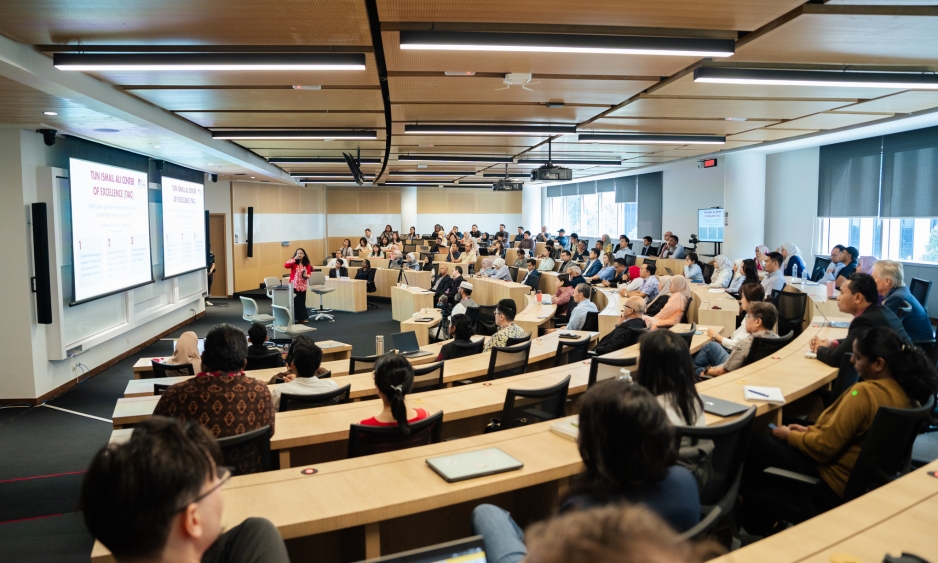
KUALA LUMPUR, MALAYSIA – Media OutReach Newswire – 3 December 2025 – The Asia School of Business (ASB) today reaffirmed its position as a leading institution for AI-driven leadership in Asia by hosting the AI-Powered Leadership Conference, which convened global AI pioneers, CEOs, regional innovators, and policymakers to explore the future of leadership in an AI-powered world. The event was supported by the conference’s Strategic Partner, TRX City Sdn Bhd, the organisation driving the growth of Tun Razak Exchange (TRX), Malaysia’s International Financial Centre.

In his welcome address, YB Gobind Singh Deo, Minister of Digital, Malaysia, welcomed the gathering of leaders who recognise the importance of Artificial Intelligence (AI) which will drive the next phase of Malaysia’s and the region’s economic growth.

“Leadership in the new age of intelligence demands trust and transparency to drive growth and return on investment. Beyond managing teams, leaders must understand AI’s ethical implications for jobs and equity, proactively anticipating risks like algorithmic bias and cybersecurity. Corporate leaders must adopt human-centred AI principles, ensuring technology serves people first by augmenting human judgment and enhancing the human touch, rather than dictating or eroding it,” he said, adding that leaders must invest in people as seriously as they invest in technology.

The opening keynote was delivered by Professor De Kai, a globally recognised AI pioneer and author of critically-acclaimed MIT Press book, Raising AI, appearing for the first time in Malaysia. Renowned for building the web’s first language translator and developing the language models that later powered Microsoft, Yahoo, and Google Translate, he is one of only seventeen Founding Fellows of the Association for Computational Linguistics. With appointments at HKUST and Berkeley’s International Computer Science Institute and experience on Google’s AI ethics council, De Kai brings deep expertise at the intersection of AI, ethics, and society.

Professor De Kai shared, “Artificial Intelligence are not gods or slaves. They’re attention seeking children who want your approval. We are not parenting them but they are already influencing us unconsciously, and it will continue to influence us even more if we keep thinking of them as mechanical tools.”

His session set the stage for a series of sessions and interactive discussions around the theme of Leadership and Cybersecurity, that examined how AI is reshaping industries, workforce structures and organisational strategy. Other notable keynote speakers included Brian Wong, former Alibaba executive, entrepreneur, investor, and author known for his work on globalisation strategy and AI-enabled organisational design; and Professor Hiroshi Ishiguro, globally renowned for his groundbreaking research in interactive robotics, avatar science, and human–AI interaction.

The conference also featured ASB faculty experts Professor Ong Shien Jin and Professor David Asirvatham, who provided insights into AI-driven decision-making, leadership dynamics, and organisational transformation. Participants explored next-generation AI models, leadership, cybersecurity, responsible adoption, human-centred leadership and long-term competitiveness.

“As intelligent systems become central to national strategy, corporate competitiveness, and cross-border collaboration, leaders today must pair technical literacy with sound judgement and ethical clarity. This is why ASB is proud to host this conference: to ensure our region’s decision-makers are equipped to navigate AI’s sweeping impact across economies and societies. ASB has invested deeply in these capabilities through our Micro-Credential in AI for Business Leaders, our Certified AI Leader and Certified AI Practitioner executive education programs, and an expanding suite of AI-integrated offerings across our learning pathways. Our goal is straightforward ‒ to help organisations lead AI-driven transformation with confidence, accountability, and long-term competitiveness.” said Joe Cherian, CEO, President, Dean and Distinguished Professor of the Asia School of Business.

TRX City Sdn Bhd, the strategic partner of the conference, highlighted the importance of AI-ready leadership as a critical foundation for a thriving financial ecosystem. Dato’ Sr Azmar Talib, CEO of TRX City said, “AI is reshaping global finance and Malaysia must stay ahead of the curve. At TRX, we see AI-ready leadership as a fundamental driver of competitiveness. Our partnership with ASB reflects our commitment to building an international financial centre that attracts top talent, accelerates innovation and strengthens Malaysia’s position in the region. TRX is proud to support that momentum.”

The conference also included exhibitors, including ThakralOne, iFLYTEK, Biline, Beyond Insights, Symprio, and Galactic Network and Vetece Holdings. PIKOM, the National Tech Association of Malaysia, also participated as a supporting partner as part of broader efforts to strengthen Malaysia’s digital economy and innovation landscape.

Originally published by The Sun.

KUALA LUMPUR, 2 Dis (Bernama) — Kerajaan bertanggungjawab untuk mewujudkan ekosistem yang membolehkan pihak industri berinovasi dan berkembang maju dalam era digital, kata Menteri Digital Gobind Singh Deo.

Beliau berkata walaupun kerajaan mengiktiraf kepentingan teknologi, tetapi ia sedar bahawa industri memerlukan blok binaan dan peralatan untuk membolehkan penggunaan dan pembangunan teknologi. 

“Ianya penting kerana kita sentiasa bercakap mengenai membina ekosistem yang akan memberi manfaat dan memperkasakan industri.

“Akhirnya, kita bercakap mengenai cara untuk memperkasakan industri agar mereka boleh memanfaatkan ekosistem ini yang kita bina untuk menyampaikan teknologi yang kita perlukan agar kita dapat melihat penyelesaian kepada masalah masa lepas, yang boleh diselesaikan oleh teknologi hari ini,” katanya ketika berucap pada Persidangan Kepimpinan Kecerdasan Buatan (AI) di sini hari ini. 

Oleh itu, Gobind berkata Kementerian Digital ditubuhkan untuk membangunkan strategi bagi bidang utama seperti infrastruktur, keselamatan, kepercayaan dan bakat dalam segmen digital. 

Beliau berkata walaupun kerajaan akan menyokong pertumbuhan industri, ia masih memerlukan garis panduan dan cadangan daripada industri untuk membina ekosistem tersebut. 

“Saya hampir pasti jika kita semua bekerjasama, kita akan memastikan bahawa kita bukan sahaja membina ekosistem yang akan membantu setiap orang daripada kita, tetapi akhirnya kita juga memastikan tiada siapa yang akan ketinggalan dalam dunia baharu transformasi digital baharu yang kita semua sering bincangkan dengan penuh keterujaan,” katanya. 

Persidangan anjuran Asia School of Business itu menghimpunkan perintis AI global, pemain industri, inovator serantau, dan penggubal dasar untuk meneroka masa depan kepimpinan dalam dunia yang dikuasakan AI. 

Sementara itu, Presiden dan Ketua Pegawai Eksekutif Asia School of Business Professor Joseph Cherian dalam satu kenyataan hari ini berkata persidangan itu bertujuan memastikan pembuat keputusan di rantau ini berkemampuan untuk melayari kesan AI yang meluas merentasi ekonomi dan masyarakat. 

Originally published by Bernama.

The Asia School of Business (ASB) hosted the AI-Powered Leadership Conference in Kuala Lumpur, bringing together global AI experts, CEOs, regional innovators and policymakers to discuss the impact of artificial intelligence on leadership and organisational strategy.

The conference, held with strategic support from TRX City Sdn Bhd, highlighted the growing importance of AI-ready leadership for economic growth in Malaysia and the wider Southeast Asian region.

In his welcome address, Minister of Digital, YB Gobind Singh Deo, said, “Leadership in the new age of intelligence demands trust and transparency to drive growth and return on investment. Beyond managing teams, leaders must understand AI’s ethical implications for jobs and equity, proactively anticipating risks like algorithmic bias and cybersecurity. Corporate leaders must adopt human-centred AI principles, ensuring technology serves people first by augmenting human judgment and enhancing the human touch.”

Keynote speakers included Professor De Kai, a pioneer in AI language models and member of Google’s AI ethics council, who noted, “Artificial Intelligence are not gods or slaves. They’re attention seeking children who want your approval. We are not parenting them but they are already influencing us unconsciously and it will continue to influence us even more if we keep thinking of them as mechanical tools.”

Other speakers included former Alibaba executive Brian Wong and Professor Hiroshi Ishiguro, known for his research in interactive robotics and human–AI interaction. ASB faculty, including Professor Ong Shien Jin and Professor David Asirvatham, provided insights into AI-driven decision-making, leadership dynamics and organisational transformation.

Joe Cherian, CEO and Dean of ASB, said the conference aims to equip leaders with the knowledge and ethical framework to navigate AI’s growing influence across industries and societies. ASB has invested in programmes such as the Micro-Credential in AI for Business Leaders and Certified AI Leader courses to support AI-driven organisational transformation.

TRX City Sdn Bhd also emphasised the role of AI-ready leadership in strengthening Malaysia’s financial ecosystem. Dato’ Sr Azmar Talib, CEO of TRX City, said, “AI is reshaping global finance and Malaysia must stay ahead of the curve. Our partnership with ASB reflects our commitment to building an international financial centre that attracts top talent, accelerates innovation and strengthens Malaysia’s position in the region.”

The conference featured technology exhibitors including ThakralOne, iFLYTEK, Biline, Beyond Insights, Symprio, Galactic Network and Vetece Holdings, alongside support from PIKOM, Malaysia’s National Tech Association, as part of efforts to boost the nation’s digital economy and innovation landscape.

Originally published by Business Today.

The Asia School of Business (ASB) is set to host its inaugural AI-Powered Leadership Conference, a landmark one-day event aimed at exploring the future of leadership in an increasingly AI-driven world. Bringing together a distinguished lineup of global AI pioneers, CEOs, innovators, and policymakers, the conference promises to offer deep insights into how organisations can lead responsibly and competitively amid rapid technological transformation. Supported by strategic partner TRX City Sdn Bhd, the master developer of the International Financial Centre Tun Razak Exchange (TRX), the event will examine the impact of AI on industries, talent management, and strategic decision-making. The conference will be graced by YB Gobind Singh, Malaysia’s Minister of Digital, and will feature keynote sessions from internationally acclaimed experts, including Professor Sanjay Sarma, MIT Professor and Eminent Visiting Professor at ASB known for his pioneering work in technology; Professor De Kai, a leader in AI and language technologies; Brian A. Wong, former Alibaba executive and author of The Tao of Alibaba; and Professor Hiroshi Ishiguro, renowned for his groundbreaking contributions to interactive robotics and human-robot collaboration. ASB faculty members Professor Ong Shien Jin and Professor David Asirvatham will also present on organisational readiness and decision-making in the AI era. Attendees can look forward to interactive discussions, leadership-focused dialogues, and curated showcases highlighting emerging AI applications. The conference will revolve around three core themes: AI-driven leadershipcybersecurity in the age of AI, and responsible, human-centered adoption of AI. More information on registration and the agenda can be found at ASB’s official website.

Originally published by Malaysian Updates

Sporting careers can fulfil fantasies and broaden horizons. Jeffrey Ong Kuan Seng did not just live the dream; his biography might be called the Ballad of East and West. Like Rudyard Kipling, one of Malaysia’s most celebrated swimmers knows that “the twain” can not only meet, but also enjoy the best of both worlds.

“With a dad from Penang and a mum from England,” he says, “I always aimed to have the best of East and West. And it’s not East versus West, it’s about balance, and I think I’ve achieved a good balance.” The way he’s kept his equilibrium, he’s the living embodiment – both in and out of the water.

GROWING UP IN PENANG
Maintaining equilibrium is a crucial part of swimming, which is a tough gig. Distance swimming is even tougher, and he did it the hard way. At 13, he went to an overseas boarding school; university was on yet another continent. But his horizon was already after all – didn’t matter because his intrepid future mum “took the leap,” as he puts it, into what was then a backward, third world country – and stayed.” They duly married, and by the time Jeffrey, the third of four children, was born in 1972, the family was ensconced on Penang Island, and so he began an idyllic childhood. “My dad was a swimmer,” he says, “as were my older siblings, Steven and Katerina. They used to go to the Chinese Swimming Club in Tanjung Bungah, and I would tag along. “By 11, I knew I had talent, and “Rina”, who won medals at the SEA Games and was Sportswoman of the Year in 1980, was my inspiration. The swimming coach, Lin Boon Lee, was a legend and helped me build the foundation for swimming success. “I went to Wellesley Primary and had one year at St Xavier’s Institution. Growing up in Penang then was amazing. It was all very harmonious. I had Malay, Indian, Chinese and broad, his balance worthy of a tightrope walker.

Read more on The Expat.

Tariffs swing, policies flip, and rules keep changing. How can CEOs stay ahead when uncertainty is constant? Professor Joseph Cherian, CEO of the Asia School of Business, shares strategies and practical insights for leaders navigating today’s volatile world.

Originally published by Astro AWANI.

The video features Distinguished Professor Joe Cherion, CEO, President and Dean of Asia School of Business in Malaysia, discussing Asia School of Business’s mission, its Asia-focused approach, and Vietnam’s role in Asia’s education landscape. Cherion’s visit to Ho Chi Minh City for the MIT Southeast Asia Advisory Council meeting highlights Asia School of Business’s collaboration with MIT Sloan and the Central Bank of Malaysia, its Asian-centric curriculum, and the central banking program. He explains why Vietnam matters, Asia School of Business’s experiential, action-learning approach, and hybrid delivery, and how Southeast Asia can serve as a neutral platform for global collaboration while addressing talent mobility and development.

Summary by AI.

Originally published by BNC Now.

At IGEM2025 and the Kuala Lumpur Sustainable Summit (KLSS), Dr. Renato Lima de Oliveira, Associate Professor at Asia School of Business, shares expert insights on Malaysia’s path to net zero by 2050. He discusses the synergy between policy and innovation, the role of industry players, and the importance of regulatory frameworks in scaling green technologies. Highlighting the National Energy Transition Roadmap (NETR), Dr. Oliveira calls for more ambitious action and emphasizes Malaysia’s potential to lead in ASEAN’s energy transition.
 
Watch here.
Originally published by Bernama.

(Oct 8): Malaysia’s steel industry has faced both economic and environmental challenges in recent years, with rapidly increasing greenhouse gas (GHG) emissions and rising overcapacity. The Steel Industry Roadmap 2035 (SIR), launched on Sept 29,  aims to address both of these challenges.

The SIR contains a range of novel policy ideas, including a push for green steel standards and a green steel public procurement mandate, the creation of a “carbon competitiveness fund” financed through carbon taxes, a pledge to prohibit construction of new blast furnaces, and various other initiatives to encourage high value-added steel production in Malaysia. These are all important measures and in line with the broader aspiration of the Malaysian government to achieve net zero GHG emissions by 2050.

The way in which the SIR and other “roadmaps” are presented, suggests that there is clarity of where we are today (the starting line), the end goal (the destination), and how to get there (the instruments and execution timeline). It is therefore important to ask what data and assumptions back documents like the SIR, and if the proposed strategies are credible — and likely to be implemented.

Conflicting evidence

The report follows a typical strategy consulting framework, and is relatively light on real data, details, and specifics: there are no appendices to support claims, nor a reference list. This is not an issue of the SIR alone, but also found in other roadmaps, blueprints and masterplans, commonly written with the help of international strategy consultants.

The one-page methodology chapter of the SIR states that various government departments and industry groups were consulted, and that unnamed “research, white papers and economic studies” were reviewed. Table 4-1 names four specific sources, which are presumably considered to be the most authoritative by the authors. They include the Foresight Study on the Iron and Steel Industry and the 2024 report from the Independent Committee on the Iron and Steel Industry.

However, none of these reports is publicly available, so the public (including academics) cannot know on which facts and deliberations the SIR is based.

This lack of transparency matters, because some of the data in the SIR raises questions. For example, the SIR states that steel production capacity utilisation in Malaysia is 69.9%, whereas industry sources note a far lower utilisation rate of 39.1%.

In terms of renewable energy (RE) use, the SIR uses figures from the National Energy Transition Roadmap (NETR), citing 31% RE for 2026, 40% by 2035 and 70% by 2050.

However, the NETR figures refer to installed capacity, not to actual generation. As Malaysia’s growth in RE is expected to come primarily from solar energy, 70% RE capacity will only lead to 22% RE generation.

Without the necessary RE, it is not possible to produce low-emissions steel, and 22% RE is clearly insufficient to meet the demand of the sector and the whole economy under a net zero target.

The SIR also notes a 45% reduction in emission intensity by 2030. However, this goal does not appear to refer to the steel industry at all. It likely refers to Malaysia’s national GHG emission reduction target. This target is based on a 2005 baseline, a period when emissions from Malaysia’s steel industry were still very low. The inclusion of such figures is confusing at best.

Carbon pricing as a critical policy instrument

Carbon pricing is an integral part of any decarbonisation strategy. By pricing emissions, steel producers can make a business case for producing low-carbon steel, thus unlocking private-sector investment.

Although carbon pricing was again announced in Budget 2025, the SIR states that carbon pricing will be introduced as early as 2026…or as late as 2035. The SIR also makes no mention of how high the carbon price will be, nor about the size of the proposed “carbon competitiveness fund” for the steel industry.

Our own research suggests that a carbon price of around RM200 per ton can lead to meaningful shifts towards low-carbon steel production. Such a tax could raise RM3 billion in annual revenue.

For investors, clarity about the timeline and quantum of carbon pricing are critically important when deciding to invest in low-carbon steel production, as are the availability of upstream inputs like RE and green hydrogen. The SIR appears to provide no clarity on these points. Thus, while the roadmap provides a direction of travel, its limited transparency makes it difficult to discern if the starting line has been correctly identified.

Credible execution

The SIR contains many positive and genuinely exciting proposals about transforming the steel sector. To realise the full potential described in the document, it needs to be followed by a credible execution strategy. Despite being described as a “national contract”, roadmaps, blueprints and masterplans like the SIR or NETR, are essentially a wish list. Their real impact lies in deploying policy instruments to align investment decisions made in the present (and in the immediate future) with the stated goals.

At this point, there are no references to specific budget allocation to fund the transition. Timelines are vague. There are no projections of future GHG emissions, or RE and green hydrogen demand. Regulatory agencies will be reformed to increase their effectiveness, but it is unclear from the document how this will be done. There is no framework to monitor the implementation of the roadmap and guarantee its execution (and revisions based on new data) across multiple years (and governments), as required for an industry of long-term investments like steel. Without such information and openness, investors will likely stay on the sidelines. The SIR introduces innovative ideas that could serve as a model for decarbonising Malaysia’s heavy industry, which makes it all the more important that it be underpinned by transparent data, robust assumptions, and clear strategies for full implementation.

Pieter E Stek is a senior lecturer and Renato Lima-de-Oliveira an associate professor at the Asia School of Business in Kuala Lumpur. They are also the authors of a recent Institute for Democracy and Economic Affairs (IDEAS) policy brief: Carbon Pricing for the Malaysian Steel Industry: Incentivising Sustainable Growth.

Originally published by The Edge.

MALAYSIA’S reputation as the world’s second-largest producer of palm oil is built not only on sprawling estates owned by major conglomerates but also on the modest plots tended by independent smallholders. 

These farmers, often managing only a few hectares, account for nearly one-fifth of the nation’s planted area. 

Their collective success or failure will determine whether the industry can meet global sustainability standards while sustaining livelihoods across rural Malaysia. 

For decades, smallholders have been viewed as the weakest link in palm oil’s global supply chain. 

Without the technical knowledge, capital or networks of big players, they were often excluded from certification schemes and sidelined in policy debates. 

That narrative, however, is shifting. 

A growing ecosystem of support programmes, led by companies like SD Guthrie Bhd’s downstream arm, NGOs such as Solidaridad, and research institutions like the Center for Sustainable Small-owners (CSS) at the Asia School of Business, is beginning to change how smallholders are seen and how they see themselves. 

These efforts are not abstract. They translate into better farm records, more efficient fertiliser use, income diversification and, in some cases, yields that rival the best plantations. 

They also produce compelling stories of resilience and determination. 

Rosli’s Formula: Discipline, Data at the Heart of Farming

When The Malaysian Reserve (TMR) spoke to Rosli Abdul Rahman, the first thing he shared was not his oil palms but his logbook. 

The farmer from Johor now manages five farms, having started with just one when he joined the CSS programme in 2021. 

Under the scheme, he has pushed his yield to 36.8 metric tonnes per hectare (MT/ha), more than double the national average of 17MT/ha. 

Rosli explained that his progress stems from a disciplined approach to daily work and record-keeping. 

Every activity on his farm is written down, from fertiliser applications to harvest volumes. This habit allows him to analyse what works and what needs improvement. 

His focus on consistency, he told TMR, has become part of his identity. 

“You begin with a good attitude. From attitude comes discipline. And when you stick with it long enough, it becomes part of your culture,” he said. 

Rosli’s discipline extends beyond paperwork. He has built a routine that ensures tasks are done on time, from pruning to fertilising. 

This has not only improved yields but also created a model that other farmers can observe. 

He now serves as a mentor within Pertubuhan Tani Niaga Lestari Negeri Johor (Pertaniaga), the independent smallholder association supported by CSS in Johor. 

Rosli added that the recognition he recently received from the Malaysian Palm Oil Board, through the 2025 Anugerah Tokoh Pekebun Kecil Sawit, reinforced the value of discipline. 

“Once you find what works for your farm, keep at it. God willing, it will lead to success,” he advised. 

Every activity on his farm is written down, from fertiliser applications to harvest volumes. This habit allows him to analyse what works and what needs improvement. 

His focus on consistency, he told TMR, has become part of his identity. 

“You begin with a good attitude. From attitude comes discipline. And when you stick with it long enough, it becomes part of your culture,” he said. 

Rosli’s discipline extends beyond paperwork. He has built a routine that ensures tasks are done on time, from pruning to fertilising. 

This has not only improved yields but also created a model that other farmers can observe. 

He now serves as a mentor within Pertubuhan Tani Niaga Lestari Negeri Johor (Pertaniaga), the independent smallholder association supported by CSS in Johor. 

Rosli added that the recognition he recently received from the Malaysian Palm Oil Board, through the 2025 Anugerah Tokoh Pekebun Kecil Sawit, reinforced the value of discipline. 

“Once you find what works for your farm, keep at it. God willing, it will lead to success,” he advised. 

A former civil servant, she converted the land from a rubber plantation and managed it together with her late husband. 

When he died in 2021, she took full charge, eventually becoming one of the first women to join CSS programme. 

Hamisah’s yields have risen from 38 tonnes to 42 tonnes annually in just three years. But her story is not only about numbers. 

She has become a leader in her community, ensuring other women are not left behind. She often drives neighbours to training sessions in her van and shares lessons openly. 

“I teach them how to fertilise based on the right measurement and the proper use of personal protective equipments (PPEs),” she shared with TMR, emphasising that attention to small details prevents larger problems. 

At first, Hamisah admitted to being hesitant about joining the programme. Yet she now sees clear benefits. 

“If we do not teach our community, who will?” she asked. 

Hamisah also highlighted challenges. Finding reliable labour is difficult and she often takes on fertilising herself to ensure schedules are met. 

She believes agriculture should be introduced earlier in schools, so the next generation views farming as dignified work. 

Her insistence that women participate more actively in agriculture is also reshaping community norms, giving a new face to palm oil’s sustainability drive. 

SD Guthrie’s Long-term Commitment

The corporate sector’s role in supporting smallholders is central. 

SD Guthrie downstream sustainability head Mark Wong told TMR that the company works with about 35,000 smallholders globally, including 2,000 in Malaysia through the SD Guthrie Solidaridad-Colgate programme. 

He explained that in Malaysia, the relationship is indirect, since independent smallholders sell to traders before the fruit reaches SD Guthrie’s mills. 

To bridge this gap, the company partnered with Solidaridad and Colgate-Palmolive Co to run a landscape-level initiative in Bera, Pahang. 

“The involvement of brands like Colgate, who are far downstream, shows that sustainability is now a shared responsibility across the supply chain,” Wong said. 

The programme has trained more than 2,100 farmers in Malaysia, surpassing the initial target of 1,800. 

Training focuses on good agricultural practices such as pest management, fertiliser use and waterway protection. 

Farmers also receive administrative support, including help with the Malaysian Palm Oil Board (MPOB) licensing and compliance with the Malaysian Sustainable Palm Oil (MSPO) standard. 

Wong explained that feedback has been positive but stressed that results take time. Building trust and measuring yield improvements can take years. 

He added that the programme is now preparing for a second phase. 

“Working with smallholders is not just a one or two-year project. It is something you really need to put in for the long term,” he told TMR. 

CSS Perspective 

For CSS director Professor Asad Ata, the stakes are clear. He said beyond certificates, the research institution celebrates the change small-holders unlocks for livelihoods and communities. 

He explained that the CSS programme, launched with support from P&G and Temasek Foundation, has certified nearly 900 farmers and helped many improve yields by up to 35% over three to four years. 

Certified farmers also receive premiums of RM20 to RM25/MT, creating financial incentives for sustainable practices. 

Asad said the core of the programme is community empowerment. By organising farmers into associations like Pertaniaga, small-holders gain bargaining power and peer learning opportunities. Model farms serve as demonstration plots, showing others what is possible when good practices are adopted.

He acknowledged that challenges remain systemic. Independent smallholders often manage fragmented plots of less than 1ha, lack direct links to mills and face grading standards designed for larger estates. 

These factors reduce their bargaining power and discourage investment in better practices. 

To overcome this, Asad recommended a holistic approach: Support during replanting years when income is low, yield intensification programmes once palms mature and digital traceability tools to meet evolving standards like the EU Deforestation Regulation (EUDR). 

He also urged more horizontal partnerships among NGOs and vertical partnerships across the supply chain. 

“The future of sustainable palm oil depends on whether smallholders feel motivated. There has to be a business case for them, not just a compliance burden,” he told TMR.

Solidaridad Inclusión Model

On the other hand, Solidaridad country manager Law Chu Chien said Perak’s landscape illustrates the stakes. 

As Malaysia’s second-largest state for smallholders, accounting for 17.5% of the total planted area, its proximity to central forest spines requires careful balance between farming and conservation. 

He explained that this is why Solidaridad partnered with SD Guthrie and Colgate-Palmolive. 

“The involvement of private corporations such as SD Guthrie and Colgate-Palmolive is crucial in supporting sustainable development among smallholders through knowledge sharing and capacity building,” he told TMR. 

Beyond training, Solidaridad promotes income diversification, such as oyster mushroom cultivation, to help farmers cope with low yield periods caused by replanting or weather. 

Communications officer Maria Ariessa Mohd Tahir shared that the ultimate goal is compliance with MSPO through consistent application of good agricultural practices. 

“The ultimate goal for our project is to ensure smallholders’ compliance to national standards (MSPO) through consistent GAP application in their farms,” she told TMR. 

She explained that Solidaridad’s trainers conduct field visits and interviews to verify that farmers adopt what they have learned. 

Trainers also help smallholders register with MPOB, opening doors to services and digital traceability platforms such as Sims and GeoSawit. These tools are increasingly critical as farmers prepare for EUDR requirements. 

Maria Ariessa further outlined Solidaridad’s sustainability assessment matrix, which scores farmers on economic, legal, environmental and social criteria. 

This twice-yearly assessment classifies smallholders as low, medium or high risk, guiding targeted support. 

By improving efficiency and fertiliser management, the matrix reduces pressure for land expansion while encouraging climate-resilient farming. 

Linking Local Discipline to Global Markets

The stories of Rosli and Hamisah, together with corporate and NGO perspectives, highlight a common theme in which sustainability is not an abstract concept but a lived practice. 

For Rosli, it is about keeping a disciplined logbook while for Hamisah, it is about driving neighbours to training sessions. 

For Wong, it is about long-term engagement with farmers he may never meet directly while for Asad, it is about systemic reform. 

For Solidaridad, it is about risk matrices that translate sustainability into measurable progress. 

Malaysia has more than 275,000 independent small-holders. Together, they hold the key to whether the industry can improve yields without opening new land, comply with stricter international rules and prove that sustainability and livelihoods are not opposing goals. 

The path forward is complex. Smallholders face labour shortages, volatile prices and systemic disadvantages in how their produce is graded and marketed. 

Yet as the stories from Johor and Perak show, change is possible. 

When smallholders are empowered with knowledge, supported by institutions and connected to fairer markets, they become not the weakest link but the most important one. 

As Asad told TMR, the goal is not only to certify farmers but to transform communities. The measure of success, he argued, is whether smallholders feel ownership of the sustainability agenda — whether discipline, diversification and digital tools become second nature. 

That transformation is already visible in the ledgers of Rosli, the fertiliser routines of Hamisah, the training modules of Solidaridad and the supply chain partnerships of SD Guthrie. 

It is a reminder that the future of palm oil will not be decided only in corporate boardrooms or international negotiations. 

It will also be decided on the small plots of land where Malaysian farmers choose, each day, to farm differently.

Originally published by The Malaysian Reserve.