





Across Asia, the decision to pursue an MBA or Executive MBA is changing.
For many professionals, the question is no longer simply, “Which business school should I choose?” It is also, “Where can I gain a global business education that remains connected to the realities of Asian markets?”
As organizations across the region navigate digital transformation, geopolitical uncertainty, supply chain shifts, sustainability pressures, and the rapid adoption of AI, leaders need more than traditional management theory. They need practical exposure to complex business environments, diverse regional perspectives, and the ability to lead across borders.
This is one reason why Malaysia is becoming an increasingly relevant destination for professionals considering postgraduate business education in Southeast Asia.
Located at the center of the region, Kuala Lumpur offers access to a dynamic business ecosystem shaped by ASEAN growth, emerging market complexity, multinational presence, and cross-cultural leadership. For professionals from across Asia, studying in Malaysia can provide both regional proximity and global exposure.
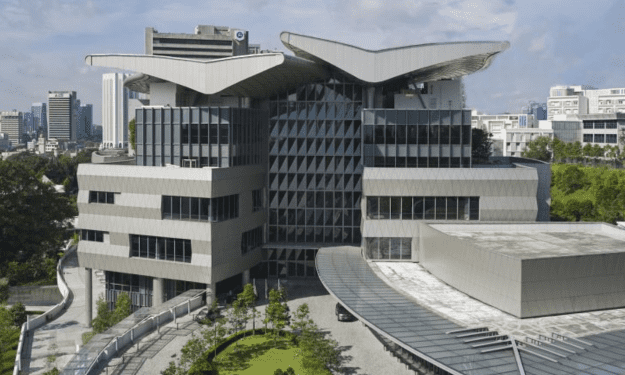
At the Asia School of Business, this regional relevance is built into the learning experience.
Established in collaboration with MIT Sloan School of Management, ASB offers MBA and Executive MBA programs designed for professionals who want to strengthen their leadership capabilities while engaging with real business challenges in Asia and beyond.
A distinctive part of the ASB experience is Action Learning, where students work on practical business projects with organizations and apply classroom insights to real-world problems. This approach gives participants the opportunity to connect analytical thinking, leadership judgment, and execution in a live business context.
For professionals exploring MBA and Executive MBA options, regional fit matters. A program located in Southeast Asia can offer a different kind of learning environment — one that reflects the complexity, pace, and diversity of the markets many leaders operate in today.
A regional pathway for professionals across Asia
Professionals from different countries often approach the MBA decision with different priorities.
For Malaysian professionals, the focus may be on career advancement, leadership development, financial assistance, and the opportunity to study in Kuala Lumpur while remaining close to professional and personal networks. Learn more about ASB’s MBA and Executive MBA options for professionals in Malaysia.
For Indonesian professionals, regional accessibility, ASEAN business exposure, and the opportunity to study in a neighboring country can be important considerations. ASB’s Kuala Lumpur location provides proximity while still offering an international graduate business experience. Explore ASB’s MBA and Executive MBA options for professionals from Indonesia.
For Thai professionals, Malaysia can offer a practical regional alternative for those looking to develop leadership capabilities while engaging with Southeast Asian business realities. Learn more about ASB’s MBA and Executive MBA pathways for professionals from Thailand.
For Vietnamese professionals, the rapid growth of Vietnam’s economy creates increasing demand for leaders who can scale organizations, manage transformation, and operate across regional markets. Explore MBA and Executive MBA options for professionals from Vietnam.
For professionals from the Philippines, English-medium graduate business education, regional mobility, and exposure to Asian business contexts can be important factors when comparing MBA options. Learn more about ASB’s MBA and Executive MBA pathways for professionals from the Philippines.
For Singapore-based professionals, Malaysia offers a nearby regional option for those considering an MBA or Executive MBA experience connected to ASEAN growth and emerging market leadership. Explore ASB’s MBA and Executive MBA options for professionals in Singapore.
For Indian professionals, Malaysia can serve as a strategic gateway to Southeast Asia, offering exposure to regional business networks, Asian market dynamics, and a globally connected learning environment. Learn more about ASB’s MBA and Executive MBA options for professionals from India.
For those considering the region more broadly, ASB also offers a Southeast Asia-focused MBA and Executive MBA pathway for professionals seeking a business education rooted in Asia and connected to global leadership practice.
Why regional context matters
Business education is most powerful when it reflects the environment leaders are preparing to navigate.
Southeast Asia is one of the world’s most dynamic regions, shaped by fast-growing consumer markets, digital adoption, infrastructure development, sustainability challenges, and cross-border trade. It is also a region where leadership often requires the ability to operate across cultures, sectors, and institutional contexts.
For MBA and Executive MBA candidates, this makes location an important part of the learning experience.
Studying in Kuala Lumpur places participants close to many of these regional shifts. It creates opportunities to examine business challenges not only from a global perspective, but also through the lens of Asian markets, emerging economies, and real organizational complexity.
Choosing the right MBA or Executive MBA pathway
The right program depends on career stage, professional goals, and the kind of learning experience a candidate is seeking.
A full-time MBA may be suitable for professionals looking to accelerate, transition, or broaden their career direction. An Executive MBA may be more suitable for experienced professionals who want to continue working while deepening their strategic and leadership capabilities.
At ASB, both pathways are designed to support professionals who want to lead with stronger analytical judgment, practical experience, and a broader understanding of business in Asia and the world.
For candidates comparing options across countries, the decision should go beyond rankings or location alone. It should include questions such as:
- Does the program offer practical exposure to real business challenges?
- Does the curriculum reflect the realities of Asian and global markets?
- Does the school provide access to diverse peers and networks?
- Is the learning experience relevant to my career stage?
- Will the program help me lead across uncertainty, complexity, and change?
For many professionals in the region, these questions are making regional MBA and Executive MBA pathways increasingly relevant.
As Asia continues to evolve, the next generation of business leaders will need to understand both global systems and local realities. A regional business education experience can help bridge that gap.
Explore ASB’s MBA and Executive MBA pathways
Whether you are based in Malaysia or exploring graduate business education from across the region, Asia School of Business offers MBA and Executive MBA programs designed for professionals preparing to lead in Asia and beyond.
ASB also welcomes professionals from beyond Asia who are exploring graduate business education in a region shaped by growth, transformation, and cross-border opportunity. Candidates from Africa and South America can explore ASB’s MBA and Executive MBA pathways in Asia.