Asia School of Business

Global Inquiry, Local Heart

When your partner is going through a stressful time at work, it’s common for you to be affected by it, too (and vice versa). Sometimes it can even feel as intense as if you were experiencing it firsthand. That experience is called crossover workplace stress (or trauma)—a term that researchers use to describe how work stress gets passed from one partner to another. There are three ways someone’s workplace stress can impact their partner: through direct crossover, indirect crossover, and common stressors.

Direct Crossover. If you’re feeling your partner’s stress as if it were your own, you’re likely experiencing what scientists call direct crossover. “It’s when a partner is highly empathetic and puts themselves into the same shoes as their significant others,” says organizational psychologist Yi-Ren Wang, PhD, who recently authored a research study on crossover stress. You feel as if you’ve experienced the stressful event yourself, even though you haven’t.

Indirect Crossover. You can experience indirect crossover stress when tension in the relationship arises because of how your partner copes with their workplace stress, and it impacts the quality of your relationship. For example, if your partner is experiencing a really stressful time at work, they can become avoidant—not wanting to talk about whatever is happening. Because they aren’t communicating, you might begin to think that their source of stress is you or the relationship, which affects the connection between the two of you.

Common Stressors. Your partner’s workplace can also create common (or general) stressors that impact you and the entire household. “For example, maybe the lack of opportunity to get a promotion at work can negatively affect my spouse, and at the same time that affects the level of financial security that the entire family experiences,” Wang says.

5 WAYS TO MANAGE CROSSOVER STRESS

Whichever way your partner’s workplace stress is affecting you, it can lead to a high level of psychological distress, says Nina Westbrook, a licensed marriage and family therapist. “Each partner then loses the ability to support the other, and they become emotionally depleted and unable to reasonably and effectively navigate within the relationship,” says Westbrook.

Before it reaches that point, she suggests that you and your partner consider five things.

  1. Create healthy boundaries. It’s important to support your significant other’s emotional needs—that’s part of having a compassionate relationship—but taking on their stress isn’t very effective. “We feel like we’re helping, but in turn we’re kind of emptying our cup while our partner is emptying their cup, and then there’s no one left to fill the cups back up because you’re both now drained and emotionally depleted.” Setting boundaries allows each of you to create ways to manage your own stress and helps you both move through stressful times better.
  2. Communicate. If you’re experiencing stress at work, communicate this to your partner. “This way, your partner is aware of the circumstances and in turn can more likely have patience and understanding as you work through the overly stressful time,” says Westbrook. And they’re less likely to attribute the stress to the relationship itself.
  3. Be considerate. Being aware of how much stress you’re feeling and how much of that you’re unloading on your partner is important. “You can start by asking your partner what their capacity is to listen prior to sharing,” says Westbrook. That can sound a little bit like, “I’m experiencing a lot of stress at work. Is this a good time for you to talk about it?”
  4. Get support. “One person cannot provide all of our emotional, social, romantic, intimate, and psychological needs. That’s a lot to ask,” says Westbrook. Talking to other people—a trusted colleague, a friend, or a therapist—about your workplace stress can alleviate some of the load that your partner takes on.
  5. Have a plan. If you know a stressful time is approaching in one (or both) of your professional lives, plan for it. You could schedule downtime each day (either alone or together), do stress-reducing meditations, or, if you have kids, plan for them to visit with their grandparents on weekends to help free up your mental space. Whatever it looks like for you, making adjustments can help reduce stress for you and your partner.

Originally published by Goop.

“I think ASB is pretty magical. To bring MIT Sloan and the best qualities of a Western business school and a leading Asian school together within one MBA is really marvellous.” Sanjay Sarma – President, CEO and Dean of Asia School of Business (ASB) “One of the most creative thinkers I know.” The words of Rafael Reif, President of MIT for ten years until December 2022 described Sanjay Sarma, who for nearly a decade had run MIT’s digital learning platforms and education initiatives.

He continued, “For all he has done for our community, for his indelible mark on open learning, locally and globally, and for his continued commitment to inventing the future of education, I express to him my deep gratitude and admiration.” Sanjay Sarma, the incoming President, CEO and Dean of Asia School of Business (ASB), based in Kuala Lumpur has what he describes as an unconventional background.

“I’m a professor of engineering, I was vice president of MIT for open learning, I’m a businessman, I’m an author, and I’m a father .” Disarmingly modest and thoughtful, Sarma doesn’t elaborate on the extent of his achievements. But under his watch at MIT, he conceived and then led the launch of the MicroMasters, a new type of credential that allows working professionals to pursue master’s-level courses online.

Nearly 2 million students have enrolled, and 5,000 learners have earned MIT MicroMasters credentials. The programs have been adopted by over 25 universities worldwide, with over 50 programs offered. He also began entrepreneurship courses and bootcamps attended by hundreds of entrepreneurs, a content library to help professionals keep pace with the latest advances in technology, digital academic credentials, and led the creation of MITx Online, which hosts many of MIT’s online courses and has reached close to 10 million registrations.

With a bachelor’s degree from a prestigious IIT, followed by a Masters from Carnegie Mellon and his PhD from UC Berkeley, Sanjay Sarma initially worked in industry, and during his award-winning teaching career he has been involved in an IPO, developed key technologies behind Radio Frequency standards, and sits on the board of numerous companies.

In his books, Sarma has explored the structural, pedagogical and technological approaches to rethink our approach to learning and education, and understand methods that lead to the most meaningful and lasting impact “It’s been quite a journey,” he quietly concludes. So where next for such an accomplished and unassuming creative thinker? Taking on the leadership of Asia School of Business made perfect sense. 

The school was founded in collaboration with MIT Sloan and the Central Bank of Malaysia. Students benefit from a teaching approach that Poets&Quants describes as “experiential learning on steroids.” MIT Sloan’s world-renowned faculty teach 50% of the one-year MBA curriculum in the vibrant cultural melting pot of Malaysia alongside ASB faculty, and students spend up to 3-weeks immersion at MIT Sloan in Cambridge, MA.

These courses are some of the most sought-after at MIT, covering subjects from Bill Aulet’s 24-step program in Disciplined Entrepreneurship to Nelson Repenning’s unique System Dynamics framework. Upon completion of the ASB MBA program, students will earn an MIT Sloan Certificate of Completion, receive affiliate MIT Sloan alumni status.

They can extend their learning opportunities by applying to study at MIT in the Visiting Fellows Program or apply to enroll in the nine-month STEM-designated MS in Management Studies from MIT Sloan, providing international students with work authorization in the U.S. for up to three years. At less than $35,000 in tuition fees for an intensive 12-month MBA program, you’re getting an M7 experience with outstanding ROI.

And Sanjay Sarma has hit the ground running, drawing on his experience to create what he describes as the post-GPT MBA. “We are living in strange times” he notes. Acknowledging that education as we know it has changed drastically in recent years, not just through the pandemic but also in terms of AI and how fast technology is developing. He believes that the MBA and education itself need to adapt and move with the times.

“For students to really get the most out of their[-]MBA education, the classroom should be flipped. The classroom is becoming a studio.” Sanjay Sarma – CEO, President and Dean Asia School of Business (ASB) “In a post-GPT world, the software and automated systems are capable of doing pretty damn well. It is human instinct that remains special.” He explains that classroom learning needs to be revolutionized.

He believes that lectures in their current format are no longer the best way for students to learn. “Even the word lecture has a negative connotation”, he says. “Does anyone else recall being ‘lectured’ as a child?” The ten years running MIT’s digital learning platforms is front of mind, with a strong emphasis on action learning that is a hallmark at the Sloan School of Management. “For students to really get the most out of their MBA education, the classroom should be flipped.”

“The term is embodied cognition, where your intuition aligns with your learning as opposed to having to second guess your instincts all the time.” ASB plans to deploy video and AI to reinforce the deep learning, and using the MBA classroom time to then discuss what they are learning. “It is more than just reciting information learned off by heart, the classroom is becoming a studio.”

The ASB approach to learning draws from MIT’s motto (mind and hand), and heavily focuses on classroom rigor combined with onsite Action Learning experiences throughout Asia. Sarma insists that in order for business schools and MBAs to remain strong, they should direct their focus to research and thought leadership. “At ASB we are fortunate to have excellent researchers in areas such as finance, social science, economics, political economy, supply chain and more, and therefore we have wonderful thought leadership going on in our community.”

“We have to teach with the workplace in mind,” he explains, “and ensure that MBA students have a great depth of knowledge not only in theory, but in the practical elements of their work too, so they can hit the ground running.” The MBA has been identified as one of the hottest in Asia, and the innovative approach to learning is one of the many reasons why.

Sanjay notes that their attitude towards learning is to see innovation and entrepreneurship as a form of thinking. It is consistent with his belief that an individual needs to become the CEO of ones life. “You need to have a vision for your life, and plan accordingly. In the absence of that, decisions become triply hard. The Financial Times identified South East Asia as offering the highest % salary increase for MBAs, so the decision to study at ASB in the world’s fastest-growing region by GDP, with a wealth of post-MBA career opportunities is compelling.”

Students can extend their stay at ASB for up to 4 months as a Scholar / Entrepreneur-in-Residence, and the school will provide office space for their entrepreneurial venture in the ASBeehive, or provide them with the opportunity to work with a professor in one of our research centers. With this mindset, the sky truly is the limit for ASB and their students alike.

Sarma describes the ties with MIT Sloan like, “having their cake but eating it too”. He explains that he wants to bring the two cultures together – the differing perspectives from the South East Asian and Western perspectives, combining them to provide students with an in-depth level of entrepreneurial learning in Asia’s dynamic business environment. “Malaysia is the perfect gateway to Asia and beyond.

It is a cultural melting pot which includes three of Asia’s oldest civilizations, in the heart of South East Asia and its population of over 600 million. Kuala Lumpur is a dynamic economic hub in the region, and serves as the ideal hub for our students to experience Asia through our Action Learning projects.”

The FT identified SE Asia as offering the highest[-]% salary increase for MBAs, so the decision to study at ASB in the world’s fastest-growing region by GDP, with a wealth of post-MBA career opportunities is compelling.” Sanjay Sarma – President, CEO and Dean of Asia School of Business (ASB) In an unlikely comparison, he relates the partnership to apps that are used in Malaysia to order a taxi.

The app will translate the driver’s text in their language to the first language of the passenger when they are messaging to arrange a pickup, making it a much easier experience for all involved. He compares this to the blend of teaching from MIT Sloan and ASB, saying that a nuance it is to have technology adapting to everyone, and being understanding of the needs of each individual.

“I think it can be pretty magical. We have teachers here who will look at each perspective. This idea that the best qualities of a Western school and an Asian school could be brought together within one MBA is really marvellous. Students get to experience life in ASB’s home, Kuala Lumpur, for most of their MBA, with the last three weeks taking place in MIT. This opens them up to new cultures and experiences, and a wide variety of new people to get to know.”

The one-year format is proving popular. In the Graduate Management Admission Council’s annual Prospective Students Survey, a majority of business school candidates said that they prefer one-year MBA programs over the two-year options more popular in the U.S. “The price of the Asia Business School MBA is far less than that of the other leading programs in Asia, coming in at $35k, and the return on investment is substantial.

But we are not sacrificing the quality of the experience. – we are getting as much information across to students as humanly possible.” With the timeline and attractive tuition, Sanjay Sarma likens the experience to getting 50lbs into a 15lb bag. “Between the hands-on knowledge, the networking and career opportunities, and the potential opportunity to study somewhere new, the MBA at ASB is a quantum leap opportunity worth grabbing with both hands.”

Originally published by Forbes.

Students should worry less about ChatGPT taking their jobs (at least today), and more about somebody who knows how to use it taking their job!” Phanish Puranam, Professor of Strategy at INSEAD (Photo by Hollie Adams/Getty Images) The wheel. Gunpowder. The printing press. Penicillin. The light bulb. The washing machine. The Dynasphere. British humour. A few among many inventions and technological advances that have transformed the world.

And for decades Artificial Intelligence has been making advances, with a growing impact on manufacturing, healthcare, finance, agriculture and retail. And Alexa makes sure you won’t forget your sister’s birthday. But with the launch of ChatGPT3 just a few months ago, and the accompanying frenzy – euphoria from some, hand-wringing from many others – AI has suddenly become the hot topic of the year. And each update is likely to add to the mix of eagerness and despair.

Is it a game changer? Almost certainly. So was the development of a personal computer with graphical user interface and networking at Xerox, but the company’s executives famously couldn’t see what they had under their noses at the Palo Alto Research Center. But with Bill Gates describing AI as the biggest thing this decade, and Elon Musk pushing for a 6-month pause on AI development, everyone is paying attention even if we fully understand what comes next.

Private investment in AI is skyrocketing, while Goldman Sachs estimates that up to 300 million jobs could be lost or diminished due to AI. So how are business schools reacting in the face of such potentially sweeping change? At the beginning of 2022, when the world’s leading business school minds were asked to contemplate how AI might impact upon education, the biggest evolutions they could imagine were in VR and augmented reality.

The focus was on inclusion, creating virtual campuses and immersive learning experience for a global cohort of students still grappling with the aftermath of the pandemic. The AACSB’s annual Business Trends Report highlighted the industry-leading investments of prominent schools such Berkeley Haas, Texas A&M Mays, and INSEAD in virtual and hybrid classrooms, predicting that the market for AI in education would reach 25.7 billion USD by 2030.

Key AI tools included utilizing chatbots, simulations, and even the metaverse to design highly-personalised, flexible learning experiences – making faculty available to students seemingly 24/7 through technologically-savvy support systems. Attentions were placed primarily on what AI could so for us, rather than what it might end up doing to us. For all of the industry’s forecasting, few predicted the mind-bending possibilities and challenges that came with the launch of Chat GPT in November.

Within a few short months, AI tools have evolved beyond defeating human chess champions to entities which can not only ace the GMAT, but can also pass Wharton MBA exams. For Sanjay Sarma, who for nine years lead MIT’s work on digital learning as Vice President for open learning, the post-GPT world has the potential “to make individuals superhuman, but much like the domestication of the horse it is all about those that learn to ride.”

“We’re using video and AI to reinforce the embedded learning, and using the classroom time to then discuss what they are learning. The MBA classroom is becoming a studio.” Sanjay Sharma – incoming CEO, President and Dean at Asia School of Business. Sarma is the incoming CEO, President and Dean of the Asia School of Business, founded in Kuala Lumpur nearly a decade ago in a partnership between MIT Sloan School of Management and the Central Bank of Malaysia, Bank Negara Malaysia.

Responsible for courses at MIT that have been followed by millions, Sarma is already focused on ensuring that the MBA program at ASB prepares students for a post-GPT world. Sanjay states that we must utilize the technology we have. Using videos and AI to reinforce the embedded learning, and using the classroom time to then discuss what they are learning. It is more than just reciting learned-off information, far more than that.

“In a post-GPT world, the system is capable of doing well. It is human instinct that remains. So classroom learning needs to be revolutionizsed.” He believes that lectures in their current format are no longer the best way for students to learn. “Even the word lecture has a negative connotation”, he says. “Does anyone else recall being ‘lectured’ as a child?”

“The term is embodied cognition, where your instinct aligns with your learning as opposed to having to second guess your instinct all the time.” And ASB features MIT Sloan’s action learning pedagogy, with the belief that effective learning should have the combination of mind, hand and heart. “We’re using video and AI to reinforce the embedded learning, and using the classroom time to then discuss what they are learning. It is more than just reciting information learned off by heart, the classroom is becoming a studio.”

With AI, business schools now face a greater challenge, not only in evolving educational offerings to keep pace with modern industry demands but in reshaping the very nature of how they operate. For Dr Reza Etemad-sajadi at EHL Hospitality Business School in Switzerland, the focus should be on finding solutions. “It would be a mistake to see it as a threat and, regardless, we have no choice. We will have to adapt to this kind of technology in the future,” he says.

“Curricula and programs must be ready to adapt to the ways in which various professions evolve over time because AI will transform the skills that recruiters will be looking for in the future.” Dr Reza Etemad-sajadi – EHL Hospitality Business School. And there is potential in abundance for those who dare to look. “Instead of focusing on how to cope with the challenges of ChatGPT, educators need to explore how to best leverage ChatGPT and other AI models to help students achieve their full potential,” says Dr Na Fu at Ireland’s Trinity Business School.

“ChatGPT presents an opportunity to transform the way business schools teach and educate current and future business leaders.” This sense of reactiveness is echoed by Antonio Rodríguez Engelmann – Managing Director at GBSB Global Business School. “Chat GPT is challenging the way we should approach education from two different angles.

The first one is related to the way we as educators leverage ChatGPT opportunities to define new educational resources, new educational support services, new teaching methodologies like project-based learning, new academic integrity assurance models, and new student assignment frameworks,” he says. “The second challenge is related to how business schools update their program portfolios to educate students within this new wave of disruptive innovation.”

And with new educational design comes greater opportunity for a new, more diverse generation of aspiring business leaders, levelling the playing field. “ChatGPT is enabling people to interact with machines in a more natural and conversational manner. This is helping them to access information which was earlier limited to only skilled information seekers,” says Professor Gaurav Gupta – Associate Professor at NEOMA Business School.

“For example, it has allowed people with limited language and browsing skills to seek and find exotic information.” Not only is a wider array of information available, but ever-smarter AI is enabling students to begin querying what they find. “In classrooms, it has started to become an indispensable tool for students, allowing them to often challenge as well as cooperatively learn from this text companion along with the teacher,” he continues.

With such educational revolution comes a sense of responsibility. “By embracing ChatGPT and other AI models as a valuable tool for learning and innovation, business schools have an opportunity to ensure students stay at the forefront of the rapidly evolving technological landscape,” affirms Trinity’s Dr Na Fu. Etemad-sajadi at EHL agrees.

“Curricula and programs must be ready to adapt to the ways in which various professions evolve over time because AI will transform the skills that recruiters will be looking for in the future,” he says. Unsurprisingly, Fu and Etemad-sajadi are not alone in their way of thinking. “Students must continue to develop their expected competencies,” says Rodríguez Engelmann. “Once they enter the workforce, they need to be valued because of their new competencies to solve complex problems, not just for what they know.”

“By embracing ChatGPT and other AI models as a valuable tool for learning and innovation, business schools have an opportunity to ensure students stay at the forefront of the rapidly evolving technological landscape,” Dr Na Fu.Pic, Trinity Business School [Paul Sharp/SHARPPIX] And responsibility extends beyond a duty to keep skills development up-to-date.

“As an AI model, ChatGPT is constantly evolving and its potential impact on society is still unknown,” says Fu. “It is important to use these tools ethically and responsibly, and to recognize that it is ultimately up to humans to determine how AI is used. By using AI tools in responsible and innovative ways, we can maximize its positive impact and mitigate its potential negative consequences.”

The way forward, according to Phanish Puranam, Professor of Strategy and the Roland Berger Chaired Professor of Strategy and Organisation Design at INSEAD, lies in effective collaboration, noting the potential for new AI to boost our capabilities, despite the many ways in which it is beginning to encroach on what were, perhaps until now, exclusively human qualities.

“Now, generative AI is demonstrating that it can pass the Turing test for creativity in practice as well. This means it will be increasingly harder to distinguish human generated from machine-generated creative content-which, in turn will raise the bar for human creativity,” he suggests. “The “hacks” in any creative field are undoubtedly in trouble, but some users will amplify their creativity.

Such amplification may already be underway. Thomas Gauthier, Professor or Strategy and Organisation at emlyon business school, sees a future in which business schools can encourage students to use the significant advancements in AI to better themselves. “On May 11th, 1997, Garry Kasparov became the first human World Chess Champion to lose to an AI – IBM’s Deep Blue. Did Kasparov quit playing chess? He didn’t.”

“One year later, he convened and participated in the world’s first “Centaur Chess” game,”Gauthier recounts, “in which a human player and an AI teamed up. Business school students, and faculty members, may well turn into Centaurs too. Not raging against the machine, but rather collaborating with it to engage in unprecedented learning experiences.”

But, as always, there are cautions to be raised. “At the same time, developing a dependence on these technologies before building one’s own creative thinking muscles can stunt development,” warns INSEAD’s Puranam. Not only are students at risk here, but institutions too.

“ChatGPT has finally pushed the point home to my students that they need to be on top of developments in AI – this is not a choice.” Phanish Puraman, Professor of Strategy at INSEAD. “In particular, the potential impact of ChatGPT being misused by students could have serious consequences on the reputation of business schools whose graduates that bring less than expected value to a hiring organisation than commensurate with the standing of the school,” warns Russell Miller, Director of Learning Solutions at Imperial College Business School.

Gupta agrees, “On the other hand, the aim of such chatbots to provide the “one right answer for each question“ will curtail divisive and outlying ideas and beliefs. Its overt attempts to serve information that is palatable to the greatest common denominator of its clientele will tend to curtain abnormal and alternative expressions. Imparting education that provokes curiosity and dissonance will become more difficult.”

But here, such vulnerabilities and a pursuit for accuracy might, conversely bring things full circle. “Paradoxically, this would be a chance to return to the ‘moment of truth’, i.e., face-to-face contact between the professor and the student,” Dr Reza Etemad-sajadi says. “After focusing on digitalization for the past 20 years, this would be a return to the past where socialization becomes even more important. Old fashioned paper and oral exams might make a comeback, which could be a good thing.”

But forewarned is forearmed. Whilst institutions grapple with how to tell the human from the machine, and prevent students from cutting corners, Imperial’s Russell Miller suggests that, in some ways, we’ve been here before, and there are lessons we can learn from the past. “It seems to me that the challenge is not dissimilar to that of the late 90s when the internet was beginning to get mainstream traction,” he says.

“Back then, as now, business schools were wrestling with issues of what the technology would mean in terms of plagiarism and other considerations (arguably) linked to a perceived loss of control. The answer to the question is both help and hinder, and it’s the human element in all of this that will determine whether Chat GPT and similar will be a force for good in the education world.”

“The good news,” he continues, “is that by and large society has proven very good at adopting disruptive technologies.” Puranam, like Miller, offers a reassuring ray of optimism. “I am not worried about cheating in exams or stunting thinking skills- those are easy problems to fix if we put any thought into it,” he says. “As faculty, we have been trying various means to make our students savvy about AI, machine learning, and programming.

ChatGPT has finally pushed the point home to my students that they need to be on top of developments in AI – this is not a choice. As I tell my students, they should worry less about ChatGPT taking their jobs (at least today), and more about somebody who knows how to use it taking their job!” Such sentiment may ring true for educators as well. Those institutions which fail to harness the power of ChatGPT might well find themselves at a sudden, and significant disadvantage. The genie can’t be put back in the bottle.

Originally published by Forbes.

PETALING JAYA: Even as Bank Negara Malaysia (BNM) confirmed last week that most Malaysian banks passed its macro solvency stress test, an economist has urged the central bank to ensure such tests take into account possible ‘worst-case’ scenarios. “Although BNM’s macro solvency stress test appears to be robust and up to global standards, the bank stress test process should also be reverse engineered to mitigate for the worst-case scenarios, taking a bottom-up approach,” said Asia School of Business and Cornell University practice professor of finance Joseph Cherian.

He said the problem is that most stress tests are calibrated to most recent or slightly longer-term experience. He highlighted examples such as tech start-up overvaluation that caused the 2000/2001 Dotcom crisis, and the sale of toxic financial assets repackaged as high-quality loans that brought US banks to their knees in the 2008/2009 global financial crisis.

“Certain events which brought ‘infamous’ banks down in the past may not necessarily repeat themselves, but it could be a totally different experience if they do. “What if unemployment hits 10%, or inflation spikes to 12%, or bond yields and credit spreads hit the roof, or liquidity simply dries up? “What happens if contraction is both severe and long lasting – will the same financial institutions continue to remain resilient?” Joseph asked, alluding to a doomsday or “perfect storm” scenario where all the above happens at once.

BNM carried out the macro solvency stress test in early 2023 to evaluate the resilience of Malaysian financial institutions, covering a three-year horizon up to end-2025. Under the first adverse scenario (AS1), it assessed the resilience to temporary severe disruptions in the operating environment, such as a sharp contraction in the economy, by a magnitude larger than during the Covid-19 pandemic.

The second adverse scenario (AS2) tested the banks’ ability to weather a prolonged economic slowdown, with negative gross domestic product (GDP) growth in 2023 and 2024, before mild recovery in 2025. BNM found that only two banks out of 54, which account for less than 1% of total banking system assets, were projected to breach the minimum regulatory capital requirements under these adverse scenarios.

The vast majority (over 80%) of banks would be able to maintain capital ratios above their internal capital targets, although 24 out of 54 banks, with a cumulative share of 25% of total banking system assets, would report losses in at least one year throughout the stress horizon. “Without casting aspersions on the stress test in place nor our banks’ resiliency, we should not rule anything out when designing stress tests for different – and perhaps unique – financial institutions,” said Joseph.

However, Center for Market Education CEO Carmelo Ferlito said instead of focusing on the banking system’s resilience, Malaysians should be concerned about improving financial literacy and the reasons why the household debt to GDP ratio is among the highest in the region. Ferlito said many analysts have failed to observe that the current crisis in the US, like the one in 2008, is not a banking crisis.

He explained that the effect on the banking sector is just the final point of a deeper economic crisis which was fuelled by too-low interest rates in the wake of the Covid-19 lockdowns that incentivised hazardous economic activities, and the credit crunch due to inflation generated by quantitative easing. Nevertheless, he opined the Malaysian banking regulatory framework is quite stringent.

Banks stress testing themselves Joseph said ever since the Asian financial crisis of the late 1990s, financial institutions in Asia, particularly in Malaysia and Singapore, have ramped up risk management practices monitoring and control. However, they should not rest on their laurels. Apart from the regulator’s stress tests, banks should design additional risk management tests as they know their books best.

“Banks should have a well-trained and well-intentioned risk management unit in place which understands its balance sheet intimately and is capable of designing appropriate and (stringent) stress tests,” he said, adding that for their own good, the risk management department should design orthogonal tests. “(In contrast to) BNM’s systemic risk stress tests, orthogonal tests are unique to the individual bank’s balance sheet,” Joseph said.

He said an orthogonal test instituted by the bank could be an adverse event affecting a concentration of depositors and/or financial assets in the bank’s books due to the nature or geography of its business. He suggested that such a test could have highlighted the risks faced by the failed Silicon Valley Bank (SVB) given its preponderance of tech assets due to it being the financial institution of choice for Silicon Valley.

“What usually blows financial institutions or banks out of the water is not just economic contraction and the second order effects resulting from that – be it credit contraction, defaults, unemployment – but bad practices by a financial institution. “Banks should consider taking on the responsibility of doing their own stress tests that are unique to their own circumstances, over and above BNM’s requirements,” he said.

Originally published by Free Malaysia Today.

The decision to head East is about more than your destination – it’s about a new way of seeing things. And for many young professionals, the dynamic business environment of Asia is an irresistible opportunity to gain boots-on-the-ground experience in some of the world’s fastest-growing markets.

The region is home to four of the five most populated countries on the planet, and the war for talent that McKinsey first coined in 1997 now has the added dimension of training the next generation of business leaders for digital transformation and AI-driven innovation. Twenty-five years later, Asia has a growing number of world-class business schools to meet that challenge.

As former Graduate Management Admission Council CEO Sangeet Chowfla points out, in 2000, MBA programs domiciled in the U.S. occupied 38 of the top 50 positions in the Financial Times global MBA ranking. Schools in Asia had none. “This year the U.S. had 29 positions while Asia had eight,” he notes. “Europe makes up the rest.

It’s not that U.S. schools have gotten worse, it’s just that others have caught up, and students have more choices.” The CentreCourt MBA Festival with Poets&Quants in June 2023 will include a special focus on the best business schools in Asia. Below is a review of seven of the hottest MBA programs in the region.

Asia School of Business

Tuition fees: 150,000 Malaysian Ringgits ($33.5K)
Class size: 40 students
Program length: 12 months

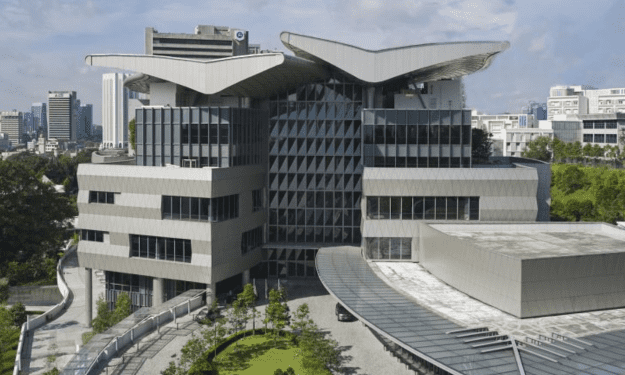
Bringing the M7 to Malaysia, Asia School of Business (ASB) offers an MBA program that stands among the most innovative and affordable among the region’s leading business schools. Based in Kuala Lumpur, a city that is one of the world’s most diverse melting pots, the school was founded in collaboration with MIT Sloan and Bank Negara Malaysia, the country’s central bank.

Students benefit from a teaching approach that Poets&Quants describes as “experiential learning on steroids”, making for a truly unusual yet insightful time. MIT Sloan’s world-renowned faculty teach 50% of the one-year MBA curriculum in KL alongside ASB faculty, and students spend a 3-week immersion at MIT Sloan in Cambridge, MA.

They can extend their learning opportunities by applying to study at MIT in the Visiting Fellows Program or apply to enroll in the nine-month STEM-designated MS in Management Studies from MIT Sloan. Academic rigor is combined with Action Learning experiences throughout Asia, including industry treks and business practicums as well as group projects and associate programs at host organizations.

“Through my Action Learning projects in Malaysia, Thailand, Germany, and Vietnam, I learned that there are different ways to run a business in companies that were sometimes American and sometimes 100 percent Thai or Vietnamese, we developed a common language to understand the problem and deliver results,” says Klara Markus, MBA Class of 2019 and now a Senior Manager at Amazon.

Of course, when applying for a full-time program that lasts for an entire year, students are making a lifestyle commitment as well as an educational one. With sun-kissed beaches, a plethora of Asian culture and cuisine, and one of the world’s oldest rainforests practically on your doorstep, there are plenty of opportunities to expand your horizons outside of the classroom too. And at less than $35,000 for an intensive 12-month MBA program, you’re getting an M7 experience with outstanding ROI.

Originally published by Poet&Quants.

“My advice to women starting their MBA journey is to first know that you are needed as thought leaders and decision-makers in all industries and across sectors.” In her ten years at the Yale School of Management, Kris Mercuri has had many conversations with women about imposter syndrome. “Imposter syndrome is real,” confirms the director of MBA admissions, recruiting and outreach.

“But we must recognize it as one of the things we can control.  Forge ahead in your pursuit of a seat at the table, or at the head of the table. You will be joining a collective effort to get us all closer to equality.” Yale SOM had an early success in the formative years of the school of management back in the 1980s, when women comprised over 50% of the MBA class.

“Meaningful leadership means that all perspectives are represented and all viewpoints heard,” says Assistant Dean Bruce DelMonico, “and making sure that women have an equal seat at the leadership table is a critical component of this vision.”

Nearly Half the Top 100 MIM Programs are Composed of 50% Women Students
Kris Mercuri, director of MBA admissions at Yale School of Management

Since then, Yale SOM has been working to return to gender parity in the MBA program, which DelMonico sees as an important aspect of fully realizing this view of management education. Progress for the leading U.S. and international MBA programs has been slow.

It was not until 2018 that USC Marshall became the first top-ranked business school to achieve gender parity in an MBA program, while Wharton made the headlines in 2021 when the incoming MBA class was the first in the program’s 140-year history to be majority female.

The picture looks more balanced at the early career stage of graduate management education. Some 49 of the top 100 Masters in Management (MiM) programs in the Financial Times ranking recorded at least 50% women in 2022, including five of the top 10.

A Wide Range of Specialized Business Master’s are Now Available

Poets&Quants will be hosting the CentreCourt Masters Festival this week, and discussing with program directors and students the wide range of specialized Masters that are now available.

Certainly, businesses need more diverse perspectives and ideas to succeed in today’s complex and competitive global economy. But still, in 2023, a common reason why fewer women return to business school for an MBA or Executive MBA is the lack of flexibility that allows them to juggle both a family and their careers.

“Women everywhere carry the lion’s share of family care. Taking time off from work to care for young children would entail slower or interrupted career trajectories,” says Kristina Rai, chief operating officer at Asia School of Business, which offers a one-year MBA program in collaboration with MIT Sloan.

“All too often the clock stops for career progression when the biological parenting clock is ticking,” she adds. “This pause in a woman’s career often has an impact on seniority, job mobility, and even their confidence.”

Women and Career Breaks
Kristina Rai, chief operating officer at Asia School of Business

Nalisha Patel, regional director for Europe at GMAC, echoes this point. “Taking time ‘out’ of their career may not be attractive for many women, and doing an executive program may just be too much.” As many women are already taking time out of their careers to have a family, it may not seem like it is an option to further their education as it involves another career break.

“The MBA remains largely a post-experiential degree,” says Bruce DelMonico at Yale SOM, “which can be less optimal timing for many women than comparable programs such as law degrees and other graduate programs.

To address this issue (among others), over 20 years ago we created a program called the Silver Scholars Program, which allows students to go directly from undergraduate to our MBA program here at Yale without any gap, which addresses this timing issue that many women face.”

There are a growing number of flexible options now available – different types of programs, varying course lengths and delivery formats available, online or hybrid study, part-time and stackable – this means that people can find something that suits their circumstances.

Flexible MBA Program Options Most Attractive to Women

“We learned from our GMAC Application Trends Survey that women’s representation in the applicant pool of flexible MBA programs, which allow students to switch between full-time and part-time status through their time in the program, is higher than any other U.S. MBA program type,” explains Patel.

This highlights that flexibility in graduate management education is key for women and something that more business schools need to prioritize if they want the gender balance of their cohorts to be more equal.

“We’re in the education sector, so we should be at the forefront of helping women traverse these dilemmas so that it does not become a binary choice of career or family,” says ASB’s Kristina Rai.

A Need for More Female Faculty and Staff
Malin Arve, vice rector for research at Norwegian School of Economics

Another way business schools can attract more women is to have a more diverse staff and faculty. “For many reasons, business is perceived as a very male subject and often prospective students and their families do not see the whole spectrum of what business really is and the broad set of opportunities it offers,” says Malin Arve, vice rector for research at Norwegian School of Economics (NHH).

“A step towards changing this perspective would be to have more females on the faculty and offer female role models. It is important to lead the way by actively showing the important role that females or other underrepresented groups play in these programs,” says Arve.

She adds, “this can be done by having female role models in the educational institutions, but also drawing upon past and current female students to create awareness of their success and place in their field of expertise.”

‘Business Schools Need to Show They Walk the Talk’

As Rebecca Loades, director of MBA programs at ESMT Berlin insists, “Business Schools simply need to show they ‘walk the talk’ and employ female faculty and women at senior levels in the business schools.”

Business schools can also think of all the little things the institution can do to make an impact. Karen Spens, President of BI Norwegian Business School says “even if you start small, think big. It’s always better to do something than nothing, even small initiatives may have a big impact on someone.”

Marlin Arve emphasizes this point, “I do not think that there is one measure that alone can change the world. Changes come from the sum of all the small things that we do.”

There are many small changes that schools can make, and Nalisha Patel points to a range of options that include, “showcasing more females in their class profiles, adjusting their targeting when looking for applicants, partnering with bodies to support finance, supporting student-led clubs and events, offering more flexibility in programs, and providing places for mothers to breastfeed.”

Rebecca Loades adds that it is important to “recognize that business schools are not alone. Employers want to help their female employees develop so that they can reap the benefits of increased diversity at senior levels. Working together, business schools and employers can develop programs to support female career progression.”

Value in Starting the Journey, Regardless of Whether You Go to B-School
Rebecca Loades of ESMT Berlin

Even if you’re not 100% sure that business school is right for you, GMAC’s Nalisha Patel insists there are many benefits from even just applying. “It needn’t be challenging and you don’t have to commit to anything. You could find a whole host of benefits on the journey of exploring business schools – the connections, knowledge, and information about new careers and sectors.

But most of all, you’ll find confidence in the information out there encouraging you to do it, and you’ll find people that are rooting for you to succeed.” Rebecca Loades agrees. “Invest in yourself, know you can do it, and prepare for personal and professional transformation. And if you’re not sure now is the time, then consider joining women’s networks like the Forte Foundation, or the Professional Women’s Network. Reach out to women who inspire you, learn from them.”

Yale SOM is a founding member of the Forte Foundation and has partnered with organizations such as 21 Broads and Womensphere over the years to encourage more women to pursue graduate management education. The school also engages in recruiting efforts at Seven Sisters schools and other academic institutions, partnering with colleagues at Harvard, Wharton, and elsewhere, to increase awareness among aspiring MBA students.

Bruce DelMonico hopes these efforts and continued experiments with program portfolio and educational delivery innovation will provide inspiration and meaningful flexibility for women who may not otherwise have considered graduate management education to pursue an MBA degree.

“The industry continues to move toward gender parity in the MBA student body, and I feel that it remains a matter of when rather than if. Some schools have crossed that threshold intermittently, and I think more schools will do that in the coming years, and on a more consistent basis.”

Originally published by Poets&Quants.

There’s no denying that international education is critical in widening opportunities for all. Research shows that international education helps individuals achieve higher economic mobility and better job prospects. That’s not to distract from the many benefits education brings to the individual — widening their perspectives and introducing them to new ways of problem-solving.

Such a mindset is incredibly important for anyone wishing to progress in their lives and career — but it is especially so for Malaysian women. While the number of educated women in Malaysia is increasing, just as many are held back. Reasons include family commitments, personal responsibilities, and a lack of exposure. For educated women like Kristina Rai, this was the most significant lesson she learned from attending an international university.

“Education opens you to, if not like-minded people, then people who value learning,” Rai shares. The desire to constantly grow and learn guided Rai through more than 30 years of her career. As a scholar of Malaysia’s Central Bank (or Bank Negara, as it’s referred to locally), she’s gone from strategy to international relations — seeking new experiences to increase her knowledge and expertise in different areas.

It’s led her where she is today: the COO of Asia School of Business, an innovative institution working with the MIT Sloan School of Management to deliver forward-thinking MBA and leadership programmes. We speak to her about her journey as a Malaysian woman in leadership — and how education was the central driving force in helping her achieve her aspirations.

Rai now helms the Asia School of Business, which aims to provide programmes to elevate and empower men and women in Asia. Source: Asia School of Business

The importance of being an educated woman

Growing up, Rai was always a focused student. She got her As and aced all her exams. More than that, she was influenced by her father’s words. “My dad used to tell me: you’re a girl, so you have to study hard because if your marriage is not great, you can leave the man,” she recalls. “When I look back, it was a practical piece of advice,” the Malaysian recalls.

That is a reality for many women around the world. It’s common knowledge that educating girls is the most effective way to end child marriage. Other research shows that educated women tend to maintain stable marriages and leave violent ones. “My mother was a homemaker,” she explains. “And all her friends were homemakers as well.

The mantra from her was that when you don’t have an education, you’re stuck, you have no choice but to stay in a bad marriage. That was the norm back then — you would hear more about how women endured.” It was a powerful message that stuck with her for years. Upon graduating from school, Rai went on to win a scholarship from Bank Negara. They sent her to Universiti Malaya — Malaysia’s oldest and highest-ranking higher education body — and the University of Manchester for her master’s.

Since then, she carved out a long and impressive career for herself — one that could not have been possible without her education. “I think education gives you a sense of self-sustainability,” she enthuses. “I got a job on my own merit. I could get my own house, a loan for my own car — all my cars, I bought myself. The person I could choose in my life was never determined by how much they earned. It made the partnership more balanced.”

An education can help empower women to choose what she wants rather than what she needs. Source: Asia School of Business

Career or family — why do women have to choose?

Educated women get a reputation for being too career-focused — something which Rai believes is untrue. She noticed it herself when the time came for her to want to start a family. A survey in 2019 found that one in eight companies was reluctant to hire women who could become pregnant. The same survey revealed that one in seven companies take this and any existing children a woman might have into account when awarding promotions.

As such, educated women are faced with a seemingly impossible choice: sacrifice their career or family. “For women, I think that having a young child really takes a lot out of us because we have this guilt muscle in us,” Rai says. “I wasn’t there for my son’s first birthday. It didn’t really matter to him — of course, he couldn’t remember my absence. But I still felt a lot of guilt, like it was something I should have done. And that’s one thing I learned — that you should know what’s important in your life.”

Fortunately, Bank Negara never gave her the ultimatum of choosing — and gave her two years off work. “I had people who said that it would affect my career and my progression,” she recalls. “But the fact of the matter was that I wanted to spend time with my family. When I looked back at it, nothing was severely impacted. I’m very lucky to have had kind and compassionate bosses in the past — but I do think this is something society is moving away from, and I can’t understand why we do that.”

At Asia School of Business, no one is held back because of their gender. Source: Asia School of Business

Building a programme that elevates women

As evidenced by Rai, educated women are just as capable as men of carving out successful careers for themselves — sometimes even more so. In her role as COO at Asia School of Business, she’s working on creating business programmes that will benefit both men and women in their careers and as individuals. More than that, she hopes to instil a growth mindset in Malaysians — something she believes is gained through international exposure.

“The business teaching here gives students incredible exposure to another side of the world: the US,” shares the COO of Asia School of Business. “In an Asian setting, we are not as encouraged to do so. In our culture, it’s more common to give deference to someone because of their position. But with us, we have MIT faculty who come to this side of the world to teach. In their classes, everyone is encouraged to ask questions and give their opinions.”

Indeed, Malaysia scores highest on the Power Distance Index, which indicates the level of deference a society has towards authority figures. The results show that Malaysians are simply not brought up to defy people in positions of authority — by the simple fact that it is considered disrespectful. For women, who are already at a disadvantage for their gender, this can be even more harmful.

In this, Rai hopes that programmes like the ones offered by Asia School of Business can help change that tendency. “It’s important that our students — especially women — are exposed to environments where they are encouraged to question and give their opinions on things,” Rai explains. “This helps them build confidence. Because women take home so much, and society still expects us to take so much — so it’s important that we learn to stand our ground.”

Today, Rai is not the best homemaker. She isn’t a traditional wife and never really spent enough time learning to cook when her mother invited her. “In the end, I don’t cook great,” she says. “But I’m not stuck — and that’s very liberating.”

Originally published by Study International.

Dr Joseph Cherian, Practice Professor of Finance at the Asia School of Business (ASB) in collaboration with MIT Sloan, has recently returned to Malaysia after many decades living overseas and held the prior position of Professor of Finance at the National University of Singapore (NUS) Business School, as well as managing director, global head, and chief investment officer in the quantitative strategies group of Credit Suisse Alternative Investments in New York.

He sees opportunities abound for Malaysia’s growth. Having worked on a wide range of subject matters, from his research on Islamic Sukuk bonds in Malaysia to his advisory role on Singapore’s national pension plan, Dr Joseph Cherian now sees several areas in Malaysia’s economy that can be leveraged and elevated.

BusinessToday just had an interview with Dr Joseph Cherian to get his views on issues like net-zero, sukuk and pensions.

BT: How is Malaysia progressing towards achieving net-zero? How far is Malaysia behind its goals?

Dr Cherian: First some definitions. Achieving net zero – which means no net greenhouse gas emissions, be it carbon dioxide, methane, nitrous oxide or fluorinated gases – would have a big impact on climate change. According to the UN, to cap global warming to 1.5°C of the pre-industrial era temperature level, greenhouse gas emissions must come down by 45% by 2030 and attain net zero by the year 2050.

Malaysia is one of the 70 plus countries that has signed on to that target. The Malaysian sectors covered under net zero are energy, industrial processes and product use, waste, agriculture, and land use, land-use change and forestry (LULUCF). The commitment from the government appears to be robust. Various government linked entities, such as the EPF, Khazanah, TNB, Petronas and Sarawak Energy, appear to be equally committed to net zero.

To understand our progress, however, we need to scientifically track and measure the progress against targets. Example, the Climate Action Tracker (CAT) tracks and rates 39 countries in this manner by using scientific and quantitative methods & models. Unfortunately, while Singapore is included in the CAT, Malaysia isn’t.

BT: How to finance Malaysia’s goals of achieving net-zero?

Dr Cherian: Funding net zero is not cheap. I wrote an entire article on it:Funding net zero – CLIMATE CHANGE – Magazine | Asia Asset Management (by Joseph Cherian)

While capital market instruments (such as carbon credits & offsets) and government levies (such as carbon taxes) can to a certain extent help achieve net zero goals, all countries, including Malaysia, will need huge amounts of financing to transform their respective national
economy towards net zero compliance by 2050.To put things in perspective, it is estimated that the world would need to spend approximately US$9.2 trillion annually on physical assets in energy and land use systems over the next 27 years (2023 – 2050).

If we use a back-of-the-envelope calculation, where it is estimated that the net zero cost is, on average, about 7.5% of GDP, that translates to about US$30 billion in annual net zero costs to Malaysia!

In any case, to raise even part of the requisite amount of net zero financing, one would need all the multilateral development banks’ balance sheets plus various capital market instruments, such as Green Finance, Green Bonds & Loans, Blended Finance, Sukuk, and so on.

What should the government and private sector do to win the global recognition in the sukuk industry?

I view Sukuk as Green Bonds. It is, by construction, totally aligned with the ESG principles. And we know Sukuk predates the coining of ESG. The rage now is ESG-based financing. Why not popularize Sukuk?

Malaysia is the world’s pre-eminent leader in Sukuk issuance, trading, and liquidity. It can use that leadership to nudge the world to recognize that Sukuk financing is a viable net zero financing instrument, which is green by construction, like Green Bonds, Blended Finance, etc. The world needs all the help it can get, and Sukuk lends itself naturally as a green finance solution. Good for the world, and especially good for improving Malaysia’s status as a global financial hub in this region. Just as the Chicago Board of Trade (CBOT) brought derivatives trading into the mainstream, Malaysia can help universalize and popularize Sukuk.

BT: The future of pensions and social protection in Malaysia. Around Dec 2022, there was a global ranking on the pensions and social protection. In Asia, Malaysia took the spot behind Singapore and Hong Kong. What should be done for Malaysian to secure a better pension system?

Malaysia has one of the best run pension systems in Asia. On the investments side, the EPF follows a prudent asset allocation scheme that targets long-term, risk-adjusted returns, which can also meet its liabilities (viz. member withdrawals).

That said, early withdrawals have become the scourge to pension adequacy in many countries, including Malaysia. The pandemic compounded the problem, especially in Malaysia, where close to US$35bn was withdrawn in aggregate (early!) due to members trying to meet pandemic-related exigencies and expenses.

So, while those with adequate savings can continue to rely on the EPF to protect and invest their savings until the point of retirement – where I hope a cost-efficient life annuity will be automatically made available within the EPF for members who want it – much still needs to be done for the members who have little left in the EPF. These folks are also probably in the B40 income group. An alternative subsistence (or living wage) pension scheme needs to be designed for them so that no one in Malaysia is left behind or falls between the cracks in their
retirement years.

The Malaysian Institute of Economic Research (MIER) issued a very nice report on this recently titled, “Retirement Fund Reform: The Future of Pensions and Social Protection in Malaysia (September 2022)”:

Originally published by Business Today.

Micro, small and medium enterprises (MSMEs) are the backbone of most developing countries. Hence why many countries have also developed initiatives to encourage entrepreneurship to grow MSMEs to strengthen the economy. But are the initiatives enough to encourage entrepreneurship? What are the actual reasons for Malaysians to become entrepreneurs? Dr Melati Nungsari, Assistant Professor of Economics at the Asia School of Business, explains the factors that can drive a sole entrepreneurial idea or intent into real action.

Listen to the full interview below.

Originally published by BFM.