Many countries that have been recognized for the effectiveness of their COVID-19 response, including New Zealand, Denmark, Finland, Germany, Slovakia, Ethiopia and more, are led by female heads of government. Yet Liu Zhenmin, chief of the United Nation’s Department of Economic and Social Affairs (DESA) weighed in on the brutal truth. “Women are far from having an equal voice to men.”
Women are Heads of State and Government in only 20 countries worldwide (UN). And when it comes to the scientific industry, less than 30% of the world’s researchers are women in almost every region in the world. Despite the number of Fortune 500 companies led by women reaching an all-time high in 2020, that number still remains very small – 8%.
Across the Atlantic, the trend is similar – 7.9% of CEOs in the largest publicly listed companies in the European Union in 2020 are women. So, although progress is happening across the globe, much remains to be done to attain gender parity and complete inclusivity. This International Women’s Day (IWD), the theme is #ChooseToChallenge – a message that goes across the gender barrier to urge everyone to challenge the systemic inequality faced by women around the world.
In a nutshell, #ChoosetoChallenge is a notion that everyone plays their own unique role to create an inclusive world shaped for generations to come.
ASB’s Efforts on the Forefront of Gender Equality
Since Day 1 at ASB, we have challenged convention and chartered paths no other school has gone before. The 2021 theme for IWD, #choosetochallenge, resonates strongly with our ethos, as well as our number one value of Respect for People. This value means we don’t treat people as I want to be treated, but treat everyone as they wish to be treated.
In embracing strength in diversity in an ever-increasing connected world, we strive to create an environment where everyone feels that they are heard and valued as individuals. This includes providing a representative, inclusive, and supportive ecosystem for our women faculty, staff and students.
“As a woman, I haven’t had to think about the role my gender plays on the impact I am able to have within the organization,” says Emily Preiss, Senior Director of Admissions.
“Not only have I felt supported and empowered by the amazing women in the organization, but the men of ASB have continuously had my back, and they’ve lifted me up and helped me see my potential,” adds Emily.
Juliana Roth, Deputy Director of the MBA for Working Professionals, echoes Emily’s sentiments:
“Our Dean, Dr. Charles Fine, has made such a significant effort to put so many women in leadership positions. Over the last three years at ASB, there are many times when my male colleagues have reached out and supported me along the way, such as Dr. Sean O. Ferguson, Associate Dean, who went out of his way to open the door for me to join ASB, and Jefri Zaini, Director of the Full-Time MBA Program.
Both of them have ensured I have visibility and a voice across the organization, through Dr. Sean inviting me to larger meetings or Jefri asking me to share my opinion when we are discussing issues that impact both programs. These seemingly small gestures make a significant difference, and are appreciated.”
Student diversity
43% of the latest cohort of MBA students (Class of 2022) are women, well over the global MBA average of 38% (Association of MBAs). On average, across our full-time MBA cohorts (5 classes to date since 2016), the percentage of female students is 41.8%.
For the two MBA cohorts of full-time Working Professionals we’ve had, the average percentage of female students is 32%.
“ASB has provided me an active and safe environment to start having fearless conversations about gender equality during classes and among our community,” says Diana Maria Ayala Gomez, MBA Candidate from the Class of 2021, who hails from Columbia.
“These conversations have increased our awareness of the challenges that gender inequality represents and how to tackle them as transformative leaders.”
Staff and faculty diversity
At ASB, 59% of staff are women. Meanwhile, ASB’s female faculty percentage stands at 33%, which compares favorably to Financial Times 2021 Global MBA Top 50 schools (25.9%) and Asian schools in the Financial Times 2021 Global MBA Top 100 (25.5%).
“I love ASB’s mantra of ‘Extraordinary and Unconventional’,” says Anella Munro, Professor of Economics. “I feel like it values us for what we excel at, and gives us permission to not have to conform to a specific norm and to embrace diversity.”
Among the faculty, women are spearheading community-impacting initiatives, such as the Rapid Youth Success Entrepreneurship (RYSE) program, an initiative sponsored by Citi Foundation, that has trained hundreds of at-risk youth in entrepreneurship skills, with the aim of reducing youth unemployment and empowering them toward upward mobility. RYSE is initiated and led by Melati Nungsari, Assistant Professor of Economics and Research Affiliate.
Leadership diversity
Before ASB even became reality, the idea of a dynamic school in the heart of Southeast Asia, designed to create transformative and principled leaders, was first envisioned by Tan Sri Zeti Akhtar Aziz, who was not only the first female governor of Malaysia’s central bank, but the first woman in Asia to chair a central bank.
Well-respected among her peers, she has been called “one of the most influential central bank governors in Asia over the last 25 years”, according to Ravi Menon, managing director of the Monetary Authority of Singapore.
With the school’s inception led by Tan Sri Zeti, strong female leadership is also seen at the top very ranks at ASB. The school is led by effective and innovative female leaders across the board, with 69% of top leadership roles filled by women, such as:
Abigail Tay, Deputy Dean and Faculty Chair, an applied microeconomist who is also an Assistant Professor of Economics at ASB, and an International Faculty Fellow at MIT, who holds a PhD in Economics from Stanford University and focuses her research on industrial organization and health economics.
Emily Preiss, Senior Director of Admissions, who has had a successful career in international executive recruiting across the US and Asia, and has since led ASB’s admissions process since the very first MBA intake – while finding the time to co-found Clubaloha, a popular spin studio in Kuala Lumpur, along the way.
Gillian Ng, Senior Director of Corporate Governance at the Iclif Executive Education Center, who leads a team that has broken new ground in setting standards for boards across Malaysia, developing two corporate governance programs that have since become mandated for Directors of financial institutions and directors of public-listed companies, as well as developing a Shariah Leaders Education Program for Shariah committee members of Islamic financial institutions.
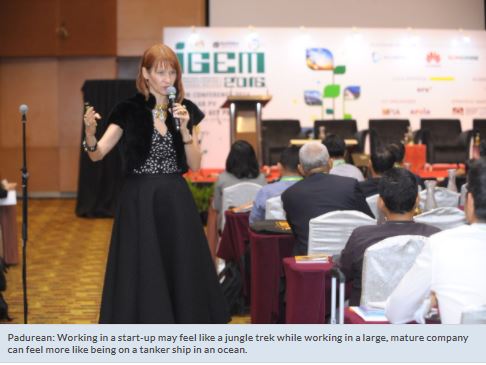
Loredana Padurean, Associate Dean and Faculty Director for Action Learning, who has led student teams to successfully complete over 300 projects (5 projects per student across the MBA program) in 26 countries for over 150 corporate, government, NGO, and startup hosts.
Rhoda Yap, Chief Operating Officer (COO), who left a career in consulting at McKinsey & Company to pursue her passion of talent management and career development, and now leads the Career Development, Human Resources, and Operations, which includes Campus & Administrative Services for a brand-new campus totaling approximately 900,000 square feet (approximately the size of two Tescos).
Dr. Thangamany Siniah, Chief Financial Officer, who brings with her vast experience spanning thirty years in Malaysia’s central bank and the Iclif Leadership and Governance Centre (Iclif), and was responsible for facilitating the merger between ASB and Iclif.
Zainon Mustaffa, Registrar, who spent over two decades serving with Malaysia’s education ministries and working to advance Malaysian universities on an international scale, and has played a crucial role in ensuring the successful registration of ASB’s university license with the Ministry of Higher Education through a laborious and extensive process.
Zalina Jamaluddin, Chief Business Development Officer and Secretary to the Board of Governors at ASB, who is the main driving force behind external partnerships and corporate sponsorships that have allowed many women the financial aid to advance their careers.
Woon Hooi Shyen, Head of Internal Quality Assurance, who was seconded to ASB upon its inception as Chief Financial Officer, after over 2 decades of serving at Malaysia’s central bank (Bank Negara Malaysia), and who both set up the finance department at ASB before moving on to set up its Internal QA unit, establishing processes and policies to uphold the Code of Practice for Programme Accreditation (COPPA), as recommended by the Malaysian Accreditation Agency (MQA).
Aiming for Inclusivity at Every Level
ASB continues to uphold gender equity through its programs, projects and partnerships with external entities. Lean In Malaysia, for example, works closely with ASB to drive female participation in corporate leadership – via scholarships offered by ASB to extend support to deserving women so they can advance in the workforce. As of 2020, ASB joined hands with 30% Club Malaysia, a local chapter of a global movement to promote diversity, equity and inclusion (DE&I) especially in board and C-suite roles.
This partnership was spearheaded by Zalina Jamaluddin, Chief Business Development Officer, and she offers the following advice for women seeking to advance in leadership positions:
“Build genuine connections regardless of your position. Identify your strengths and transferable skills, always be curious, build a support system, get a coach, line up your own board of advisors and always be truthful to yourself.”
On the student front, ASB also champions student-led DEI efforts, through clubs themed around global diversity such as the Women’s Association that organizes important discussions to foster inclusivity and diversity.
“ASB has empowered me since day 1 by having female role models in the school, a mentoring program, and designing teams that encourage diversity,” says Ilham Bazi, an MBA student from the Class of 2021, who has a background in finance and hails from Morocco. “Having our female team recognized as the winners of Microsoft’s region-wide hackathon further underscores this!”
Rewriting the Future
As we #ChoosetoChallenge – it’s important to remember that the success of women is not dependent on the fall of men.
“I feel society as a whole, and companies and government in particular would do well to embody the saying ‘It takes a village to raise a child’. Many men I have spoken to wish to be able to spend more time in their children’s earliest days and months,” says Sangeeta Menon Matu, Deputy Director for Action Learning.
“The few men in Malaysia who are able to realize this goal at present are those who are business owners themselves. For those of us working in the corporate sector, I encourage persons in power to create a discussion and vision for shared parental leave. I believe the sooner we speak up about parental leave models and trial them, the sooner we can realize them, and the sooner our children can benefit.”
COO Rhoda Yap adds on to this: “One of the areas where I feel more needs to be done is promoting understanding of the role of women and men in society. Ultimately, we are not created the same, but complementary to each other. Leveraging diversity also means embracing the differences.”
“For instance, the ability for a female professional to raise a family as wives and mothers should be at the forefront of employers’ minds. Many are worried about what will happen when their staff go on maternity leave, but the framing should be: if you have women of child-bearing age in your workforce, you should anticipate that they will take maternity leave and not penalize them for that.
With technology and trust, work can be flexible and accommodative. Personally, I feel like I have done something right when members in my team get pregnant and take parental leave – both mothers and fathers alike,” adds Rhoda. Rather than the journey for equality being about the battle of the sexes, we recognize that all individuals play an important role in building a balanced and fair world.
Every International Women’s Day highlights how gender balance is not solely a woman’s issue, but an economic one. Women are still more likely to be unemployed than men and take up the bulk of unpaid care work, which is essential to the functioning of the economy, but often goes uncounted and unrecognized. It is estimated that if unpaid work were assigned a monetary value, it would constitute between 10 per cent and 39 per cent of GDP, according to the UN Research Institute for Social Development.
Increased educational attainment accounts for about 50 per cent of the economic growth in OECD countries over the past 50 years. But there is still a gap in labor market participation. Increasing female employment rates in OECD countries to match those of Sweden could potentially boost GDP by over USD6 trillion, according to PwC.
“Through my experience of researching and championing women in non-academic STEM careers and technical roles in industry, I’ve learned that a key turning point for women is when a young lady at university undertaking a STEM degree decides in her penultimate year what kind of internship she will take,” says Sangeeta Menon Matu, Deputy Director of Action Learning and former Head of Partnerships for Lean In Malaysia.
“Will it be a technical, field-based, off-shore, on-plant one – or an office-based one? That decision has a knock-on effect, impacting her likelihood of moving back into the field, and subsequently up the ranks, and is the key reason why we see very few women in technical roles today,” she adds.
We know there is still much to be done, and diversity at ASB extends beyond gender diversity alone. It includes cultural, religious, and racial diversity, as well as inclusion for people with disabilities. Our hope is that through creating a community that fosters the exchange of dialogue and diverse viewpoints, we can create a more understanding, equitable, and inclusive world for all of us.
This community does not just include our students, staff, and faculty, but also our many corporate and strategic partners and stakeholders as well. We are inspired by the many leading women we work with in the wider ecosystems we are proud to contribute to, and we hope to continue working together to advance gender parity, diversity, and inclusion in the region and beyond.
If you’re interested in joining a community that champions inclusivity and diversity – learn more about ASB’s innovative MBA, Executive Education, and Master of Central Banking programs here.