Asia School of Business

Global Inquiry, Local Heart

该调查由Asia School of Business研究员与PwC Malaysia于2023年合作进行,涵盖来自15家企业的员工。结果显示,受访员工对自身雇主的信任度(4.12分/5分)高于对媒体(3.76)与政府(3.75)的整体信任程度,突显企业在建立社会信任体系中扮演关键桥梁角色。

垂直信任差异大 可作为企业独特优势

调查进一步分析指出,不同企业在“垂直信任”(vertical trust)上的差异明显。信任度高的企业,其员工普遍认为雇主言出必行、履行社会责任,也较少担忧在毫无防备的情况下遭受剥削。相比之下,“平行信任”(如同事之间的合作与互信)在各家企业之间差距不大。

这一发现意味着,垂直信任虽难建立,却能成为企业在吸引与留住人才上的关键差异化优势。

建立信任 公平制度是关键

根据组织行为理论,要让员工愿意信任拥有权力的上位者,必须先协助其克服“基础社会两难”(fundamental social dilemma)——也就是在权力不对等的关系中,信任意味着让自己暴露在可能被剥削的风险下。

研究指出,员工对企业是否具备“公平制度”的预期,是建立垂直信任的核心。其中包括:

  • 分配正义:合理的薪酬与奖赏制度
  • 程序正义:透明公正的决策流程
  • 人际互动正义:尊重、同理且无偏见的沟通文化
  • 信息正义:信息对称、不分职位流通
  • 多元接纳文化:种族与身份认同的包容性

这五大面向可有效降低员工对上位者的戒心,从而打下信任基础。

员工信任雇主 表现投入意愿倍增

报告也揭示,垂直信任与员工的积极行为表现呈现显著正相关。与不信任雇主的员工相比,信任雇主的员工在多项指标上表现更为积极:

  • 工作满意度高出 11 倍
  • 对工作保障的信心高出 5 倍
  • 相信付出会得到合理回报的比例高出 13 倍
  • 更积极进修与成长的意愿高出 6 倍
  • 采纳AI新科技的意愿高出 8 倍
  • 支持企业ESG政策的行为高出 7 倍

研究团队指出,当雇主与员工之间的信任被建立,不仅能够改善组织内部氛围,还能激发创新力、加速数位转型与永续发展,成为企业长期竞争力的重要资产。

结语:信任,是企业无形却关键的资产

在马来西亚多元文化和不断变化的政经环境下,企业能否成为员工值得信赖的依靠,将决定其未来在市场中的立足与扩张。垂直信任不仅关乎企业文化,更是企业长远发展的核心竞争力。

Originally published by Finsource Media.

How can leaders negotiate effectively in high-stakes, politically charged environments? Can negotiation frameworks help leaders—whether in politics, business, or diplomacy—navigate power struggles, build trust, and turn conflict into collaboration? On this episode of #ConsiderThis Melisa Idris speaks with Dr Bruno Verdini, Visiting Professor at the Asia School of Business and author of the book ‘Winning Together’.

Watch here.
Originally published by Astro AWANI.

ARE Filipinos financially ready to retire? Not so if pension schemes remain siloed, the Deputy CEO of the Asia School of Business (ASB) told the BusinessMirror.

Joseph Cherian, also a professor of Finance at ASB, pointed out the differences between the Philippines and three of its neighbors in Southeast Asia: Hong Kong, Malaysia and Singapore.

“These three countries have a single mandatory national social security savings scheme, with smaller supplementary schemes in some cases. All are defined contribution plans,” Cherian told the BusinessMirror. “In contrast, the Philippines has multiple pension and retirement schemes for different population segments; some mandatory, others optional.”

According to the ASB executive, “it would be wise” for Manila “to consolidate these various schemes and ensure the sustainability of the defined benefit plans.”

“Otherwise, transitioning them to a national defined contribution plan may be a better alternative,” Cherian added.

The Philippines has two pension funds: the Social Security System (SSS) and the Government Service Insurance System (GSIS). The country also has several provident funds. The SSS has its Workers’ Investment and Savings Program (WISP) while the GSIS maintains its own as allowed by Republic Act 8291.

Each government agency also has its own PF after then-President Gloria Arroyo issued Executive Order 641 in 2007 authorizing the establishment and administration of PFs in the government.

According to Cherian, he doubts these systems are exempted from the sustainability challenges that most pension plans worldwide face.

He cited that the 2023 SSS annual report revealed that the agency faced severe financial challenges.

On a consolidated basis, the SSS was significantly underfunded, with liabilities amounting to $150.53 billion—far exceeding its assets of just $15.32 billion. Additionally, the system reported a substantial operating loss of $7.66 billion for the year, Cherian said.

Further highlighting these concerns, the Philippines’s SSS received a “D” rating in the 2024 Mercer CFA Institute Global Pension Index, ranking poorly among global pension systems, he added. This low score (45.8) was primarily driven by weak “Integrity” (27.7) and “Adequacy” (41.2) ratings, Cherian said.

The index puts the Philippines below Poland’s and Peru’s in the overall value at 56.8 and 54.7, respectively.

According to the Mercer Index report, the Philippine index value increased slightly from 45.2 in 2023 to 45.8 in 2024, primarily due to the changes in the integrity sub-index. The changes recognized “the growing importance of cyber risk in financial services and the associated need to maintain public confidence in this industry.”

Meanwhile, Cherian believes “it is highly unlikely that the current schemes’ payouts in the Philippines will keep pace with the rising cost of living.”

“To address this, several measures are needed: raising the retirement age to extend working years, encouraging higher savings, and introducing home monetization options such as reverse mortgages,” he told the BusinessMirror. “Additionally, affordable, inflation-indexed life annuities should be made accessible to citizens upon retirement.”

For Cherian, ensuring that income is adjusted for inflation to maintain purchasing power is one of three elements that a citizen can tick off to say he or she is financially ready to retire.

The other two are: accumulating sufficient savings before retirement that can be converted into a reliable income stream to cover living expenses; and, securing access to financial products that provide a steady income for life.

Many workers, nonetheless, remain struggling to save enough for retirement.

According to Cherian, the Philippines should look to its neighboring Asean states that “are exploring several strategies to strengthen retirement security.”

He said these include providing a basic, means-tested safety-net pension for those in need, minimizing leakage from retirement savings by eliminating cash-out options during the accumulation phase, and introducing affordable home monetization schemes dedicated to funding retirement income.

“Additionally, measures such as government top-ups, special matching-dollar programs, and integrating a healthcare component into the retirement system are being considered,” Cherian said.

Originally published by BusinessMirror.

WITH a storm brewing on the macro front due to US President Donald Trump’s tariffs and trade restrictions, the Employees Provident Fund (EPF) will continue to seek shelter in the domestic market.  This raises questions whether the fund can match or beat the latest dividend returns of 6.3%, in 2025. It is the highest payout since 2017.  The fund appears confident of its strategic asset allocation (SAA).

“The EPF will continue to be guided by its SAA, which targets optimal returns within our risk tolerance as a long-term retirement fund,” it says in a reply to StarBiz 7.  “The SAA is reviewed periodically to take into account the latest capital market assumptions and the asset-liability profile of the EPF, which includes the growing asset size,” it adds.

Under the present SAA, the provident fund has 46% of its assets in fixed income and 44% in equities. The 44% in equities includes 4% in private equity. In addition to these investments, it has 6% in real estate and infrastructure, as well as 4% in money market investments. There is merit to the domestic angle in 2025, according to fund managers.

“The EPF’s strategic allocation of 1:2 offshore:domestic may work well under the general market outlook. Given a relatively good 2024, a tactical allocation in 2025 for risk management may be a wise move. This is especially so with market uncertainty under Trump 2.0.

Read the full article HERE.
Originally published by The Star.

As sovereign wealth funds (SWFs) manage over US$11 trillion in global assets, governance and transparency are essential safeguards against malfeasance and are crucial for building and maintaining public trust, Asia School of Business Senior Business Development Advisor for Corporate and Sustainability Governance Elsa Satkunasingam said.

She highlighted that SWFs play a vital role in ensuring economic stability and wealth creation by making strategic investments that safeguard prosperity for both current and future generations.

“As such, transparent and accountable governance structures are necessary to protect against financial mismanagement and political interference.

“Additionally, clear governance processes help ensure SWFs fulfil their responsibility to manage national wealth for current and future generations effectively,” Elsa said in an exclusive email interview with BusinessToday while pointing out that public confidence hinges on the professionalism and independence of SWF management.

Commenting on the launch of Sarawak Sovereign Wealth Future Fund (SSWFF), Elsa said protective measures such as enacting laws to shield the Board of Guardians and senior management from coercion, holding them accountable if they mishandle funds and launching public awareness initiatives to keep leadership accountable to the fund’s objectives can help SSWFF to maintain its independence and protect against political pressure.

In terms of challenges, Elsa shared that SWFs face the challenge of balancing domestic investments with international diversification.

“Diversification enhances portfolio returns and mitigates domestic risks, but prioritising socioeconomic development through domestic investment is also critical.

“For this, Khazanah Nasional Bhd and Temasek Holdings Ltd balance investments for financial returns with contributions to socioeconomic development by operating across domestic and international markets to foster economic growth while maintaining independence, accountability, and adherence to their investment objectives,” Elsa said, adding that SWFs can leverage emerging technologies like artificial intelligence (AI) and blockchain to enhance transparency and improve investment decision-making in 2025.

“AI enables investors to process large, less structured and complex datasets, and provide insights that previously took much longer to process.

“At the same time, it also helps SWFs to detect emerging trends quickly and it also increases transparency as conflicts of interest, or environmental, social, and governance tracking in their investment portfolios can be identified,” she said.

Originally published by Business Today.


Guest: Dr Elsa Satkunasingam, Governance Specialist, Asia School of Business

The role of independent directors is under the spotlight as expectations rise and corporate governance standards tighten. How they adapt will define the future of business leadership. Philip See speaks to Dr Elsa Satkunasingam, Governance Specialist at Asia School of Business on the shifting dynamics of board leadership.

Listen to the full interview below.

Originally published by BFM.

Guest: Pieter E. Stek, Senior Lecturer, Asia School of Business

China’s top economic planning agency said on Sunday it was taking steps to scale back subsidies for renewable energy (RE) projects after a boom in solar and wind power installations. This announcement came after China broke its own records for new solar installations in 2024, and meeting targets that were meant for 2030. Pieter E. Stek, Senior Lecturer at the Asia School of Business explains what this pullback in subsidies for the Chinese RE sector means for industry players and global supply chains.

Listen to the full interview below.

Originally published by BFM.

Guest: Dr Elsa Satkunasingam, Senior Business Development Advisor for Corporate and Sustainability Governance, Asia School of Business

President Donald Trump has signed an executive order to set up a US sovereign wealth fund within the next year. What could this look like and does the US need one? We discuss what makes an effective sovereign wealth fund with Dr Elsa Satkunasingam of the Asia School of Business.

Listen to the full interview below.

Originally published by BFM.

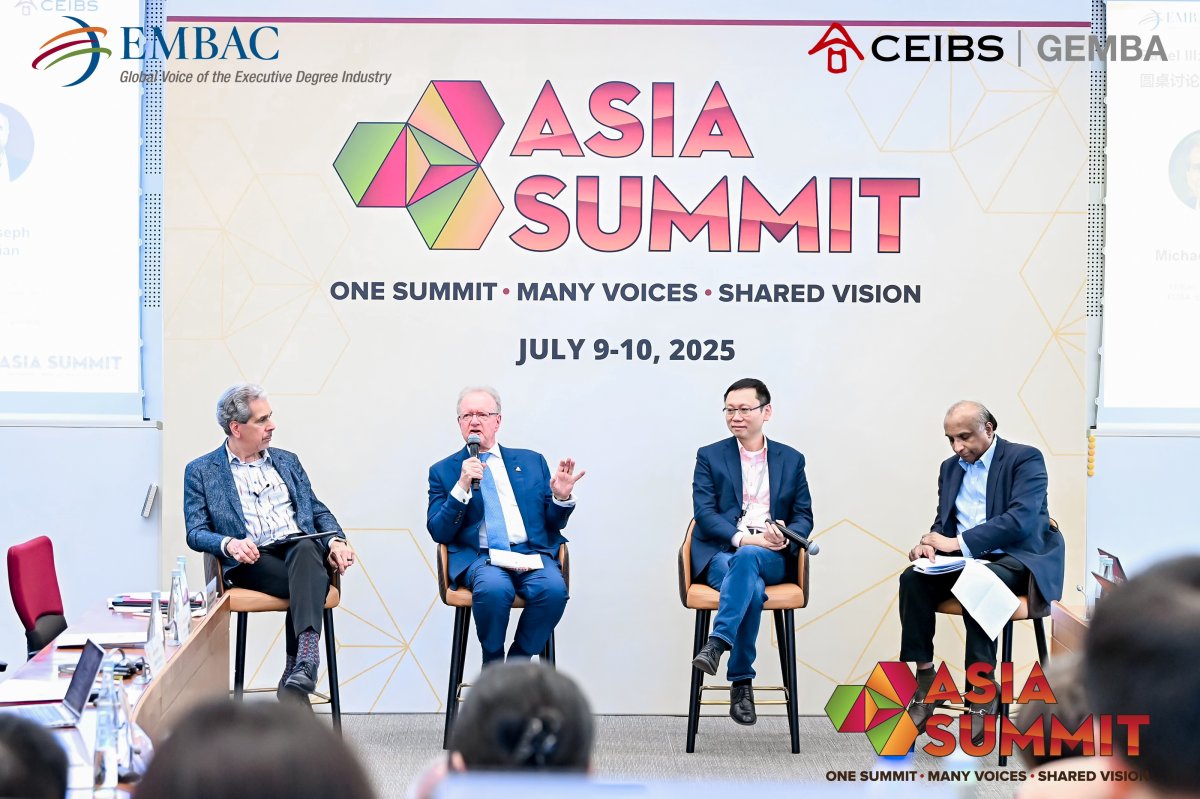
The EPF recently introduced the Retirement Income Adequacy Framework, a three-tiered savings benchmark—basic, adequate, and enhanced—meant to be used as a reference to maintain different levels of financial security post-retirement. Is this framework enough to ensure financial security in old age? On this episode of #ConsiderThis Melisa Idris speaks with Professor Joseph Cherian, Deputy CEO and Practice Professor of Finance, at the Asia School of Business.

Originally published by Astro AWANI.

By Joseph Cherian

So why should Malaysia’s tertiary education system be any different from the more developed world’s? It, too, should be embedded with flexibility. Based on the examples provided below, without delving into financial mathematics, one’s educational experience and value would be enhanced far more than a system without such flexibility. In economics, we refer to this as being on the Pareto efficiency frontier, where resources and opportunities are allocated most efficiently.

Flexibility holds intrinsic value in various aspects of life — careers, investment plans and policymaking. A key reason for this is the uncertainty that surrounds future outcomes. Whether it’s predicting the trajectory of financial markets, the global economy, the exchange rate of the Malaysian ringgit, or even getting into a car accident, our ability to foresee the future is inherently limited.

This unpredictability is evident in the changing demands of the workforce. According to the World Economic Forum, 44% of workers’ core skills will need to change by 2027 due to advances in technology and automation. Meanwhile, the global e-learning market is projected to grow to US$842.64 billion by 2030, highlighting the increasing reliance on flexible, technology-enabled education solutions.

Consider the current unpredictability of global events and their implications for education. In today’s rapidly changing world, traditional systems may no longer suffice. For instance, educational models that rigidly define paths without accommodating individual needs or interests risk leaving many behind.

This is where the concept of flexibility becomes critical in education. Allowing learners to tailor their journeys based on personal or professional goals, or even unforeseen circumstances, enhances the overall value of education. Gap years, modular learning, and asynchronous courses are examples of how education systems can adapt to accommodate diverse needs.

Globally, there is growing recognition of the need for adaptive learning structures. Prestigious institutions have adopted models that allow students to pause their studies, explore interdisciplinary fields, or even take courses remotely. These practices not only enrich the individual learning experience but also contribute to society by fostering creativity, resilience and adaptability among learners.

Take, for example, the emergence of digital and online learning in the last decade. Universities worldwide such as MIT, Cornell University and Yale University have embraced this shift, offering remote learners access to high-quality courses and programs. From engineering in Patagonia to business analytics in Kuala Lumpur, technology has bridged the gap between learners and education, bringing opportunities that were once out of reach.

In Southeast Asia, some educational institutions are adopting flexible upskilling approaches, allowing learners to earn course credits at their own pace and transition into full-time or part-time degree programmes if they choose to pursue a postgraduate degree.

The economic value of flexibility in education extends beyond individual growth. It benefits employers by creating a more adaptable workforce and society by encouraging lifelong learning. According to LinkedIn’s Workplace Learning Report, 94% of employees say they would stay at a company longer if it invested in their learning and development — a testament to the importance of education adapts to evolving career trajectories.

As education systems evolve, the emphasis should remain on quality and accessibility. Agile learning methods, stackable courses, and modular degree options are examples of how institutions can make education more inclusive and relevant. These innovations represent a step toward a future where learning is not just a phase of life but a continuous, adaptive journey.

Educational institutions worldwide are already setting the stage for this transformation. By embracing flexibility, we can create an ecosystem that supports learners at every stage of their journey — and, in doing so, prepare for a future where uncertainty is the only certainty.

The author is Asia School of Business Deputy Chief Executive Officer

Originally published by Business Today.