



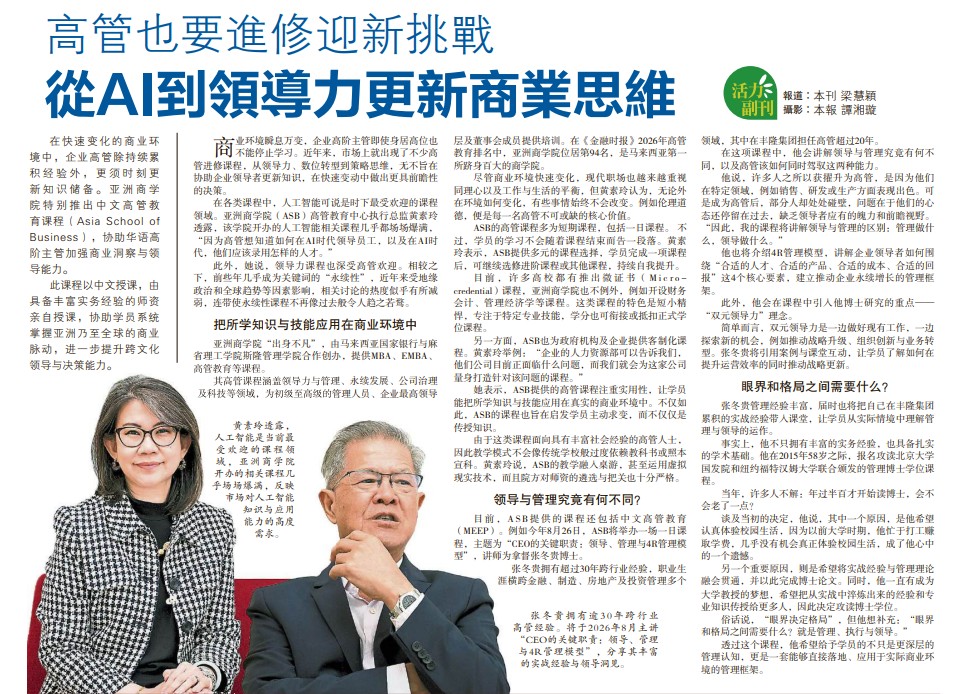
In today’s rapidly changing business environment, senior executives need to do more than accumulate experience—they must continuously update their knowledge and perspectives. Asia School of Business (ASB) has introduced its Mandarin Executive Education Programme to help Chinese-speaking senior executives strengthen their business insights, leadership capabilities, and decision-making skills.
Conducted entirely in Mandarin, the programme is led by experienced faculty and industry practitioners. It equips participants with a systematic understanding of business trends across Asia and the global market, while enhancing their ability to lead and make decisions effectively in a cross-cultural environment.
Staying Ahead in a Rapidly Changing Business Environment
The business landscape is evolving at an unprecedented pace, and senior executives cannot afford to stop learning simply because they have reached the top of their careers. In recent years, a growing number of executive education programmes have emerged, covering areas such as leadership, digital transformation and strategic thinking. These programmes are designed to help business leaders refresh their knowledge and make more forward-looking decisions in an increasingly complex environment.
Among these areas, artificial intelligence (AI) has emerged as one of the most sought-after topics. According to Huang Su Ling, Executive Director of the Executive Education Centre at ASB, the school’s AI-related programmes are consistently fully subscribed.
“Senior executives want to understand how to lead their people in the age of AI, as well as what kind of talent they should be hiring,” she said.
Leadership programmes are also highly popular among executives. In contrast, sustainability—which was once a major business buzzword—has attracted less attention in recent years amid changing geopolitical developments and global trends.
A Business School with Strong Foundations
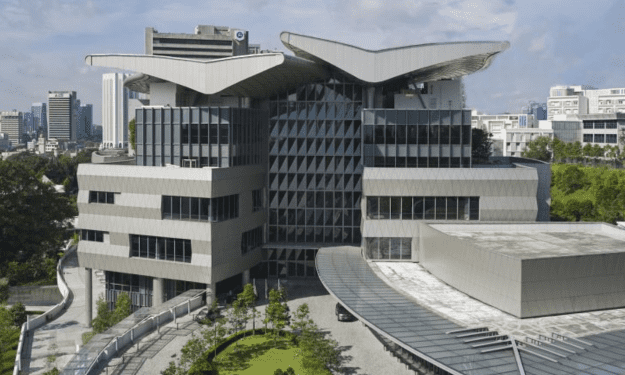
ASB has a distinguished background. It was established through a collaboration between Bank Negara Malaysia and the MIT Sloan School of Management, and offers MBA, EMBA and Executive Education programmes.
Its Executive Education portfolio covers areas including leadership and management, sustainability, corporate governance and technology, catering to managers at different levels, senior business leaders and board members.
In the Financial Times Executive Education Ranking 2026, ASB was ranked 94th globally, making it the first business school in Malaysia to break into the global top 100.
While empathy and work-life balance are increasingly valued in today’s workplace, Huang believes certain principles remain fundamental regardless of how the business environment changes. Ethics and integrity, for example, remain essential qualities for every senior executive.
ASB’s Executive Education programmes are generally short-term in nature, with some designed as one-day programmes. However, learning does not end when a course is completed. Participants can continue their development by enrolling in advanced or other specialised programmes offered by ASB.
ASB also offers micro-credential programmes, covering areas such as financial accounting and managerial economics. These programmes are designed to be concise and focused on specific professional skills, with credits that may be transferable towards formal degree programmes.
Practical and Customised Learning
ASB also provides customised executive education programmes for government agencies and corporations.
Huang explained that companies can share their specific challenges with ASB’s team, after which the school will develop a customised programme tailored to address those needs.
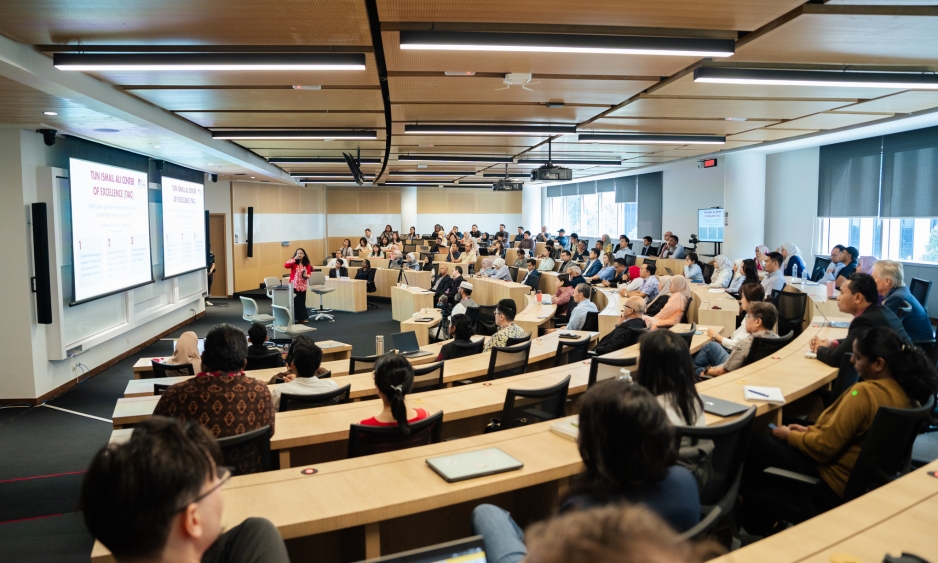
The school’s Executive Education programmes place strong emphasis on practical application, enabling participants to apply what they learn directly to real-world business situations. More importantly, the programmes aim not merely to impart knowledge, but to encourage executives to embrace change and actively seek new opportunities.
Because these programmes are designed for experienced business leaders, the teaching approach goes beyond traditional textbooks and classroom lectures. ASB incorporates interactive learning methods such as business simulations and even virtual reality technology. The school also maintains a rigorous selection process for its faculty.
Mandarin Executive Education Programme (MEEP)
ASB currently offers the Mandarin Executive Education Programme (MEEP). One of the upcoming programmes is a one-day course scheduled for 26 August 2026, titled:
“Key Responsibilities of a CEO: Leadership, Management and the 4R Management Model”
The programme will be conducted by Dato’ Dr Chang Tong Kwee.
With more than 30 years of cross-industry experience, Dato’ Dr Chang’s career spans the financial, manufacturing, property and investment management sectors. He spent more than 20 years in senior management roles with the Hong Leong Group.
During the programme, he will explore the fundamental differences between leadership and management, and how senior executives can effectively master both capabilities.
Many professionals are promoted into senior management because they excel in a particular area, such as sales, research and development, or production. However, some struggle after stepping into executive roles because their mindset remains rooted in their previous responsibilities and they have yet to develop the broader perspective and decisiveness required of a leader.
“This is why my course will examine the difference between leadership and management—what management does and what leadership does,” he explained.
The 4R Management Model
The course will also introduce the 4R Management Model, which focuses on four critical elements for sustainable business growth:
- Right People
- Right Product
- Right Cost
- Right Return
The framework provides business leaders with a practical approach to building a management system that supports sustainable growth.
In addition, Dato’ Dr Chang will introduce the concept of “Ambidextrous Leadership”, which forms part of his doctoral research.
In simple terms, ambidextrous leadership means managing today’s business effectively while simultaneously exploring opportunities for the future. This may involve strategic upgrades, organisational innovation and business transformation.
Through real-world cases and classroom interaction, participants will learn how to improve operational efficiency while simultaneously driving strategic renewal.
Combining Real-World Experience with Academic Knowledge
Drawing on his extensive management experience, Dato’ Dr Chang will bring practical insights from his years with the Hong Leong Group into the classroom, allowing participants to better understand how leadership and management work in real business situations.
Beyond his extensive professional experience, he also has a strong academic background. In 2015, at the age of 58, he enrolled in a Doctor of Management programme jointly awarded by Peking University’s National School of Development and Fordham University.
At the time, some people questioned whether pursuing a doctorate after the age of 50 was too late. For him, however, one of the main motivations was to experience university life properly. During his undergraduate years, he had been busy working to finance his education and never had the opportunity to fully experience campus life—something he had always considered a personal regret.
Another important motivation was his desire to integrate his extensive practical experience with management theory and use this knowledge in his doctoral research. He also had a long-standing ambition to become a university professor and pass on the knowledge and expertise he had gained through years of practical experience to the next generation of business leaders.
As the saying goes, “Your perspective determines the scale of your vision.”
But Dato’ Dr Chang adds: “What connects perspective and vision? It is management, execution and leadership.”
Through this programme, he hopes to provide participants with more than a deeper understanding of management. His goal is to equip them with a practical management framework that can be directly applied to real-world business situations.
Originally published by Sin Chew Daily.