



ASB Research Series
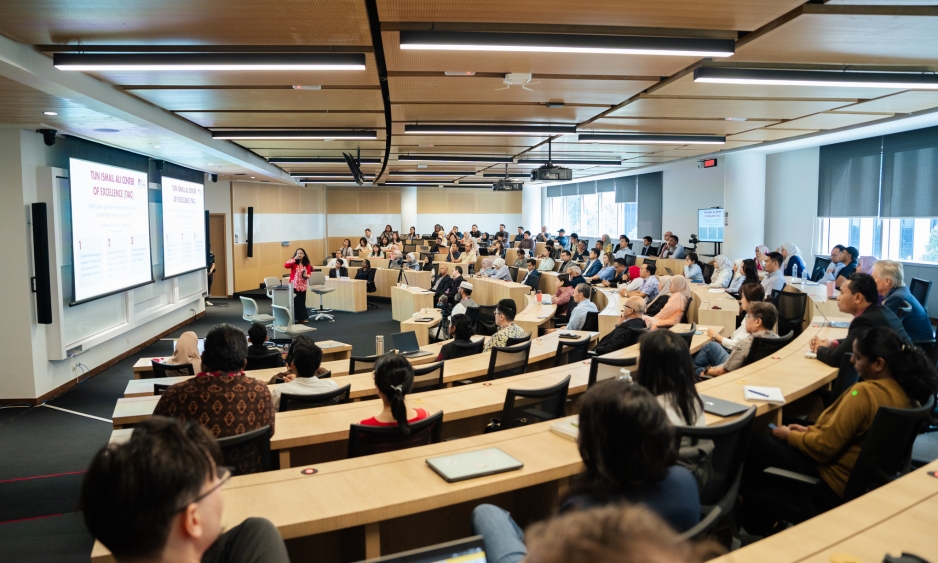
The ASB Research Seminar Series (RSS) is a monthly series hosted by ASB that invites academics and professors from various universities worldwide to give talks and share insights about their research and ongoing work. They engage in discussions on various research topics with ASB’s esteemed researchers and faculty members, receiving feedback and comments on their work.
ASB RSS are now in hybrid mode and are usually held at lunchtime.
If you would like to present at and/or attend the ASB RSS please contact the Research Office: research@asb.edu.my
Upcoming Talks
Date/Time
Speaker
Title & Abstract
THE ASIA SCHOOL OF BUSINESS MAKES LANDMARKDEBUT AMONG ASIA’s TOP 25 MBA PROGRAMMES
ASB secures #2 position in Malaysia with top 25 rankings in employability, diversity and value for money
KUALA LUMPUR, 17 September 2026 – Just under a decade after graduating its first MBA cohort, the Asia School of Business (ASB) has entered the global stage, debuting at #23 in Asia and within the top 180 MBA programmes worldwide in the QS Global MBA Rankings 2027. This milestone follows closely behind ASB’s achievement of AACSB accreditation – an essential eligibility criterion for participation in the ranking that paved the way for this inaugural entry.
While global league tables are traditionally dominated by institutions with decades of history, ASB’s swift entry reflects the immediate international standing of its academic model. The result also places ASB as the #2 MBA programme in Malaysia.
Beyond its overall ranking, ASB demonstrated particular strengths in employability, diversity and value for money, ranking among Asia’s top 25 across all three dimensions. Its strong diversity performance reflects the international character of the MBA, while ASB achieving a perfect score for student gender balance and near perfect score for international faculty:
- Strong Employability and Performance: Driven by robust career outcomes and strong connections with the corporate world.
- Entrepreneurship: Driven by a strong cohort of alumni launching successful new ventures.
- Exceptional Global Diversity: Scoring 100/100 for student gender balance and 99.5/100 for international faculty.
Building World-Class Business Education in Kuala Lumpur
Established in collaboration with the MIT Sloan School of Management in 2015, ASB was designed to challenge traditional business education. Rather than relying on passive classroom lectures or theoretical models, the ASB MBA experience is built on immersive, practice-first learning:
- Action Learning & Integrative Management Lab: Hands-on projects for host companies across Asia, where students solve real-world, cross-functional business challenges from the start of their journey.
- Mindset Lab: A unique programme rooted in behavioural science focused on developing personal resilience, adaptive leadership, and self-awareness.
- Global Exposure (GIE & MIT Immersion): Regional field studies through Global Industry Experience (GIE) treks, alongside an extended residential immersion at MIT Sloan in Cambridge, Massachusetts.
This multi-faceted foundation reflects ASB’s broader collaboration with MIT Sloan – an institution ranked #1 globally in the QS Global MBA Rankings 2027. By bridging MIT’s innovation ecosystem with hands-on practice in Asia’s emerging markets, ASB equips students to lead across complex global environments.
Reflecting on the Milestone
Speaking on the ranking debut, Professor Joseph Cherian, CEO, President, Dean and Distinguished Professor of the Asia School of Business, shared:
“When we started ASB, the goal was simple but ambitious: build a business school in Kuala Lumpur that could stand shoulder-to-shoulder with the best in the world, guided by an ethos of ‘Global Inquiry, Local Heart.’ Seeing our debut in the Asia’s Top 25 MBA Programmes and earning recognition for our strengths in employability, diversity, and value for money proves that this practical, immersive approach works. It’s a testament to our faculty and, above all, our students who step into the market fully equipped to navigate real-world challenges.”
Clear Post-MBA Pathways
ASB’s hands-on curriculum provides direct springboards for career advancement. Beyond the MBA, ASB graduates can continue their learning through pathways at globally renowned institutions including MIT Sloan School of Management, Yale School of Management, Cornell University and the University of Oxford’s Saïd Business School. These opportunities span management studies, advanced management, business analytics, and executive leadership – enabling graduates to deepen their expertise, broaden their global perspective, and strengthen their leadership capability and international networks. Beyond immediate career entry into multinational corporations, strategy consultancies, and high-growth ventures, graduates benefit from exclusive post-MBA institutional pathways.
###
ABOUT THE ASIA SCHOOL OF BUSINESS
Global Inquiry, Local Heart. Established in 2015 by Bank Negara Malaysia in collaboration with MIT Sloan School of Management (MIT Sloan), the Asia School of Business (ASB) is committed to developing transformative and principled leaders who create a positive impact in the emerging world and beyond. ASB offers Executive Education, Micro-Credentials, PhD in Management, MBA, Executive MBA (EMBA), and the world’s only Master in Central Banking (MCB). To learn more about the Asia School of Business, visit asb.edu.my, or connect via LinkedIn, Instagram and Facebook.
_____________________________________________________________________________
For media enquiries, kindly contact:
Asia School of Business (Marketing)
- Anson Tung at 014-704 8687
- marketing@asb.edu.my
Perspective Strategies (PR Agency for ASB)
- Brandon Tan at 012-524 5447
- Melisa Yim at 012-687 1541
- asb@perspective.com.my
The Asia School of Business Makes Landmark Debut Among Asia’s Top 25 MBA Programmes
KUALA LUMPUR 15 Sept — Malaysia perlu memberi tumpuan kepada transformasi pekerja dalam Belanjawan 2027 bagi memastikan mereka bukan sekadar menguasai kemahiran baharu, malah menyesuaikan diri dengan perubahan kecerdasan buatan (AI) dan teknologi automasi, kata Asia School of Business.
Jelasnya, daya saing ekonomi Malaysia bukan hanya bergantung kepada keupayaan menarik pelaburan dan menerima pakai teknologi baharu, tetapi turut kepada keupayaan tenaga kerja tempatan menyesuaikan diri dengan perubahan peranan serta peluang pekerjaan.
Menurutnya, kerajaan perlu mengutamakan pelaburan modal insan bagi membantu pekerja memperoleh kemahiran baharu, beralih kepada peranan baharu dan bekerjasama dengan teknologi yang semakin berkembang.
“Teknologi mengubah cara bekerja, tetapi persoalannya adakah pekerja kita bersedia berubah,” kata Timbalan Ketua Pegawai Eksekutif dan Timbalan Dekan Penyelidikan dan Akademik Asia School of Business, Profesor Madya Ekonomi serta Pengarah Fakulti ASEAN Research Center, Melati Nungsari.
Tambahnya, Malaysia sudah membuat pelaburan besar dalam infrastruktur dan pendigitalan, namun pendekatan sama perlu diberikan kepada tenaga kerja bagi memastikan rakyat terus mencipta nilai dalam persekitaran pekerjaan yang berubah.
Mereka mencadangkan insentif cukai kepada majikan melaksanakan program peningkatan semula kemahiran yang lebih bermakna, dengan insentif dikaitkan kepada hasil seperti peningkatan produktiviti, kemajuan kerjaya dan pertumbuhan gaji, bukannya berdasarkan jumlah jam latihan semata-mata.
Pada masa sama ujarnya, penggunaan levi Human Resource Development Corporation (HRD Corp) perlu diberikan lebih fleksibel bagi menyokong golongan profesional pertengahan kerjaya, pendidikan eksekutif serta bidang baharu termasuk AI, transformasi digital dan kepimpinan.
“Kami turut menggesa kerajaan membantu syarikat mereka bentuk semula pekerjaan, bukannya sekadar menggantikannya apabila AI dan automasi diperkenalkan, termasuk melalui insentif bagi pelan peralihan tenaga kerja yang merangkumi penempatan semula dan latihan semula pekerja,” katanya.
Ujar Asia School of Business, kerjasama antara industri dan institusi pendidikan juga perlu diperkukuh bagi mengenal pasti kemahiran baharu serta membangunkan program lebih pendek dan praktikal yang boleh bertindak balas dengan pantas terhadap perubahan keperluan industri.
Cadangan itu turut berdasarkan pengalaman bersama rakan korporat dan kerajaan menerusi program pendidikan eksekutif, yang menunjukkan permintaan semakin meningkat terhadap kemahiran kepimpinan, kefahaman digital dan keupayaan AI gunaan ketika organisasi melalui transformasi tenaga kerja.
Matlamat utama jelasnya, bukan sekadar melatih lebih ramai pekerja, tetapi memastikan rakyat Malaysia terus mampu mencipta nilai apabila sifat pekerjaan berubah, sekali gus menyokong pertumbuhan ekonomi bernilai tinggi dan mampan menerusi Belanjawan 2027.
Originally published by Newswav and DagangNews
Belanjawan 2027 digesa fokus bantu pekerja hadapi perubahan AI dan automasi
Originally published by The Edge.
Passing the Torch
Guest: Alexander Eng (Associate Professor), Asia School of Business
More businesses are letting AI make decisions that directly affect customers, including how they handle complaints. But does a bot apology land the same way as a person’s?
Alexander Eng, Associate Professor at Asia School of Business, tells us what an effective AI-powered complaints system should actually look like, from giving customers a real channel to flag or push back on a decision, to the mistake recognition and acknowledgements that customers want to hear.
Listen to the full interview below.
Originally published by BFM.
Designing an AI That Knows How to Say Sorry
Across Asia, business schools are transforming how they prepare graduates, placing real-world relevance at the center of their education.
- Business curricula are aligning more closely with employers’ daily priorities, translating classroom theory into real workplace purpose.
- Regional case studies and industry-tested faculty are reshaping the Asian classroom experience.
- Hands-on simulations and real-world scenarios are turning classrooms into living laboratories that deepen student engagement.
Transcript
Joseph Cherian: [00:12] When individuals, employers, and students question the value of the business degree, they’re questioning everything: the entire model, the value it brings to the table, the relevance to industry (especially employees asking, ‘is this relevant for my workplace?’) and the costs.
[00:33] Fortunately, Asians still value education. The half-life, or the duration for time decay in terms of its relevance, will be longer than in the U.S. or Europe, which are more impatient. But that said, Generation Z is also getting impatient in Asia.
[00:51] They’re asking and questioning: why should I get this degree? How does that add value to my career trajectory or my relevance in society? Many Gen Zers want to do good. They want to give back to the community more than I did—now I do, but in the old days, I did not. As a result, they begin to question, even in Asia.
[01:14] What employers are signaling is that the stuff that you learn in business schools—if we can focus on business schools, since this is what we’re here for—has to be relevant to what we are doing on a daily basis: our vision, our mission, our purpose.
[01:29] The last thing an employer wants is to take in talent from a business school, retrain them, and put them through some kind of rotation program to drink the Kool-Aid.
[01:42] Schools should be doing that. We should make our curriculum and our programs relevant. If you live in Asia, you’d better be using Asian cases. It should be experiential, it should be hands-on.
[01:56] Sometimes it’s good in life that you fail in every aspect of your career. I failed in academics. I failed industry. And I failed in, I don’t know, what’s the last one? Policymaking…Just kidding.
[02:05] What I think is useful is the experience. The blended experience of working in academia, being trained in academia, and then having a career in industry is invaluable. I don’t say it for self-serving purposes. I say it because that’s what a business school is about.
[02:23] It’s like talking to a professor of surgery at the top medical school who says, ‘hypothetically speaking, this is how you perform an incision for a type of surgery.’ You don’t want to go to such a school. You want to make sure you get a surgeon, a professor of surgery who’s performed surgery.
[02:42] Somehow, business schools are exempt from this rule, but we can be straight through from university with no experience, and yet be teaching students how to become professionals. Something doesn’t add up.
[02:55] At the Asia School of Business, we are doing modularized learning. Basically, you can take the education in bite-sized pieces. We call them stackable microcredentials. It’s not the newest concept on Earth. It’s been around for many years; many schools have been doing it.
[03:12] But we’ve made it into a unique form suited to the Asian audience. When students come to my class—I teach finance, particularly portfolio management and investments—they watch my videos asynchronously, and at the end of the week, they can dial in or come in person. Most come in person if they’re in the neighborhood or in that zip code.
[03:34] What happens is we have the jam sessions. I mean, I don’t mean we plug in the guitar, drums, and all that. What we mean is that we run simulations, conduct scenario analyses, and perform what-if situations. So we put students in a thinking-cap mode, and it’s more fun.
[03:52] For the boring theory stuff, you can get it from any textbook or watch videos anytime you want—and you can rerun it as many times as you want, like on Netflix. You watch the series a gazillion times. But when you come to the class, we learn how to apply that theory in the living laboratory.
Originally published by AACSB
Building Relevant Business Education in Asia
Malaysia’s financial center ambitions are gaining traction by leveraging its world-leading Islamic finance strength rather than directly competing with Singapore. To maximize success, economists emphasize uniting its various regional financial hubs into a single, cohesive ecosystem centered in Kuala Lumpur.
For instance, TRX has attracted major financial institutions including HSBC, Prudential and Affin Bank, alongside technology companies such as Ant International, consultants and other professional services firms.
Professor Joseph Cherian, CEO, president and dean of Asia School of Business, noted that physical clustering is only the beginning.
He said at the moment, TRX is a very successful property development, but that alone does not make it an international financial centre.
He said the financial capability has to be deliberately built. Labuan arguably has more of that institutional infrastructure already because it has operated as an offshore financial centre for many years.
“You need intellectual capital. You need people who understand finance, markets, regulation, asset management, capital raising and product development.”
He suggested bringing expertise from institutions including Bank Negara Malaysia, the Securities Commission, Employees Provident Fund, Permodalan Nasional and the Ministry of Finance together at TRX with a mandate to develop the financial ecosystem.
The discussion should focus on three key areas: developing new financial products, attracting asset managers, and internationalising Malaysia’s sukuk market.
He said Malaysia’s strongest opportunity lies in something more difficult for Singapore to replicate: Islamic finance.
He said Malaysia’s decades spent building expertise in sukuk, Islamic banking, takaful, and Shariah governance give it an unrivaled edge in the region.
Rather than trying to replicate a conventional financial centre and adding Islamic products around its edges, Islamic finance should become the organising principle of Malaysia’s IFC strategy.
One opportunity would be to internationalise Malaysia’s sukuk market by encouraging major multinational companies operating in the country to issue US dollar-denominated sukuk and distribute them to global investors.
“If you want an Islamic financial centre, come to Malaysia. We are among the best in the world,”
The objective should not be to defeat Singapore but to build capabilities that make the two centres valuable to each other.
“Malaysia doesn’t have to defeat Singapore or Hong Kong… It has to develop capabilities that make those centres want to work with Malaysia,”
Malaysia’s efforts to develop multiple financial centres also present another challenge: whether spreading activity across different locations undermines the concentration that makes financial centres successful.
Malaysia’s efforts to develop multiple financial centres also present another challenge: whether spreading activity across different locations undermines the concentration that makes financial centres successful.
Prof Cherian said Malaysia needs a clearer hierarchy, with Kuala Lumpur and TRX serving as the country’s principal international financial hub and other centres developing specialised roles.
“You cannot have Labuan, Penang, Johor and every other location all saying, ‘We want to be the financial centre.’ You need to choose your main international financial centre,”
Under his proposed hub-and-spoke model, Labuan could retain its offshore role while developing areas such as Islamic finance and tokenisation, while Johor could specialise in Islamic wealth management and family wealth.
Originally published by Business Times
Malaysia’s strongest card in multi-hub push could be Islamic finance
27 Aug – After years of hard work, Bront Palarae is finally the holder of a Master’s in Business Administration (MBA).
Sharing the news on social media with photos from his graduation ceremony at the Asia School of Business, the 47-year-old actor expressed, “Five years just to get through the door. No conventional academic route. A lot of knocking on doors, figuring things out, and eventually finding my way in through APEL A.”
“Then came 16 months of assignments, deadlines, group work, late nights, new friendships, and three absolutely crazy weeks at MIT in Boston. And yesterday, I graduated.”
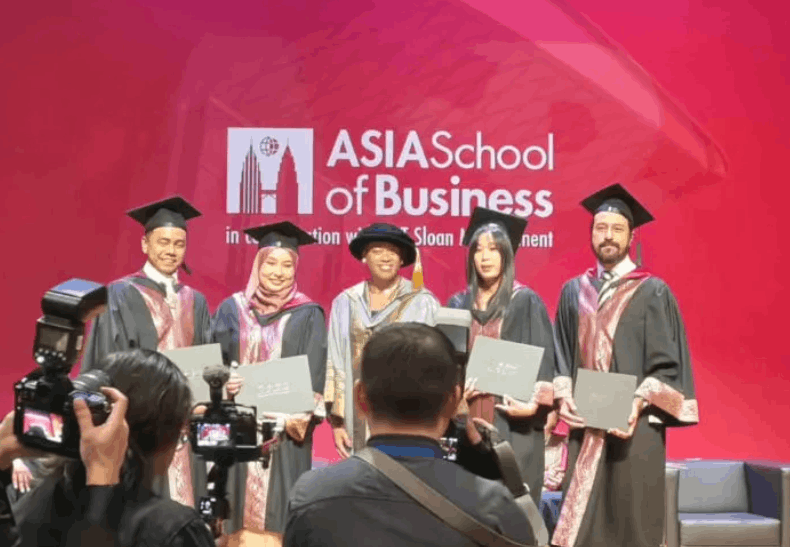
Bront, real name Nasrul Suhaimin bin Saifuddin, stated that it had been 16 months of “intense, humbling, exhausting, and incredibly rewarding” journey, and thanked his classmates for their kindness and willingness to help.
He continued by thanking his Team Pani Puree whom he said is the Best Action Learning Team for their practicum with SRK India, the academic managers, professors, as well as his family for their patience and understanding.
“Five years to get in. Sixteen months to get through. Worth every bit of it. Yesterday, I got to say I did it,” he added.
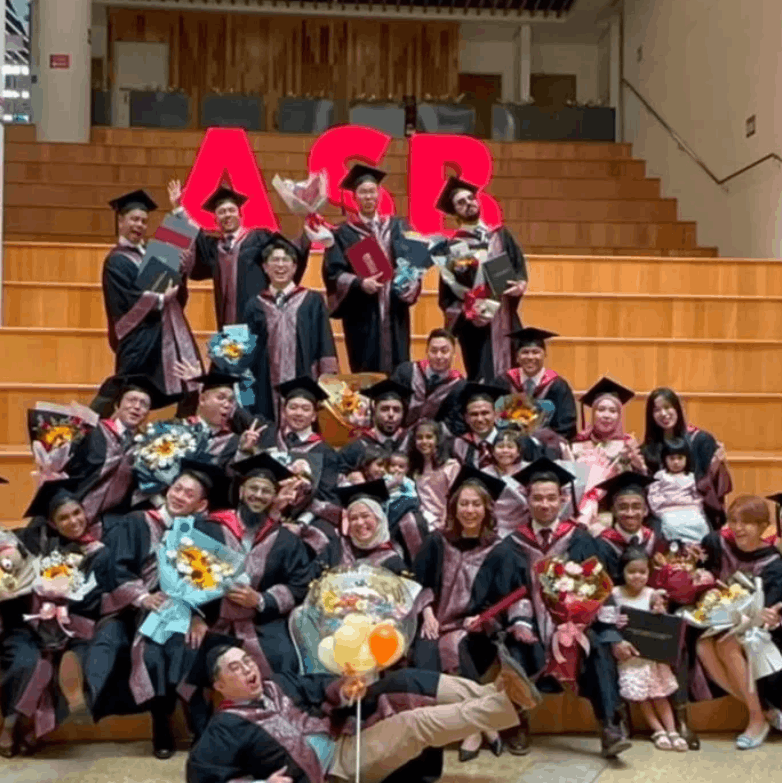
Originally published by Yahoo News and Cinema.com.
Bront Palarae celebrates MBA graduation
Universities around the world are offering unique, tailored module selections that address and anticipate the evolving demands of the business world. And for many in Japan, the value of an international program is clear: access to a comprehensive English-speaking business environment, multinational appeal and the prestige of a recognized university.
To help make the choice easier, here’s our GoConnect guide to some of the best international MBA programs in 2026, and why each is worth your consideration if you’re looking overseas.
Asia School of Business
School Location: Kuala Lumpur, Malaysia
Affiliated University: Established as a collaboration between MIT Sloan School of Management and Bank Negara Malaysia
International Student Cohort: 50-60%
The Asia School of Business MBA (ASB) has a unique origin story. MIT Sloan and Malaysia’s central bank, Bank Negara, built the school together. For the students, this means that they’re being taught by ASB residential faculty and MIT Sloan faculty. They aren’t just licensing the name and walking away — they’re creating an MBA worthy of the MIT Sloan name.
One of ASB’s biggest strengths is that their course isn’t all theory. About one third of the coursework is what the school calls Action Learning. It’s a practical element, working with consulting projects for companies across Southeast Asia. The cornerstone of the MBA is then cemented in with a required stretch on MIT’s own campus in Cambridge. This, combined with the small cohort of 35 to 50 students in each course, ensures a first-class educational experience. This is only enhanced by the support offered in housing and relocation by ASB’s team, so students arrive without the stress of weeks of house searching and utility setup.
Dr Yi-Ren Wang, Associate Professor II of Organizational Behavior, and head of ASB’s ‘Mindset Lab,’ put the commitment to student care and development on full display when describing the program: “Beyond the curriculum itself, ASB places a strong emphasis on how students think, act, and grow. Students are trained to think like scientists, seek evidence, integrate perspectives, and act on what they learn. At the same time, the school’s Mindset Lab and executive coaching help them develop self-awareness, cultivate mindsets to continually stretch beyond their comfort zones, and grow into well-rounded leaders.”
The value for anyone based in Tokyo is clear. Students walk away with an MIT-caliber degree with Asia’s business norms baked in, at a fraction of Tokyo prices. Add the planned on-the-ground experiences in China, Vietnam, Japan and Thailand designed to offer global exposure and deepening students’ local roots and connections. And sign the package off with classes and instructors from MIT Sloan, which still opens doors on prestige alone, and you’re left with a premium MBA.
Read the full article HERE.
Originally published by GoConnect.jp
Best International MBA Programs for Japanese Professionals—And Why
SELEPAS lima tahun menempuh perjalanan penuh liku, pelakon Bront Palarae akhirnya berjaya menggenggam Ijazah Sarjana Pentadbiran Perniagaan (MBA), sekali gus melengkapkan satu lagi pencapaian besar dalam hidupnya.
Ujar Bront atau nama sebenarnya Nasrul Suhaimin Saifuddin, 48, perjalanan untuk melangkah ke alam pengajian tinggi bukan mudah apabila dia perlu melalui laluan akademik tidak konvensional sebelum diterima masuk menerusi laluan APEL A.
“Lima tahun saya habiskan hanya untuk membuka pintu. Saya tidak melalui laluan akademik konvensional. Banyak pintu diketuk, banyak perkara perlu difahami dan akhirnya saya berjaya mencari jalan masuk menerusi APEL A.
Kemudian bermulalah 16 bulan penuh tugasan, tarikh akhir, kerja berkumpulan, berjaga malam, persahabatan baharu serta tiga minggu amat mencabar di Massachusetts Institute of Technology (MIT) di Boston. Akhirnya saya berjaya menamatkan pengajian,” katanya dalam Instagram.
Tambah bintang filem One Two Jaga itu, tempoh 16 bulan sepanjang mengikuti pengajian MBA memberikan pengalaman cukup mencabar, namun pada masa sama amat bermakna.
Dia turut merakamkan penghargaan kepada pasukan Pani Puree selepas kumpulan tersebut dinobatkan sebagai Pasukan Pembelajaran Tindakan Terbaik menerusi projek praktikum bersama SRK India.
“16 bulan terakhir ini sangat mencabar, merendahkan ego, memenatkan tetapi pada masa sama amat berbaloi.
“Kepada rakan sekelas, terima kasih atas segala kebaikan, kemurahan hati dan kesediaan untuk sentiasa membantu. Saya belajar daripada kalian sama banyak seperti di dalam bilik kuliah.
Kepada Team Pani Puree, Pasukan Pembelajaran Tindakan Terbaik untuk praktikum bersama SRK India, ucapan ‘saya bangga’ masih belum cukup untuk menggambarkan perasaan itu. Sungguh cara terbaik untuk kita menamatkan perjalanan ini bersama,” ujarnya.
Pelakon Pembantu Lelaki Terbaik Trust Gu Thai Film Awards 2024 itu tidak melupakan jasa pengurus akademik serta barisan profesor sepanjang pengajiannya kerana sentiasa memberikan bimbingan selain mencabar cara pemikirannya.
Kepada pengurus akademik, terima kasih kerana sentiasa berada di sisi setiap kali saya memerlukan panduan atau bantuan.
“Kepada semua profesor, terima kasih kerana mencabar cara saya berfikir serta segala ilmu diberikan, sama ada di dalam mahupun di luar bilik kuliah,” kongsinya.
Paling penting kata Bront, penghargaan teramat istimewa diberikan kepada keluarganya atas kesabaran, pengertian serta sokongan sepanjang dia mengejar impian akademik berkenaan.
“Paling utama, buat keluarga saya, terima kasih atas kesabaran, pengertian serta ruang dan sokongan diberikan untuk saya melakukan semua ini, walaupun bermakna masa bersama kalian menjadi semakin terhad.
Saya benar-benar tidak mampu melakukannya tanpa kalian semua. Lima tahun untuk masuk. 16 bulan untuk mengharunginya. Semuanya berbaloi. Semalam, saya akhirnya dapat mengatakan saya sudah berjaya.
“MBA selesai, Program Imersi MIT selesai dan Anugerah Projek Pembelajaran Tindakan Terbaik juga selesai. Alhamdulillah,” luahnya.
Perkongsian Bront itu mengundang pujian netizen, malah ramai menganggap kejayaannya sebagai inspirasi kerana mampu membahagikan masa antara kerjaya seni, keluarga dan pengajian.
Ada juga menyifatkan pencapaian tersebut membuktikan usia bukan penghalang untuk seseorang kembali mengejar ilmu serta mencabar kemampuan diri. – HIBGLAM
Originally published by Hib Glam
‘Saya sudah berjaya’ – Bront Palarae genggam MBA
KUALA LUMPUR: Pelakon Bront Palarae, 48, berjaya menamatkan pengajian dan memperoleh Ijazah Sarjana Pentadbiran Perniagaan (MBA) selepas 16 bulan mengimbangi komitmen akademik dengan kerjaya lakonan.
Bront berkongsi berita gembira itu menerusi media sosial, sambil menyifatkan perjalanan akademiknya sebagai pengalaman yang intensif, meletihkan, namun amat bermakna.
Katanya, dia tidak melalui laluan akademik konvensional sebaliknya mengambil masa lima tahun untuk mencari peluang sebelum akhirnya diterima mengikuti pengajian menerusi laluan Accreditation of Prior Experiential Learning for Admission (APEL A).
“Lima tahun hanya untuk membuka pintu. Tiada laluan akademik konvensional. Banyak mengetuk pintu, mencari jalan dan akhirnya berjaya mendapatkan peluang menerusi APEL A,” tulisnya.
Selepas berjaya mendapatkan peluang itu, Bront perlu mengharungi tempoh 16 bulan yang dipenuhi tugasan, tarikh akhir, kerja berkumpulan, berjaga malam dan membina persahabatan baharu.
Pengajian berkenaan turut membawanya ke Massachusetts Institute of Technology (MIT), Boston, Amerika Syarikat selama tiga minggu, yang disifatkannya sebagai antara pengalaman paling mencabar sepanjang perjalanan akademik berkenaan.
“16 bulan terakhir sangat mencabar, merendahkan ego, meletihkan tetapi pada masa sama memberikan pengalaman yang sangat bermakna,” katanya.
Bront turut merakamkan penghargaan kepada rakan sekelas yang banyak membantu serta berkongsi ilmu sepanjang tempoh pengajian.
Katanya, pengalaman belajar bersama rakan-rakan memberikan banyak ilmu yang tidak terhad kepada pembelajaran di dalam bilik kuliah.
“Saya belajar sama banyak daripada semua rakan sekelas seperti yang saya pelajari di dalam kelas.
“Terima kasih atas kebaikan, kemurahan hati dan kesediaan untuk sentiasa membantu,” katanya.
Dalam hantaran sama, Bront turut menzahirkan rasa bangga terhadap Team Pani Puree yang dinobatkan sebagai Pasukan Pembelajaran Berasaskan Tindakan Terbaik bagi praktikum bersama SRK India.
Katanya, pengiktirafan itu menjadi cara yang cukup bermakna untuk mereka menamatkan perjalanan pengajian bersama.
Bront turut berterima kasih kepada pengurus akademik dan barisan profesor yang banyak memberikan bimbingan, selain mencabar cara pemikirannya sepanjang mengikuti pengajian.
Menurutnya, pengalaman itu bukan sekadar memberikan ilmu berkaitan pengurusan dan perniagaan, malah membuka ruang untuk melihat sesuatu perkara daripada perspektif berbeza.
Namun, penghargaan paling besar ditujukan kepada keluarganya yang sentiasa memberikan kesabaran, pemahaman, ruang dan sokongan walaupun komitmen pengajian menyebabkan masa bersama mereka menjadi lebih terhad.
Bront mengakui kejayaan itu tidak mungkin dicapai tanpa sokongan insan di sekelilingnya yang memahami tuntutan pengajian dan kerjaya.
“Lima tahun untuk berjaya masuk. 16 bulan untuk mengharunginya. Berbaloi setiap detik. Akhirnya saya dapat berkata, saya berjaya melakukannya,” katanya.
Originally published by BH Online.
Bront Palarae genggam MBA selepas 16 bulan