Asia School of Business

Global Inquiry, Local Heart

Malaysia’s retirement challenge is becoming more about whether people are financially and psychologically prepared to sustain themselves through longer lifespans and rising living costs, and less about dividends paid by the Employees Provident Fund (EPF), the nation’s biggest pension fund.

It was an issue highlighted during a panel session at Asia Asset Management’s 14th Annual Malaysia Roundtable in Kuala Lumpur on May 5.

Panel members pointed out that Malaysia has one of the stronger mandatory retirement systems in Asia.

“We should recognise that our EPF is doing an excellent job. The fact that 24% of wages are contributed to retirement savings, and that it has managed the funds well, means Malaysia has actually done very well in this respect,” said Joseph Cherian, chief executive, president and dean of the Asia School of Business.

But panellists warned that many Malaysians still underestimate how much they need for retirement, and how quickly the money they saved can run out.

Taufiq Iskandar, chief executive officer of Private Pension Administrator Malaysia (PPA), the administrator of the Private Retirement Scheme (PRS), noted that only about 40% now meet the EPF’s basic savings threshold, leaving the majority financially vulnerable in retirement.

He said even retirees who have 1 million ringgit (US$249,500) saved could struggle to sustain their lifestyles over the long term.

EPF alone isn’t enough

Panel members pointed to a growing “retirement illusion”, where individuals see a large lump sum in their retirement accounts and assume it will be sufficient, without fully understanding how inflation, longevity and monthly spending can eat into the savings.

“There is money illusion. People see a large pot of money and think it is enough,” Cherian said.

Ageing demographics could intensify the pressure in coming years, especially as family support structures weaken and more workers shift into informal or gig-based employment.

The United Nations has projected that Malaysia will become an ageing nation by 2030, with the number of people 65 years and older making up 7% of the population.

Although the Malaysian pension system isn’t in “deep crisis” now, it does need structural changes, according to Ng Jit Seng, chief operating officer of Principal Asset Management

“I would not call it a very deep crisis yet, but we are entering a phase where structural changes and stronger savings behaviour are needed,” he said.

He noted that many Malaysians rely heavily on just the EPF instead of building broader retirement portfolios.

“EPF should form the core foundation of retirement savings, while PRS and other investments should complement it,” he said.

For Ismitz Matthew De Alwis, executive director and chief executive officer of Kenanga Investors, financial literacy is a big concern.

“I do not think there is a shortage of investment products or vehicles. The key issue is financial literacy,” he said.

He observed that many Malaysians, especially younger employees and gig workers, do not have long-term investing habits or the discipline to save consistently.

Fees and ETFs

The panel also debated the hidden impact of investment costs on long-term retirement savings.

Tan Haw Sin, founder and managing director of Riskk.Com, warned that high management fees could erode retirement wealth over time, particularly for long-term retirement products.

“At 2% annual fees over 30 years, you could lose more than half your wealth accumulation. The cumulative cost of wrapping and managing funds over the long term is actually very, very high,” he said.

He said lower-cost investments such as exchange-traded funds could help improve long-term retirement outcomes, but that ETF adoption in Malaysia is low compared with more developed markets.

According to Taufiq, funds on the PRS platform charge reasonable fees and that fee disclosures are very transparent. He said the PPA and Securities Commission Malaysia are actively working to further reduce costs.

He also said the PRS ecosystem is being restructured to become more account-based and could eventually include ETFs as investment options.

Ultimately though, the broader challenge may be more behavioural.

“Retirement is one of those things that creeps up on you. When you are young, you feel invincible, and before you know it, retirement arrives,” Ismitz said.

Originally published by Asia Asset Management.

ASIA SCHOOL OF BUSINESS VAULTS INTO FINANCIAL TIMES WORLD’S TOP 100 FOR EXECUTIVE EDUCATION

The historic debut recognises ASB’s mission to deliver world-class education built in Asia, for Asia and beyond.

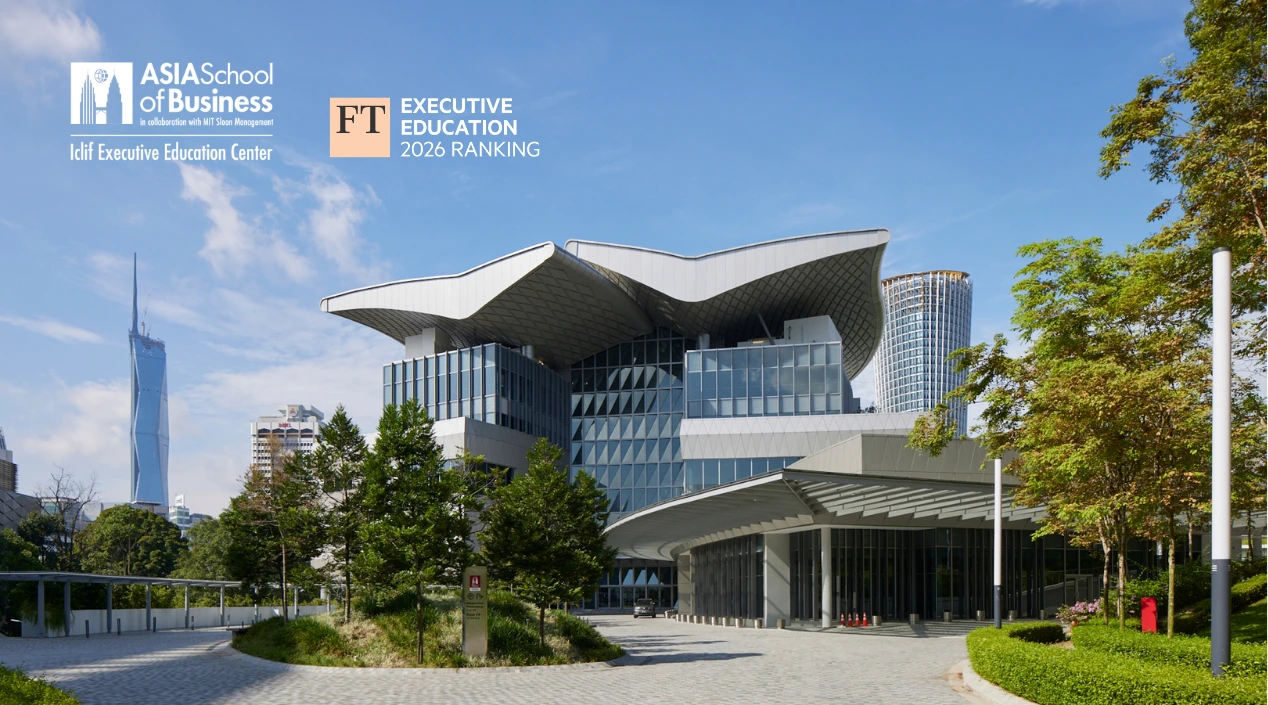
The Asia School of Business (ASB) has achieved a historic milestone by debuting at 94th globally in the prestigious Financial Times (FT) Executive Education Custom Rankings. In its very first year of participation, ASB is the first business school in Malaysia to enter this definitive global ranking.

This landmark achievement reflects the deep trust placed in ASB by diverse corporate partners and underscores the School’s commitment to executive learning engineered specifically for Asia’s unique leadership and organisational transformations.

Delivering Tangible Business Value

The FT methodology relies heavily on direct stakeholder sentiment, with client and participant feedback accounting for 80% of the overall ranking across dimensions like programme design, teaching methods, and value for money.

Professor Joseph Cherian, CEO, President, Dean and Distinguished Professor of Asia School of Business, expressed his enthusiasm: “Securing a position among the world’s top 100 custom executive education providers in our inaugural debut is an extraordinary honour for the Asia School of Business, and a significant milestone that elevates Malaysia’s presence in global business education. With the Financial Times methodology placing an immense 80% weight on client feedback, this ranking directly validates the genuine trust, real-world value, and transformational impact our corporate partners experience with us.”

Strategic Excellence Across Five Pillars

ASB’s executive education programmes are uniquely structured to address the most pressing challenges of the modern economy. The School’s curriculum is anchored by five strategic pillars designed to empower leaders with a 360-degree perspective on regional and global shifts:

  1. Corporate Governance & Finance: Enhancing the skills of directors to effectively fulfil their fiduciary duties, with a focus on board-level risk management, strategy, and succession planning.
  2. Leadership & Management: Equipping busy executives and high-potential managers across industries with the practical tools and insights needed to lead effectively in today’s complex world.
  3. Technology: Immersing participants in the dynamic digital landscape, covering pivotal fields like AI and cybersecurity to understand how technology is reshaping global industries.
  4. Geopolitics: Examining the interplay between global policies and economics, enabling leaders to anticipate geopolitical shifts and adapt strategies for resilient growth.
  5. Sustainability: Moving beyond the buzzwords to help organisations strike a vital balance between profits and sustainable growth, progress, and future-minded impact.
Global Inquiry, Local Heart

This global recognition validates ASB’s defining ethos: Global Inquiry, Local Heart. Unlike traditional regional outposts, ASB operates as a homegrown executive education powerhouse built inside the region, significantly enhanced by the integration and legacy of the ICLIF Leadership and Governance Centre in 2020.

Our capability has been built deeply and institutionally over the years to design executive education that answers to Asian market dynamics while staying globally connected,” added Professor Cherian. “This recognition builds on ASB’s broader trajectory of international benchmarking, including our AACSB accreditation and growing global engagement. Moving forward, this milestone will catalyse our next phase of growth as we strengthen client listening mechanisms and expand our international footprint.”

A Comprehensive Educational Ecosystem

Building upon this momentum, ASB continues to shape global knowledge from Asia for the world. Beyond executive education, the School offers premier postgraduate degrees including the Master in Central Banking (MCB)MBAExecutive MBA (EMBA)and Agile Continuous Education (Micro-Credential) programmes (ACE). Driven by its signature Action Learning methodology, ASB ensures graduates possess rigorous real-world capabilities, backed by robust career services that successfully place students in top-tier global and regional organisations.

Originally published by The Exchange Asia.

In terms of graduate employability, 65% out of 581 trainees from investED Leadership1 programme have secured employment within the capital market since the programme’s introduction. The remaining graduates are employed across other sectors including banking, fintech, consulting and accounting.

This affirms the programme’s objective in building a sustainable and skilled talent pipeline for the capital market.

In addition, investED Foundation programme has enrolled 3,072 participants over three cohorts, surpassing its target of 2,400. This foundation programme provides introductory knowledge and baseline certification on the capital market.

Since its inception in 2023, the investED programme has also undertaken significant outreach, engaging more than 190,000 university students and fresh graduates nationwide through career fairs and talks.

The investED Cohort 3 graduation ceremony was held today and attended by Datuk Dr. Anesee Ibrahim, the Ministry of Higher Education’s Secretary-General, together with the SC’s Chairman Dato’ Mohammad Faiz Azmi.

Today’s ceremony honoured 210 and 513 graduates from Cohort 3 of the investED Leadership and Foundation Programme respectively.

Launched by Prime Minister Dato’ Seri Anwar Ibrahim in June 2023, investED is the first collaborative effort of its kind involving the SC, the Ministry of Finance, the Ministry of Higher Education, industry and Malaysian universities.

investED is focused on developing specialised skills for the capital market industry. The programme’s structure, combining an intensive month-long classroom training at the Asia School of Business, with six-month placements at 50 capital market partner companies serves as a bridge between academic study and professional practice.

SC Chairman Dato’ Mohammad Faiz Azmi noted that a sustainable talent pipeline is necessary to support the Capital Market Masterplan 2026–2030 which is projected to increase market size to between RM5.8 trillion and RM6.3 trillion by 2030.

“investED is aligned with industry needs. It is a credible and effective capacity building platform, delivering tangible workforce outcomes for the Malaysian capital market. By combining structured training with on-the-job exposure, it ensures that participants are ready for their roles and capable of contributing to the industry,’’ he said.

Meanwhile, partner firms and investED Steering Committee members comprising industry players applauded the programme’s impact on talent development.

Malaysian Investment Banking Association’s Council Chairman and Group Managing Director & CEO, Hong Leong Investment Bank, Lee Jim Leng commented, “investED is a programme designed to extend beyond foundation and knowledge. At the core lies a recognition of the need to bridge the gap of building a consistent talent pool for the capital market industry.”

Representative from Malaysia Futures Brokers Association and TA Futures Sdn Bhd’s Executive Director, Dayangku Shukarni Awang Jolkipli said, “From the investED programme, we manage to filter the suitable candidates to be further trained in our organisation. Hence, TA gained in term of fresh perspective and ideas, balance in age gap for succession plan programme and cost-effective recruitment process.”

Bursa Malaysia Chief Executive Officer and Steering Committee member, Dato’ Fad’l Mohamed said, “A vibrant and evolving capital market requires a steady pipeline of talent, and programmes such as investED provide participants with early exposure and practical insights into the industry and its ecosystem. Over the course of the programme, the cohort gained knowledge and skills that we hope will support their future growth and contribution to Malaysia’s capital market.”

Originally published by BusinessCircleKL.

KUALA LUMPUR: The Asia School of Business (ASB) has achieved a historic milestone by debuting at 94th globally in the prestigious Financial Times (FT) Executive Education Custom Rankings.

In its very first year of participation, Asia School of Business is the first business school in Malaysia to enter this definitive global ranking.

This achievement reflects the deep trust placed in Asia School of Business by diverse corporate partners and underscores the school’s commitment to executive learning engineered specifically for Asia’s unique leadership and organisational transformations.

The FT methodology relies heavily on direct stakeholder sentiment, with client and participant feedback accounting for 80% of the overall ranking across dimensions like programme design, teaching methods and value for money.

Asia School of Business chief executive officer, president and dean Professor Joseph Cherian said, “Securing a position among the world’s top 100 custom executive education providers in our inaugural debut is an extraordinary honour for Asia School of Business and a significant milestone that elevates Malaysia’s presence in global business education.

“With the Financial Times methodology placing an immense 80% weight on client feedback, this ranking directly validates the genuine trust, real-world value and transformational impact our corporate partners experience with us.”

Asia School of Business’s executive education programmes are uniquely structured to address the most pressing challenges of the modern economy.

The school’s curriculum is anchored by five strategic pillars designed to empower leaders with a 360-degree perspective on regional and global shifts:

  • Corporate Governance and Finance: Enhancing the skills of directors to effectively fulfil their fiduciary duties, with a focus on board-level risk management, strategy and succession planning;
  • Leadership and Management: Equipping busy executives and high-potential managers across industries with the practical tools and insights needed to lead effectively in today’s complex world;
  • Technology: Immersing participants in the dynamic digital landscape, covering pivotal fields like artificial intelligence and cybersecurity to understand how technology is reshaping global industries;
  • Geopolitics: Examining the interplay between global policies and economics, enabling leaders to anticipate geopolitical shifts and adapt strategies for resilient growth;
  • Sustainability: Moving beyond the buzzwords to help organisations strike a vital balance between profits and sustainable growth, progress, and future-minded impact.

This global recognition validates Asia School of Business’s defining ethos: Global Inquiry, Local Heart. Unlike traditional regional outposts, Asia School of Business operates as a homegrown executive education powerhouse built inside the region, significantly enhanced by the integration and legacy of the ICLIF Leadership and Governance Centre in 2020.

“Our capability has been built deeply and institutionally over the years to design executive education that answers to Asian market dynamics while staying globally connected,” added Professor Cherian.

“This recognition builds on Asia School of Business’s broader trajectory of international benchmarking, including our AACSB accreditation and growing global engagement.

“Moving forward, this milestone will catalyse our next phase of growth as we strengthen client listening mechanisms and expand our international footprint.”

Beyond executive education, the school offers premier postgraduate degrees including the Master in Central Banking (MCB)MBAExecutive MBA (EMBA)and Agile Continuous Education (Micro-Credential) programmes (ACE)

Driven by its signature Action Learning methodology, Asia School of Business ensures graduates possess rigorous real-world capabilities, backed by robust career services that successfully place students in top-tier global and regional organisations.

Originally published by The Star.

SHAH ALAM, May 20 — SME Corporation Malaysia will strengthen financing and scale-up initiatives in 2026 to help develop micro, small, and medium enterprises (MSMEs), particularly in improving competitiveness, business growth, and market expansion.

Its development and technology adaptation sector representative Zubaidah Mohamad said its initiatives will focus not only on financing assistance but also on capacity building, business development, and market access support to help local businesses strengthen their operations and long-term sustainability.

Among the key programmes highlighted were Prestige 2.0, PKS Bursa, PMKS Access, BRAVE, Skill Up, and the Next Level CEO initiative, which aim to support companies through financing, leadership development, capacity building, and preparation for expansion into larger and international markets.

“Several financing initiatives offered soft loan facilities and business funding support, particularly for Bumiputera-owned companies and businesses looking to strengthen ESG governance or prepare for entry into capital markets. 

“Prestige 2.0 now places stronger emphasis on financing support, market access, and capacity building for companies in high-growth and high-value sectors through collaborations with strategic partners, including Funding Societies,” she said during the ‘Invest Selangor Update Series: Insights into the Latest Opportunities for SMEs & MTCs’ programme today.

Zubaidah added that the Skill Up initiative will continue supporting companies through matching grants, particularly for businesses in the semiconductor and health technology sectors, while the Next Level CEO programme focuses on upskilling SME owners and senior management.

The programme is conducted in collaboration with institutions, including the Asia School of Business, Heriot-Watt University Malaysia and Efficient Frontier Consulting, to strengthen leadership, strategic planning, and business capabilities among local entrepreneurs.

She highlighted efforts to support youth and startup entrepreneurs through programmes such as Tunas Usahawan Belia Bumiputera and GROWBiz, which focus on entrepreneurship development, training, and business expansion.

Meanwhile, the Global Value Chain initiative is expected to help SMEs from high-growth sectors enter international markets through planned business matching programmes.

“Companies with official MSME status and strong performance ratings would have greater opportunities to participate in export-focused and expansion programmes aimed at improving competitiveness and sustainability,” Zubaidah said.

On its part, SME Corp Malaysia said announcements and updates on its programmes and initiatives would continue to be shared through its official website and social media platforms.

Originally published by Media Selangor.