




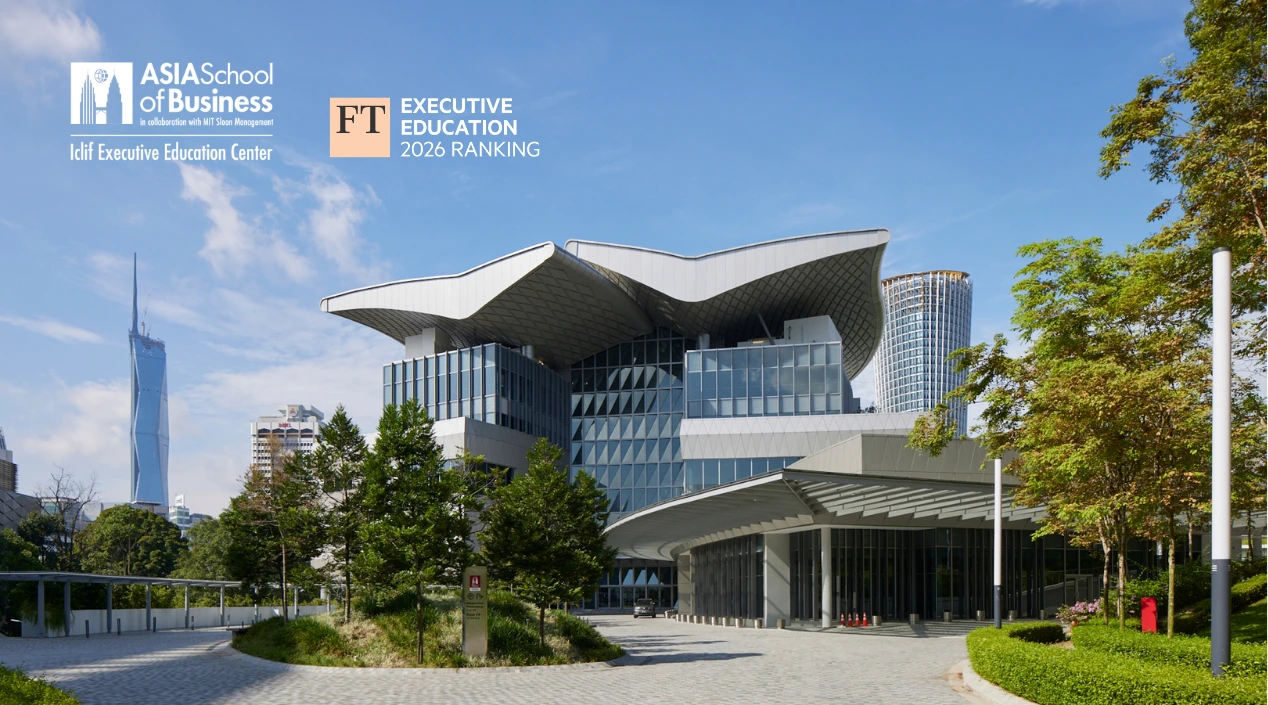
KUALA LUMPUR: The Asia School of Business (ASB) has achieved a historic milestone by debuting at 94th globally in the prestigious Financial Times (FT) Executive Education Custom Rankings.
In its very first year of participation, Asia School of Business is the first business school in Malaysia to enter this definitive global ranking.
This achievement reflects the deep trust placed in Asia School of Business by diverse corporate partners and underscores the school’s commitment to executive learning engineered specifically for Asia’s unique leadership and organisational transformations.
The FT methodology relies heavily on direct stakeholder sentiment, with client and participant feedback accounting for 80% of the overall ranking across dimensions like programme design, teaching methods and value for money.
Asia School of Business chief executive officer, president and dean Professor Joseph Cherian said, “Securing a position among the world’s top 100 custom executive education providers in our inaugural debut is an extraordinary honour for Asia School of Business and a significant milestone that elevates Malaysia’s presence in global business education.
“With the Financial Times methodology placing an immense 80% weight on client feedback, this ranking directly validates the genuine trust, real-world value and transformational impact our corporate partners experience with us.”
Asia School of Business’s executive education programmes are uniquely structured to address the most pressing challenges of the modern economy.
The school’s curriculum is anchored by five strategic pillars designed to empower leaders with a 360-degree perspective on regional and global shifts:
- Corporate Governance and Finance: Enhancing the skills of directors to effectively fulfil their fiduciary duties, with a focus on board-level risk management, strategy and succession planning;
- Leadership and Management: Equipping busy executives and high-potential managers across industries with the practical tools and insights needed to lead effectively in today’s complex world;
- Technology: Immersing participants in the dynamic digital landscape, covering pivotal fields like artificial intelligence and cybersecurity to understand how technology is reshaping global industries;
- Geopolitics: Examining the interplay between global policies and economics, enabling leaders to anticipate geopolitical shifts and adapt strategies for resilient growth;
- Sustainability: Moving beyond the buzzwords to help organisations strike a vital balance between profits and sustainable growth, progress, and future-minded impact.
This global recognition validates Asia School of Business’s defining ethos: Global Inquiry, Local Heart. Unlike traditional regional outposts, Asia School of Business operates as a homegrown executive education powerhouse built inside the region, significantly enhanced by the integration and legacy of the ICLIF Leadership and Governance Centre in 2020.
“Our capability has been built deeply and institutionally over the years to design executive education that answers to Asian market dynamics while staying globally connected,” added Professor Cherian.
“This recognition builds on Asia School of Business’s broader trajectory of international benchmarking, including our AACSB accreditation and growing global engagement.
“Moving forward, this milestone will catalyse our next phase of growth as we strengthen client listening mechanisms and expand our international footprint.”
Beyond executive education, the school offers premier postgraduate degrees including the Master in Central Banking (MCB), MBA, Executive MBA (EMBA), and Agile Continuous Education (Micro-Credential) programmes (ACE).
Driven by its signature Action Learning methodology, Asia School of Business ensures graduates possess rigorous real-world capabilities, backed by robust career services that successfully place students in top-tier global and regional organisations.
Originally published by The Star.