


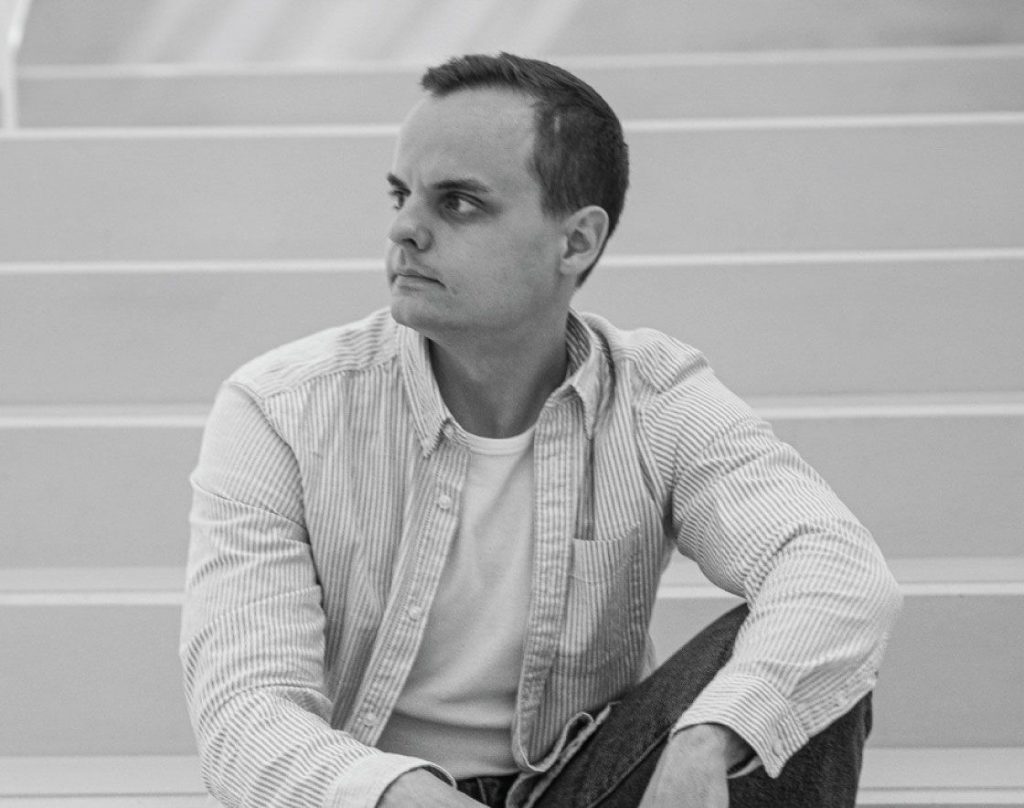
As an AI and quantum integration specialist, I have spent the last decade exploring how technology can serve both human progress and systemic resilience. My journey has taken me across continents — from Russia to Malaysia, and then to the United States.
It has seen me pivot from optimizing $80 billion energy operations at Rosneft to clinching the grand prize at Yale’s prestigious YQuantum 2025 Hackathon, which drew 700 entries from 29 countries.
My story is about taking leaps of faith into new areas and learning continuously — from founding a quantum startup that pioneered hybrid portfolio optimization to being selected by Yale University to lead AI innovation for environmental justice, impacting 50 million U.S. citizens.
I have always been fascinated by systems. Engineering, to me, was not just about machines or mathematics; it was about how structure creates stability and how logic creates beauty. I loved how everything had a pattern, how every variable could be defined. Yet, as I advanced in my career, I began to sense that the world did not always work in such perfect equations. Systems failed. Markets fluctuated. People made irrational decisions. And the question that kept coming back to me was: how can technology serve humanity, not just efficiency?
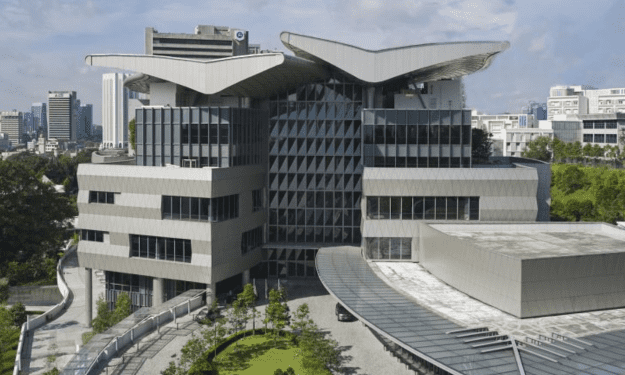
That question triggered me to pursue an MBA at the Asia School of Business. I wanted to explore how technology and leadership could intersect to create real change. The experience was transformative. At the Asia School of Business, I learned to see uncertainty as a creative force, not an obstacle. The program challenged my thinking, teaching me that leadership is not about controlling outcomes, but about enabling possibilities. It was a space where I learned to lead with empathy, adaptability, and a sense of responsibility toward the future.
After studying at the Asia School of Business and its pathway relations to other universities in the USA, I continued my studies at Yale. I was immersed in an environment that valued intellectual curiosity and experimentation. I had a global lens to see how technology, policy, and ethics must evolve together. Both the Asia School of Business and Yale taught me that progress is not linear. It is iterative. It requires courage to challenge conventions.
My fascination with quantum computing deepened even more during this period. While developing AI-driven financial models, I saw a clear limitation: traditional computing systems could not process the overwhelming complexity of financial markets in real time. Every second, millions of transactions and variables were interacting across economies, and the more data we collected, the less predictive our models became. It was a paradox of scale.
It led me to quantum computing. The idea that a system could process information across multiple states, simultaneously, felt like a new frontier of thought. Quantum technology does not follow binary rules; it thrives in uncertainty. And I realized that finance, with all its chaos and unpredictability, is inherently quantum in nature.
This insight sparked the creation of QINST, my company dedicated to exploring how quantum computing can transform finance. Our mission is to design intelligent systems that empower better human decisions. I wanted to build something that would not only model financial outcomes faster, but also provide deeper insight into how markets behave and why they move the way they do.
We piloted a hybrid AI–quantum platform that could analyze simultaneously, thousands of portfolio configurations. Within seconds, it produced optimized investment strategies that traditional models would have taken hours to compute – a 90x reduction in processing time. Watching that system in action felt like witnessing the future unfold in real time. It was not just about speed, it was about a new way of seeing patterns within complexity.
Since then, we have collaborated with banks, insurers, and academic researchers to test real-world applications. The potential impact is enormous. From predicting systemic risks to designing more resilient financial networks, quantum computing could help build systems that are not only more efficient but also more sustainable and transparent.
Yet, the more I explore this frontier, the more I understand that innovation is not purely technical. It is deeply human. The question is no longer what we can compute. But what we should compute. This ethical dimension is something that my time at the Asia School of Business instilled in me. The School’s philosophy of combining analytical rigor with moral purpose is the compass that shapes my work every day. I believe the next decade will redefine how finance operates. Quantum systems will not replace human intelligence; they will expand it.
Leaders who understand both technology and humanity will have the power to responsibly guide this transformation. Today, my research continues at the intersection of AI, quantum computing, and environmental innovation. I am building the next generation of decision-support systems that will enable institutions to model complex environmental risks, optimize resource allocation across continents, and accelerate the transition to a resilient global economy – work that Yale University and leading enterprises have recognized as essential to America’s technological leadership.
For me, this journey is not about chasing disruption for its own sake. It is about creating value with integrity. The quantum revolution will challenge our assumptions about risk, prediction, and control. But at its heart, it is also a reminder that uncertainty is not something to fear. It is the raw material that fuels innovation.
And that, I believe, is where the future begins.
Vladimir Gaylun Wins Grand Prize at International Quantum Circuit Hackathon: Read here
Read more about Post-MBA Pathways here.