






FROM Tun Dr Mahathir Mohamad’s Vision 2020 and the Multimedia Super Corridor in the 1990s to the current government’s New Industrial Master Plan 2030 (NIMP2030), Malaysia has repeatedly set its sights on becoming a high-income, innovation-driven economy. On paper, Malaysia has the capabilities to succeed — a solid university sector, advanced manufacturing capabilities in electronics, automotive and petrochemicals, and a history of rising research and development (R&D) expenditure — at least until recently.
However, Malaysia’s innovation engine appears to be losing steam. Where we currently stand, it seems unlikely for Malaysia to achieve its 3.5% R&D expenditure-to-GDP target set in NIMP2030 as its funding efforts fall behind. Whereas South Korea invests 5.2% of GDP in R&D, Japan 3.3%, Taiwan 4%, and Singapore 2.2%. Malaysia’s R&D expenditure has declined from 1.44% of GDP in 2016 to just 0.95% by 2020. The decrease in R&D expenditure is accompanied by a similar decline in domestic patent applications.
Foreign Investment Hides Domestic Innovation Deficit
While foreign direct investment (FDI) in manufacturing has surged, these projects often rely on imported technology and plug into global supply chains, rather than stimulating the local innovation ecosystem. Our recent analysis of Malaysian-invented patents registered at the US Patent and Trademark Office (USPTO) showed that 75% of patents invented in Malaysia are foreign-owned, compared to 45% in Singapore and 30% in China.
This lack of domestic R&D investment suggests there are large “reverse” knowledge flows out of Malaysia, whereby innovation at Malaysian subsidiaries primarily benefits foreign headquarters.
Meanwhile, Bursa Malaysia has failed to attract major technology listings, and government-linked investment companies (GLICs) remain focused on asset-heavy portfolios rather than high-tech ventures.
The Public Sector’s Role: Catalyst or Crutch?
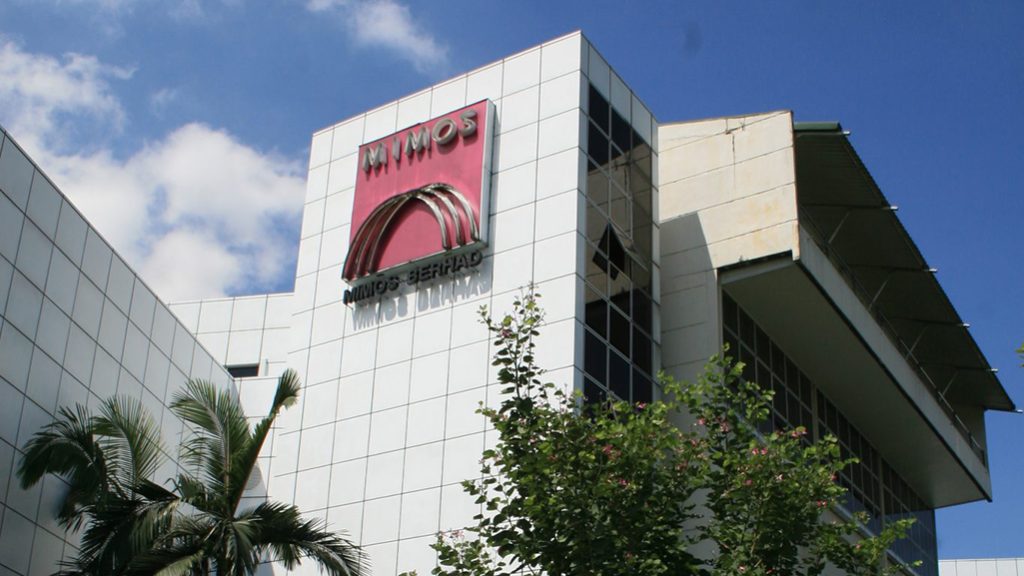
From 2000 to 2016, Malaysia’s innovation ecosystem rapidly developed due to public sector investment. Government funding acted as a catalyst, sparking both academic research and private sector R&D. Universities, government research institutes, and public-private partnerships drove patent filings, with institutions like the Malaysian Institute of Microelectronic Systems (MIMOS) leading the charge. However, as public R&D spending declined post-2016, so did innovation output.
The data shows a clear picture: Public sector research expenditure was the main component driving Malaysia’s patent growth. When funding decreased, private sector R&D (already lagging), further failed to pick up the slack. This suggests that Malaysia’s innovation ecosystem is highly dependent on public investment, a pattern seen in many developing economies. The question now is whether the government can reverse this trend.
Bright Spots: Penang and Johor’s Decentralised Innovation
Amid the national decline, two regions stand out: Penang and Johor. While patent activity in the Klang Valley, Malaysia’s largest urban agglomeration, has fallen by 16.2% since 2018, Penang and Johor have seen increases of 67.6% and 44.4% respectively.
These regions are anchored by strong public universities, Universiti Sains Malaysia (USM) in Penang and Universiti Teknologi Malaysia (UTM) in Johor, and thriving industrial parks like Bayan Lepas and Iskandar Puteri.
The success of Penang and Johor offers a potential blueprint for Malaysia’s innovation strategy.
Their growth suggests that decentralised innovation systems, built around regional universities and industrial clusters, can thrive even as the Klang Valley conurbation’s innovation performance declines. This shift also aligns with global trends, where secondary cities are emerging as centres of innovation. Decentralisation appears to be a key factor in achieving the goals of the NIMP.
The Potential of GLCs: Mobilising State-Linked Capital
Malaysia’s government-linked companies (GLCs) remain a dominant force in the economy, accounting for a significant share of market capitalisation on the FTSE Bursa Malaysia KLCI (FBM KLCI). These entities represent an important lever for innovation. If directed strategically, GLCs could mobilise investment into high-technology projects, increasing Malaysia’s capacity to absorb knowledge spillovers from foreign FDI.
Yet, for this to materialise, GLCs must shift from their traditional focus on asset-heavy industries to technology-driven ventures. This would require not just financial investment but also a cultural shift, one that prioritises long-term innovation and calculated risk-taking.
The Road Ahead: Policy Over Promises
Malaysia’s innovation challenges lie not in the lack of ambition but lack of execution. NIMP’s targets are laudable, but without matching policy interventions, they risk remaining simply words on paper.
The growth of Penang and Johor, amid national decline, suggests that decentralised strategies at the regional level hold the key to Malaysia’s innovation future. If Malaysia wants to escape the middle-income trap, it must move beyond a focus on FDI-driven growth, and harness the potential of its regions, with a focus on practical, localised policies that harness real innovation.
The clock is ticking regardless. Will Malaysia’s next decade be one of innovation-led growth, or will the country remain in its middle-income trap?
Authors : Pieter E. Stek and Muhammad Rasyid Ridha Hj Muhamad Juhari
Originally published by The Malaysia Reserve.