Asia School of Business

Global Inquiry, Local Heart

Tonight, we focus on electric vehicles and whether they’re truly a viable option in Malaysia. First, what would it really take for EVs to become the vehicle of choice, and what stands in the way right now? Professor Loredana, Senior Associate Dean at Asia School of Business weighs in. Then, we hear from the president of the Malaysian Electric Vehicle Owners Club about the pain points and how they’re being overcome.

“No matter what we choose, if we only choose one change, it will not make an impact. If we bring change into all aspects of our behaviors, then we will be able to make a [meaningful] change.”

Listen to the full interview below.

Originally published by BFM.

“Renato Lima-de-Oliveira, an assistant professor of business and society at Asia School of Business and a fellow of the Centre for Market Education, said this year has been a positive year for oil companies after a disastrous 2020. He said it is likely that 2022 would be even better, with the full recovery of production beyond pre-pandemic levels or above 100 million barrels per day.

But in the medium to long term, he said crude oil is still a sunset business as the world renews the calls to decarbonise by 2050 or earlier in order to deal with climate change. He noted that many countries are facing an energy crisis now like Brazil, China and the UK. “The core of the problem is that investments in fossil fuels are going down because of the push to decarbonise the economy and their lower long-term growth prospects in a net-zero emissions world but renewables are not yet mature enough to fully replace them.

“This is the time to put in place policies that are aligned with this emerging energy economy and are resilient to the climate challenge we face. “In particular, the aspiration to be net zero by 2050, as expressed in the 12th Malaysia Plan, is a start but it needs to be followed up soon with a concrete roadmap to boost investments in green economy,” Renato said.

Read the full article HERE.
Originally published by The Star.

For the energy sector, a decarbonization strategy will take a “carrot and stick” approach by governments, according to Professor Renato Lima-de-Oliveira, Assistant Professor at ASB and an expert on energy and environmental politics, which some countries have already adopted.

In a recent Malaysiakini article, he said: “You have policies to promote renewables, such as net metering, feed-in tariffs, large scale solar options, tax credit subsidies and you also have policies to discourage fossil fuels.”

He notes that we shouldn’t discount the role each of us play within society either: “A key thing within the political economy of any transition has been societal pressure. If you see where these policies have been adopted most, you will see a lot of activity coming from NGOs and from green parties, pushing society in one direction.”

Read the full article HERE.
Originally published by Malaysiakini.

A study involving 1,307 Malaysian adults found those unvaccinated for Covid-19 might be convinced to get jabbed if they were compelled to pay for tests on a fortnightly basis. This was based on preliminary results of the study “Norms, Trusts and Increasing Vaccine Registration in Malaysia” by the Asean Research Centre at the Asia School of Business published on Thursday. The study found that mandated self-paid PCR Covid-19 tests every two weeks for those yet to register for the vaccine would expedite vaccine take-up rates.

The final paper for the study will be released at a later date once it has undergone rigorous peer-review at an academic journal. Led by Dr Melati Nungsari, Dr Sam Flanders and several other researchers, the study involved an online survey experiment from June 21 to July 5. According to the study, tough measures were implemented in Singapore where unvaccinated workers in malls, supermarkets and food delivery businesses are tested twice a week.

“The vignette experiment in this study indicates that the attitude towards the vaccine is not highly driven by social pressure, but significantly affected by the likelihood of being punished,” the centre stated. Dr Nungsari said they conducted two behavioural survey experiments to study respondents’ reactions towards a state-imposed carrot-and-stick approach. “The first experiment suggested that 80% of respondents who had yet to register for the vaccine did so when there is a cash incentive,” she said.

Another key finding indicated that “a second experiment showed that respondents predicted that a punishment of having to self-pay for PCR Covid-19 tests every two weeks was more effective at promoting vaccinations compared to an incentive of being enrolled in a lucky draw with one large cash prize of RM1mil.” Universiti Malaya’s Department of Social and Preventive Medicine’s Prof Dr Moy Foong Ming said the government must consider multiple measures to encourage the public to get vaccinated.

Read the full article HERE.
Originally published by The Star.

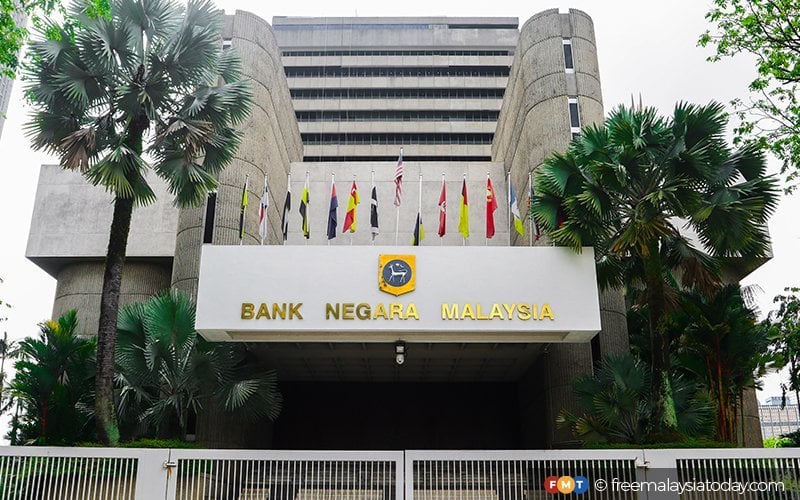
The Financial Stability Coordination Council (FSCC) has collaborated with Kuala Lumpur-based Asia School of Business (ASB) through the conduct of an online course structured for the personnel of the FSCC-member agencies. The ASB was established in 2015 as a partnership between Bank Negara Malaysia (BNM) and the MIT Sloan School of Management.

With faculty cross-posted between Kuala Lumpur and Cambridge, Massachusetts, the ASB sets out to develop highly qualified, industry-ready talents to meet the requirements of a dynamically growing Asia. At the opening of the three-week program, Bangko Sentral ng Pilipinas (BSP) Governor and FSCC Chairman Dr. Benjamin E. Diokno underscored how forging partnerships is critical in an interconnected global economy.

Governor Diokno noted that “risk behaviors in financial markets are much more fluid and respond more quickly to changing incentives. … [I]t is important more than ever for the FSCC to see what market players see, and for us to influence risk behaviors in ways that develop markets and build resilience.” Several senior ASB officials graced the opening ceremony, led by its Co-Chairperson, former BNM Governor, Dr. Zeti Akhtar Aziz.

In her remarks, Dr. Zeti highlighted how a well-functioning bond market was critical for Malaysia’s financial stability. Narrating her various experiences at the helm of BNM for 16 years, Dr. Zeti noted that market volatility in Malaysia was moderate even during global flashpoints such as the 2013 taper tantrum. This, she attributed, to a strong domestic bond market that minimized the reliance on capital flows from offshore markets as well as on the local banking market.

Dr. Zeti shared that Malaysia “recognize[d] after the Asian Financial Crisis the importance of diversifying our financial system. We had an over-concentration of risks in the banking sector and so we needed to diversify our risks and develop the bond market.” Governor Diokno pointed out that “part of our intent [is] to better survey risk behaviors … [and] the Financial Stability Coordination Council has been actively looking at secondary market asset prices for signs [of] any potential systemic risk concern.”

The FSCC Chairman added that “of particular interest to me is that ASB itself is a partnership that brings together the best talents and the broadest experience from different parts of the world. This puts the FSCC in an envious position. We are partnering with the best to better ourselves so that we too can, one day soon, be the best at what we do.”

“[This] is about making the FSCC an engine of improving the welfare of the Filipino public. This is the standing vision of the FSCC for why managing systemic risks and the pursuit of financial stability matter,” he concluded.

Twenty officials from the BSP, Department of Finance, Securities and Exchange Commission, Insurance Commission, Philippine Deposit Insurance Corporation, and the Bureau of the Treasury participated in this inaugural collaboration between the FSCC and the ASB.

Read the full article HERE.

With a RM5.36 billion palm oil industry at stake, Malaysia’s palm oil exports are set to face stricter trade barriers to markets such as the EU, for their association with deforestation and biodiversity loss.

Prof. Renato Lima de Oliveira, Assistant Professor of Business and Society at the Asia School of Business (ASB) and senior fellow at The Institute for Democracy and Economic Affairs (IDEAS), shared his thoughts recently on how Malaysian businesses can respond to these growing trends with The Edge, Malaysia’s leading business and investment weekly publication.

He advocates for putting sustainability at the forefront of business strategy, greater engagement with societal stakeholders, and greater engagement with the government. “It’s a clear signal that the market for clean energy is only going to grow and some Malaysian firms can benefit from that,” said Prof. Renato.

Read the full article HERE.
Originally published by The Edge Malaysia – a business and investment weekly.

As someone who is creating Asia Pacific’s business leaders of the future, what do you believe are the essential skills leaders require?

In many ways, we need leaders who are Renaissance women/men or polymaths, as opposed to specialists of an industry or a field. A polymath is a person with profound knowledge, proficiency and expertise in multiple fields and today’s leaders have to be able to combine various ideas, look at problems in novel and useful ways, and develop a broad and yet still deep set of skills, talents, and knowledge.

You’ve coined ‘smart’ and ‘sharp’ as skills of the future. What are these?

They are replacements for ‘soft’ and ‘hard’ skills, a concept coined by a US Army doctor in 1972 who observed that his pupils had different skills: dealing with machinery required ‘hard’ skills, while dealing with people and paper were ‘soft’ skills. This concept has served us well since, but I find it too binary, not to mention the semantic implications of the words themselves.

Soft implies gentle, delicate, mild, quiet, tender, weak. However, there is nothing soft in navigating competing perspectives and cultures, handling and delivering critical feedback or dealing with office politics. Instead, I prefer to call these skills ‘smart’.

Hard implies rigid, difficult, heavy, static. But how can we think of engineering or software development as static or rigid? I believe ‘sharp’ is more apt as such skills need constant updating or sharpening. I think it’s time to reflect on these classifications, because we can drastically change someone’s perspective by how we choose to talk about and frame something.

How important are smart skills in leadership today?

Smart skills are more important than ever because we live in a world of extreme diversity: generational, ethical, value-based, gender, etc. Gone are the days when giving an order was an effective act of leadership. I personally work with people from five different continents and across five different generations, therefore as leaders, we need to know how to adapt, motivate, inspire and connect.

We need to increase our investment in learning about them in action, especially as smart skills are more difficult to develop. I believe that a successful leader today has to be both smart and sharp. Take cognitive readiness, one of my top 10 smart skills. In order to be cognitive ready, one has to master system dynamics, one of my top 10 sharp skills.

Also, did you know that one of the primary reasons why digital transformation fails is not the absence of digital literacy, a sharp skill, but the need for more validation and adaptability, both smart skills. So, instead of thinking of these skills as binary, I prefer to think of them as the yin and yang; co-existing and complementing each other.

So, you can teach leaders smart skills then?

Yes, you can, via a combination of the classroom experience, plus an action component supported by deeply embedded reflection. At ASB we call this Action Learning, and we teach it both in the MBA and in the executive programs.

For example, in teaching a leader emotional maturity as a smart skill, first they need to learn what it is, and then act on it, before reflecting on what we did and how we did it. And then to repeat it, but this time with more expertise and awareness. It’s not easy, but that’s why my favourite mantra is ‘the job is easy, the people are not’.

Discover Professor Padurean’s successful skills for a digital transformation here.

Read the full article HERE.
Originally published by Business Chief APAC, a ‘Digital Community’ that connects the world’s largest brands and their most senior executives with the latest trends pivoting towards technology and digital transformation.

A virtual graduation ceremony, organized by the Iclif Executive Education Center (ASB-Iclif) at Asia School of Business in collaboration with MIT Sloan, was recently held for Sarawak Energy graduates who completed ASB-Iclif’s Executive Certificate program. The graduates were the first batch of graduates to obtain the Executive Certificate in Leadership, designed to equip middle to senior leaders to lead effectively.

Over the two-year programme, participants could select from a range of programs on managing self, managing others (including applying the Freedom within the Framework model), managing performance, and developing skills of the future. Dr. Sean Ferguson, Associate Dean of Asia School of Business, said, “On behalf of ASB-Iclif, we would like to express our gratitude to Sarawak Energy for the opportunity to develop and upskill these high potential employees.”

Sarawak Energy’s Senior Vice President of Human Resources, Dr. Mak Met, said while commenting on the occasion, “Our people are our greatest asset. We support their continued development through learning and training that add on new skill sets and through mentoring programmes, among others.”

“In Asia School of Business, we have a partner that can help us meet our goal to nurture leadership competence and to develop high performing leaders for Sarawak Energy through their world-class leadership programs,” he continued.

In the initial phase of Sarawak Energy’s engagement with ASB-Iclif, courses were held in locations across Southeast Asia to embed regional participation and perspectives into the learnings. During the COVID-19 pandemic, classes moved online seamlessly, allowing Sarawak Energy to pivot and adjust to the shifts brought about by the global crisis.

The ASB faculty members who teach ASB-Iclif courses are also MIT Sloan International Faculty Fellows, where MIT Sloan faculty serve as mentors and collaborate on research and teaching. A significant proportion of ASB’s professors are trained at Top 10 Time Higher Education (THE) or Quacquarelli Symonds (QS) schools, providing an unrivalled level of academic quality in the region.

Sarawak Energy is one of the largest employers of professional Sarawak talent with a multidisciplinary workforce of 5,400. The energy development corporation is undergoing a corporate transformation journey to meet its regional ambition.

To develop the required skills and competencies in its workforce, Sarawak Energy invests significantly to develop a high-performance team with the right culture and technical, professional and leadership competencies, through a structured approach of workplace learning, self-learning and formal learning on a 70:20:10 ratio.

The six graduates who received the Executive Certificate from ASB-Iclif were Chua Jiun Yih, Senior Manager for Information Security and Risk Management; Effendy Syaiful Abdullah, Senior Manager for Occupational Safety; Julie Ha Dai Dee, Manager for Project Analysis; Johny Kundoh, Senior Manager for Internal Audit; Mohamad Danial Bin Beti, Manager for Bumiputra Capacity Development; and Simon Fowel Tami, Senior Manager for Generation Asset Management.

Said Ms. Ha (Julie), “This programme has taught me how to increase my work efficiency and allow maximisation of resources, and I have learnt how to apply these principles at the workplace.” During the event, Dr. Lawrence Abeln, Associate Dean at ASB-Iclif, delivered a mini-masterclass titled: “Global and Strategic Mindset: Key to Leadership for Tomorrow”.

He said, “A strategic leader has a global view and understands the interconnectedness of the world and can navigate these cultural barriers. They have a strategic mindset to solve problems at the economic, social and political levels. The strategic leader is guided by values, is driven by purpose and directs with a vision.” In addition to the Leadership Track, ASB-Iclif also offers three other Executive Certificate Tracks for: Finance & the Global Economy, Corporate Governance, and General Management.

Originally published by PR Newswire.

MDEC appoints Mohd Afdhal Mohd Nayan as Chief Transformation OfficerTHE Malaysia Digital Economy Corporation (MDEC) has announced the appointment of Mohd Afdhal Mohd Nayan (pic) as its chief transformation officer. Afdhal, who will report to MDEC’s chief executive officer Surina Shukri, will work closely with the MDEC Operating Council (MOC), members of the leadership team, and its board of directors to define the organisation’s corporate transformation initiatives, development and implementation.

“Afdhal is a proven transformation specialist, his track record at AirAsia marks him out as an excellent fit with the ‘Re-invent’ mission that we are on at MDEC,” Rais Hussin, chairman of MDEC, said in a statement.

“I am confident that he will accelerate our change initiatives towards making MDEC an agile, efficient agency operating with the highest level of integrity in our bid to establish an innovative, inclusive and technologically-integrated society in line with Malaysia 5.0 and making the nation the heart of digital Asean.”

Afdhal is a graduate from the Asia School of Business (in collaboration with MIT Sloan Management), and was formerly with AirAsia Group Bhd, where he served as head of transformation execution from 2018.

Read the full article HERE.
Originally published by Digital News Asia.

IT’S not every day that you run into a Jamaican who is quadrilingual but 27-year-old Gabrielle Barnett speaks four languages.

Barnett, who is a past student of St Hilda’s Diocesan High School and Hampton School for Girls, is fluent in English, Spanish, and Mandarin; and is at the advanced proficiency level in Portuguese. Up until September of 2020 she was the education manager and head of the Capstone Educational Group in Beijing, China, where she worked with students who attended international schools in China and were preparing to transition to universities abroad.

Barnett worked previously in the Hong Kong office as senior instructor and educational consultant before transitioning to the Beijing office. She noted that she was promoted six months earlier than the norm to become the manager of the Beijing office, helping to lead the expansion efforts for the other mainland China offices (Shanghai and Shenzhen) and directing the overall strategy of the Beijing location.

Additionally, she was also the translator for the office and would help to mediate client meetings between non-English speaking clients and non-Mandarin speaking staff. “Initially, I wanted to be a diplomat for Jamaica so I decided that I wanted to learn languages because that would be of strategic importance to Jamaica. With this in mind, I started finding more opportunities to improve my Spanish language fluency and decided to study Mandarin as well,” Barnett said.

This led her to study for a Bachelor of Arts in International Relations with a minor in Mandarin and certificate in Latin American, Caribbean and Latino Studies at Mount Holyoke College, the first and oldest all-women’s college in the United States. As part of her undergraduate studies Barnett also studied in Beijing, China; Seville Spain; and Monrovia, Liberia.

She graduated with distinction in 2015 before moving on to Johns Hopkins University School of Advanced International Studies where she obtained a Graduate Diploma in Chinese and American Studies with a concentration in Economics. “By studying abroad I was able to improve my language proficiency, develop strong cross-cultural communication skills and gain clarity as to what I wanted my future to look like.

The constant exposure to foreign cultures, languages and people challenged me to push beyond any perceived limits I had for myself and taught me to be more resilient, imaginative and resourceful,” Barnett pointed out. Similarly, acknowledging the value of learning a foreign language, in January of this year Minister of Education Fayval Williams announced that Mexico and Jamaica will be doing a pilot project through which Mexican teachers will teach Spanish to Jamaican students online.

Barnett believes that Jamaican organisations should provide their employees with the opportunity to learn foreign languages as the world is becoming more integrated and business models are rapidly changing. “Organisations that allow their employees to learn other languages are well-positioned for success, and it is a worthwhile investment. When one learns a language they also learn the culture, which is a key asset to have when you are dealing with a more diverse clientele,” Barnett opined.

In 2019 Jamaica National (JN) Group implemented a programme for its employees called JN Foreign Chat, Learn a Foreign Language, in a bid to increase communication with customers who speak foreign languages and remain a leading performer in the Caribbean region.

“In championing our vision of using innovative solutions to unleash the potential of our people and ensuring that the JN Group’s performance directly benefits the people and communities that our member companies serve, the JN Group Talent and Performance Management Unit conceptualised the conversational foreign language programme. “It is aimed at providing a platform for JN Group employees to develop their language skills in French, Mandarin and Spanish.

The objective of the programme is to provide our employees with the basic conversational skills needed to converse in different situations. The programme is also flexible with the future demands of the organisation and is subject to change based on the needs of the organisation,” said Rushard Blake, learning support officer and JN Foreign Chat programme coordinator.

Blake pointed out that classes done prior to the coronavir pandemic facilitated both face-to-face and online. However, since the pandemic the sessions have been solely virtually instructor-led and the live recordings made available via the group’s learning management system for all staff members to access. He added that classes will resume this summer.

Having freelanced as a Manadarin translator and copy editor, Barnett said learning languages allowed her to secure many employment opportunities and stand out when applying for grants and scholarships. “My language skills played an integral role in securing my past jobs. Furthermore, having had the opportunity to thrive outside my comfort zone I find it less daunting to explore other endeavours like solo international travel,” the avid traveller mentioned.

She added that she is often called on by her alma mater to give talks about studying abroad and the perks of learning a foreign language. Barnett has travelled to 35 countries so far and is on a full scholarship studying for a master’s in business administration at the Asia School of Business in collaboration with MIT Sloan Management in Malaysia, where she is the first student from Jamaica and the Caribbean.

Originally published by Jamaica Observer.