Asia School of Business

Global Inquiry, Local Heart

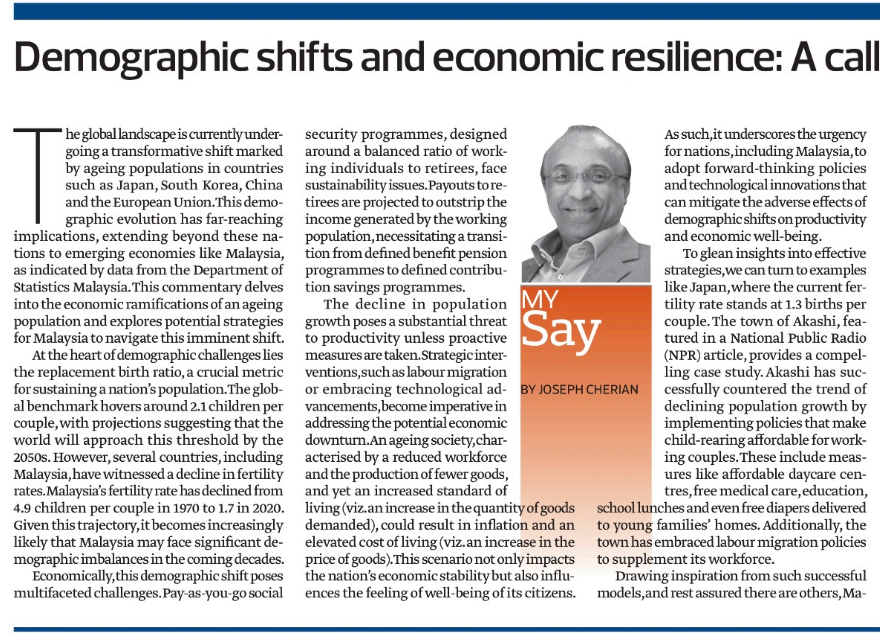
AT THE recent OECD-Asia Roundtable on Corporate Governance hosted by Securities Commission Malaysia, I was on a panel discussing corporate governance developments in Malaysia. I shared my reflections on how corporate governance in the country has evolved, and recent developments. I have followed developments in Malaysia since it started its corporate governance journey around 2000.

Some participants were surprised about my largely positive views, given my often critical comments about corporate governance in Singapore and elsewhere in my published articles, posts on my website, and comments on social media. There is no doubt that Malaysia has significant issues in public governance. This makes…

Read the full article HERE.
Originally published by The Business Times.

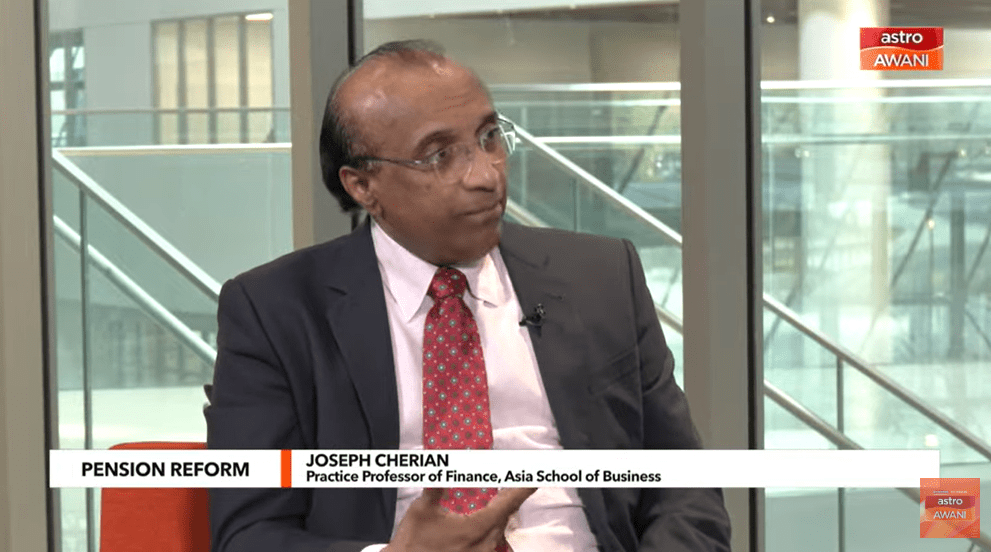
Join Joseph Cherian, Practice Professor of Finance at the Asia School of Business, as he shares smart strategies for funding your future in the context of Belanjawan 2024 including financial planning, investment opportunities, and effective budgeting techniques.

Originally published by Astro AWANI.

The conversations surrounding the consequences of artificial intelligence (AI) for jobs, productivity and quality of life are in full swing. AI is not merely a future concept but a present reality shaping our workplaces. As its remarkable capabilities become increasingly integrated into professional environments, understanding its impact on employees’ work and lives becomes crucial.

In a first-of-a-kind study in the Asean region conducted by Asia School of Business (ASB), researchers set out to measure AI’s impact on work-life balance, job security and job satisfaction among employees in various industries. The study employed a comprehensive survey-based research approach, gathering data from a diverse sample of 124 professionals across different sectors in Malaysia.

The study’s participants were drawn from industries such as technology, finance, healthcare, manufacturing and services. The sample included employees at different levels, from entry-level positions to top-level executives. The survey consisted of questions related to participants’ use of AI in the workplace, perceptions of work-life balance, job security and overall job satisfaction, all rated on a five-point Likert response scale.

Better work-life balance and lower job insecurity

Results based on independent sample T-tests show that employees who adopted AI at work reported a significantly higher level of work-life balance. Surprisingly, we found that employees using AI reported a significantly lower level of job insecurity. Intriguingly, we also found that this trend is even more pronounced among individuals at a higher seniority level. However, the study did not find a significant impact on job satisfaction among AI users compared with non-AI users.

Navigating challenges and embracing opportunities

The study comes at a pivotal time as businesses worldwide grapple with the challenges and opportunities presented by AI. While 54% of the 124 professionals surveyed reported regular use of AI in their roles, this advancement does not come without its concerns. The question of data security and potential leakage is one that many companies, including those in Malaysia, are contending with as they navigate this new technological landscape.

Despite these concerns, the evidence suggests that AI implementation can significantly enhance work-life balance and reduce job insecurity, particularly for senior professionals. These benefits provide a counterpoint to the challenges, underscoring the complex and multifaceted impact of AI on the modern workplace.

US-based cloud access solution provider Kisi in its study titled “Cities with the Best Work-Life Balance 2022” ranked Kuala Lumpur as the third most overworked city in the world, a fact that underscores the urgent need for improved work-life balance strategies in Malaysia. The co-authors believe the use of AI improves productivity, which leads to a reduction of long working hours, consequently leading to a better work-life balance.

Positive impact on career advancement and talent retention

In line with the key findings of our survey research, studies conducted in the US also indicate that early adoption of AI is linked to a host of professional benefits. A notable example is a recent CNBC SurveyMonkey Workforce Survey, which showed that 44% of early AI adopters reported excellent opportunities to advance their careers in their respective companies, compared with only 24% among those who do not use AI at all. This suggests a potential correlation between AI adoption and professional advancement opportunities, supporting our finding that employees using AI reported a lower level of job insecurity.

Power of AI in enhancing work-life balance

The use of AI has a measurably higher impact on work-life balance for more senior employees, likely owing to elimination of menial drudgery. These tasks, which often consist of administrative and routine work, can add to the already-demanding schedules of senior employees, contributing to job fatigue and reduced work-life balance. AI tools such as automated meeting schedulers, predictive email response and task management tools can significantly reduce the burden of these mundane tasks.

By eliminating the tedium that grinds one down, AI tools can free up valuable time, allowing senior employees to focus more on their strategic responsibilities and less on administrative chores. This in turn helps alleviate job fatigue and improves their work-life balance. According to researchers in organisational behaviour, employees with a better balance between work and life are better at performing, learning, innovating and relating to others at work.

These findings offer valuable insights for business leaders. The adoption of AI is not merely a matter of advancing productivity; it is a strategic decision that could facilitate talent retention and shape a positive workplace culture. A healthier work-life balance is a strong factor in employee retention, and companies that promote such a balance tend to experience lower employee turnover rates.

The reduced sense of job insecurity reported by AI users in our study could be due to the professional advancement opportunities that come with AI skills and experience.  The ability to use and adapt to AI technologies is becoming a highly valued skill in today’s digital economy, leading to better job prospects and security. By embracing AI as part of work, companies could use this technology as a strategic tool for attracting and retaining top talent.

The integration of AI into workplaces brings transformative potential. The study conducted highlights AI’s positive impact on work-life balance and job security, especially for senior professionals.  By recognising AI as a knowledge-work collaborator and embracing it strategically, businesses can navigate the AI revolution successfully, attract top talent and foster a culture of innovation. The time for action is now as AI’s multifaceted impact on the modern workplace continues to evolve.

Dr Wang Yi-Ren is the assistant professor of organisational behaviour at Asia School of Business (ASB), a higher education institution in collaboration with Bank Negara Malaysia and MIT Sloan School of Management. The research was led by ASB’s Masters of Business Administration candidates, Alvin Tang, Mohammad Azhary Abdul Aziz, Aizatul Akmar Abu Talib, Chia Shiroo and supported by Dr Wang.

Originally published by The Edge.

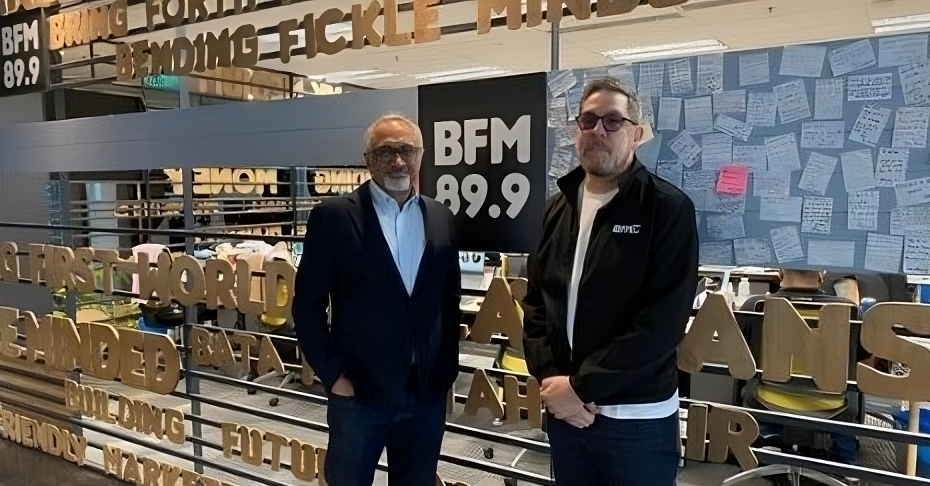
Porto Digital Tech Park, Brazil’s largest technology park was born in 2020 with an aim to turn the port city of Recife to be a centre of technological development and innovation. Prof. Silvio Meira, it’s founder and chairmen tells us the roots of their success and how this can be replicated in Malaysia.

Listen to the full interview below.

Originally published by BFM.

While the PBH supports logistics, priority should be given to the infrastructure development of the sector. THE aim of the Pan Borneo Highway (PBH) is to connect Sabah and Sarawak with Brunei and Kalimantan, which is expected to benefit their economic growth. In terms of the oil and gas (O&G) industry, while the highway aids in logistics, the emphasis should be on the sector’s infrastructure development, particularly for Sabah.

Read the full article HERE.
This article was originally published on The Malaysian Reserve.

Closing the gap between business and sustainability is no easy feat — and here’s what this engineering graduate from Chile is doing to join the fight in tackling the climate crisis. Source: Rodrigo Berner Bensan

As the world heats up to the point of no return, there’s still a stark gap between business and sustainability at many companies. Living in Latin America, Rodrigo Berner Bensan felt it acutely. Structural issues like poverty, inequality, and climate change were prevalent and he saw the need for “innovative, socially focused solutions.” “The emergence of social innovation strategies that aimed to address these problems and benefit society as a whole resonated strongly with me,” he says.

Read the full article HERE.
Originally published by Study International.

The Philippine government will need to swiftly address the rising threat of artificial intelligence (AI), especially on key sectors such as outsourcing, which is one of pillars of the economy. This warning was raised by Dr. Sanjay Sarma, the Dean of the Asia School of Business (ASB) and a professor of mechanical engineering and the Sloan School of Management at the Massachusetts Institute of Technology, during a recent visit to the Philippines.

“In the Philippines, it has to be a national effort [so] the government needs to be really cognizant,” said Sarma, who likened climate change to the threat AI poses to the unprepared. “It’s like climate change is going to damage the environment. [AI] is going to hurt a lot of people. This is technology change,” he said.

Sarma, who was in the country to also promote the ASB in Kuala Lumpur, said businesses need to level up their skills and technology to combat the threat. This also applies to the Philippine government, which can push new skills training so parts of the workforce can remain relevant. “The Philippines should become the country that leads the world in how to use AI. It will put some people out of work, but at least you define the rules of how it works,” he said.

Up for modernization

As part of the ongoing urban renewal of Makati City—which is to say the improvement of old structures with more modern, more efficient and more environmentally friendly ones—another iconic building will be modernized soon. Biz Buzz hears that the China Banking Corp. building along Paseo de Roxas will soon be augmented by a newer edifice that will rise right beside it, on a property that currently hosts a multilevel parking building (which has also become insufficient for the needs of the growing financial institution).

There’s no word yet on whether China Bank’s headquarters, which is also showing its age, will be torn down soon, but that is a reasonable assumption to make given the aggressive redevelopment being made by the Sy family (which also controls China Bank, in addition to BDO Unibank) of the entire.
– Daxim L. Lucas

BCDA chief gets public service citation

Bases Conversion and Development Authority (BCDA) president and CEO Joshua Bingcang last Monday received a citation for his dedication and leadership in public service from his hometown, a recognition that came after being with the government agency for close to three decades. The BCDA chief received the commendation from the local government unit of Mexico, Pampanga, which expressed their “pride and honor” for his recent appointment to the top management position of the investment promotion agency.

“Engineer Bingcang has performed vital tasks that prove his commitment and love for Pampanga and the Metro Clark areas through his roles in the planning and implementation of key projects,” read a part of the Municipal Resolution No. 138-2023 issued by the Sangguniang Bayan of Mexico. Climbing the career ladder in the public sector, Bingcang started working at the BCDA as a rank III project development officer in 1996.

He then held different positions on development and project management through the years until his promotion as senior vice president for the Conversion and Development Group in 2019. In March 2023, he was appointed as president and CEO of Clark International Airport Corporation, a BCDA subsidiary, before taking the oath of office as the parent government agency head last June 6.
– Alden M. Monzon

Originally published by Philippine Daily Inquirer.

PHILIPPINE companies should take advantage of artificial intelligence (AI) to benefit industries such as retail and outsourcing, according to an industry expert. “In the Philippines, AI is going to replace jobs. So, let’s accept that. The Philippines should become the country that leads the world in how to use AI, in call centers, recognizing that it will put some people out of work, but at least you define the rules of how it works with people,” Asia School of Business (ASB) President, Chief Executive Officer, and Dean Sanjay Sarma said during a media roundtable in Makati City last week.

“It has to be a national effort. The government needs to be really cognizant that this is an epic moment. It’s like, climate change is going to damage the environment, it’ll hurt a lot of people. This is ‘technology change,’ just like climate change,” he added. According to Mr. Sarma, industries that could benefit from AI in generating profit include those in the service sectors such as banking, retail, and customer service. “We spend a lot of time talking, trying to figure things out. AI can automate that,” he said.

Mr. Sarma added that companies only have one to two years to upskill their workers before AI replaces other jobs. “It’s not very long. It’s one or two years. The reason is that for these transforming technologies, there are now lots of companies working. And there’s hundreds of millions of dollars being spent on it,” Mr. Sarma said. Meanwhile, Mr. Sarma said workers should focus on upskilling to perform jobs that technology cannot accomplish such as planning and dispute resolution.

“You have to really figure out what the technology can do and what humans can do, and what technology can’t do. And to develop human capital in those directions,” Mr. Sarma said. “It takes a very careful analysis of the local labor economy. Combined with a very careful analysis of the needs of companies and education or development, put policy incentives, institutions, to let people move from where they are to where they need to be,” he added.

Recently, the International Data Corp. said the Philippines ranked 12th out of 14 economies across the Asia-Pacific region in terms of AI adoption for business and consumer transactions. The Philippines trailed other countries such as China, Japan, Australia, South Korea, Singapore, India, Taiwan, New Zealand, Hong Kong, Malaysia, and Thailand. Previously, the Trade department projected that AI could contribute as much as $90 billion to the country’s economy by 2030.

ASB, established in 2015 by Bank Negara Malaysia in collaboration with the Massachusetts Institute of Technology (MIT) Sloan School of Management, seeks to be a premier business school that is committed to “developing transformative and principled leaders who will create a positive impact in the emerging world and beyond.” — Revin Mikhael D. Ochave

Originally published by Business World.

The rapid progression in the development and application of artificial intelligence (AI) can no longer be denied or ignored and Philippine corporations may have to adjust or be left behind. Sanjay Sarma president, CEO and dean of the Asia School of Business, said AI is going to replace jobs. However, he said the Philippines should emerge the country that leads the world on how to use AI, at least in call centers.

“It will put some people out of work, but at least you define the rules of how it works,” Sarma said. “In the Philippines, it has to be a national effort. The government needs to be really, really, really cognizant, that this is an epic moment. It’s like, you know, climate change is going to damage the environment, it’ll hurt a lot of people, this is going to hurt a lot of people. This is technology change, just like climate change.”

Sarma, also a professor of mechanical engineering and the Sloan School of Management at the Massachusetts Institute of Technology, said AI is developing at an unprecedented pace and will be everywhere soon. “I’m telling you. It’s not 10 years; its one or two years. The reason is that for these transforming technologies, there are now lots of companies working. And there’s millions, hundreds of millions of dollars being spent on it,” he said.

While older and successfully adopted technologies such as automated teller machines took about 15 years to be widely accepted, people no longer have the luxury of time with AI. In the case of ATMs, Sarma said the immediate concern was that bank tellers would lose their jobs. “But that did not happen. In fact, bank tellers did something more advanced, which is selling mortgages and things like that.

The job changed. So they had to become cognitive. They did the more cognitively advanced tasks and ATMs did the cash. But it took 10 years or 15 years. The problem here is moving very fast.” “I mean, chat GPT only appeared in December or November 2022. We are now in September 2023. It now has more than 100 million users,” he said.

To adapt to changes that will be brought by the use of AI, Sarma said local industries like the business process outsourcing sector will need to upgrade more into the technology space. “You can’t be at this level, you have to go up, because the attack comes from below. It’s like a tiger, you know, it’s chasing you, you climb a tree, the tiger learns to climb the first 10 feet, well, you have to climb higher. So you have to go higher up in the cognitive stock to go higher,” he said.

Sarma is a leading authority in AI, Internet of things and education. The ASB, established in 2015 by Bank Negara Malaysia in collaboration with MIT Sloan School of Management, aims to be a premier business school that develops transformative and principled leaders who will contribute to the advancement of the emerging world, particularly in Asia. He teaches there alongside Bangko Sentral ng Pilipinas Governor Eli Remolona.

Originally published by Business Mirror.