Asia School of Business

Global Inquiry, Local Heart

The future is always unpredictable, and that’s part of the challenge. A leader must be agile and humble enough to rethink plans as needed. As Eisenhower said, “I love planning, but I hate plans.” When facts change, be ready to adapt while staying focused on the ultimate goal.

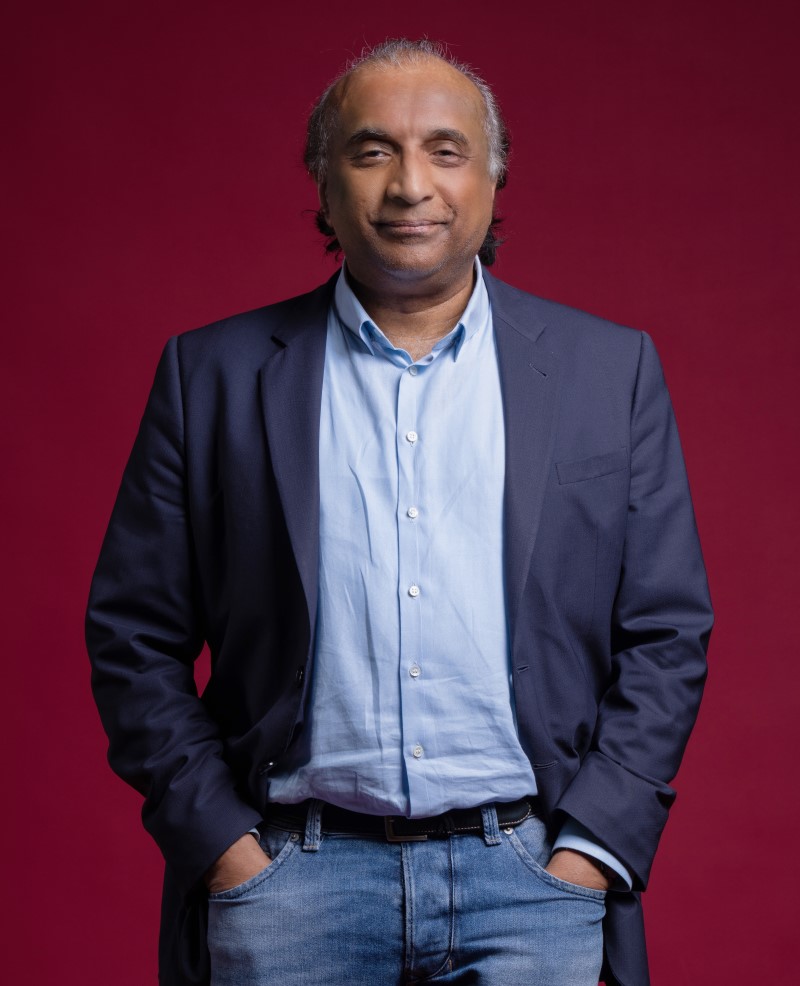
Sanjay Sarma is the CEO, President, and Dean of the Asia School of Business and a widely influential leader in education. He shares his backstory, beginning with an engineering degree from IIT Kanpur, and his advice for leaders who find themselves in turbulent times.

Thank you so much for your time! I know that you are a very busy person. Our readers would love to “get to know you” a bit better. Can you tell us a bit about your ‘backstory’ and how you got started?

Igrew up in India, got my engineering degree from IIT Kanpur, and worked in the oil industry in Scotland. After grad school at CMU and UC Berkeley, I joined MIT as an assistant professor in 1996. Since then, I’ve worked with amazing students, colleagues, and industry partners to invent and commercialize new technologies. I’ve also had the good fortune to work on education innovation including new educational institutions.

Is there a particular person who you are grateful towards who helped get you to where you are?

I’ve had many people help along the way. My PhD advisor, Professor Paul Wright, was a big influence. He was creative and open-minded and pushed me to let go of my inhibitions and pursue new ideas.

When your organization started, what was its vision and purpose?

The Asia School of Business was created to develop global leaders with a focus on leadership, ethics, and transformation. We’re in a rapidly changing region, and we need leaders who can guide companies, social enterprises, and governments through challenges like climate change, sustainability, and AI.

Can you share a story about how you lead your team during uncertain times?

Education is in a time of change, and in a crisis, it does not necessarily recognize or acknowledge. “Democratizing education” is good, a bit cliched as a rallying call. At MIT, we did so by focusing instead on principles and pedagogy — and the science of learning. This made our focus clear, unique and, therefore, empowering. It wasn’t just words — it was principles.

Did you ever consider giving up? Where did you find motivation?

Yes, I’ve had moments of doubt. But experience teaches you that hitting a wall often sparks creativity. Necessity is the mother of invention, and those moments of challenge are where new ideas emerge.

What is the most critical role of a leader during challenging times?

The leader’s role is to keep the team focused on the mission and understand that setbacks will happen. Prioritization is key — leaders need to guide the team through competing objectives and keep the long-term vision in sight.

What is the best way to boost morale and engage your team?

A leader must also keep the team focused on *why* the mission matters. Acknowledge challenges, but emphasize perseverance. It’s crucial as well to create an environment where the team feels empowered to provide feedback and be part of the decision-making process.

How can a leader make plans when the future is so unpredictable?

The future is always unpredictable, and that’s part of the challenge. A leader must be agile and humble enough to rethink plans as needed. As Eisenhower said, “I love planning, but I hate plans.” When facts change, be ready to adapt while staying focused on the ultimate goal.

Is there a number one principle that can help guide an organization through turbulent times?

One of the most important principles is focusing on why we’re doing what we’re doing. That long-term vision keeps everyone motivated and aligned, especially when times are tough. Just like raising a family — focus on the ultimate goal, the well-being of the next generation, and you can weather most storms.

What are the five most important things a leader should do to lead during uncertain times?

  1. Stay focused on the mission and vision.
  2. Allow your team to shape the plan and provide feedback.
  3. Foster chemistry and reduce power dynamics.
  4. If someone doesn’t want to be part of the change, it’s best they move on. For both parties.
  5. Keep things informal — don’t take yourself too seriously, but always take the mission seriously.

Can you give us your favorite “Life Lesson Quote”?

I don’t have a specific quote, but I often remind myself that when I’m stuck, it’s because I lack a long-term vision. A clear long-term vision helps you navigate short-term obstacles.

How can our readers follow your work?

I’m not on social media, as I foresaw it being a net negative for me personally. However, my work at Asia School of Business, MIT, and my public talks are widely available for those interested.

Thank you so much for sharing these important insights. We wish you continued success and good health!

Originally published by Medium.

Last year’s budget reflected the renewed ambition of the Madani Government to accelerate the country’s energy transition and catalyse new investments in the green economy. But this cannot be divorced from the broader climate action agenda of reducing carbon emissions, including the importance of nature-based policies. How can Budget 2025 best balance all the necessary elements for an effective national climate strategy? Dr Gary Theseira of Climate Governance Malaysia weighs in.Brought to you by Mah Sing. Reinvent Spaces. Enhance Life.

Listen to the full interview below.

Originally published by BFM.

After more than 80 years in the making, artificial intelligence (AI) has finally reached a point of inflection with the advent of generative AI. Gen AI can redefine industries, reshape the labour market and challenge the capabilities of both individuals and corporations.

As we navigate this rapidly evolving landscape, the need for strategic adaptation is becoming existential, encompassing reskilling initiatives for society, governmental financial and computation support, and corporate innovation.

A long time coming

The journey of AI began in 1943 with Walter Pitts and Warren McCulloch’s conceptualisation of the artificial neuron. Decades of fluctuating progress followed, marked by periods of optimism but eventually of stagnation, commonly referred to as AI winters.

Significant breakthroughs in the early 2000s, particularly with the use of graphics processing units (GPUs) to accelerate neural networks and set the stage for the current wave of AI optimism. However, it was the introduction of convolutional neural networks in 2012 that truly ignited the current AI revolution.

Gen AI, particularly large language models (LLMs) like GPT, LLaMA and Claude, are a new frontier in this evolution. These models have demonstrated capabilities far beyond the original objectives behind their development, influencing various domains through their interaction, reasoning, knowledge and generative capacities.

The rapid advancement of Gen AI presents contradictory challenges: its potential benefits are immense, but so are the risks and disruptions it can engender.

Unpacking the impact of Gen AI

Gen AI’s influence extends across multiple dimensions, reshaping how businesses operate and how individuals perform their tasks.

Interaction and interfacing: LLMs excel in natural language processing (NLP), enabling unprecedented levels of interaction and interfacing. This capability has transformative implications for customer service, office administration and various service industries.

The automation of these roles not only increases efficiency but also introduces new application possibilities. For instance, customer service bots can now handle complex queries, and robots in restaurants can take orders and payments, enhancing efficiency and cost savings.

Reasoning: One of the surprising developments in Gen AI is its basic reasoning ability. While these systems don’t inherently possess reasoning skills, their large associative memory allows them to effectively simulate reasoning.

This capability is improving as researchers integrate more intentional logic facilities into AI systems. Such advancements promise to enhance decision-making processes across various sectors, from healthcare to finance.

Knowledge: Gen AI bridges the gap between unstructured and structured data, a breakthrough with profound implications. Techniques like fine-tuning and retrieval-augmented generation (RAG) enable AI to handle vast amounts of unstructured data, transforming it into actionable insights.

This development rekindles the concept of “knowledge management” in a powerful new way, potentially revolutionising fields that rely heavily on knowledge interpretation and application.

Generation: The generative capabilities of AI are already making waves in creative industries, as evidenced by the Hollywood Writers’ Strike over AI-generated content. Beyond creativity, these capabilities are impacting coding, engineering design and more.

The ability to generate complex content and solutions autonomously positions Gen AI as a disruptive force across multiple domains.

Navigating the labour market shift

The integration of Gen AI into the workforce is reshaping the job market in significant ways. Unlike previous automation waves that predominantly affected blue-collar jobs, Gen AI is set to impact white-collar roles more profoundly.

Furthermore, since jobs that require cognition more than physical action tend to employ more women, women will be more impacted by Gen AI. These changes call for a proactive approach to reskilling and upskilling the workforce.

Labour economists argue that technological innovation can create new jobs through increased productivity, but the rapid pace of Gen AI advancements necessitates swift and comprehensive reskilling initiatives to avoid widespread job disruption, as well as to enable competitiveness.

Corporate adaptation: Challenges and strategies

The AI transformation within corporations will require more than incremental adjustments; it demands a fundamental redesign of business operations and strategies. AI is statistical and probabilistic, employees using AI will need to master risk management in decision-making processes.

Risk and Talent: Large corporations face significant challenges in adopting Gen AI due to the need for a new breed of risk professionals. Recently, an Air Canada chatbot went rogue and offered unauthorised deals to customers. Incidents such as this highlight the difficulties in managing AI-driven processes.

Smaller, more agile companies may navigate these risks more effectively, but they too require robust strategies to mitigate potential pitfalls.

SMEs can seize the opportunity: Small and medium enterprises (SMEs) have a unique opportunity to leverage Gen AI for competitive advantage. Unlike large corporations, SMEs can be can more quickly adapt to the quirks and advantages of Gen A.

However, they face barriers such as limited access to advanced AI technologies and the need for specialised skills. Governments play a crucial role in supporting SMEs through financial incentives, training programmes and affordable access to AI resources.

Addressing misuse

While Gen AI offers immense potential, it also poses risks related to cybersecurity and misuse. The sophistication of social engineering attacks, such as deep fake scams, highlights the importance of educating all employees about the risks associated with AI technologies.

Recommendations for policymakers

Policymakers must take proactive measures to facilitate the Gen AI transition. Some key initiatives are:

Talent development: A multifaceted approach to talent development is crucial. This includes educating individuals on the basics of Gen AI, training technical staff to manage and implement AI technologies, and equipping leaders with the knowledge to navigate the strategic implications of AI adoption.

Supporting SMEs: An AI transformation service for SMEs can help these businesses thrive in the Gen AI economy. This includes providing training courses, networking opportunities and affordable consulting services. Governments should also consider grants, loans and incentives to support AI adoption in SMEs.

Democratising AI access: Ensuring affordable access to AI technologies is essential for SMEs. This may involve utilising open-source models, exploring innovative AI technologies that require fewer computational resources, and considering AI as equivalent to a subsidised utility.

The emergence of generative AI is a watershed moment in the evolution of technology. Its potential to transform industries, redefine job roles and enhance productivity is immense. However, realising these benefits requires a concerted effort from individuals, corporations, policymakers and nations. By embracing strategic adaptation and proactive measures, we can harness the transformative power of Gen AI, ensuring a prosperous and inclusive future for all. The time to act is now, as the AI revolution continues to gather momentum, shaping the future of business and labour in profound ways.

Originally published by The Edge.

In April 2022, Bank Negara Malaysia issued five digital banking licences, signalling a step towards financial inclusion in the country. Three of the digital banks — AEON Bank (M) Bhd, GX Bank Bhd and Boost Bank Bhd — have since launched their platforms, saying they aim to cater to the underserved communities. Two more digital banks, one by the consortium of Sea Ltd and YTL Digital Capital Sdn Bhd and the other led by KAF Investment Bank, are expected to follow soon. But as these platforms roll out with promise of accessibility and innovation, the question arises: Will this push for financial inclusion be delivered, or is it just a well-crafted marketing strategy?
 
“Financial services are more like a necessity now than anything because people need to be able to pay for stuff and other things. All communities that live in Malaysia should have access to these and people who don’t are underserved, which includes refugees and the elderly who are having issues accessing financial services,” says Dr Melati Nungsari, associate professor of economics at the Asia School of Business.

“From the personal conversations I have had about digital banks, it appears that the people who have already signed up and taken advantage of all these great returns and stuff for now have been mainly the richer people, to be honest.”

According to the 2023 RinggitPlus Malaysian Financial Literacy Survey, 71% of the respondents said they could only save RM500 or less each month, while 67% stated their emergency savings could only last them three months or less.

Despite being cash-strapped, Malaysian households continued to allocate 60.7% of their income to consumption expenses in 2022, the Khazanah Research Institute points out in its report The Financialization of Our Lives: Values and Trade-offs, highlighting a shift towards spending rather than saving.

The report also said that more than half (55%) of Malaysians spend exactly or more than what they earn each month, effectively living paycheque to paycheque. This combination of low saving rate and insufficient emergency funds underscores the urgent need for improved financial literacy and education across the country.

With the recent launch of digital banks, which promise greater accessibility and financial inclusion, there is hope to foster better saving habits among the public, particularly the underserved.

Beyond the bottom 40% income earners (B40) and micro, small and medium enterprises (MSMEs), the digital banks should also consider other underserved communities such as the immigrants, refugees and unbanked. While these groups represent a smaller percentage of the population, they should not be overlooked.

The first step toward financial inclusion for digital banks should be reducing the requirements for proof of identification for access to their services. It should be noted that providing education and reaching out to underserved communities are key to achieving true financial inclusion in the country.

“I can see the value of not having to go to a physical bank for communities who live far away or are hard to serve outside of urban areas. But if the digital banks really want to be different from traditional banks, they need to actually do things that make sense for these communities. Fewer identification requirements and less paperwork would be an example of these,” says Melati.

In addition to promoting financial inclusion, digital banks face the challenge of balancing their social mission with the need to remain profitable. In their applications to the central bank, they are required to maintain minimum capital funds of RM100 million and be unimpaired by losses for the first three to five years, also known as the foundational phase. After this period, the required capital is increased to RM300 million.

Applicants for the digital bank licence had to provide comprehensive details on their deployment of technology as well as address cybersecurity issues and IT governance. During the foundational phase, a cap of RM3 billion is placed on the asset size of digital banks.

Ultimately, digital banks will need to generate sufficient revenue streams, such as through lending products or transaction fees, without compromising on their commitment to inclusivity, say industry players.

Word on the street

Boost Bank chief technology officer Steven Gan is cognisant of the challenge. He stresses that the bank is working to break down barriers to allow users who don’t even have a traditional bank account to open a digital bank savings account.

Gan says that on a recent work trip to Kuala Terengganu, he came across many potential users who were unfamiliar with digital banking and had limited financial resources.

“When we did on-the-ground interviews at Mydin Bukit Mertajam, of the 500 users who came in, 97% said they did not have RM2,000 on hand to begin with. We want to stitch together the ecosystem and get the right momentum of saving and spending behaviour for these underserved customers,” he adds.

Gan wants to offer guidance to the underserved segment and eventually encourage saving and investing literacy. “Through BoostMyMoney, we hold monthly campaigns to bring awareness to them on how their funds are being managed and to give them financial literacy because cash is still power in some parts of Malaysia.”

Digital banks will need to join forces with the central bank and government to educate users who are not familiar with digital payment services.

“We are working to allow foreigners to come in as well after we have all the robust anti-money laundering (AML) security tools in place, together with the National Fraud Portal (NFP) built by Paynet,” says Gan.

While the NFP and MyDigital ID system by the government are underway, there is still a gap in onboarding immigrants or foreigners due to their limited financial resources and lack of digital literacy. Traditional banks might consider them high risk, making it difficult for them to access financial services.

However, Gan sees this as an opportunity. “We have adopted a very stringent AML ruling to detect not just your transaction monitoring and behavioural pattern, but also your digital activity.”

Read the full article HERE.
Originally published by The Edge.

KUALA LUMPUR: Kesan kecerdasan buatan (AI) terhadap pasaran kerja adalah nyata dengan kesannya terhadap pemberhentian kerja dalam segmen tertentu, kata Ketua Pegawai Eksekutif, Presiden dan Dekan Asia School of Business, Prof Sanjay Sarma.

Beliau berkata, ada syarikat teknologi telah membangunkan pembantu AI yang boleh menggantikan pekerjaan di pusat panggilan.

Katanya, teknologi itu boleh beroperasi di 23 pasaran dengan berkeupayaan dikendalikan dalam 35 bahasa, 24 jam sehari, tujuh hari seminggu.

Malah, jelasnya, teknologi AI itu juga berjaya melayani pelanggan dengan lebih pantas, dengan masa penyelesaian menurun kepada dua minit daripada 11 sebelumnya dan terdapat juga penurunan sebanyak 25 peratus dalam pertanyaan berulang.

“Ia menggantikan kerja 700 ejen sepenuh masa,” katanya pada sesi plenari bertajuk ‘Data dan Kecerdasan Buatan: Memperkasa Masa Depan’ di sini, hari ini.

Sidang plenari itu sempena Persidangan Statistik Malaysia (MyStats) ke-11 2024 yang bertemakan ‘Data dan Kecerdasan Buatan: Memperkasa Masa Depan’ anjuran secara bersama antara Jabatan Perangkaan Malaysia, Bank Negara Malaysia dan Institut Statistik Malaysia.

Sanjay berkata, syarikat AI itu dianggarkan menjana keuntungan sehingga AS$40 juta dalam tempoh 20 tahun.

Justeru, katanya, kesan AI kepada pekerjaan adalah nyata.

“Kita berada di ambang sesuatu yang luar biasa, menakutkan, menggerunkan dan menakjubkan,” katanya.

Mengenai kesan kepada pasaran kerja di Malaysia, Sanjay berkata, impak AI ke atas pasaran kerja Malaysia akan sangat mengejutkan.

“Saya fikir Malaysia mempunyai, mungkin, lima tahun (sebelum AI memberi kesan kepada pekerjaan di negara ini),” katanya.

Lebih 1,000 peserta menghadiri MyStats kali ke-11 itu yang menjadi platform untuk ahli statistik, penyelidik, ahli ekonomi, pembuat dasar, ahli akademik untuk mengetengahkan idea baharu dan meningkatkan pemahaman bersama dalam bidang statistik, selain mewujudkan jalinan kerjasama dan rangkaian yang lebih baik.

Ia juga dapat meningkatkan lagi keberkesanan analisis dan penggubalan dasar kerajaan yang dibuat berdasarkan fakta. 

Originally published by Berita Harian.

KUALA LUMPUR: The impact of artificial intelligence on the job market is real, the CEO of a business school has warned, citing the layoffs it created in the Philippines.

Sanjay Sarma, of Asia School of Business, said a third of the Philippines’s revenue comes from call centres, which businesses outsource to local residents.

He also said that recently, a Swedish fintech company developed an AI assistant that could operate in 23 markets, 24/7, in 35 languages.

The AI, which handled two-thirds of its customer service, managed to attend to customers faster, with the resolution time dropping to two minutes from the previous 11. There was also a 25% drop in repeat inquiries, he said.

It replaced the work of 700 full-time agents, he said at the 11th Malaysia Statistics Conference here today.

Sanjay said the company’s AI is estimated to drive profit up to US$40 million in 20 years.

The impact on jobs is real. We are on the threshold of something incredible, scary, terrifying, and wonderful, he said.

He said the impact AI would have on the Malaysian job market would be staggering.

I think Malaysia has, maybe, five years (before AI impacts jobs in the country), he said. 

Originally published by Free Malaysia Today.

KUALA LUMPUR – Lebih 1,000 peserta terdiri daripada ahli statistik, ahli akademik dan penyelidik dari pelbagai agensi secara fizikal serta dalam talian menyertai Persidangan Statistik Malaysia (MyStats) ke-11 2024 di Sasana Kijang, Bank Negara Malaysia di sini pada Khamis.

Timbalan Menteri Ekonomi, Datuk Hanifah Hajar Taib berkata, persidangan ini merupakan antara platform yang membolehkan para perangkawan, penyelidik, ahli akademik dan pengguna data untuk memahami dan membincangkan hal berkaitan pengurusan data dan sosio ekonomi semasa di samping perkembangan teknologi yang semakin maju pada hari ini.

“Saya berkeyakinan bahawa melalui kertas pembentangan MyStats pada hari ini, kita dapat menambah input-input yang signifikan bagi memperkukuh proses asimilasi kecerdasan buatan di negara kita.

“Dengan menggunakan data yang kaya dan analitik mendalam, kita dapat membuat keputusan lebih baik, meningkatkan kecekapan dan menginovasi dalam pelbagai bidang, yang semuanya membawa kepada peningkatan kualiti hidup dan pembangunan berterusan,” ujarnya.

Beliau berkata demikian ketika menyampaikan ucapan perasmian pada persidangan tersebut dianjurkan Jabatan Perangkaan Malaysia, Bank Negara Malaysia dan Institut Statistik Malaysia dengan tema “Data dan Kecerdasan Buatan: Memperkasa Masa Depan” di sini pada Khamis.

Hadir sama, Ketua Perangkawan Malaysia, Datuk Seri Dr Mohd Uzir Mahidin dan Timbalan Gabenor Bank Negara Malaysia, Datuk Marzunisham Omar.

Sementara itu, menurut Mohd Uzir, tema persidangan kali ini mencerminkan peranan yang semakin meningkat dalam menggabungkan teknologi dan data untuk mencipta inovasi serta meningkatkan keberkesanan dalam pelbagai sektor di negara kita.

Jelasnya, ia bertujuan menyediakan platform untuk ahli statistik, penyelidik, ahli ekonomi, pembuat dasar, ahli akademik untuk mengetengahkan idea baharu dan meningkatkan pemahaman bersama dalam bidang statistik, selain mewujudkan jalinan kerjasama dan rangkaian yang lebih baik.

“Ini dapat meningkatkan lagi keberkesanan analisis dan penggubalan dasar kerajaan yang dibuat berdasarkan fakta.

“MyStats ialah platform untuk mengumpulkan ahli statistik, pembuat dasar dan pengamal statistik terkenal yang memberikan pelbagai manfaat kepada komuniti statistik,” ujarnya pada persidangan berkenaan.

Terdahulu, persidangan bermula dengan sesi ucap tama yang membincangkan dengan lebih lanjut berkenaan tema persidangan disampaikan Ketua Pegawai Eksekutif juga merupakan Presiden Asia School of Business, Profesor Sanjay Sarma.

Persidangan kemudiannya diteruskan dengan dua sesi forum menghuraikan perihal gaji progresif dengan membincangkan pandangan majikan dan penyelidik berkaitan pelaksanaan gaji progresif dan komitmen kerajaan bagi mereformasi pasaran buruh dengan matlamat untuk meningkatkan pendapatan pekerja selari dengan peningkatan produktiviti.

Pengenalan dasar baharu ini akan menjadi pelengkap kepada inisiatif gaji sedia ada iaitu perintah gaji minimum dan sistem upah yang dikaitkan dengan produktiviti (Productivity Linked-Wage System – PLWS).

Forum kedua adalah mengenai kecerdasan buatan (Al) dan dilema kehilangan pekerjaan bagi membincangkan berkenaan kecerdasan buatan (Al) yang telah membawa perubahan besar dalam era Revolusi Industri 4.0 (IR 4.0).

Selain itu, persidangan ini turut mengiktiraf sumbangan pengamal statistik melalui anugerah “Mystats The Best Young Statistician Presenter”, “The Best Oral Presenter” dan “The Best Poster Presenter” sebagai penghargaan dalam mengiktiraf bakat mereka dari segi penyelidikan dan penghasilan statistik berimpak tinggi.

Sebelum ini, Jabatan Perangkaan Malaysia (DOSM) telah melancarkan OpenDOSM NextGen sebagai medium menyediakan katalog data dan visualisasi bagi memudahkan pengguna menganalisis pelbagal data, OpenDOSM NextGen adalah platform perkongsian data sumber terbuka dan boleh diakses melalui portal https://open.dosm.gov.my.

Dalam masa sama, DOSM sedang menjalankan banci pertanian dan juga survei pendapatan dan perbelanjaan (HIES) POSM juga akan menyambut Hari Statistik Negara pada bulan hadapan dan Sambutan Jubli Intan Ke-75 Tahun DOSM yang akan berlangsung di Pulau Pinang November ini.

Originally published by Sinar Harian.

Staying updated through learning and training will help employees deal with concerns about artificial intelligence (AI).

Asia School of Business Assis- tant Professor Alex Eng said people became frustrated with technology at work because they expected it to be perfect.

He added that this disappoint- ment arose when Al or machines made mistakes, leading to a per- ception of these tools as flawed.

“When people make mistakes, we would say ‘to make a mistake is human’, but when it comes to machines making mistakes, we call it ‘flawed,” he told the ‘New Straits Times’ recently.

Better understanding of Artificial Intelligence

Eng said it was crucial to educate employees and managers about the nature of Al, its capabilities and the reasons behind dissat- isfaction with technology if they wanted to implement it in their workspace.

He said training should focus on setting realistic expectations and understanding how to interact with Al, and helping employees and organisations adapt to and man- age technological tools better.

He said employees and manag- ers needed to be educated about the basics of Al, including what it was and the ability required to interact with it.

“Businesses must understand the factors that lead to dissatisfaction with Al, especially the differences in how people perceive mistakes made by Al compared with those made by humans.”

He added that companies should train their employees to recognise that the expectations for Al and human responses differed, such as the time taken to provide advice or solutions.

“Training boosts employees’ per- ception of Al, making it easy to use and useful by increasing accessibility and relevance to their tasks.”

Eng said it could also help build confidence and reduce computer anxiety.

Read the full article HERE.
Originally published by New Straits Times.

Since 2017, there has been a 38% increase in family offices worldwide, with the Middle East becoming a popular jurisdiction.

Leading family businesses in the Middle East have been evolving over the past two decades. As patriarchs age, they have prioritised reorganising their management structures and adopting corporate governance and family protocols. This ensures orderly successions and smooth transmissions of businesses to the next generation, particularly given that only 13% of family businesses survive into the third generation.

A third of family offices globally are currently in the process of handing over responsibilities to a new generation of leaders, and more than a quarter expect to do so soon. In the Middle East, an estimated Dh3.67 trillion ($1 trillion) in assets will be transferred to the next generation during the next decade.

These families have also made a strategic move to separate management from ownership, delegating responsibilities to professionals and staying remote from day-to-day operations. This approach infuses businesses with new ideas while preserving the family’s strategic oversight and long-term vision.

“Family enterprises are evolving as families evolve—especially when wealth passes between generations, for example, when members become adults and, in turn, owners and/or employees of the family business,” noted Niels Zilkens, Head of Wealth Management, Middle East, UBS Global Wealth Management. “The rapid pace of change and constant need for innovation in today’s market can make these evolutions more challenging, however in our experience, those with well-defined values are best placed to succeed.”

Opinions differ on the best approach. “Many professionals believe that separating management from ownership is the optimal strategy, as it allows for professional management while maintaining family control,” noted Mazen Boustany, Partner at Baker McKenzie LLP. “Conversely, some argue that having ‘skin in the game’ is better, asserting that the direct involvement of family members in management ensures a stronger commitment to the business’s success.”

Next generation

Succession planning has several advantages for families and their organisations. It prepares both for leadership transitions and helps ensure a seamless handover, knowledge transfer and risk mitigation. Industry experts see this occurring more frequently as family offices collaborate, sharing knowledge more openly with peers.

This matches talent development with business goals, ensuring a skilled workforce aligned with family values and ready to drive long-term performance. “A family’s planning efforts should begin with mentoring, coaching, and deciding which family member is best placed to take the leadership reins for the next generation,” explained Adam Ladjadj, Founder of The Emirates Family Office Association. “This process typically begins by involving the younger generation from an early age, cultivating a leadership mindset that naturally integrates family values with innovation.”

“Equally important is giving future family business leaders space and freedom to be creative, experiment, and innovate,” he added. “This balance is vital for an optimum succession strategy, allowing the business to evolve while staying true to its core values.”

Currently, 68% of next-generation family members hold advanced degrees in finance or business, up from just 30% a decade ago. This educational trend ensures that future leaders are equipped to drive innovation. Moreover, next-gen family members are now involved in 65% of family businesses, contributing to key operations and values. This hands-on approach provides valuable practical experience through mentorship and execution, facilitating the transfer of family values and business acumen while encouraging fresh perspectives on innovation and growth strategies.

The rise in family offices

Since 2017, there has been a 38% increase in family offices worldwide, with the Middle East becoming a popular jurisdiction. The increased focus on succession planning and long-term stewardship aims to secure lasting legacies and family heritage for the next generation.

“Traditionally very discreet, family offices are coming out of the shadows and becoming an attractive structure for managing private/family capital,” stated Ladjadj. “Family offices’ increased visibility has accompanied their strategic transition from local wealth custodians to dynamic entities actively seeking investments and partnerships.”

Communication and decision-making become more complex when families grow and develop as new members and technologies are introduced. These steps must be guided by a clear governance framework with processes and principles that ensure efficient operations. A “family constitution” or “family charter” should describe the family’s values, principles of engagement in the business, decision-making and communication processes, and family activities.

“This clarifies to family members where they fit in the enterprise and what that means for them,” explained Zilkens. “It defines, for example, how they can interact and influence the rest of the family or what role they can play in respect to ownership or management. Finally, it helps families balance everyone’s interests and ambitions and avoid discontent.”

On the investment side, the family should define a professional investment policy that aligns with its values. Such a policy sets out clear goals, rules, and processes for investing. It serves as the basis for decision-making on asset allocation or key investment decisions by the family’s investment committee.

The rise of AI

Since 2018, 35% of family offices have adopted AI and machine learning for risk assessment and asset allocation, preserving the family’s control over wealth management decisions while leveraging technology for improved performance. Cybersecurity investments have also risen, reflecting a growing commitment to safeguarding family wealth and data in the digital age.

“They have not escaped the disruptive aspects of the digital revolution, and those thriving most have embraced tech advances such as automation, data analytics, artificial intelligence (AI), and fintech innovation,” Ladjadj added. “Modern tools that enhance connectivity and communication between family members are crucial. Heritage can also be protected by preserving historical records, documents, and values in digital formats, ensuring easy access for future generations.”

Nearly 57% of family businesses in the region prioritise improving their digital capabilities, compared to 44% globally. Over the past decade, there has been a shift in portfolio composition, with traditional sectors like real estate and commodities decreasing and a rise in alternative investments, particularly private equity and venture capital.

“This reallocation reflects a growing appetite for innovation while preserving a strong foundation in traditional assets,” stated Anuj Goel, SEO, Century Private Wealth. “There is a rising integration of modern sustainable practices, with 93% of family businesses incorporating Environmental, Social, and Governance (ESG) criteria into their investment strategies.”

Advisory firms

Family wealth transfers require strategic planning, and experts see families increasingly seeking external support. This ensures that planning is done in a professional manner while alleviating some of the emotional biases that naturally occur.

Many UAE family businesses work with dedicated family business advisory firms. Some family members may resist outside involvement in family matters, so companies often involve them in the selection of advisors to build trust.

“The role of external advisory and mentorship can be critical in professionalising the succession planning process for UAE family businesses,” stated Asad Ata, Associate Professor of Operations and Supply Chain Management at the Asia School of Business. “They can help address different facets of succession planning for family businesses.”

Succession planning and the role of family offices have become crucial amid recent global instability. In the Middle East, there is a growing trend of establishing family offices to separate business operations from private family wealth.

The looming wealth transfer between generations will see up to $70 trillion of private wealth bequeathed, presenting challenges such as inheritance laws, investment strategies, and conflict. It is vital that families do not face these challenges alone.

As wealth transfer accelerates, families increasingly demand sophisticated services and support. “We see a growing awareness for education of the next generation among wealthy families in the Middle East, as well as increasing interest in professional family office services based on international best practices to retain control over the family’s wealth,” noted Zilkens. “Often, family offices are organizationally separated from the family’s operating business.”

Advice and guidance for Middle Eastern families is vitally important. Up to 80% of the region’s private sector involves family businesses. Succession planning has evolved significantly as more families recognise it as a crucial tool within their family offices.

Succession planning guarantees the retention of identity, culture, and mission, even when key figures depart. Experts are necessary to navigate challenges in professional disciplines such as tax, legal, investments, real estate, and finance. External advisors and mentors are also essential in facilitating tough conversations about succession within families, offering impartial advice and ensuring fairness and openness during difficult moments. “The business world has many examples of both well-handled successions and poorly managed ones,” stressed Ladjadj. “The latter often stem from poor or non-expert advice – and these are the case studies that make the headlines.”

Read the full article HERE.
Originally published by Finance Middle East