Asia School of Business

Edit Content
Executive Education

Southeast Asia’s dynamic economies and intricate political landscapes pose unique challenges for leaders balancing stakeholder interests amidst resource constraints and global uncertainty. This makes mastering negotiation, fostering collaboration, and leading with diplomacy critical skills for navigating complexity and driving business success. In this episode with Professor Bruno Verdini, Executive Director of the MIT-Harvard Mexico Negotiation Programme at Massachusetts Institute of Technology, we explore practical frameworks and actionable strategies to overcome negotiation blind spots, and discuss the skills leaders need to thrive in politically and economically complex environments.

Listen to the full interview below.

Originally published by BFM.

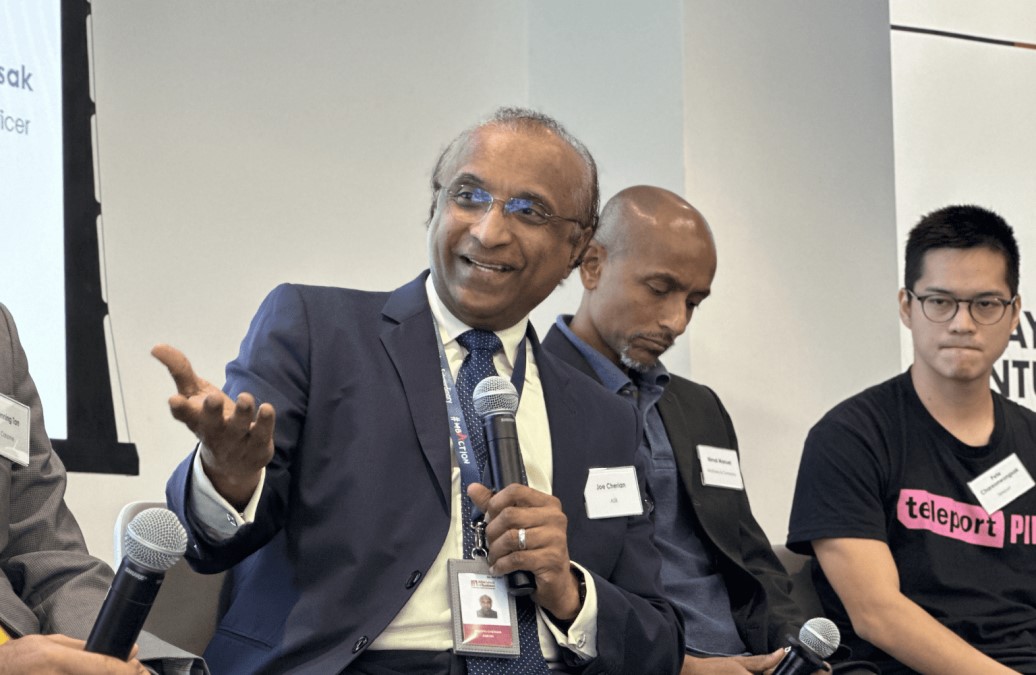
Professor Joseph Cherian, a Malaccan, exemplifies a breed of influential academics with careers beyond the walls of academia, bringing global insights and experience to serve the communities he came from. 

As Deputy CEO and Practice Professor at the Asia School of Business (ASB), Cherian’s career spans roles as an electrical engineer, a finance executive, and a philanthropic advisor. His extensive experience bridges the gap between theory and practice, enriching his teaching, writing, and policy contributions.

In the classroom, Professor Cherian weaves his real-world financial experience with theory, creating a dynamic learning environment that brings financial concepts to life for his students. 

His approach reflects the “mind and hand” ethos of his alma mater, MIT, where he combines practical skills with theoretical knowledge to inspire flexible, hands-on learning.

I was able to blend my past experience as a US academic and more recent experience in the financial industry to make the classroom come alive with finance theory blended with real-life experiences, financial lab simulations, and tools like Bloomberg and Thomson Reuters workstations. It was truly experiential learning for the students. – Professor Joseph Cherian

From Engineer to Executive to Educator

Professor Cherian began his career as an electrical engineer but soon transitioned to finance. He earned a master’s and PhD in finance from Cornell University and eventually served as Managing Director and Global Head at Credit Suisse in New York. 

While his career on Wall Street was impressive, his passion extended beyond professional success to making education accessible to others. 

Ever conscious of his own humble beginnings as a former scholarship student at MIT and the grim financial realities of a world-class education,  Professor Cherian has been committed to supporting students from low-income backgrounds in accessing world-class education.

I was a beneficiary of loans and scholarships from both MIT and the Kuok Foundation during my undergraduate years at one of the most expensive colleges in the US at that time (1982-86). The Kuok Family’s astounding generosity to aspiring Malaysian students, when such bursaries were fairly scarce, left an indelible mark in my mind. – Professor Joseph Cherian

In 2007,  Professor Cherian and his wife Emma (Yanfang) began their philanthropic journey by establishing scholarships for MIT and Cornell University students. Their foundation has since provided vital support to many young students, including setting up the Yanfang and Joseph Cherian Bursary at the National University of Singapore, where they were both based for 12 years.

When I saw my first Wall Street bonus check, I was shocked and said “I am not worthy”. My wife was also in the financial industry, and we have no children. In the US we are known as  DINKS (“Double Income No Kids”). So, what we did was to give back. – Professor Joseph Cherian

From Global Influence to Homegrown Impact

Currently, Professor Cherian serves as Deputy CEO and Practice Professor at the Asia School of Business (ASB) in collaboration with MIT Sloan and as a Visiting Professor at Cornell University’s Samuel Curtis Johnson Graduate School of Management. 

He brings extensive experience from renowned institutions, having held positions at Boston University, the National University of Singapore (NUS) Business School, the University of Amsterdam, and Tinbergen Institute.

Beyond the classroom, Professor Cherian has contributed to high-level advisory roles, including working with Singapore’s  Central Provident Fund and the Ministry of Manpower, Bursa Malaysia, and the Mercer-CFA Institute Global Pension Index. 

With deep expertise in investment science, retirement reform, and sustainable investing, Professor Cherian also serves as an academic advisor to Asia Asset Management. In this role, he underscores the need for science-driven economic policies that prioritise climate action.

To move the needle on climate action, mainstream economies need to get in step with climate science. Countries – and the asset management industry – should therefore not lose sight of the substantial economic benefits from investments in decarbonisation. It also means walking the talk. As fiduciaries, asset managers should avoid greenwashing and excessive public relations stunts involving sustainable and net zero investing. – Professor Joseph Cherian[1]

Back to Homeland

Despite a successful international career and tempting offers from global institutions, Professor Cherian, who remains a Malaysian citizen despite leaving the country in 1982, chose to return to Malaysia in 2022, encouraged by his wife, Emma.

It was my wife, who is not even Malaysian, who convinced me to accept the ASB offer to move to KL. She said it was time for me to give back to my country. – Professor Joseph Cherian

While his academic achievements are numerous, his passion for advancing Malaysia’s financial education infrastructure shines brightest. He remains dedicated to nurturing future generations of Malaysians, equipping them with both knowledge and ethical integrity.

Revolutionising Education

He believes that flexibility in education is essential, especially in a world filled with uncertainty. Just as adaptability benefits us in career planning or financial investments, it holds equal importance in education, where the ability to respond to changing circumstances can add significant value.

To make learning more accessible and adaptable, Professor Cherian and his colleagues at the Asia School of Business (ASB) launched a platform called Agile Continuous Education (ACE). Designed to meet the evolving needs of today’s learners, ACE offers online courses that blend flexibility with hands-on learning. 

Students can engage in self-paced video lessons, join live interactive sessions, and work towards professional certificates or even credits that count toward ASB’s MBA or Executive MBA programmes.

For example, a student taking Professor Cherian’s Corporate Finance course can watch pre-recorded lectures at their convenience, attend live online classes for discussions and simulations, and then continue with their day—whether at work or at the park. 

ACE covers a broad range of topics, from Artificial Intelligence and Data Analytics to Sustainable Finance, allowing learners to tailor their education to their career goals.

We hope to ACE continuous education learners’ keen interest in both having flexibility and acquiring high-quality knowledge. This translates to substantial economic value. A classic case of having your cake and eating it, too. – Professor Joseph Cherian

Professor Cherian’s journey from Wall Street to the classroom in Malaysia reflects his dedication to bridging theory and practice for real-world impact. Through his work at the ASB, he is reshaping education to be more flexible and accessible, equipping future leaders to make meaningful change. 

The Asia School of Business (ASB) has launched Agile Continuous Education (ACE), a dynamic series of hybrid courses to keep professionals at the cutting edge. Current offerings include Professional Certifications in AI for Business Leaders and Corporate Finance.
Explore our sources: 
  1. Cherian, J. and Thambiah, Y. Funding Net Zero. Asia Aset Management (June 2022, Vol. 27, No. 6). Link.

Originally published by Wiki Impact .

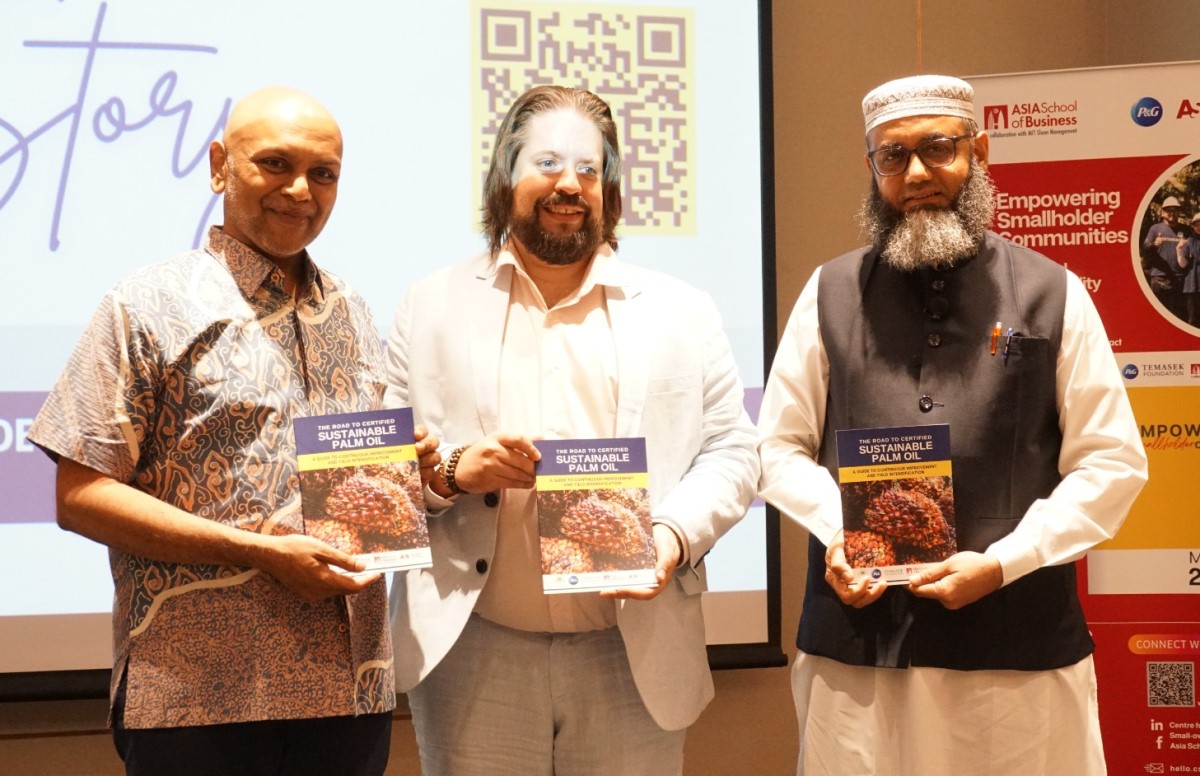
The Procter & Gamble (P&G) Centre for Sustainable Small-owners (CSS) announced the launch of its latest publication, “Road to Certified Sustainable Palm Oil: A Guide to Continuous Improvement and Yield Intensification,” to share fundamental strategy for smallholder farmers in increasing crop yields, maintaining sustainable farming practices and qualifying for premiums, according to a press statement circulated by CSS on Nov 12.

Malaysia is the second largest palm oil producer globally. There are over 275,000 independent palm oil smallholder farmers in Malaysia, who collectively account for an estimated 17% of total oil palm planted area in the country.

CSS Research indicates that the targeted yield gain of 20-25% is attainable among independent smallholders for oil palm. Guidance and tools can help smallholders and groups maintain their RSPO1 certification and benefit from eligible premiums.

“Achieving the RSPO Independent Smallholder Standard certification is a significant milestone for the independent smallholders in Batu Pahat and Pontian districts (in Johor),” said Dr Asad Ata, Director of CSS, adding that, “CSS has recorded an increase in yield of palm fruit by 20% to 25%. The certified farmers have qualified for premiums over US$90,000 in the past three years.”

Building upon the success of the previous publication in 2023, this guide addresses the critical need for continuous improvement among independent smallholders in the palm oil industry, serving as a valuable resource for smallholder farmers, group managers, farmer associations, Npn-Governmental Organisations (NGO), multinational corporations, technical assistance providers, certification bodies, as well as academia.

CSS is a research centre launched in 2019 by funding from P&G to be housed within the Asia School of Business (ASB). The centre is committed to empowering and improving smallholders’ livelihood through training and implementation of sustainable best agricultural practices in accordance with global standards.

P&G serves consumers around the world with one of the strongest portfolios of trusted, quality consumer brands. The group is praised for its Responsible Palm Sourcing Programme in protecting the environment.

The publication can be accessed at https://publuu.com/flip-book/288834/1496305.

Originally published by Business Today.

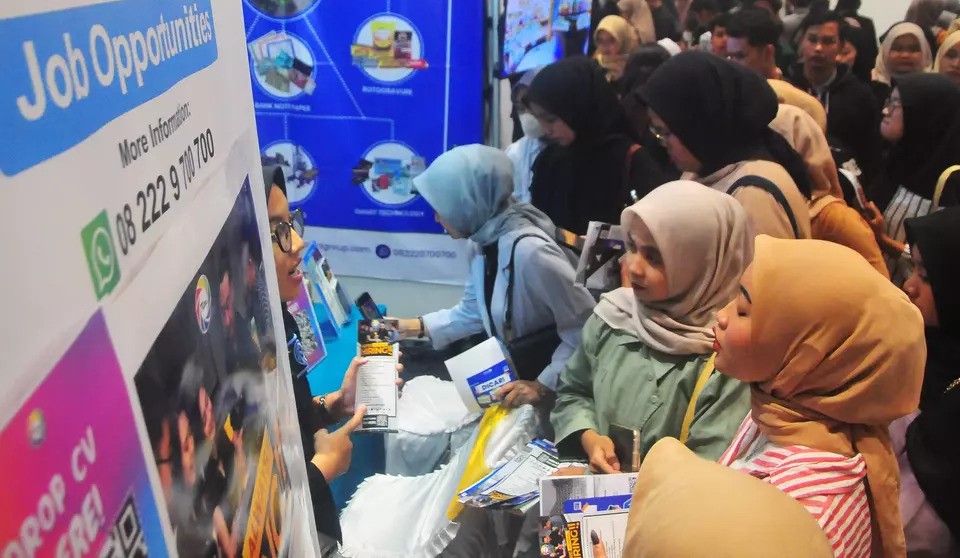
Jakarta. Indonesian universities continue to lag behind ASEAN peers in global rankings, with an expert calling for stronger international partnerships and English language training to boost competitiveness.

According to the latest QS World University Rankings 2025, Universitas Indonesia (UI) ranks 206th with a score of 45.7, while the National University of Singapore (NUS) leads the region at 8th globally with a score of 93.7. Singapore’s Nanyang Technological University ranks 15th, and Malaysia’s University of Malaya holds 60th place.

Other Indonesian institutions, including Universitas Gadjah Mada (UGM) at 239th and Institut Teknologi Bandung (ITB) at 256th, remain outside the top 200—a stark contrast to their ASEAN neighbors and a reflection of broader challenges in Indonesia’s higher education system.

Sanjay Sarma, CEO of the Asia School of Business, suggests that closing this gap requires building global partnerships and supporting credit transfers for international studies.

“Strong partnerships, exchange programs, and international internships are critical for raising international awareness,” Sarma told the Jakarta Globe. He also advocated for increased English language training and collaboration projects, even for students who remain in Indonesia.

According to data released by the Educational Testing Service (ETS), Indonesia’s average TOEFL score in 2021 was 489, surpassing Japan (473) and Thailand (440). However, it remains lower than some other Asian countries. The highest average scores were recorded in the Philippines (570), followed by India (559), Malaysia (566), South Korea (509), and Taiwan (489), which is on par with Indonesia.

International engagement brings diverse perspectives, drives research, and fosters an innovative campus culture, Sarma explained. These elements attract high-quality faculty and research opportunities, factors that directly impact global rankings. He recommended research partnerships, joint degree programs, and faculty exchanges.

“Research collaborations could boost publication rates and access to advanced methodologies, while student exchanges expose students to varied educational settings.

According to Sarma, the Indonesian government could play a role in advancing these initiatives by offering scholarships, grants, and simplifying credit transfer processes. Policies to support international partnerships and English-language training would better prepare students for an interconnected job market.

With growing demand for skills in AI, data science, and cross-cultural communication, Sarma said that cross-border programs provide Indonesian students with valuable technical expertise and adaptability, giving them an edge in the global workforce.

He stated that countries like Singapore and Malaysia have enhanced their academic standings through international partnerships and English-language programs. Expanding international exposure for students and faculty, Sarma said, will be essential for Indonesia to achieve regional and global competitiveness.

Originally published by Jakarta Globe.

If policymakers and ESG proponents fail to ensure that the ESG agenda is equitable and credible – directly benefiting working class and rural communities – the credibility of ESG will deteriorate further.

Donald J. Trump’s return to the White House is a remarkable political comeback, but for those invested in environmental, social, and governance (ESG) initiatives, his re-election spells a serious setback. Trump’s opposition to regulatory oversight – particularly on climate change and social inclusion – signals a halt to United States policy support for many sustainability and social equity initiatives.

While this disrupts the ESG landscape, it is not a death blow. The momentum for sustainable practices, which took root in the late 1990s, has gained strong footholds in the European Union, China, and among many US corporations. Yet, without robust US government involvement, ESG efforts will be slowed.

Trump’s return highlights an urgent need for ESG policies to be not only ambitious but equitable and credible. Across nations, there is visible anger over the rising costs of living, which voters often attribute to progressive climate policies.

In Southeast Asia, leaders have shown an understanding of this balance, prioritising affordable policies that don’t overlook working-class citizens. In practice, this often means more fossil fuel subsidies, continued investment in infrastructure, and a cautious approach to environmental regulations. Without a “just transition,” criticism of ESG as an “elite scam” gains traction, resonating with those who feel excluded from the promised benefits of these policies.

The ESG agenda must grapple with a fundamental question: has it genuinely improved the environment and lives on the ground? Has it strengthened labor rights, raised wages, or held major corporations accountable for their environmental impact? Or has it simply become more paperwork, tax incentives, and subsidies that favor large corporations, while ignoring the concerns of normal people?

In the US, rural and working-class voters, who’ve been increasingly abandoning the Democratic Party, feel alienated by ESG policies and the progressive agenda. These groups might wonder if sustainability initiatives serve their interests, or if they merely serve as talking points for corporate lobbyists and fund-raising non-governmental organisations.

Southeast Asia’s palm oil industry is a good example of this, where the push for sustainable palm oil has, in many cases, burdened smallholder farmers with higher compliance costs and reduced market access. Large-scale producers, with their greater economies of scale, have managed to navigate the regulatory landscape more easily, consolidating their hold on global supply chains while the smallholders are often left out.

For many, these developments support claims that ESG regulations are a form of neo-colonialism or “regulatory imperialism”. The sense of injustice makes it easier to downplay climate concerns, harming both the social and environmental goals that the ESG movement seeks to promote. If policymakers and ESG proponents fail to address these issues – if they don’t ensure that the ESG agenda directly benefits working class and rural communities – the credibility of ESG will deteriorate further.

Dr Pieter E. Stek is a postdoctoral scholar at the Center for Technology, Strategy and Sustainability (CTSS) at the Asia School of Business in Kuala Lumpur.

Originally published by Eco-Business.

KUALA LUMPUR: The Asia School of Business (ASB) had its first annual ASB Research Day 2024 on its cutting-edge research on sustainability across key sectors, including business, energy, and social impact in Malaysia and ASEAN.

This marquee event showcased ASB’s three research centers: The Center for Sustainable Small-owners (CSS), the Center for Technology, Strategy & Sustainability (CTSS), and the ASEAN Research Centre (ARC). It brought together key figures from leading corporations, financial institutions, and human resources professionals, fostering collaboration and dialogue on sustainable practices and innovations shaping the future of ASEAN’s economy.

ASB also shared its research magazine on its sustainability work in business, energy sustainability, and social sustainability, offering a valuable resource for policymakers, corporate leaders, and researchers alike.

In his opening address, Sanjay Sarma, Chief Executive Officer, President, and Dean of Asia School of Business, stated, “The 2023/2024 edition of sustainability research from ASB offers essential insights for regulators, academics, corporate leaders, and policymakers. This year’s emphasis on sustainability confronts critical global issues like climate change and resource depletion, both key to securing long-term economic and societal stability. Backed by our strategic partnerships and the dedication of our team, this research aims to inform ethical, data-driven decisions for a sustainable future. With the region’s sustainability investment projected to reach $150 billion by 2030, our efforts are more crucial than ever.”

In her keynote address, Dr Melati Nungsari, Deputy Dean of Research at ASB, spoke of the critical role businesses play in advancing sustainability. “From our research on sustainability in business, we’ve learned that any serious effort requires the transformation of all stakeholders”. She underscored the region’s role where “ESG adoption across Southeast Asia has risen significantly, with 78% of companies now integrating some form of ESG criteria into their operations. Employees must be equipped with the right knowledge, skills, and technology to incorporate sustainability into their daily work and embrace the changes necessary for long-term success. Clear leadership, regular updates, and rewarding exemplary behaviors are all crucial steps to this transformation.”

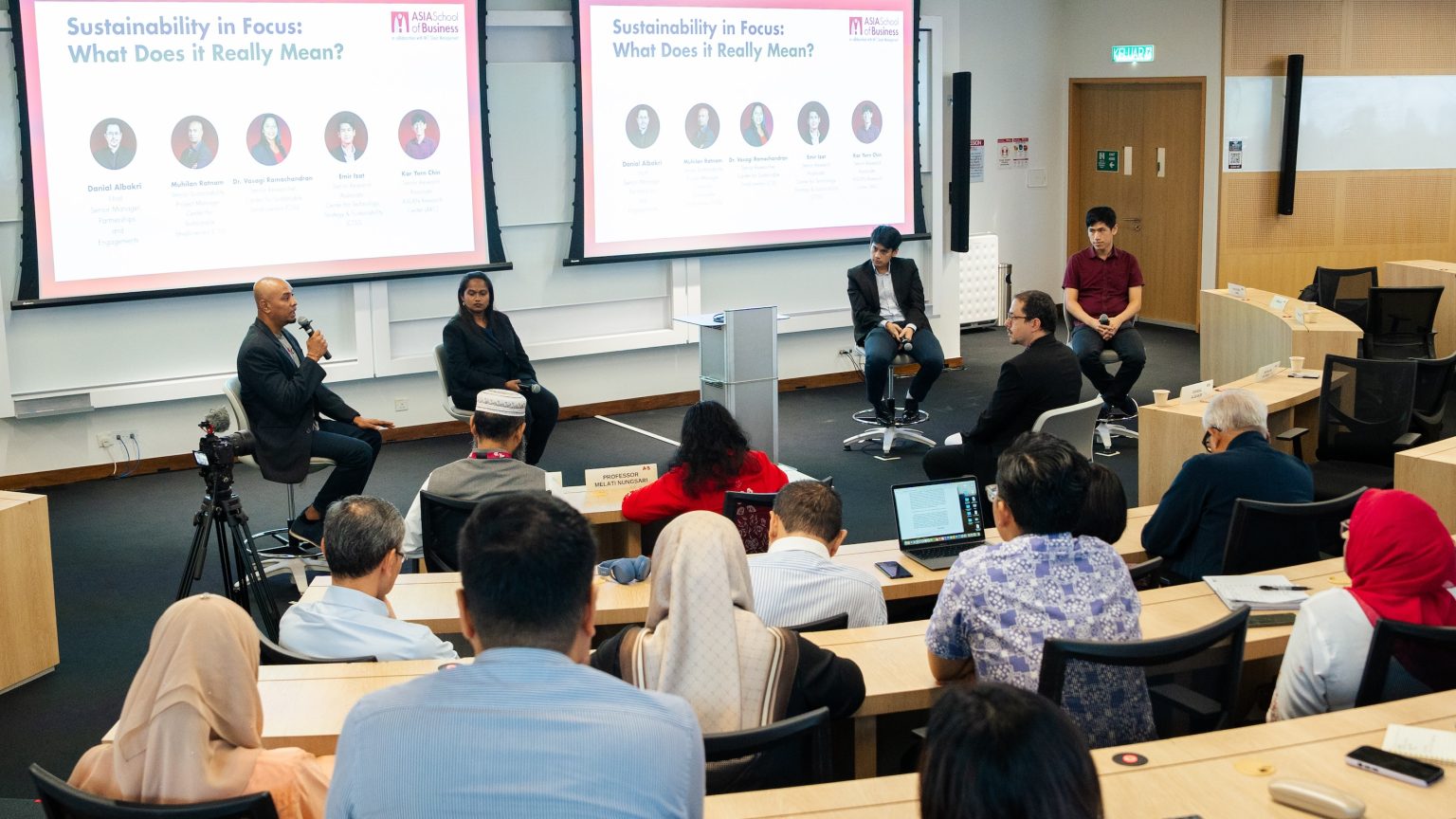
The event delved deeper into “Sustainability in Focus: What Does It Really Mean?” with panelists including Dr Vasagi Ramachandran, Kar Yern Chin, Emir Izat, and Muhilan Ratnam where they explored the different sectors of sustainability, a growing research area at ASB. As sustainability becomes a more pressing global challenge, the panel emphasized the importance of raising awareness and educating the public.

ASB’s newly released research magazine, available for pickup and download at https://ebrochure.asb.edu.my/view/16519775/ featured ASB’s work in the following key sections:

Part 1: Sustainability in Business

ASB’s research focuses on partnering with various institutions and industries in the realm of business sustainability. ASB has collaborated with the ASEAN-Korea Centre, palm oil smallholder farmers in Johor under the P&G Smallholder Program, and corporate organizations such as PwC Malaysia. ASB’s work focuses on the “social” aspect of ESG, a key area of concern for firms and businesses. While environmental sustainability often receives significant attention from companies, the complexities of the social aspect and employees are frequently overlooked despite their crucial role in achieving overall sustainability.

Part 2: Energy Sustainability

Energy sustainability addresses the critical challenges of energy security, environmental protection, and social equity. By focusing on sustainable energy practices, The Center for Technology, Strategy & Sustainability (CTSS) at ASB delves into how greenhouse gas emissions can be reduced, mitigation policies for climate change, and the preservation of natural resources. Sustainable energy solutions can promote economic development and social well-being by providing access to clean and affordable energy for all, especially in underserved communities. The transition to sustainable energy systems also drives innovation and job creation in new industries, fostering economic resilience and growth. In essence, energy sustainability is crucial for building a more stable, equitable, and healthy future for our planet and its inhabitants.

Part 3: Social Sustainability

At ASB, social sustainability is closely tied to the ASEAN Research Center (ARC), which conducts research on underprivileged communities to advocate for impactful policies. ARC’s work looked into the hawker community in Malaysia, and palm oil fields to investigate conditions and human rights of the workers. One project under ARC, the Rapid Youth Success Entrepreneurship/Employability (RYSE), conducts both programs and research within Malaysia to empower Malaysian youth with entrepreneurship and employability opportunities.

Originally published by The Exchange Asia.

By Joseph Cherian, Deputy CEO of Asia School of Business

In today’s dynamic economic landscape, small and medium-sized enterprises (SMEs) play a pivotal role in many nations’ economies. They serve as the engines of growth and innovation. As we navigate unprecedented geopolitical and supply chain challenges, such as those arising from the recent global pandemic, it has become increasingly evident that SMEs require robust financial support systems to thrive. With SMEs contributing significantly to the national economic fabric, fostering their resilience demands a coordinated and comprehensive approach.

Singapore provides a good case study with its all-of-government approach to supporting SMEs, epitomized by institutions like Enterprise Singapore (ESG) and the Economic Development Board (EDB). ESG’s multifaceted support, ranging from development grants, upskilling and talent development, productivity enhancements to international networking, sales, and marketing, illustrates the comprehensive manner of assistance provided to its SMEs in order for them to thrive. Moreover, initiatives like EDB’s venture fund (EDBI), which invests in promising SMEs in technology and select high growth industries, demonstrate the government’s commitment to fostering innovation and growth within the SME ecosystem.

During times of crisis, such as the recent global pandemic, the coordinated efforts of these government agencies become paramount. ESG’s role in channeling subsidized bank loans to vetted SMEs showcases the importance of a streamlined and efficient support system. Fragmented or siloed approaches risk diluting the impact of assistance, which may leave SMEs vulnerable to unanticipated economic shocks.

Drawing parallels, the U.S. Small Business Administration (SBA) also offers a plethora of support mechanisms for American SMEs, underscoring the importance of a diverse toolkit. From concessionary loans to counseling, training, upskilling, and networking sessions, the SBA takes a multifaceted approach necessary for SME resilience, especially for minority and women-owned businesses.

Private initiatives like Alignable in the U.S., which fosters online networking among SMEs and functions like a conjoined LinkedIn and Facebook for SMEs, demonstrate the potential of leveraging technology and business-focused social media platforms to enhance collaboration and resource-sharing within the SME community, especially in areas such as information-sharing, continuing education, and thought leadership. Establishing a similar platform in Malaysia can facilitate knowledge exchange and business referrals, fostering a supportive ecosystem for SME growth.

Moreover, capital market solutions, as exemplified by the Securities Commission Malaysia’s five-year roadmap for SMEs, offer these enterprises access to diverse funding mechanisms. These solutions not only stimulate economic growth but also create employment opportunities and enhance market liquidity.

Historically, many SMEs do not have access to local capital markets. They usually rely on government support, concessionary loans and grants, bank financing, or are simply owner-financed. Most government support to SMEs during crises is in the form of loans and debt channeled through the private sector at concessional rates, which eventually have to be repaid.

To mitigate negative economic and social consequences, to save organizational capital, especially organization-specific human capital, alternative financing schemes are necessary. Capital market solutions, particularly those involving tradeable funding vehicles, that partner with both the public and private sectors (PPP) to fund large-scale infrastructure and green projects around the world, and which include a credit enhancement component, are especially useful and illustrative in the current context. This type of financing mechanism is referred to as “Blended Finance.”

The Managed Co-Lending Portfolio Program (MCPP) by the International Finance Corporation (IFC), the World Bank’s investment arm, is a good vehicle structure to replicate in Malaysia for public-private financing of its SMEs. The Managed Co-Lending Portfolio Program (MCPP) is a syndication lending structure with credit enhancement, specifically designed for infrastructure projects. It allows the IFC to co-invest in a diversified portfolio of loans for due-diligence projects, attracting institutional investors from both the public and private sectors. The Swedish government or the IFC de-risks the MCPP portfolio through a first-loss guarantee, a.k.a. credit enhancement. The IFC recently announced the launch of its MCPP One Planet (climate change) facility, which comprises a portfolio of Paris Agreement-aligned emerging market senior loans.

A corresponding example is the IFC/Amundi Green Cornerstone Bond Fund, which channels capital from institutional investors into anchor investments in sustainable bond issuances from corporates and financials in developing countries. Fund proceeds are primarily used to buy green bonds issued by banks in developing countries. Blended Finance in this case helps unlock private capital with the aid of public or MDB capital with the same first-loss warranties via equity participation.

Equity investment can effectively leverage public money. Case in point is the IFC-Amundi structured fund that attracted 16 times as much private investment into the funding vehicle! Good due diligence by a trusted institution coupled with proper credit enhancement from a long-lived sovereign authority could encourage asset owners sitting on trillions of dollars in assets to participate in sustainable finance-related investment vehicles. This is due to the first loss warranties available, which makes the structure akin to investment grade.

Malaysia can draw on its strengths and comparative advantage by considering utilizing credit-enhanced Islamic Blended Finance vehicles for innovative SME financing, which by construction are ESG compliant.

Quasi-equity financing can also emerge as a promising avenue, especially during times of crisis, by offering SMEs an alternative funding mechanism to traditional debt financing. By providing first-loss protection for lenders and enabling flexible repayment structures, quasi-equity schemes mitigate financial risks for SMEs while promoting sustainable growth.

My essay on quasi-equity financing, combined with a simple financial economic model, which first appeared in an article I wrote for the Nomura Journal of Asian Capital Markets in Fall 2021, illustrates that in equilibrium, quasi-equity combined with concessional loans economically dominates a pure concessional loan scheme2.

All the innovative financing schemes for SMEs mentioned here are Pareto-optimal — i.e., at least one party is better off, with no one worse off. These structures:

  • Free up the bank’s capital for further lending (asset recycling),
  • Disintermediate and mitigate the risks that risk-averse banks face when approving risk-taking SME entrepreneurs’ loans (risk management),
  • Improve the credit quality of the funding portfolios such that asset owners like pension funds can now invest in them (credit enhancement).

In conclusion, fostering SME resilience demands a holistic and coordinated approach that encompasses financial assistance, technological innovation, and regulatory support. By emulating successful models and embracing innovative financing mechanisms, we can build a resilient ecosystem that empowers SMEs to thrive in an ever-evolving global economy.

As we look towards the future, it is imperative that the government, financial institutions, and industry stakeholders collaborate to create an enabling environment where SMEs can flourish. By prioritizing SME financial support and fostering a robust, all-encompassing, technology-driven ecosystem of innovation and resilience, Malaysia can pave the way for sustained economic prosperity and inclusive growth.

Originally published by The Exchange Asia.

By Mustabeen Ul Bari and Elsa Satkunasingam*

Study of Malaysian market suggests green stocks outperform in the short term to ESG regulatory changes

Interest in businesses that prioritise governance, environmental, social responsibility and governance or ESG has surged in recent years, driven primarily by consumer demand, regulations, and unprecedented climate shocks. From an investor perspective, there is an expectation that businesses practising ESG would be more prepared to manage climate risks, scarcity of resources, and consumer demand for more eco-friendly products and services.

There is evidence that in the US, investor support for green stocks over brown has surged, driven not by anticipation of higher returns but by increasing concern about climate change.

Originally published by Asia Asset Management.

*Mustabeen Ul Bari is a graduate of the Master of Business Administration programme at the Asia School of Business (ASB) in Kuala Lumpur. Elsa Satkunasingam is a director and senior lecturer in executive education at the school. The authors would like to express their appreciation to Yasmin Ahmad of ASB Executive Education for her research assistance.

The future is always unpredictable, and that’s part of the challenge. A leader must be agile and humble enough to rethink plans as needed. As Eisenhower said, “I love planning, but I hate plans.” When facts change, be ready to adapt while staying focused on the ultimate goal.

Sanjay Sarma is the CEO, President, and Dean of the Asia School of Business and a widely influential leader in education. He shares his backstory, beginning with an engineering degree from IIT Kanpur, and his advice for leaders who find themselves in turbulent times.

Thank you so much for your time! I know that you are a very busy person. Our readers would love to “get to know you” a bit better. Can you tell us a bit about your ‘backstory’ and how you got started?

Igrew up in India, got my engineering degree from IIT Kanpur, and worked in the oil industry in Scotland. After grad school at CMU and UC Berkeley, I joined MIT as an assistant professor in 1996. Since then, I’ve worked with amazing students, colleagues, and industry partners to invent and commercialize new technologies. I’ve also had the good fortune to work on education innovation including new educational institutions.

Is there a particular person who you are grateful towards who helped get you to where you are?

I’ve had many people help along the way. My PhD advisor, Professor Paul Wright, was a big influence. He was creative and open-minded and pushed me to let go of my inhibitions and pursue new ideas.

When your organization started, what was its vision and purpose?

The Asia School of Business was created to develop global leaders with a focus on leadership, ethics, and transformation. We’re in a rapidly changing region, and we need leaders who can guide companies, social enterprises, and governments through challenges like climate change, sustainability, and AI.

Can you share a story about how you lead your team during uncertain times?

Education is in a time of change, and in a crisis, it does not necessarily recognize or acknowledge. “Democratizing education” is good, a bit cliched as a rallying call. At MIT, we did so by focusing instead on principles and pedagogy — and the science of learning. This made our focus clear, unique and, therefore, empowering. It wasn’t just words — it was principles.

Did you ever consider giving up? Where did you find motivation?

Yes, I’ve had moments of doubt. But experience teaches you that hitting a wall often sparks creativity. Necessity is the mother of invention, and those moments of challenge are where new ideas emerge.

What is the most critical role of a leader during challenging times?

The leader’s role is to keep the team focused on the mission and understand that setbacks will happen. Prioritization is key — leaders need to guide the team through competing objectives and keep the long-term vision in sight.

What is the best way to boost morale and engage your team?

A leader must also keep the team focused on *why* the mission matters. Acknowledge challenges, but emphasize perseverance. It’s crucial as well to create an environment where the team feels empowered to provide feedback and be part of the decision-making process.

How can a leader make plans when the future is so unpredictable?

The future is always unpredictable, and that’s part of the challenge. A leader must be agile and humble enough to rethink plans as needed. As Eisenhower said, “I love planning, but I hate plans.” When facts change, be ready to adapt while staying focused on the ultimate goal.

Is there a number one principle that can help guide an organization through turbulent times?

One of the most important principles is focusing on why we’re doing what we’re doing. That long-term vision keeps everyone motivated and aligned, especially when times are tough. Just like raising a family — focus on the ultimate goal, the well-being of the next generation, and you can weather most storms.

What are the five most important things a leader should do to lead during uncertain times?

  1. Stay focused on the mission and vision.
  2. Allow your team to shape the plan and provide feedback.
  3. Foster chemistry and reduce power dynamics.
  4. If someone doesn’t want to be part of the change, it’s best they move on. For both parties.
  5. Keep things informal — don’t take yourself too seriously, but always take the mission seriously.

Can you give us your favorite “Life Lesson Quote”?

I don’t have a specific quote, but I often remind myself that when I’m stuck, it’s because I lack a long-term vision. A clear long-term vision helps you navigate short-term obstacles.

How can our readers follow your work?

I’m not on social media, as I foresaw it being a net negative for me personally. However, my work at Asia School of Business, MIT, and my public talks are widely available for those interested.

Thank you so much for sharing these important insights. We wish you continued success and good health!

Originally published by Medium.

Last year’s budget reflected the renewed ambition of the Madani Government to accelerate the country’s energy transition and catalyse new investments in the green economy. But this cannot be divorced from the broader climate action agenda of reducing carbon emissions, including the importance of nature-based policies. How can Budget 2025 best balance all the necessary elements for an effective national climate strategy? Dr Gary Theseira of Climate Governance Malaysia weighs in.Brought to you by Mah Sing. Reinvent Spaces. Enhance Life.

Listen to the full interview below.

Originally published by BFM.

Scheduled Preventive Maintenance

We will be performing preventive maintenance on the ASB website on:

Date: Sunday, December 7, 2025
Time: 12:00 AM – 3:00 AM (Malaysia Time)

During this period, the website will be unavailable to access. We apologize for any inconvenience and appreciate your understanding.