



Asia School of Business

Global Inquiry, Local Heart

Flexibility has positive value. Be it in our careers, savings and investments scheme, or in policy making. Part of the reason for this is forecasting future events is fraught with uncertainty. Whether it’s the direction of our local stock market, our salary in 20 years, or the value of the Malaysian ringgit against other currencies – example, how many of us could have predicted that the ringgit would have appreciated from roughly 23 Japanese yen to the ringgit in August 2019 to 35.6 Japanese yen to the ringgit currently? Or that the ringgit would have depreciated from 4.5 ringgit to the US dollar in January 2020 to 4.78 in April 2024?  

If one adds in the reigning geopolitical economic uncertainties the world over, the challenge of forecasting becomes even more acute. Case in point: one would have thought that the world has evolved to a much higher state of being – and a more civilized one – by now to avoid warring with each other, be it at the workplace or across nations. Yet we still do.

In any situation where uncertainty reigns, flexibility has positive economic value. If you are uncertain about the state of nature that will prevail, or the final outcome of an economic activity, textbook finance informs us that both financial options and real options have positive value!

How does this thinking fit in the education space?  Many of our children, relatives, friends, and colleagues at work sometimes face uncertainty about their educational trajectory. A US-based student who wishes to take a break from formal education (a.k.a. a “gap year”) to say volunteer at a syntropic agriculture commune (a.k.a. “sustainable agroforestry”) in Indonesia should not enroll in a university that does not provide the flexibility for a gap year before graduating with a degree. And let’s say the student’s participation in syntropic farming has climate change “additionality” and hence generates tradeable carbon credits that could offset the cost of her tertiary education. This adds value to the net present value calculation of the student’s future human capital wage income – net of costs – that is attributable to her education.

I think my readers should have gotten the point by now.

So why should Malaysia’s education system be any different? It, too, should be embedded with flexibility. Based on the examples heretofore, and without going into the financial mathematics, it would make one’s educational experience and value-add dominate the one that doesn’t. In economics we call it being on the Pareto efficiency frontier, which is when resources and economic opportunities are allocated in the most efficient manner.

In the early 2010’s, a program called MIT Open Learning brought MIT’s invaluable engineering and science classes to the world using digital and online technology. MIT could pull this off as it excelled in science and technology. In fact, I am a product of its daunting and impressive engineering school.  MIT’s auspices beginning in the digital education space was when our very own Asia School of Business President and CEO, Professor Sanjay Sanjay of MIT’s Engineering School, assumed the inaugural role of Director of Digital Learning – and later as the Vice President of Open Learning – at MIT.

Sanjay’s appointments at MIT led to a revolution in the educational technology delivery space using digital technology. An interested and pre-qualified learner located in a  remote corner of Patagonia could now enroll in a Systems Dynamic engineering course fully online, both via live cams and feeds, and by watching videos at her leisure. If she did enough accredited courses this way at the Master’s level, she may even qualify for admission into a Master of Science in Mechanical Engineering program laterally, i.e., at the half-way point of the program on campus. That is flexibility of the highest form. Many top universities in the US – and the world over – now have  e-learning programs, each of a different flavor.

My ASB colleague, Prof Sanjay Sarma, and the rest of our faculty colleagues, have likewise launched an Asian version of the digitally-flexible education movement for Malaysia, Southeast Asia and the rest of the emerging world. It is called Agile Continuous Education (ACE). And if you stack enough of these Master’s  level courses in this manner, you could qualify to enroll in our prestigious MBA or EMBA program via Lateral Entry. A 12-month full-time or 16-month part-time Business Administration program at the Master’s level at ASB, and a future pathway to MIT’s and other prestigious business schools’ Master’s programs, now becomes an option for the e-learner; and with a much shorter runway to complete her postgraduate degree program right on campus while enjoying the live, experiential learning segment and networking opportunities. 

How does it work?

Let’s say you have registered for my highly-exciting Professional Certificate in Corporate Finance: AI-Powered Learning in Action (CFALA) microcredential module via ACE@ASB scheduled for this February 2025, here are the five simple steps:

  1. You watch a series of CFALA videos offline, i.e., asynchronously;
  2. Then attend live hybrid (in-person or videoconferencing) session on a Saturday with the Professor for finance simulations, case study discussions and fun corporate finance games;
  3. After that you can switch off your camera, and head to the park;
  4. The cycle repeats itself over the following week, for about 5 weeks in total;
  5. Upon successful completion of all CFALA course requirements, including assessments, quizzes, etc., you will collect your prize: the Professional Certificate in Corporate Finance microcredential from ASB (in collaboration with MIT Sloan).

In fact, if you successfully complete seven pre-MBA/EMBA professional certificate microcredential modules at ACE (a.k.a. prerequisites), you will not only pick up a couple of MicroMasters along with that – ACE MicroMasters® Certifications at ASB are specializations in AI & Organizations, Analytics, Finance, Supply Chain, etc. – you will also qualify to apply to be considered for admission into our prestigious MBA or EMBA program at the halfway point via Lateral Entry. This includes the 12-month full-time or 16-month part-time Business Administration program at the Master’s level at ASB.

The Lateral Entry curriculum includes:

  1. Three weeks of the MIT Sloan Immersion in Cambridge, Massachusetts;
  2. ASB’s unique week-long Integrative Management Lab (IML) module & program-long Student Journey experience. In the IML module, seven top ASB- and MIT-affiliated faculty collectively integrate ideas from and learnings by students emerging from multiple perspectives w.r.t. Strategy, Marketing, Finance, Supply Chain/Operations, Organizational Behavior, AI/Analytics, and Global Political Economy, on a critical real task facing senior management in this region;
  3. Action Learning modules (Where Mind Meets Hands!); and lastly,
  4. The benefit of being taught live by both ASB’s and MIT Sloan’s top faculty right here in Kuala Lumpur!

As a final reward, you also have the option to exercise a future pathway to MIT’s and Yale’s Master’s programs in the US, which includes applying to the 9-month Master of Science in Management Studies (MSMS) degree program from MIT Sloan or the Master of Advanced Management (MAM) degree program from Yale’s School of Management. The MSMS is a STEM-designated degree that provides international students from ASB with work authorization in the U.S. for three years. 

ACE represents a conscious shift in the approach to learning by ASB through agile and continuous education. It emphasizes that learning ensues throughout one’s career and life. It is hence imperative that education is agile and flexibly accessible to learners. As mentioned, at ASB, ACE is offered as standalone professional certificate courses, allowing one to build and hone professional skills in desired fields. Learners also avail themselves to the option of stacking courses and completing a specialization ‘pack’, a.k.a. ACE MicroMasters® Certifications, in related fields such as Artificial Intelligence & Organizations, Data Analytics, and Sustainable Finance. And one could accumulate further credits for “lateral admission” at the halfway point into ASB’s full-time MBA or part-time Executive MBA program via a process referred to as Lateral Entry.

ACE courses are accessible remotely on specific dates as videos and online assessments (asynchronous), live online or in-person (synchronous) sessions, with additional access to live online classroom sessions, such as recitations, assessments, etc. By offering options and agility in education at a very high quality, we hope to ace Malaysian continuous education learners’ keen interest in having both flexibility and excellence when acquiring knowledge. A classic case of having your cake and eating it, too.

More details about ACE at ASB is available at: https://asb.edu.my/ace/ or email ace@asb.edu.my

Joseph Cherian is Deputy CEO and Practice Professor of Finance at the Asia School of Business in Kuala Lumpur and a Visiting Professor of Finance at Cornell University’s Samuel Curtis Johnson Graduate School of Management at the SC Johnson College of Business in New York. 
During a time of economic transformation, the issue of youth unemployment looms large in the consciousness of every Malaysian. As of December 2023, youths accounted for 432,100 out of 567,800 jobless Malaysians, with the 15–30-year-old age group making up a whopping 76 percent of unemployed individuals. While this challenge is not Malaysia’s alone, the ASEAN Research Center (ARC) at the Asia School of Business (ASB), endowed by Maybank, is taking up the task of supporting young Malaysians navigating the job market today. More importantly, they’re trying to figure out why. 

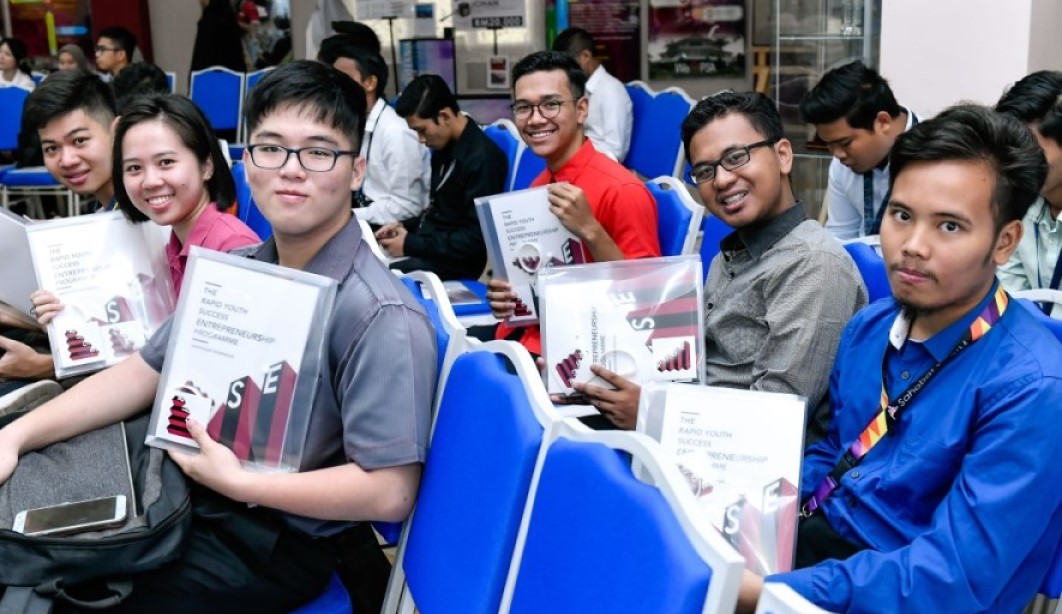
ARC is home to the Rapid Youth Success Entrepreneurship/Employability (RYSE) Program, a research and social outreach project supported by Citi Foundation, dedicated to empowering Malaysian youth through entrepreneurship and employability programs. In line with ASB’s mission to contribute to a better future and the advancement of the emerging world, ARC’s RYSE Program exposes Malaysian youths to concepts of leadership, soft skills, business, and how they can improve their employability in the competitive job market of today. Their work includes Student Entrepreneurship Boot Camps for public schools in Sabah, the RYSE To Work Employability Program, Tiny Titans Micro-Business Case Studies, and online financial literacy webinars. 

ASB’s collaborative and participatory approach to research can be seen via the research team’s active engagement with RYSE program participants to explore important questions around financial inclusion, decision-making in business, and the psychology of entrepreneurship. RYSE programs are used to collect valuable data about youth attitudes towards entrepreneurship in real time, ensuring the research is not only data-driven but also reflective of the practical challenges faced by young Malaysians. 

ARC’s research is guided by the expertise of Dr Melati Nungsari, Associate Professor of Economics and Deputy Dean of Research. “As a microeconomist, it was really important for me to understand how our decisions are affected by the economic structures we are surrounded by,” says Dr Melati. “Are youths unemployed because of problems in their attitude, or are there societal barriers that are preventing them from accessing their full potential?” These are questions that ARC’s researchers have been working on since RYSE was founded by Dr Melati in 2018. 

With the data collected from RYSE programs, ARC’s researchers are currently studying factors that affect youth perceptions of entrepreneurial risk, how gender may affect the ability of youths to participate in entrepreneurship, and the effectiveness of the RYSE employability program. These results will go on to inform the various intervention strategies, policy recommendations, and awareness campaigns held by stakeholders who are invested in resolving the issue of youth unemployment in Malaysia. 

Through RYSE, ARC has successfully built upon ASB and MIT’s strengths in entrepreneurship and innovation, combining theoretical research with practical, impactful programs to equip underprivileged and under-resourced youths with the ambitious and entrepreneurial mindset they need to succeed. 

ASB invites corporations and organizations to collaborate across its various research arms, contributing to research that addresses Southeast Asia’s pressing challenges. For more information on how to collaborate with RYSE and ARC, or ASB’s other research centers, namely the Center for Technology, Strategy & Sustainability (CTSS), Center for Sustainable Small-owners (CSS), and Central Banking Research Center (CBRC), please contact the ASB Research Office or visit https://asb.edu.my/research-office/. 

* The RYSE Program by the ASEAN Research Center (ARC) has been made possible through the support of Citi Foundation and Maybank. 

Source(s): https://www.channelnewsasia.com/commentary/malaysia-jobless-unemployment-youth-young-people-graduates-political-stability-4169011  

Most of us have heard the saying that the only constant in life is change. Yet most of us probably find it hard to affect change in the various areas of our lives, be it changing our habits to eat healthier and work out more or make the improvements we want to see in our relationships or our careers. When it comes to driving the significant changes required to shift towards a more sustainable way of doing things, both on an individual level and as an organization, most would say they have the desire to become more sustainable. But finding the will to change can be particularly hard.

Why is it so challenging to drive lasting change? And why do some organizations do it better than others? How can organizations drive change more effectively, instead of the typical approaches that are short-lived?

Read on to discover how the scientifically-backed B.A.S.E. framework, taught by Dr. Thun Thamrongnawasawat, Professor of Practice at Asia School of Business and International Faculty Fellow at MIT, can help organizations answer these questions and chart a sustainable path forward. Dr. Thun has taught this framework to many organizations in executive education courses to help them increase their leadership effectiveness in driving change.

Introducing the B.A.S.E. framework

According to Dr. Thun, the B.A.S.E. framework is a model based on the work of Dr. Karl J. Friston and Klass E. Stephan, in a paper titled Free Energy and the Brain. The key idea is about the brain striving to be as energy efficient as possible. As Dr. Thun puts it, “BASE is an acronym for [the authors’] derived model on how the human brain works, and specifically on how change happens.”

B.A.S.E. essentially stands for the various ‘blocks’ or ‘levers’ of change:

  • Beliefs one holds about the world
  • Actions one needs to take to achieve the desired outcomes
  • Social communities and networks one connects with and cultivates, or
  • Environment that one is surrounded by
Breaking B.A.S.E. down

Let’s look a bit more at each block in more detail:

Beliefs
Your beliefs about the world shapes how you perceive the world, and what your goals and aspirations in life are. Your beliefs determine the clear, compelling vision you have for the future.

Actions
Actions are all the decisions, activities, and events that you choose to pursue and spend your time on. It is literally what your body acts out.

Social
This block is all about the input you receive from those around you, from friends, family, colleagues, neighbors, and even connections on social media.

Environment
The environment includes your physical (and digital) surroundings, the strictly enforced rules and policies you have to adhere to, the ambient equipment, resources, and infrastructure that are built into the environment.

B.A.S.E., the brain, and change

Imagine a pyramid of stacked rectangular blocks, with the largest block placed at the bottom and the smallest on top. Each of the four elements is one of the blocks in the B.A.S.E. model. Understanding how these blocks interact will help you as a leader understand how to better drive change.

Alignment
Our brains are wired for consistency and are predisposed to seek out alignment whenever the four blocks are not in alignment. If any block shifts, the rest of the blocks might move to achieve alignment. If the other blocks are too heavy to move, then the block that shifted tends to return to its original alignment. This is consistent with Dr. Friston’s Free Energy dogma.

As Dr. Thun emphasizes, “The brain is in a ‘happy’ state with all four blocks aligned. In the context of professionals in organizations, the flip side to this state is the danger of becoming complacent and falling into your comfort zone – the 2Cs that resist change.”

For instance, Dr. Thun cites an example of how a few local fishermen in Thailand came together in 2007 to replenish the dwindling crab population (a key source of their income) by releasing female crabs into the ocean. The Belief and Action blocks moved and they saw success initially and the crab population started to rebound.

However, these efforts lost momentum, since it required the fishermen additional boat trips that cost more time, money, and effort, making it unsustainable. In less than three years, the Action and Belief blocks moved back to square one where they felt helpless to do anything to stop the decrease in the crab population.

Placement
The placement or order of the blocks helps us understand the connection they have to one another. Belief is the smallest block placed at the top, followed in ascending order of size by Action, Social, and Environment. The larger the block, the bigger its influence when changed. For instance, changing an environment will impact everyone in that environment. Changing your beliefs as an individual might only impact yourself.

The smaller the block, the easier it is to move. For example, our Beliefs are easily changed since they exist in our heads. However, being the smallest block, it is also easy for those Beliefs to shift back to where it was before. People change their mind all the time. On the other hand, changing one’s Environment requires the most effort to move. But once that biggest block shifts, it is also much more difficult to shift back to complacency. Thus, this last lever is extremely effective in changing our brain, and subsequently our behaviors.

Let’s look at a few tangible examples of how this model translates to the real world. For example, one of the UN’s Sustainable Development Goals (SGDs) is addressing climate change. The UN secretary-general recently stressed, “We are still addicted to fossil fuels. For the health of our societies and planet, we need to quit now.”

However, imagine how hard it is for most countries to move this largest block (Environment) that is fossil fuel-dependent, with 84% of the world’s main energy consumption in 2019 still sourced from fossil fuel! In the rare instances where moving the Environment has been successful, the resulting impact is far-reaching, such as when the European Parliament recently voted for a complete ban on the sale of petrol and diesel cars from 2035 onwards within the European Union.

Examples of sustainable change using B.A.S.E.

Top-down (Belief>Action>Social>Environment)
Two well-recognized successful movements of change began with the strong beliefs of two individuals. Both Dr. Nelson Mandela and Mahatma Gandhi believed strongly in non-violent resistance and aligned their Actions with their Beliefs.

Over time, the change gradually moved the larger Social and Environment blocks throughout their respective nations, sparked by defining events including Gandhi’s assassination and Mandela’s Springbok rugby World Championship. Eventually, both nations changed to become free sovereign countries recognized by the rest of the world.

Bottom-up (Environment>Social>Action>Belief)
The COVID-19 pandemic forced digital transformation on the world in a short period of mere months. No CEO, CTO, or CIO could have achieved this even over decades. The shift triggered by the pandemic environment forced everyone into their homes for social distancing reasons.

People had to rapidly adapt to remote working from home. Even frontliners who could not avoid physically going to work completely adapted to more hybrid, tech-enabled ways of working to ensure maximum safety levels while still carrying out their jobs.

According to a recent 2022 report by Microsoft, the majority of employees (87%) report that they are productive at work (even with hybrid work norms in place), and productivity signals across Microsoft 365 continue to climb.

As the Environment drastically changed, people’s Beliefs about what was possible or how work should be conducted changed. As a result, more companies than ever before started to become more open to more flexible, hybrid ways of working even beyond the pandemic, to provide for greater work-life balance.

Transforming your organization for a sustainable future

Traditionally, most leaders default to a top-down approach:

  • We train people in classroom settings to shift their Beliefs.
  • We hope they will then change their Actions accordingly.
  • Hopefully, enough of them will propagate Social change.
  • Eventually, with enough Social change, we will also see the Environment change in ways that are desirable.

Dr. Thun advocates for taking a different approach when it comes to sustainability. “We cannot develop a culture for sustainability using the same approach that developed the unsustainable one. Perhaps we may have to toy with the idea of doing this in reverse,” he argues.

He cites an example of a successful sustainable crab farming initiative in Thailand, where the top-down approach fizzled in ten years between 2000 and 2010. On the contrary, the bottom-up approach for the same context showed results in just two years between 2013 and 2015. It continues to be sustained today, and has grown significantly since its inception.

Dr. Thun’s ideas are also supported by the work of his mentor Prof. Deborah Ancona, Founder of the MIT Leadership Center at the MIT Sloan School of Management. Says Prof. Ancona:

“Changing beliefs might be one of the least effective modes of change, and yet that is one of the most-used strategies of change. B.A.S.E. suggests many other modes of change and strategies for leaders.”

Immersing in a different environment to drive mindset change

Closer to home, Dr. Thun has a personal experience of how the bottom-up (Environment-driven) approach can be used to shift Beliefs and mindsets. Before the pandemic, he was part of a team at Asia School of Business who were running a leadership program at a fully sustainable resort in Phuket.

When the program started, the team intentionally kept participants unaware of the sustainable features and operations of the resort. Many participants, used to the traditional five-star facilities with high carbon footprints, complained about the lack of quality service, such as the lack of an elevator to get to their rooms!

In a later session, the team then briefed them about all the ways the resort was being run as a sustainable facility with a low carbon footprint. Being made aware of the differences in their environment opened the participants’ eyes and minds, and completely changed their attitudes towards sustainability.

From this experience, Dr. Thun suggests a novel idea for leaders to consider, when trying to cultivate a more sustainable organization:

“Develop your leaders by having them embrace the Environment first. Be in it amidst stars or trees, in nature. Have them walk amidst the mountains of waste we have accumulated. Maybe that will bring together the people of similar (Social) mindsets, and those people would collectively drive Action. Then we might be able to shift the Beliefs of individual people in their teams. Environment>Social>Action>Belief.”

Equip your organization for the future

Enjoyed this article and want more leadership frameworks and nuggets like this? The Iclif Executive Education Center at the Asia School of Business offers short courses, custom-built courses, and a comprehensive certificate program taught by global thought leaders and faculty.

Top C-suite executives, talent and development leaders, and team leads eager to stay on top of current thinking and best practice to drive a culture of leadership sustainability mindsets will benefit from the rich practical and theoretical knowledge of our faculty.

Does exposure to an unfamiliar migrant community change implicit biases? In 2021, ASB professors Sam Flanders and Melati Nungsari conducted an experimental study by exposing Malaysians to a few hours of volunteering with Rohingya refugees. They then studied changes in the attitudes of the Malaysian participants towards refugees. The results? Volunteers became markedly more positive in their perception of refugees after brief exposure through volunteering.

This change was statistically significant. This suggests that brief exposure to refugees may be a cost-effective policy lever for changing local perceptions. Why does this matter? Forced displacement is one of the most serious human rights issues of our time. There are approximately 79.5 million refugees, internally displaced persons (IDPs), and asylum seekers worldwide, according to the United Nations Refugee Agency (UNHCR).

Under international law, refugees are a protected group. But since Malaysia has not signed the 1951 United Nations Convention of Refugees, refugees in Malaysia are not granted legal status. Much of the focus in addressing refugee issues has been on policy changes. For example, a Nobel Laureate proposed that richer countries should pay poorer countries to take in and resettle refugees (Bubb et al., 2011).

However, according to Professor Melati, it is also important to focus on the attitudes of the host society, as this is a critical factor in determining refugee outcomes such as integration into society, having their legal status recognized, and the ability to find work and upward mobility. One of the biggest barriers towards positive outcomes for refugees is discrimination and bias.

In the study, participants had never interacted with any refugees before, and joined because they were required by their university to complete a volunteer activity. The study showed that a small, short, cost-effective intervention exposing local citizens to refugees can potentially generate major changes in attitudes. These findings hold great relevance to policymakers and aid groups involved in refugee issues, especially in countries such as Malaysia, where refugees have not yet become a divisive political issue.

Read the full study here: A textual analysis of the effect of short-term volunteering on attitudes toward refugees in Malaysia

There is much to celebrate in the month of May as we will be celebrating Hari Raya (Eid al-Fitr) and Mental Health Awareness month. As such, our theme at Asia School of Business for this holiday season is Spark Ceria, or Spark JoyAlong with celebrating and enjoying the holidays, we also want to remind everyone that this is also a season to care for yourself, connect with others, and be thankful for the blessings in life. Here are a few tips that include our ASB SMART Skills!

Self-Care

Self-care is the act of paying attention to and caring for our own emotional, physical, mental and spiritual wellbeing. It is about being kind to ourselves!

Mentally and emotionally 

Emotional maturity teaches us to learn to love ourselves and to practice self-compassion. If we can’t love and forgive ourselves for being less than perfect, then it will be difficult for us to feel compassion for others. Being kind to ourselves allows us to accept our weaknesses (as much as our strengths) and to accept that life is a journey of continuous improvement. Working towards becoming better versions of ourselves takes time and effort.

We can never be happy If we can’t learn to quiet that inner critic (that voice inside your head) who is always telling us we’re never good enough! Emotional resilience allows us to adapt better when faced with multiple perspectives and changing circumstances, and to accept that failure is just as much a part of life as success. At the end of the day, learning to bounce back during tough times is what truly matters.

Physically

Taking time to look after ourselves physically is also key.

  • Schedule in time to reset and rejuvenate. Resting doesn’t need to involve a long holiday or pampering ourselves at the spa. All that’s important is to spend time doing things you enjoy like soaking in a bath after a long day at work or putting on some music and singing along. This Raya holidays, do take time to really switch off from work and do something fun! We do no one justice to anyone when we’re burned out. Overworking not only increases our stress levels but also impacts our mental agility, making us less productive at work.
  • Sleep is super important. Research shows we need an average of 7-8 hours of sleep a night to function well the next day. And sleep hygiene is more than just sleeping — it’s about the things you’re doing before and after bed. Have you checked your phone/TV habits or your caffeine intake?
  • Moving your body is also key. Do take time to exercise 3-4 times a week. Even 20 minutes each time is good enough to reduce stress, blood pressure and cholesterol levels.
  • And don’t forget to eat well this holiday season. Enjoy your food but also remember, everything should be done in moderation. Do consider portion control and pace yourself.
Gratitude

As we learn to care for ourselves, it’s also important to take a break and appreciate what we have. This pandemic has been difficult for many, but it is also important to focus on the positives. Emotional maturity and humility allow us to practice gratitude and appreciate what we have in life. Two psychologists, Dr. Robert A. Emmons and Dr. Michael E. McCullough conducted a study, asking participants to write a few sentences each week on things that they can be thankful for.

After 10 weeks, those who wrote about gratitude were more optimistic, felt better about their lives, exercised more and had fewer visits to the doctor! So ask yourself: what can you be grateful for that you’ve overlooked? Perhaps it’s that we’re still employed, or that we’re in good health. Or maybe it’s that our family and friends are still around and not in a place that is foreign and dangerous.

Life will always be full of the bad and the good but learning to adapt and manage our emotions or feelings by focusing on positives can spark joy in our lives. So, start listing down one thing to be grateful for everyday; who knows, maybe you’ll figure out that life is a lot brighter than it seems to be right now.

Connecting with Others

Raya is a season of celebration and forgiveness and is the perfect time to practice humility and empathy, not just to listen and forgive others but also to humble ourselves to ask for forgiveness. During this Raya, reconnect with family and friends and let them know how much you care for and appreciate them (gratitude towards others). This is especially true as many of us have not been able to bond with our loved ones during the pandemic.

Loneliness is a silent killer and can cause depression and anxiety and a whole host of psychosomatic illnesses. Hence, do supply a listening ear to those in need so you can encourage and validate each other. Family time also reduces stress and shifts our focus away from our problems. Research also shows that it can improve self-esteem and children who connect with family and are shown affection do better at school.

If you’re still concerned about contracting or spreading COVID by meeting up in person, then why not pick up the phone? Although texting is the sure-fire way to keep in touch with people, it also removes a sense of connection, because so much of connecting has to do with reading and understanding verbal and physical cues. To up you game a little, why not use technology?

Perhaps you can set up a virtual meeting and do an activity together. Having a meal over zoom, playing some video games or even watching a movie together are all activities that can help keep you connected with friends and family during a time when meeting physically might seem daunting. Do you know of any more ways to Spark Ceria this Raya? If so, do share them with all of us and let’s make this month of May one filled with joy!

Would you prefer a four-day work week? If you asked this question to most employees, you’re likely to hear a resounding ‘yes’—but what if you asked this same question to business owners and organizations themselves? For a long time, the idea of the four-day work week has been nothing more than that—an idea. Yet, in recent years, heads of organizations, political leaders, including California congressman Mark Takano, and employees across the globe have begun to take the concept seriously.

Trials have taken place across Iceland, Japan, New Zealand, and, more recently, the UK, to see whether the four-day work week could offer a solution to many challenges facing the workforce, including stress and burnout, which have a detrimental impact on business. So in what ways are employee wellbeing and business success linked? Is a four-day work week good for business?

Professor Yi-Ren Wang, Assistant Professor of Organizational Behavior, along with other b-school experts, shared her thoughts with BusinessBecause recently: “Four-day work weeks could enhance people’s productivity as it gives staff an opportunity to think more carefully about how to achieve the same amount of work with less time.

It may shift people’s mindsets from working hard in terms of long hours to working smart in terms of fewer hours,” says Yi-Ren Wang, assistant professor of organizational behavior at Asia School of Business.

“Working smart is ultimately good for businesses’ financial outcomes, when more outputs are delivered with less time and cost. By cutting unnecessarily long work meetings and creating a culture of delivering information in the most concise way, businesses may be able to produce the same level of work, if not possibly more, within a shorter time frame.”

Read the full article here.
This article was originally published on BusinessBecause, a network helping MBA students make connections before, during and after their MBA.

An MBA is essential for anyone looking to get ahead in business. But for women in business wanting to break into traditionally male-dominated industries, an MBA can be a great way to boost your network, build your confidence, and gain the skills needed to thrive in your career.

Of those industries, the technology sector is booming. Global tech job growth is set to continue over the next few years, hitting more than 60 million roles by 2023, according to Statista.

Here are four ways business school can prepare women for MBA jobs in tech.

1. Business school will equip you with the specialized skillset required for MBA jobs in tech

Working in the tech industry requires an understanding of tech and digital trends, as well as the confidence to apply specialist skills to multiple projects. Katya Lobynko, an Asia School of Business (ASB) MBA graduate, joined the 20-month ASB MBA as she wanted to challenge herself. After working in digital project management at Procter & Gamble (P&G) for five years, she was ready to move onto a new business adventure in Southeast Asia.

“What attracted me to ASB was the Action Learning (AL) component, because I never wanted to just go and sit at a desk,” she says. Throughout Action Learning, students work in teams on five consultancy-based projects, with students solving business problems for global companies like Microsoft, Google, or Samsung. Katya says it helped sharpen her digital skills in a real-world setting.

ASB is also in partnership with the MIT Sloan School of Management, and a mix of ASB and MIT Sloan faculty lead these projects alongside the core and elective MBA modules. Katya worked with an early-stage sports startup to advise on how to build a business model for a multi-sided platform, and with a leading hypermarket chain in Thailand to revamp their marketing strategy.

During the ASB MBA Summer Internship Program, she also worked on a go-to market strategy for a newly created innovative unit of General Electric, gaining insight into the Industry 4.0 and cutting-edge tech innovations like 3D printing using metal. She explains that these experiences honed her ‘Sharp’ technical skills like how to make data-based decisions, design business processes, and run operations.

She says she uses these skills today in her role as a global commercial data lead for a consumer healthcare division of the global pharmaceutical company, Sanofi, a Paris-based firm she joined after the ASB MBA. ASB’s focus on technology means that, on average, 52% of ASB MBAs enter tech and innovation after graduating.

2. Business School will prepare you for MBA jobs in tech by training you to lead diverse teams

Becoming a successful woman in the technology industry isn’t just about having good tech skills—it’s also about knowing how to lead diverse teams. The ASB MBA classroom provides that learning environment with, on average, 43% women and 70% international students in each cohort. “I was lucky to learn from and work with other people from different industries, different backgrounds, and different countries,” says Katya, adding that everyone had something unique to bring to the table.

She says that learning about communication styles in the Organizational Behavior course helped to improve her ‘Smart’ skills like listening and adaptability, which she put into practice during AL projects. “I learned that what really makes a difference is how you can bring people together,” she notes.

3. Going to business school will broaden your professional network in tech

Working alongside other likeminded women in business and women in tech during an MBA offers a great opportunity to build a professional network. On the ASB MBA, Katya explains that she was not only able to network with her peers but that many faculty members and advisors on the AL projects were successful women in business.

“It really helped to see women in leadership positions to look up to,” she says. “What I’m trying to do now is to make sure that I do my best to lift up women who are at an earlier stage of their careers and help pave the way for them as well, which is especially important in a male-dominated industry like IT.”

4. Business school can give you access to women in tech MBA scholarships

Offering scholarships and fellowships to talented women in business is one of several ways that MBA programs are proving their commitment to diversifying the business world. Katya was a recipient of the ASB Scholarship for the Unconventional Candidates. She believes that her prior career in an IT team within one of the biggest FMCG companies worldwide, as well as coming from a small town on the far east of Eurasia, played a big part in helping her land a place at ASB and receive a scholarship.

“I think my version of a ‘self-made woman’ story resonates with the ASB spirit of entrepreneurship and empowerment.” ASB also partners with the 30% Club, a global organization dedicated to increasing gender representation at the board level, to offer MBA fellowships to women who’ve faced challenges in the workplace in relation to diversity, equity, and inclusion.

Finding a business school that partners with diversity-based organizations is a good way to know whether the MBA program you’re choosing supports your individual needs and career goals. Some schools may also offer MBA scholarships to women pursuing careers in tech. Pursuing a career in technology will mean embracing an agile mindset, becoming well versed in evolving digital trends, and knowing how to combine your specialist tech skills with leadership qualities.

These are all skills you can develop while at business school, helping prepare you for MBA jobs in tech after you graduate. “The ASB MBA made me realize that a code or a business strategy doesn’t care if it’s a woman or a man who creates it—your skills and knowledge are what’s really important.” It’s estimated that diverse and inclusive companies are 60% more likely to outperform their peers. “Having women at the decision-making table is crucial if your company wants to succeed,” concludes Katya.

Read the full article here.
This article was originally published on BusinessBecause, a network helping MBA students make connections before, during and after their MBA.

The DE&I Movement in Asia

In the face of globalization, today’s workforce will be characterized by ever-growing diverse teams, including members from social groups that have been traditionally underrepresented in business. Such a diverse team embraces unique individual characteristics on different dimensions, including gender, race, national origin, religion, sexual orientation, beliefs, socioeconomic status, and etcetera.

Knowing how to build a successful diverse workforce and make every member feel equally valued has become more important to business leaders than ever. Research has shown that having a diverse and inclusive workplace is beneficial to businesses. It not only helps establish a positive reputation of “doing the right thing to protect human rights” as a business, but also enhances innovation, the size of the talent pool, decision-making quality, and marketing opportunities.

Asia is unique in its multi-dimensional diversity. As the biggest continent in the world, Asia is home to nearly five billion people with more than 2,300 languages and dialects spoken in total. Southeast Asia is particularly unique in its racial, ethnic, religious, cultural, and linguistic diversity. Yet a BCG survey [1] based on 6,100 participants in six Southeast Asian countries suggests that only 58% of Southeast Asia businesses incorporate some forms of diversity and inclusion (D&I) initiatives, a much lower rate compared to the global average of 96%.

Western countries, such as the United States, where the concept of diversity management originally developed, have evolved from coming up with solutions to prevent discrimination and prejudice, to leveraging unique talent in individual workers. Some Asian countries, on the contrary, seem to be still struggling with or have only just begun discussing workplace discrimination and prejudices.

Barriers to workplace equality are rooted in historical, political, and cultural factors. For instance, in Japan, gender inequality and the underrepresentation of women in top management are still controversial topics to discuss. In South Korea, the unequally greater power distributed to “seniors” based on their age or tenure is still an unbreakable workplace norm. In Malaysia, ethnic tensions are still high.

In India, the caste system still leaves an imprint on society, making it difficult for those born in lower castes to enjoy equal opportunities as their more advantageous counterparts. In many Asian countries, the rights of the lesbian, gay, bisexual, and transgender (LGBT) population are not legally protected.

National Culture as an Influence

The difference in the maturity of the D&I movement between Western and Asian countries seems to be at least partially explainable by their national culture. According to Hofstede’s cultural dimensions theory[2], with some exceptions, most Asian countries are higher on two cultural dimensions: collectivism and power distance. Collectivism refers to the extent to which people are integrated into social groups and emphasize collective welfare over self-interests.

Views underlying D&I initiatives that all people are unique individuals and that their uniqueness should be celebrated seem to be more inherent in the social values of individualistic countries (ie. low collectivism). However, such views may be at odds with the values of collectivistic countries, in which group harmony and a shared similarity among group members are prioritized.

Power distance, the extent to which people accept that power is distributed unequally in society, could also hinder D&I movements. People in countries higher on power distance may react less strongly in the face of injustice and may be more likely to legitimize the unfavorable treatments others receive, as evidenced by empirical research[3].

These cultural characteristics may help explain why D&I programs that focus on ensuring everybody is equally treated and valued are not implemented as much in some Asian business contexts.

Creating a Diverse and Inclusive Workforce for Asian Businesses

Despite these differences, businesses in Asia should not stop thinking of ways to build a diverse, inclusive, and fair workplace for members from all social groups, as there are many benefits to be reaped. Despite the potentially strong influence of national culture, researchers have argued that the impact of national culture on an organization is weaker than we typically expect.

There is sufficient room for businesses to craft their own unique organizational culture, independent from the national culture[4]. In addition, research shows the influence of the national culture on an organization becomes weaker when it has its own initiatives to enhance workplace diversity and inclusion[5]. Businesses in Asia can also regard these strong national cultures as an opportunity rather than a constraint.

If we believe that the core of diversity management is to reach a balance between individuals’ uniqueness and similarities, then collectivistic cultures tend to be more skilled in terms of building similarity among individuals in their pursuit of group harmony. Businesses in such contexts could take the advantage of the existing group harmony while exerting specific efforts towards valuing individual uniqueness.

In other words, while maintaining group harmony, organizations in collectivistic cultures should not overlook the fact that everyone is a unique individual and permit equal opportunities for everyone to contribute, voice out, and grow. Business leaders should also question the illegitimate grounds on which power imbalances are based and reinvent workplace norms that fairly distribute power and resources.

For example, [6]a study investigating the causes of airplane crashes in South Korea in the 90s found that the Korean culture of always respecting seniors, even when they were exercising poor judgments, was a major contributor. After the pilots and co-pilots were only allowed to communicate in English, a language that does not come with built-in terms designed specifically for showing respect to those of higher ranking, the co-pilots spoke up more against their senior colleagues when noticing questionable decisions are being made.

They were thus treated more fairly. This change in organizational norms led to reductions in airplane accidents. Another advantage of leading employees from Asian cultures is that people in Asia may be better at noticing contextual influences on others’ behaviors, compared to people from individualistic cultures. Stereotypes towards members of a different group are often a product of mistaken assumptions or interpretations of why others behave the way they do.

One unconscious bias that people often fall prey to while explaining others’ behaviors is the fundamental attribution error, which is the tendency to attribute outgroup members’ failures and shortcomings to dispositional and personality-based explanations, rather than situational or environmental explanations. Such an attribution error can reinforce stereotypes of members outside one’s tribe.

Cross-cultural research[7] indicates that people in collectivistic cultures tend to fall prey to this bias less and give more benefit of the doubt when observing others’ failures. For example, when explaining why a colleague performed poorly, people in collectivistic cultures may be more likely to consider the possibility that it may be due to some situational factors outside their personal control rather than attributing it entirely to personal attributes, such as laziness, gender traits, race, or age.

Such mindsets are important to maintain and reinforce while productively building an inclusive workplace. Although the concept of DE&I initially evolved from the West, in this new era of globalization, learning how to work effectively with workers that are traditionally underrepresented in workplaces is a critical lesson for all businesses in the world. This article presents some unique challenges and opportunities for businesses to consider while promoting DE&I in an Asian context.

Citations:

[1] https://www.bcg.com/publications/2020/diversity-dividend-in-southeast-asia

[2] https://www.hofstede-insights.com/product/compare-countries/

[3] Brockner, J., Ackerman, G., Greenberg, J., Gelfand, M. J., Francesco, A. M., Chen, Z. X., … & Shapiro, D. (2001). Culture and procedural justice: The influence of power distance on reactions to voice. Journal of Experimental Social Psychology, 37(4), 300-315.

[4] Gerhart, B. (2009). How much does national culture constrain organizational culture?. Management and Organization Review, 5(2), 241-259.

[5] Lee, Y., & Kramer, A. (2016). The role of purposeful diversity and inclusion strategy (PDIS) and cultural tightness/looseness in the relationship between national culture and organizational culture. Human Resource Management Review, 26(3), 198-208.

[6] Gladwell, M. (2008). Outliers: The story of success. Little, Brown.

[7] Carpenter, S. (2000). Effects of cultural tightness and collectivism on self-concept and causal attributions. Cross-Cultural Research, 34(1), 38-56.

By Yi-Ren Wang.

Asia School of Business, established in 2015 by Bank Negara Malaysia and MIT Sloan School of Management, is a leading school of management with a mission of developing transformative and principled leaders who will contribute to a better future and the advancement of the emerging world. ASB offers a Master of Central Banking program, a rigorous residential program offering a uniquely central banking-focused curriculum designed to equip central bankers for the challenges of the future.

Central banks face several challenges in emerging markets. The International Monetary Fund often visits member countries to consult with the financial authorities (mainly the finance ministries and central banks) on the country’s overall economic outlook and policy strategies they can follow in dealing with challenges. One of the main topics often dealt with during these exchanges includes the effects of volatile capital flows on a nation’s domestic economy.

Prior to 2012, the IMF stressed the importance of avoiding restrictions on capital flows and movement towards free international capital mobility without embargoes on the management of exchange rates. However, practically, many countries felt that sudden surges or reverses of capital inflows could be disrupted.

The best way to deal with them was using policy tools such as interventions in the foreign exchange market for better moderation of exchange rate consequences and the introduction of macroprudential policies that guarded against the buildup of financial risks.

However, such policies became taboo or a last recourse. Nonetheless, various nations are of the view that the foreign exchange rate should be reformed as part of an integrated policy framework, which can be used together with more conventional monetary and fiscal policies.

The Speakers

In a recent webinar, as part of its Conversations on Central Banking series featuring seasoned central bankers, Asia School of Business hosted two distinguished and highly experienced panelists who provided their perspectives on the question of how an integrated policy framework can benefit emerging economies:

Panelist—Jose de Gregorio, Former Governor of the Central Bank of Chile

Jose de Gregorio has served as the Governor of the Bank of Chile (2007-2011) as well as a Vice-Governor (2003-2007), and as a member of the Bank of Chile’s board (2001-2003). Currently, he is a professor and Dean at the School of Economics and Business at the University of Chile.

Panelist—Veerathai Santiprabhob, Former Governor, Bank of Thailand

Veerathai Santiprabhob began his career working at the International Monetary Fund and was responsible for advising central banks and governments of member countries. Thereafter, he served as the co-director of the Economic Policy Research Institute, Fiscal Policy Office, at the Ministry of Finance. He has contributed significantly towards challenges associated with financial institutions and economic stimulus measures.

The moderator of the webinar was Hans Genberg, Professor of Economics and Senior Director of Central Banking and Finance programs at Asia School of Business. Let’s take a look at the key takeaways from the hour-long discussion.

Relevance of an Integrated Policy Framework

The discussion began with former Governor Veerathai Santiprabhob highlighting his views on dealing with capital flows. Regarding emerging market economies and small open economies, he spoke about how the IMF, while sticking to their institutional views on different policy tools, continues to be open to discussions of an integrated policy framework, which is ultimately highly beneficial.

The relevance of an integrated policy framework has become even more relevant in a post-COVID-19 world: central banks of advanced nations are easing monetary policy restrictions even more now, as compared to the easement seen in the aftermath of the global financial crisis. This aggressive easement has led to an excess of global liquidity or a platform for investors to invest in emerging markets.

“The first challenge when we talk about an integrated policy framework that the IMF started, they look at four main policies—the monetary policies, macro prudential policies, foreign exchange intervention, and capital flow management measures. But as we know, fiscal policy is also very important. As we all know, in the current COVID environment, fiscal policy is the main policy tool in stimulating the economy.” — Veerathai Santiprabhob

In this context, he stated that the two biggest sources of volatility in capital flows are excess global liquidity and investor risk appetite. He believes that an integrated policy framework becomes more relevant for central banks of emerging market economies because their respective policy spaces and fiscal spaces have become very limited.

Therefore, the need of the hour is to think in terms of optimum policy tool combinations to achieve multiple objectives. Another aspect is dealing with the effect of capital flows on overall economic stability, as well as trade channels, which in turn puts pressure on the exchange rates.

Learning from Models, Data, and Judgement

Former Governor Jose de Gregorio also stated that the integrated policy framework of the IMF is a useful step forward, based on sound economic principles and that the challenge lies in bridging economic conclusions from models to real policy-making across diverse economic structures.

He used Chile’s example to discuss whether one should use capital controls, a topic that has been long politicized. In one case, there is a central bank board that can independently use macro-prudential regulations, financial regulations, and foreign exchange interventions from time to time.

On the other hand, capital controls in place today mimic the controls used since the 90s and are not necessarily relevant in today’s volatile ecosystem. While some may argue that central banks ought to continue to use capital controls as a toolkit of the IMF, it needs to be done in a way that suits each nation’s requirements.

Perspectives on Capital Controls 

Conceptually, said Gregorio, if all capital inflows were taxed, that would be a capital control that could work. However, practically, there are many contracts as well as institutional and economic reasons which end up excluding foreign investment.

 “…if capital is flowing into a country, it enters through a foreign entity or person, as they have less control, through portfolio investments, instead of bank debt.” — Jose de Gregorio

Therefore, the very effectiveness of capital controls is a big question, and it varies from one country’s economy to another.

Summing it up

The webinar witnessed lively participation in terms of the use of various policy instruments by central banks. It also focused on practical challenges to the integrated policy framework involving monetary policy for exchange market intervention, creating tensions about legitimacy, organization, governance, and coordination within an economy.

As part of this series, ASB was privileged to host an excellent lineup of experts, professionals, and practitioners who discussed and shared their views on various other sessions in this webinar series.

Eager to build a career in banking?

Asia School of Business’ Master of Central Banking program gives young professionals and students an excellent perspective on the nexus between macroeconomics and finance and the issues that grapple the financial ecosystems of emerging economies.

Watch the full video here

Asia School of Business, established in 2015 by Bank Negara Malaysia and MIT Sloan School of Management, is a leading school of management with a mission of developing transformative and principled leaders who will contribute to a better future and the advancement of the emerging world. ASB offers a Master of Central Banking program, a rigorous residential program offering a uniquely central banking-focused curriculum designed to equip central bankers for the challenges of the future.

The financial sector has always been information-hungry and an avid adopter of technology. Timely information has always given traders an edge in buying and selling assets, from the time financial institutions first adopted early telegraph and satellite images to gain an information advantage. With the evolution of technology, tools providing critical information have expanded to include artificial intelligence, machine learning, and blockchain technology.

Recently, ASB hosted a webinar as part of its “Conversations on Central Banking” series, focusing on the fast-changing world of #digitaldata, and the promise it holds in creating financial markets that are profoundly better informed. This information revolution is especially exciting when it supports new financial instruments and wider access to financial markets.

Two eminent panelists, Robert Merton and Agustin Carstens, discussed how they see the financial markets changing and the role central banks may play in the process. This article recaps the conversations by highlighting key takeaways from the discussion on how big techs impact financial regulation, comprehensive public policy, competition policy, and data privacy across the market.

The Speakers

We had two distinguished panelists discussing the impact of digital data on financial markets and financial intermediation:

Panelist Robert Merton, School of Management Distinguished Professor of Finance, MIT Sloan and co-chair, Asia School of Business

As a Nobel Memorial Prize winner in Economic Sciences and the co-chair of Asia School of Business’ Master of Central Bank Advisory Council, Merton’s research focuses on finance theory, including lifecycle and retirement finance, optimal portfolio selection, capital asset pricing, pricing of derivative securities, credit risk, loan guarantees, financial innovation, the dynamics of institutional change, and improving the methods of measuring and managing macro-financial systemic risk.

He earned his Bachelor of Science in Engineering Mathematics from Columbia University, Master of Science from the California Institute of Technology, and a doctorate in economics from MIT, which he later joined as a faculty member. Merton taught at Harvard University and then rejoined MIT when he became Emeritus.

Panelist Agustin Carstens, General Manager, BIS and Former Governor, Bank of Mexico 

An economist, Carstens previously served as the governor of the Bank of Mexico and presently, as the Bank of International Settlements manager since 2017. He previously served as the managing director of the International Monetary Fund, the secretary of finance in Felipe Calderon’s cabinet, and the treasurer of the Bank of Mexico. He is part of Bloomberg’s 2011 50 Most Influential list.

Eli Remolona, Professor of Finance and Director of Central Banking at the Asia School of Business moderated the webinar. Let’s look at the key takeaways from the hour-long discussion.

Understanding the DNA of Big Techs

In his opening remarks, Agustin Carstens discussed how big tech companies like Amazon, Facebook (now Meta), Google, Alibaba, and Tencent have business models enabling direct interactions among many e-commerce platform users, social media, and search engine users. He spoke about the main features of a big tech business model, including data analytics, network externalities, and interwoven activities (also called “DNA”).

He gave a strong example citing how payment services generate transaction-related data that can be analyzed; network externalities facilitate interaction among users, which helps drive other services such as providing credit, attracting more users. More users provide the critical mass of customers to offer a wider range of activities, which yield even more data.

Considering that the DNA of big techs pose huge security and other risks, regulation needs to address these risks and mitigate distortions in the competitive framework between banks and big techs. The DNA concept allows comparison between banks and big tech business models, which can be powerful in enhancing efficiencies, financial instruments, and financial inclusion.

For example, detailed user data from other businesses may have the ability to reduce costly loan collaterals.  At the same time, this DNA loop carries several risks associated with privacy, consumer protection, market, and financial instability, therefore requiring specific regulations to govern such entities. Presently, big techs hold licenses that allow them to carry out specific activities such as providing credit, managing wealth, making payments, etc.

However, akin to banks’ prudential requirements, these are not subject to entity-based rules. The objective of incorporating a new regulatory framework is to ensure efficiency and fair competition, financial stability, market integrity, and consumer protection by promoting a level playing field between big techs and commercial banks.

Gaining Ground Across Jurisdictions

Recent regulatory developments already hint at elements of an entity-based approach for big tech firms, particularly the US House of Representatives Subcommittee, which published a list of recommendations in October 2020 to regulate big techs in terms of Antitrust, Commercial, and Administrative Laws.

In November 2020, the Chinese administration for market regulation published a set of guidelines for internet companies for consultation. In December 2020, the European Commission also published proposals towards the Digital Services Act and Digital Markets Act.

Using Market Information & Prices

In the next part of the conversation, Robert Merton focused on two areas of financial information:

  1. The role of markets in producing information
  2. The digitization of financial services and the role of information there

Merton stated that the manifest function of major financial markets is transactions, which has a critical latent function of providing information. He highlighted that information depends on both the quality and the nature of its aggregation, depending on the number of resources spent by an organization or entity to gather information, especially exclusive information, and transform it into actions in the form of market prices.

If information is more institutionally dominated, then its value is weighted by the size of transactions in general. That would suggest that the quality of the information reflected in that extraordinary aggregation is fairly high.

He stressed the importance of looking at markets as an exogenous source of information instead of an endogenous reflection. The idea is to make optimal forecasts using market information and private information. He concluded that tech is mainly focused on scraping data from existing markets. Still, innovative companies are now taking advantage of technological advancements to better analyze the existing markets and discover new markets.

Conclusion

The webinar included a lively discussion with listeners who asked questions about the impact of information aggregation, how central banks and regulators use such information to set regulations and policies, and how this can lead to an alteration of the overall information content.

This webinar was one of many in the “Conversations on Central Banking” series, featuring a global lineup of central banking experts, professionals, and practitioners who discuss and share their views on emerging trends and issues in finance and central banking.

Stay on top of the latest in central banking

Do you aspire to build your career in central banking? Learn more about Asia School of Business’ Master of Central Banking program, providing students and professionals with a laser-sharp focus on the expanding role of central banks in the global economy.

Watch the full video here