



Visiting Research Associate, CTSS
Reports to: Senior Research Associate
Job Purpose
The ASB Center for Technology, Strategy and Sustainability (CTSS) is seeking a highly motivated and intellectually curious Junior Research Associate (Research Intern) to support its ongoing projects in the fields of decarbonization and technological change, topics which are approached from a political science, economics, sociology, public policy, business, and interdisciplinary perspectives. The research associate will work closely with CTSS senior researchers and ASB faculty affiliates, contributing to data collection, analysis, literature reviews, and policy-relevant writing. This position is ideal for individuals aiming to pursue graduate study or a career in academia, research, or public policy, or who are using this opportunity as part of their master’s thesis project.
Key Responsibilities
- Assist with the design, implementation, and analysis of qualitative and quantitative research projects
- Conduct literature reviews and summarize academic and policy research
- Clean, manage, and analyze datasets using statistical software (e.g., R, Python)
- Support the preparation of research briefs, presentations, working papers, and academic publications
- Attend and contribute to internal research seminars and external stakeholder meetings
- Perform other tasks as assigned, including administrative support related to research coordination
Minimum Qualifications and Skills Required
Current bachelor’s or master’s Degree Student. Background preferably in the Social Sciences such as Economics, Political Science, Sociology, Business Administration, Anthropology, etc.
Deliverables
Subject to discussion, but at least (i) an 800-word independent research-based analysis ready for publication, and (ii) a meaningful contribution to a policy report or research paper (e.g., data gathering/interviews, data analysis, literature review, etc.) as a co-author.
About the ASB Center for Technology, Strategy and Sustainability (CTSS):
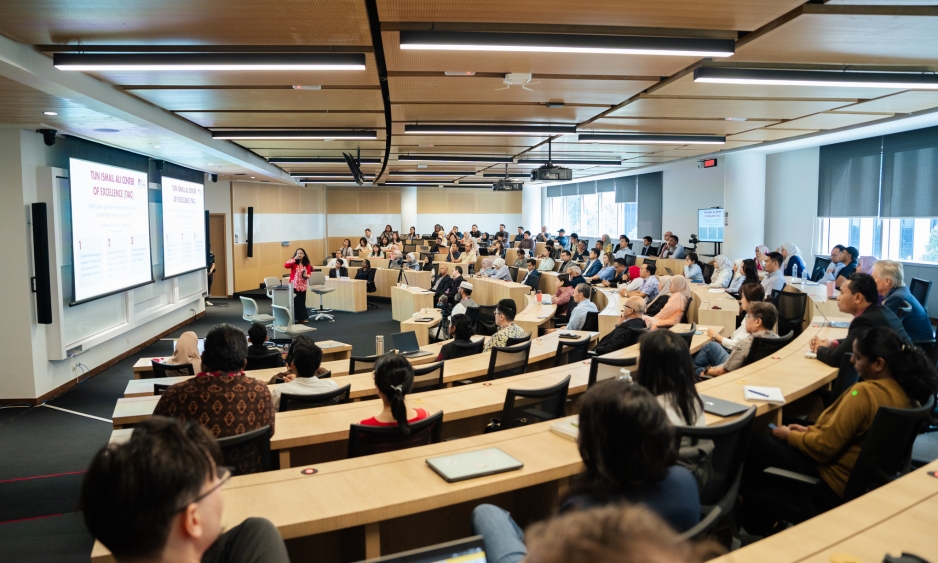
CTSS is a research center focusing on business strategies, technology, socio-political dynamics and decarbonization in emerging markets. We at CTSS conduct meaningful and rigorous research and often host visiting scholars and students who conduct research about our region and who deliver lectures and workshops.
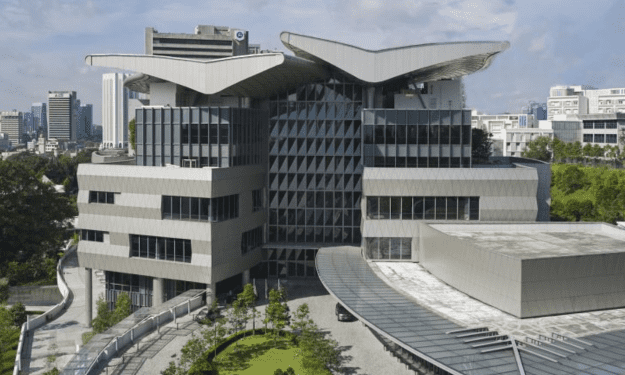
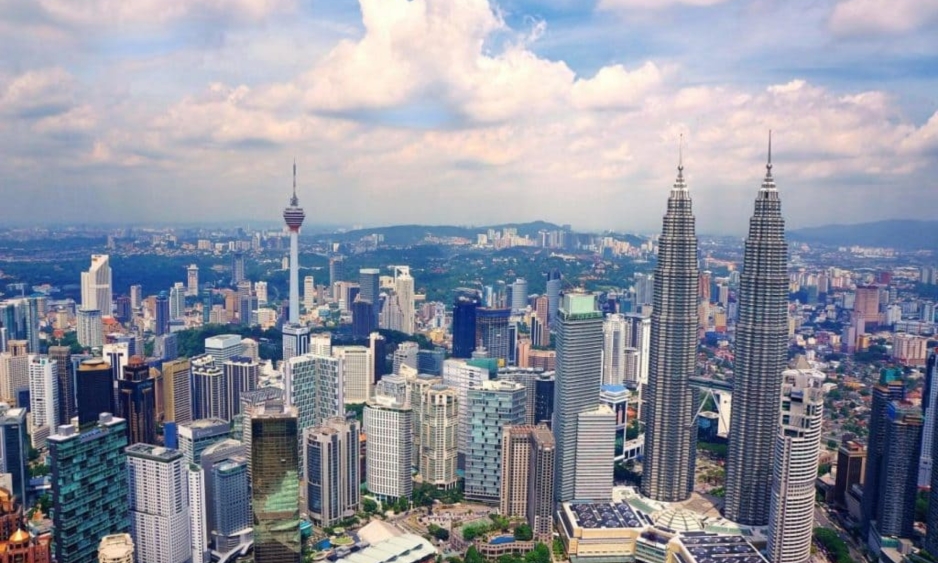
CTSS is part of the Asia School of Business (ASB) in Kuala Lumpur, founded by the Malaysian central bank, Bank Negara Malaysia (BNM), in collaboration with the MIT Sloan School of Management. ASB offers MBA, Executive MBA and Master in Central Banking degree programs, as well as continuing education programs through the ASB Iclif Executive Education Center and Agile Continuing Education (ACE) platform.
CTSS Master Thesis Research Projects
The following are some topics in the field of decarbonization in emerging markets which CTSS faculty affiliates are confident in co-supervising for the purpose of a Master’s thesis project.
We envision the Visiting Research Associate to also write and publish an ASB CTSS Working Paper or Policy Brief about their research before completing their thesis.
The following project descriptions serve as an initial guide and basis for further discussion with the student’s main thesis supervisor at the home institution. Please note that we do not have in-house experience with energy modelling programs like OSeMOSYS or NEMO, however we believe this kind of modelling is a valuable exercise for energy system stakeholders in the region.
The Evolution and Impact of Carbon Markets in Emerging Economies: A Comparative Study of Southeast Asia, Brazil, and South Africa
Research Description
This research explores the development, implementation, and effectiveness of carbon markets—particularly Emissions Trading Systems (ETS)—in emerging economies, with a primary focus on Southeast Asia. Drawing on the latest findings from the International Carbon Action Partnership (ICAP) 2025 Status Report, the thesis investigates how countries such as Indonesia, Vietnam, Malaysia, the Philippines, and Thailand are integrating carbon pricing instruments into their climate policy toolkits.
The study examines the unique challenges these countries face in balancing decarbonization goals with economic development, analyzing the structure and policy design of emerging ETSs. For instance, Indonesia’s intensity-based ETS for the power sector and Vietnam’s upcoming pilot ETS represent key case studies. The research also compares these systems to others in major emerging economies such as Brazil and South Africa, which are similarly shifting toward hybrid models incorporating crediting mechanisms and baseline-and-credit systems.
Through a comparative policy analysis and stakeholder interviews, the thesis evaluates:
- The institutional, legal, and technical readiness for ETS implementation.
- The integration of domestic offset credit systems.
- The interaction between carbon markets and broader development priorities such as energy access, industrial growth, and just transition.
- The role of international cooperation and Article 6 of the Paris Agreement in shaping market-based climate policies.
The research aims to contribute practical recommendations for policymakers and international organizations seeking to support effective and equitable carbon market development in emerging economies.
Key Methods
- Policy document and regulatory framework analysis
- Case studies (Indonesia, Vietnam, Malaysia, etc.)
- Interviews with policymakers, business leaders, and regional stakeholders
- Comparative analysis with ETSs in non-Southeast Asian emerging economies
Modelling Coal Phase-Out Scenarios in Southeast Asia: Impacts on Electricity Security, Emissions, and Investment Needs
Research Objective
To quantitatively assess the technical feasibility, emissions impact, and financial implications of accelerated coal phase-out pathways in major Southeast Asian economies using energy systems modelling.
Motivation
The IEA Southeast Asia Energy Outlook highlights the region’s young coal fleet, growing electricity demand, and diverse national targets for coal phase-out (e.g., Malaysia by 2044, Thailand by 2050, Indonesia by 2056 with JETP support). It also notes the region’s heavy reliance on coal (nearly 50% of electricity generation) and urgent climate targets. However, the report underscores a lack of alignment between stated policies (STEPS) and pledged goals (APS), suggesting a critical research gap in identifying realistic pathways for energy transition
Key Research Questions
- What are the optimal coal retirement schedules (nationally and regionally) to meet net zero targets by 2050 or 2065 under least-cost scenarios?
- How will early coal retirements impact power system reliability and electricity costs under various demand and technology cost trajectories?
- What role can low-emission alternatives (solar, wind, biomass co-firing, ammonia, CCS) play in replacing retired coal capacity?
- What is the scale and timeline of investment required for grid upgrades and new capacity to ensure energy security?
Methodology
- Use a power system modelling tool (e.g. OSeMOSYS, NEMO) to simulate multicountry energy scenarios.
- Input key data from the IEA Outlook: projected demand, technology costs, fuel prices, existing generation fleet, capacity additions, and national pledges.
Model several scenarios
- Business-as-usual (STEPS)
- Full implementation of announced pledges (APS)
- Accelerated net-zero transition (NZE aligned)
- “Just Transition” coal exit pathways with compensation and grid investments
Data Sources
- IEA Southeast Asia Energy Outlook 2024
- National energy policy documents (e.g., Indonesia’s RUPTL, Vietnam’s PDP8
- ASEAN Plan of Action for Energy Cooperation (APAEC)
- Global databases: IRENA, WRI, Open Power System Data
Expected Contributions
- Provide quantitative evidence on transition pathways that balance emissions, cost, and security.
- Inform national governments and ASEAN trade-offs between early coal retirement, renewables scaling, and grid investments. • Highlight the investment gaps and policy levers needed to operationalize net zero pledges.
Modelling Grid Interconnectivity and Regional Power Trade in Southeast Asia: Impacts on Energy Security, Costs, and Decarbonization
Research Objective
To model the effects of enhanced grid interconnectivity and cross-border electricity trading within ASEAN on system-wide costs, renewable integration, and emissions reductions, and to assess the economic and technical feasibility of expanding the ASEAN Power Grid (APG).
Motivation
The IEA Outlook emphasizes the importance of expanding and modernizing Southeast Asia’s electricity grids, highlighting the ASEAN Power Grid (APG) as a key regional initiative. Interconnection is critical to:
- Balance variable renewable energy (VRE),
- Share capacity reserves
- Enhance energy security,
- Reduce generation costs.
However, grid development is uneven; investments are lagging, and regional coordination is weak. A rigorous systems modelling approach is needed to quantify the value of deeper integration.
Key Research Questions
- What are the quantitative benefits of enhanced regional interconnectivity on overall generation costs, system reliability, and emissions?
- How does greater VRE penetration (e.g., solar/wind in Vietnam, hydropower in Lao PDR) affect optimal power flows and grid utilization?
- What is the optimal sequence of interconnection investments to maximize returns under various policy and demand growth scenarios?
- How would energy trade scenarios compare under national versus regional optimization strategies?
Methodology
- Develop a multi-node regional power system model using software like OSeMOSYS or NEMO.
- Each node represents a Southeast Asian country or major subregion with aggregated demand, generation portfolio, and transmission constraints.
- Model scenarios including:
- National self-sufficiency (limited interconnection)
- ASEAN Power Grid expansion to all 10 countries
- High-renewables scenario (e.g., solar boom + hydro trade)
- Climate-aligned pathway (NZE scenario with regional optimization)
Data Sources
- Generation mix, demand projections, and planned investments from the IEA Southeast Asia Energy Outlook 2024
- Transmission capacities and planned interconnectors from the ASEAN Power Grid project
- Renewable energy potential (wind, solar, hydro) from IEA, IRENA, and Global Atlas data
- Country-level policy documents (e.g., Vietnam’s PDP8, Indonesia’s RUKN)
Expected Outputs
- Maps and cost curves for interconnection scenarios
- Quantified system cost savings, emission reductions, and improved resource utilization under integrated scenarios
- Sensitivity analysis on VRE costs, fossil fuel prices, and technology adoption
- Policy recommendations for phased APG implementation and regional market design
Expected Contributions
- Provide an evidence base for accelerating transnational energy cooperation and investment in grid infrastructure.
- Support regional bodies like ASEAN Centre for Energy (ACE) in evaluating the benefits of a single Southeast Asian electricity market.
- Inform national policymakers of economic trade-offs between autonomy and interdependence in the power sector.