
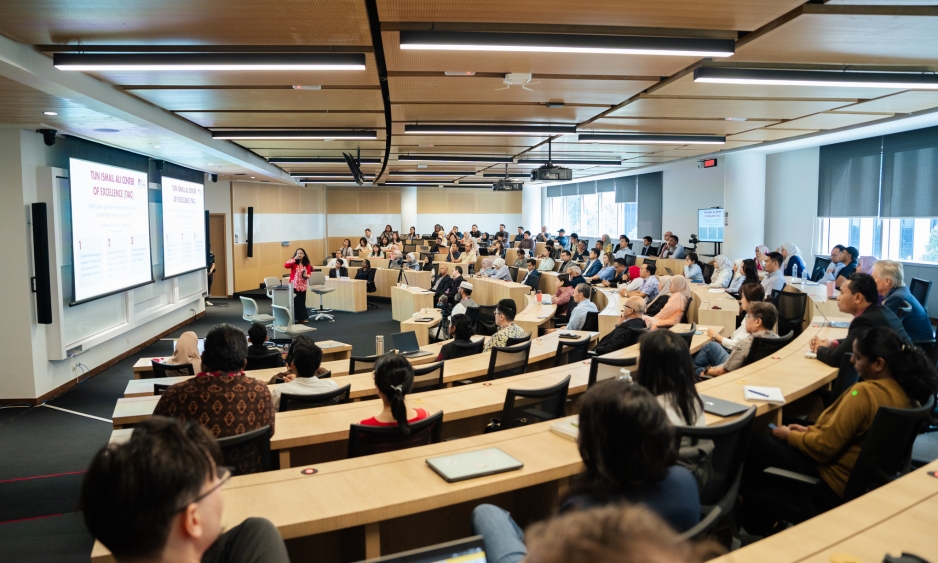


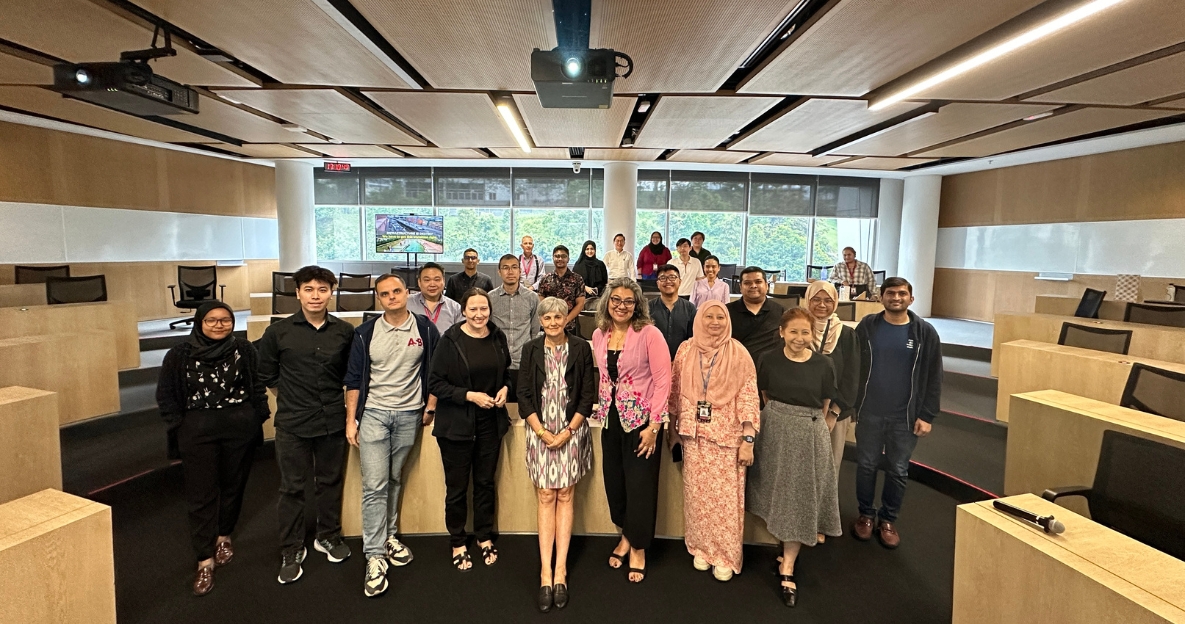
In her talk at ASB titled “Future of Transportation: What It Means for Innovation, Sustainability, and the Financial Ecosystem,” Robin Chase, co-founder of Zipcar, offered her perspective on the evolving transportation landscape and its implications for society, sustainability, and the economy.
Chase contrasted U.S. and Dutch transportation policies, emphasizing the Netherlands’ long-term commitment to bike-friendly infrastructure. “The Dutch have had 50 years of bike-friendly infrastructure,” she observed. In contrast, the U.S. has a high-rate of deaths in car accidents. This contrast highlighted the urgent need for countries to prioritize safety and sustainability over car-centric development.
Stressing that “infrastructure is destiny,” Chase explained how current decisions shape future mobility and environmental impact. “It’s very expensive to build vehicle infrastructure, and at this very moment, 50% of you, even rich people, should not get in the car and drive someplace.”
Chase advocates for reallocating space and resources from cars to public transit, biking, and walking. Cities that stood as good role-models, Paris and Copenhagen, have created pedestrian and bike-friendly environments. “It will never make environmental sense, social sense, safety sense, or geopolitical sense to move one person in a three-ton vehicle,” she asserted.
She also addressed the dangers posed by trucks and SUVs with tall front ends, which increase pedestrian injuries. She highlighted Korea’s Cheonggyecheon Stream Restoration Project, where a highway was removed to restore a river, transforming the area and improving residents’ quality of life.
Chase concluded with a call to action for policies and infrastructure investments that prioritize people over cars, urging a shift to solutions like subways and pedestrian-friendly spaces. “We need to build infrastructure that makes walking, biking, and transit the easy and convenient choices, while making car use more expensive and less convenient.”
Robin Chase’s insights underscore the critical role of transportation infrastructure in shaping a sustainable and inclusive future.