

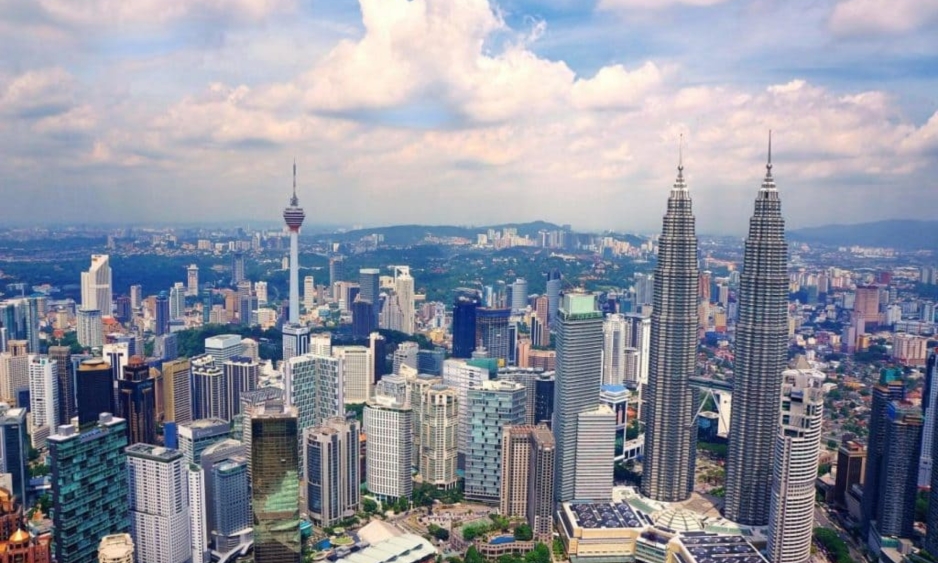

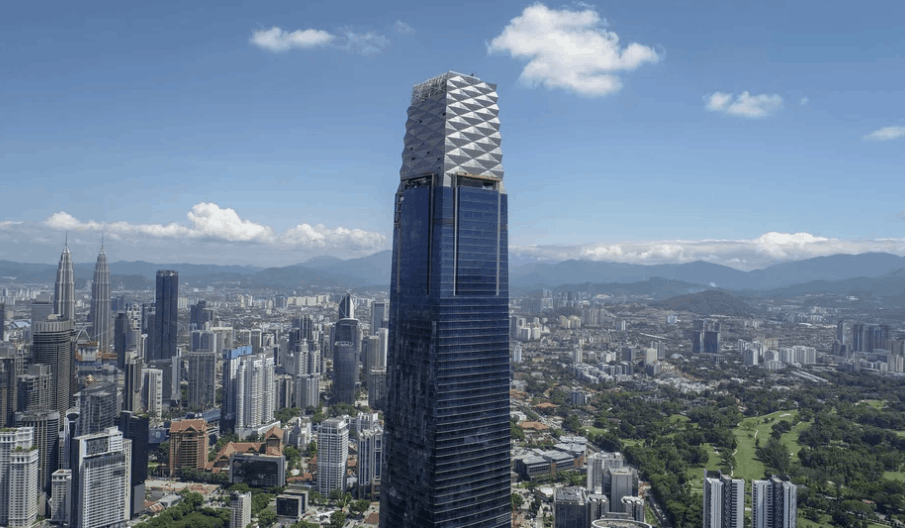
Malaysia’s financial center ambitions are gaining traction by leveraging its world-leading Islamic finance strength rather than directly competing with Singapore. To maximize success, economists emphasize uniting its various regional financial hubs into a single, cohesive ecosystem centered in Kuala Lumpur.
For instance, TRX has attracted major financial institutions including HSBC, Prudential and Affin Bank, alongside technology companies such as Ant International, consultants and other professional services firms.
Professor Joseph Cherian, CEO, president and dean of Asia School of Business, noted that physical clustering is only the beginning.
He said at the moment, TRX is a very successful property development, but that alone does not make it an international financial centre.
He said the financial capability has to be deliberately built. Labuan arguably has more of that institutional infrastructure already because it has operated as an offshore financial centre for many years.
“You need intellectual capital. You need people who understand finance, markets, regulation, asset management, capital raising and product development.”
He suggested bringing expertise from institutions including Bank Negara Malaysia, the Securities Commission, Employees Provident Fund, Permodalan Nasional and the Ministry of Finance together at TRX with a mandate to develop the financial ecosystem.
The discussion should focus on three key areas: developing new financial products, attracting asset managers, and internationalising Malaysia’s sukuk market.
He said Malaysia’s strongest opportunity lies in something more difficult for Singapore to replicate: Islamic finance.
He said Malaysia’s decades spent building expertise in sukuk, Islamic banking, takaful, and Shariah governance give it an unrivaled edge in the region.
Rather than trying to replicate a conventional financial centre and adding Islamic products around its edges, Islamic finance should become the organising principle of Malaysia’s IFC strategy.
One opportunity would be to internationalise Malaysia’s sukuk market by encouraging major multinational companies operating in the country to issue US dollar-denominated sukuk and distribute them to global investors.
“If you want an Islamic financial centre, come to Malaysia. We are among the best in the world,”
The objective should not be to defeat Singapore but to build capabilities that make the two centres valuable to each other.
“Malaysia doesn’t have to defeat Singapore or Hong Kong… It has to develop capabilities that make those centres want to work with Malaysia,”
Malaysia’s efforts to develop multiple financial centres also present another challenge: whether spreading activity across different locations undermines the concentration that makes financial centres successful.
Malaysia’s efforts to develop multiple financial centres also present another challenge: whether spreading activity across different locations undermines the concentration that makes financial centres successful.
Prof Cherian said Malaysia needs a clearer hierarchy, with Kuala Lumpur and TRX serving as the country’s principal international financial hub and other centres developing specialised roles.
“You cannot have Labuan, Penang, Johor and every other location all saying, ‘We want to be the financial centre.’ You need to choose your main international financial centre,”
Under his proposed hub-and-spoke model, Labuan could retain its offshore role while developing areas such as Islamic finance and tokenisation, while Johor could specialise in Islamic wealth management and family wealth.
Originally published by Business Times