




Micro-Credential in Supply Chain Systems
Design, Manage and Optimize Supply Chain Systems

Closed
Program Start Date
1.5 Credits
Course Credits
RM8,500*
Fee
STF Claimable
Funding Option
Overview
Master the fundamentals of inventory, production, logistics, and network design. Develop a systems view of how supply chains behave in the real world. This course equips you with practical tools to optimize supply chain performance and navigate complexity enabling smarter, more resilient supply chain decisions across global networks.
The curriculum covers the spectrum of innovation types (from incremental to radical, component to system) and the challenges of diffusion, adoption, and technological lock-in. Organizing for innovation is a central theme, drawing on models like Nonaka and Takeuchi’s knowledge-creating organization and Technology Management Systems, while addressing the tensions between open and closed innovation, value capture, and the role of complementary assets.
The course also investigates the spatial and relational contexts of innovation, including regional clusters, national systems, and global value chains, with a focus on emerging markets and the political dimensions of technological change. Through case studies and strategic frameworks, participants will learn to develop innovation strategies, forecast technological trends, and lead organizations in capturing value from innovation, all while critically assessing the risks of hype, lock-in, and ideological biases in technology-driven transformation.
The course consists of four main modules:
- Fundamentals of Technology and Innovation
- Organizational Perspective
- Innovation in Context
- Innovation Strategy and Leadership
This course will enable you to:
- Make Smarter Strategic Decisions by monitoring innovation opportunities and acting decisively ahead of disruption.
- Strengthen Competitive Advantage & Value Capture through smarter business models and strategic collaboration choices.
- Navigate Global Innovation Landscapes to identify opportunities and risks across markets and policies.
- Think Critically & Ethically About Technology to cut through hype and make grounded decisions.
- Apply Innovation in the Real World using proven frameworks and impactful case studies.
This course is particularly valuable for senior managers in dynamic industries—such as tech, manufacturing, or services—where innovation is a key driver of growth. It will help you not only anticipate and respond to disruption but also shape it, ensuring your organization remains competitive and agile in a rapidly evolving landscape.
While there are no strict prerequisites, the course will be most useful for people with an academic background in business, technology, science or engineering, or a few years’ work experience in a technology-intensive environment, such as online services, manufacturing, infrastructure, engineering, or R&D.
Class Structure
Video Learning
Before live sessions, you’ll watch 20 to 40 minute video lectures and complete assignments to reinforce your learning.
Live Sessions
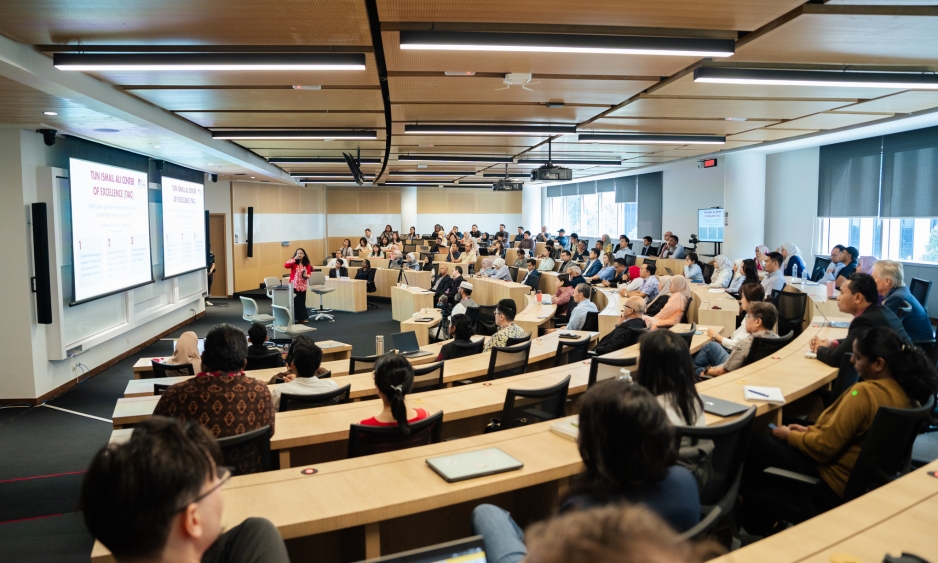
The live sessions are held in hybrid format, beginning with a review of the video lecture and followed by a discussion of the case of the day.
Duration
Covers pre-learning through videos followed by live sessions.
First Live Session
- Sunday, June 14, 2026
- 10:00 AM – 1:30 PM (Malaysia Time)
Second Live Session
- Sunday, June 28, 2026
- 10:00 AM – 1:30 PM (Malaysia Time)
Third Live Session
- Sunday, July 12, 2026
- 10:00 AM – 1:30 PM (Malaysia Time)
Fourth Live Session
- Sunday, July 26, 2026
- 10:00 AM – 1:30 PM (Malaysia Time)
First Live-session
- Sunday, June 14, 2026
- 10:00 AM – 1:30 PM (Malaysia Time)
Second Live-session
- Sunday, June 28, 2026
- 10:00 AM – 1:30 PM (Malaysia Time)
Third Live-session
- Sunday, July 12, 2026
- 10:00 AM – 1:30 PM (Malaysia Time)
First Live-session
- Sunday, July 26, 2026
- 10:00 AM – 1:30 PM (Malaysia Time)
Faculty

Asad Ata
Professor of Practice,
Operations and Supply Chain Management,
Faculty Director of Center for Sustainable Small-owners (CSS)
Connect with us to start
Micro-Credential in Supply Chain Systems
Design, Manage and Optimize Supply Chain Systems
RM8,500 or approximately USD1,848*