





Smallholders sit at the heart of the global palm oil industry, but too often, they remain at the edges of the systems shaping its future. In Malaysia, as sustainability standards rise and market expectations shift, helping independent farmers keep pace is increasingly important.
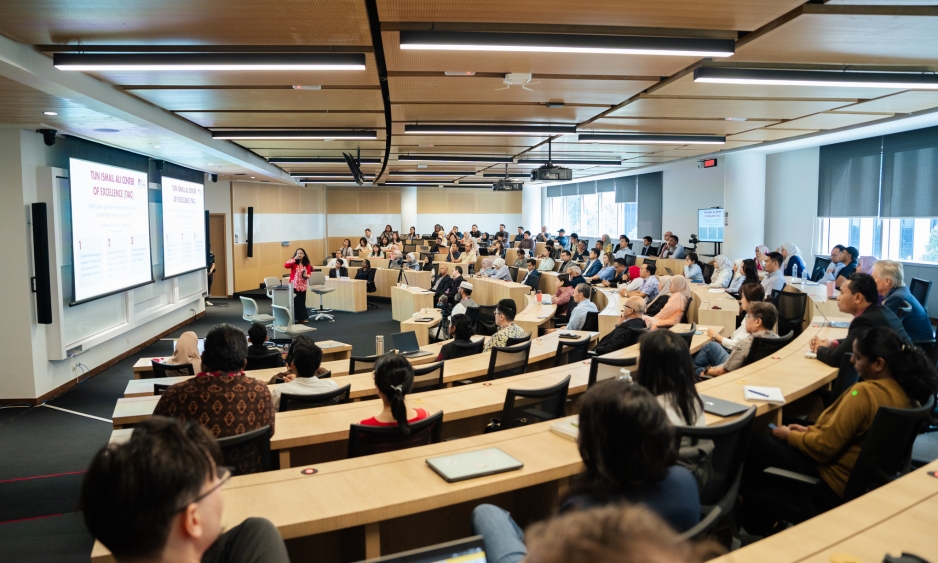
This is the work of the P&G Center for Sustainable Small-owners (CSS) at the Asia School of Business (ASB). Founded and funded by Procter & Gamble (P&G) in 2019, the center has spent the past seven years working with independent smallholders in Batu Pahat and Pontian, Johor, through the P&G Smallholder Program. CSS’s mission is clear: elevate smallholder livelihoods while promoting responsible, sustainable palm oil production. Its work is anchored in four pillars viz. Community Empowerment, Livelihood Improvement, Responsible Sourcing and Thought Leadership, which together shape how the program supports farmers on the ground.
At the edge of the system
Independent smallholders produce more than 40 percent of the world’s palm oil, yet they remain among the most underrepresented groups in formal trade. In Malaysia, where they account for 17 percent of total producers, the barriers are practical and persistent — from the cost of certification to limited access to finance and technical information. As global sustainability standards tighten, the risk is that these farmers are left further behind.
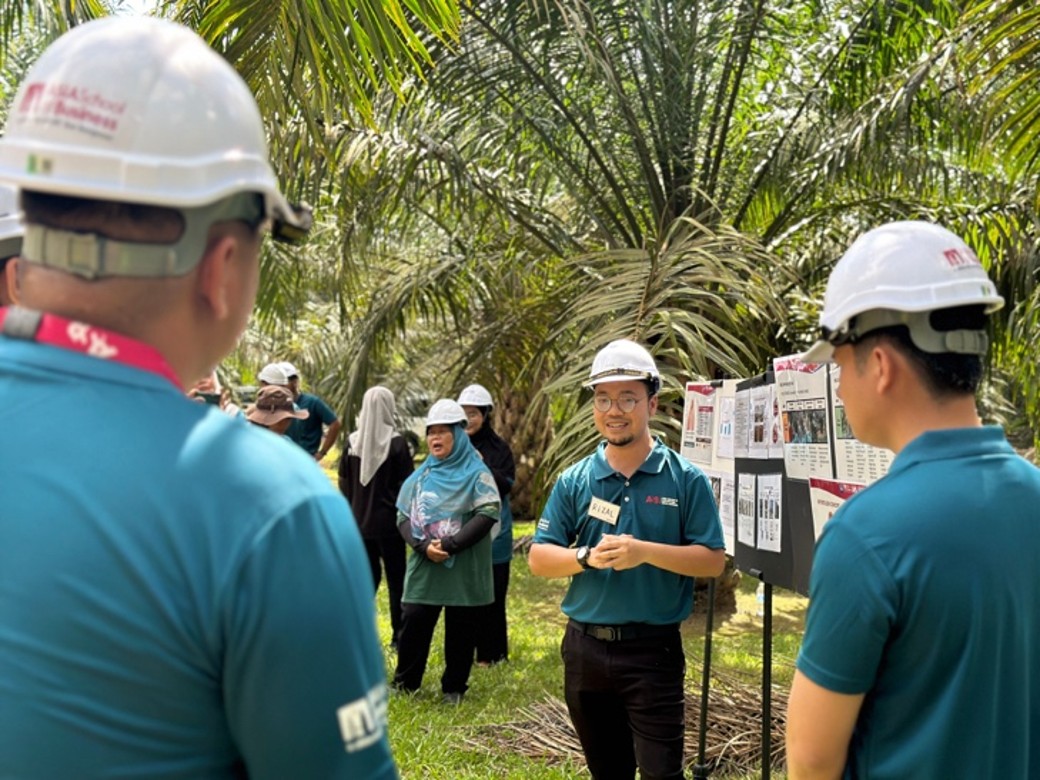
CSS was set up to address those gaps through direct engagement. By providing training, field guidance and certification support, the center has helped make sustainable practices more accessible and more achievable. So far, more than 5,000 farmers have been trained in Good Agricultural Practices (GAP), supported by five practical guidebooks designed to translate global standards into everyday farm management.
How change takes hold
That support has led to visible changes on the ground. More than 1,100 farms have adopted Good Agricultural Practices aligned with the Roundtable on Sustainable Palm Oil (RSPO) and No Deforestation, No Peat, and No Exploitation (NDPE) guidelines, and with a focus in areas such as waste and chemical management. As these practices took hold, more farmers were able to move towards formal certification. To date, 892 smallholders have achieved RSPO Independent Smallholder certification through the P&G Smallholder Program.
For farmers, those changes have also brought more tangible returns. Within four years of adopting Good Agricultural Practices, many have increased crop yields by as much as 35 percent which translates to a 25% increase in their income. Between 2021 and 2025, 642 certified farmers collectively earned USD106,000 in sustainability-linked premiums. Together, these results show how practical support can translate into stronger farm performance and better economic opportunity.
These gains also go beyond the immediate. As supply chains place greater emphasis on transparency, CSS is also helping smallholders keep pace with what comes next. Through a growing focus on digital traceability, the program is helping ensure that certified farms can be verified from source to shipment — an increasingly important step as requirements such as the EU Deforestation Regulation (EUDR) continue to reshape the market.
A wider circle of impact
The impact extends beyond individual farms. The formation of PERTANIAGA, a farmer-led association in Johor, has helped 892 members take a more active role in shaping their collective progress. Women now hold 38 percent of leadership positions within the association, reflecting CSS’s commitment to gender inclusivity in agriculture.
What the numbers don’t capture
Behind the data are the individual stories that give this work meaning. Francis Wiederkehr, Sustainability Program Director at P&G Chemicals, points to farmers such as Encik Rosli, a marathon runner who consistently beats yield averages, and Puan Hamisah, a retired civil servant who now champions women in agriculture. Francis, also added, “What’s particularly encouraging for me is how the report shows evidence-based support can uplift livelihoods, while having a positive impact on the environmental footprint of palm oil”.
For ASB, the progress in Johor reflects what sustained collaboration can make possible over time. As Joseph Cherian, CEO, President, Dean and Distinguished Professor at ASB, put it: “Smallholders are the unsung heroes of sustainable growth. This initiative shows what happens when knowledge meets purpose.” CSS Director Professor Asad Ata added: “We celebrate certificates, but more importantly, we celebrate the change they unlock in families, communities and ecosystems.”
Five years on, the work in Johor offers a reminder that progress does not only happen at the level of policy or markets. It also happens when people are given the knowledge, support and opportunity to move forward in ways that last. In that sense, the impact of CSS can be measured not only in yields, premiums or certifications, but in stronger communities, wider access, and the steady work of building a more inclusive future from the ground up.