
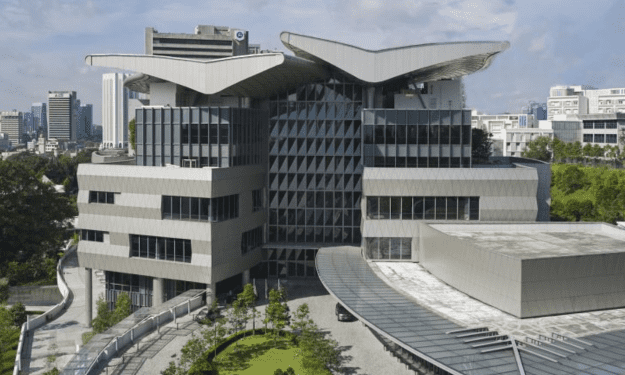




Asia School of Business

Global Inquiry, Local Heart

If your goal is to accelerate your career trajectory, there are few more impactful options than enrolling in an MBA degree.

Designed to provide business acumen and develop the mindset vital for management and leadership, each year global MBA programs help students achieve goals such as increasing their earning potential or changing industry, function, or location.

Today, employers continue to value the mixture of generalist capabilities and smart skills that MBA graduates possess. According to our research, problem solving, communication, strategic thinking, and adaptability are the attributes most valued by corporate recruiters today.

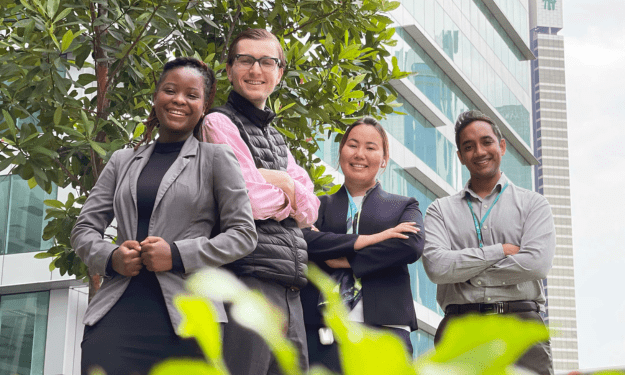
To explore how an MBA program can drive career growth, we spoke with Bryan Guan and Syarifah Hasanah Hassan, graduates of the MBA at Asia School of Business (ASB) in Malaysia, a program that aims to help students accelerate their growth over one year of study.

Unlocking transferable business skills

For Hasanah, who was born in Malaysia and grew up in the Middle East, enrolling in an MBA was a route to switching careers. After completing her bachelor’s and pursuing a career in healthcare management and strategy planning, she wanted to apply her strategic skills outside the industry.

When looking for programs, Hasanah was attracted to the ASB curriculum, which is developed in collaboration with MIT Sloan School of Management and places a strong focus on practical learning. Studying at ASB would allow her to gain a rigorous and action-oriented MBA while also being close to family in Malaysia.

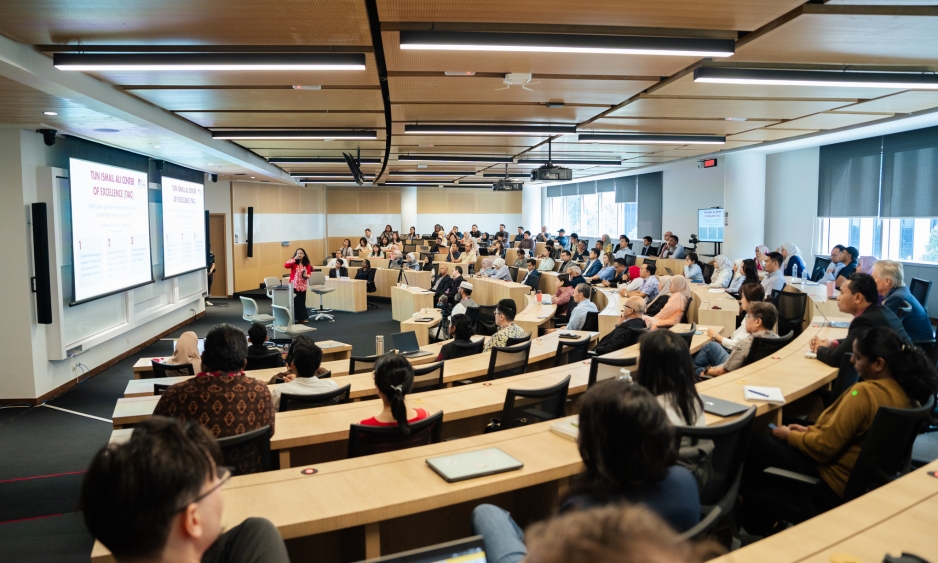
Hasanah quickly found herself developing new skills within the highly interactive classroom environment, where students had to come prepared to answer questions and speak on case studies.

“That pushed your critical thinking skills further, because you’d have to immediately apply what you’d learned,” she explains.

Despite not coming from a business background, Hasanah quickly took to subjects in technical areas such as supply chain, operations, and systems thinking. As she navigated the 12-month curriculum, she found broadening her skillset and business knowledge brought with it a new level of confidence.

“The knowledge that I learned is something that I could apply in any aspect of any industry—or even any aspect of life. The way you think and communicate is what the MBA shapes.”

Seeing the ‘big picture’

Bryan had around nine years of work experience when he enrolled in the ASB MBA. Also from Malaysia, he studied a Bachelor’s degree in Economics in California and spent time working in New York City within the pulp, paper, and packaging industry before returning to join the program.

Like Hasanah, Bryan was attracted to the MIT Sloan-influenced MBA curriculum and its delivery in a Southeast Asian context. He also felt a one-year MBA made sense for his career.

“It’s a huge opportunity cost for someone at that age to take two years off from your career—because of the cost of living, watching your peers moving ahead, lots of things,” he says. “I think the one-year MBA is actually a huge selling point.”

Bryan enjoyed growing his knowledge through the ASB MBA’s rigorous curriculum while working alongside classmates from a range of professional backgrounds. He found this experience helped expand his perspective and develop stronger leadership insight. This was further developed as he attended various guest lectures and other external engagement opportunities that featured cross-industry professionals and leaders.

“Prior to joining the MBA I was very absorbed in what my role was designated to do. I think the MBA teaches students to think on a larger picture—to really understand that a role is only a very small part of the whole ecosystem,” he explains.

Gaining access to diverse job opportunities

Armed with a fundamental understanding of business and the experiences and skills she’d developed during various Action Learning projects, Hasanah found several routes available to her when she began considering life after graduation.

Working closely with the ASB Career Development Office, she welcomed opportunities to explore diverse career paths: “I think studying an MBA pushed me to make decisions that are more for my growth, rather than being in my comfort zone.”

Hasanah eventually faced a choice between pursuing a career as a consultant or taking on a role in tech working as a product delivery manager. She opted for the latter, recognizing it would offer the chance to both strategize and deliver projects from end to end, building both on her pre-MBA strategic experience and her newfound expertise in operations and systems thinking.

“If it wasn’t for the MBA, especially in my experience, I don’t think I could ever imagine holding this role in this kind of industry,” she explains.

For Bryan, the MBA helped him move into a group operations role within the pulp and paper industry. Based in Kuala Lumpur, the role requires him to pursue industry and regional-level initiatives and work to attract foreign investment. He says the broad perspective he gained during the MBA has been crucial.

“Confidence is essential. So, in that sense, having an MBA—having the accreditation—does provide me with that confidence to work within the organization and beyond.”

Read the full article here.

This article was originally published on BusinessBecause, a network helping MBA students make connections before, during and after their MBA.
As businesses navigate rapid technological change, geopolitical uncertainty, supply chain disruption, and the rise of artificial intelligence, the expectations placed on future leaders are changing just as quickly. The traditional model of higher education, centered primarily on classroom instruction and historical case studies, is increasingly being challenged by a business environment that rewards adaptability, resilience, and practical problem-solving.

Few regions illustrate this transformation more clearly than Asia. Home to some of the world’s fastest-growing economies and innovation hubs, the region has become a proving ground for the forces reshaping global business.

The Asia School of Business (ASB), established in 2015 through a strategic collaboration between MIT Sloan School of Management and Bank Negara Malaysia, bridges the gap between high-level executive theory and the ground-level commercial dynamics driving the continent’s most vibrant global hubs. 

Today, ASB has built its reputation around an approach it describes as “Global Inquiry, Local Heart,” a philosophy that combines world-class management education with immersive, real-world learning experiences across Asia and beyond.

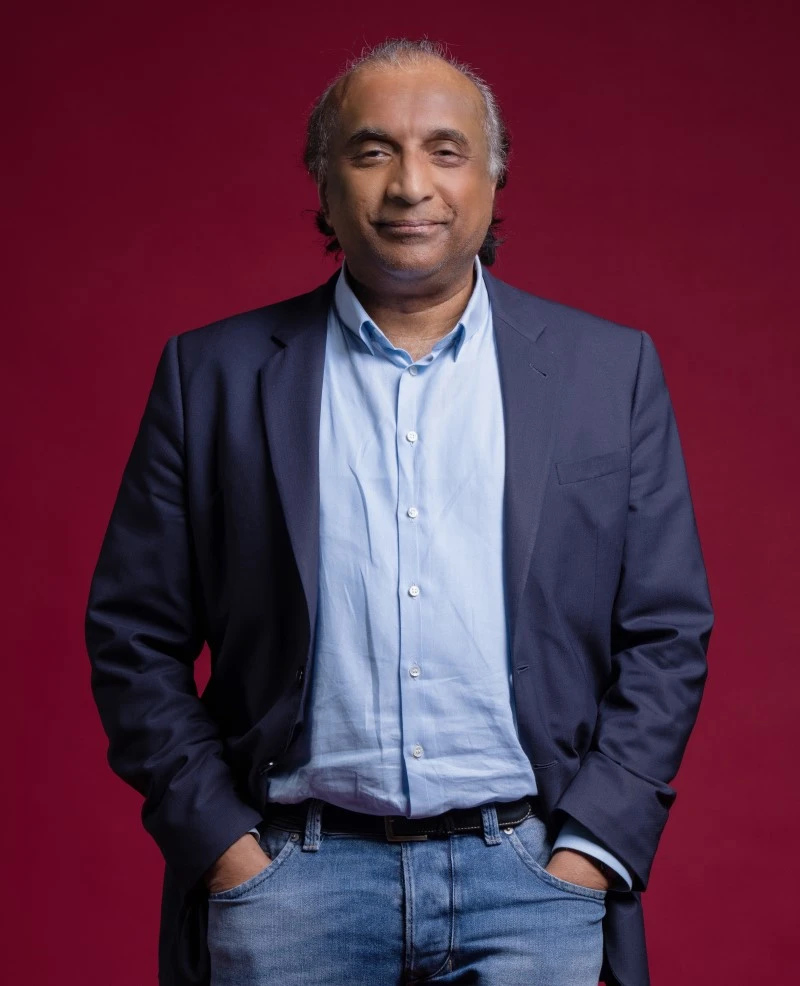
Professor Joseph Cherian, CEO, President, Dean, and Distinguished Professor at the Asia School of Business, shared his thoughts about the future of business education, the growing importance of supply chain expertise, and why he believes tomorrow’s leaders must be prepared for a world defined by constant change.

Professor Cherian, can you give us an overview of the Asia School of Business?

The Asia School of Business was established in 2015 in Kuala Lumpur, Malaysia, through a strategic collaboration between MIT Sloan School of Management and Bank Negara Malaysia. Our mission is to develop transformative leadership talent for Asia’s rapidly evolving economies while connecting regional business realities with global management thinking.

Since our founding, we’ve grown into a comprehensive educational ecosystem offering Executive Education, a Master in Central Banking, MBA, Executive MBA, and Micro-Credentials programs. We are also AACSB-accredited, placing us among a select group of business schools globally recognized for teaching quality, curriculum, research, and institutional impact.

How does your approach and curriculum compare to other leading business schools?

What fundamentally sets ASB apart from traditional business schools is our deeply integrated, action-oriented curriculum, guided by our ethos of “Global Inquiry, Local Heart.”

Asia today represents one of the world’s most dynamic environments for studying supply chains, digital transformation, fintech, sustainability transitions, and geopolitical business risk. That context shapes how we design our experiential or Action Learning model.

As I often tell prospective students, “We do not just teach business in theory; we immerse students in the realities of business practice across Asia and beyond.”

While many MBA programs rely primarily on classroom case studies, our Action Learning methodology serves as a core pillar of the curriculum. Students work directly with organizations to diagnose business challenges, gather firsthand insights, and develop actionable solutions alongside industry leaders.

Are there specific areas of expertise where ASB offers students a unique advantage?

ASB focuses on areas that are increasingly critical to modern business leadership, including supply chain resilience, central banking and public policy, digital transformation, sustainability, entrepreneurship, and leadership under uncertainty.

We also offer postgraduate pathways with institutions including MIT Sloan, Yale School of Management, Oxford Saïd Business School, and Cornell SC Johnson College of Business.

Perhaps most importantly, these pathways ensure students do not have to choose between an Asia-focused education and access to elite global networks.

As I often explain, “Our students do not choose between an Asian-focused education and a Western elite network—they get the distinct advantages of both.”

Supply chain management has become one of ASB’s specialties. Why is this area so important today?

Supply chain management has evolved from a back-office operational function into a core driver of corporate survival and geopolitical strategy.

Recent disruptions have demonstrated how interconnected and vulnerable global supply chains can be. Events ranging from geopolitical tensions to transportation bottlenecks have highlighted the need for leaders who understand not only efficiency and logistics, but also resilience and risk management.

At ASB, we believe future business leaders must understand how disruptions in one region can create cascading effects throughout global manufacturing, trade, and economic systems.

What challenges do you see confronting higher education today?

Higher education globally is facing a period of structural transformation.

One challenge is that traditional academic models are struggling to keep pace with the speed of change in the modern workforce. Employers increasingly seek graduates who possess practical problem-solving skills, technological literacy, and the ability to adapt in uncertain environments.

Generative AI is also reshaping expectations around knowledge acquisition. As a result, universities must focus less on rote information transfer and more on critical thinking, judgment, creativity, and applied problem-solving.

Additionally, the traditional model of learning once early in life is rapidly changing. Lifelong and modular learning pathways are becoming increasingly important as professionals continuously update their skills throughout their careers.

What are the biggest opportunities for higher education and business schools like ASB?

The future of business education will belong to institutions that can integrate global thinking with regional execution, technological fluency with human leadership, and academic rigor with real-world adaptability.

One of the greatest opportunities is moving beyond simply producing managers who maintain existing systems and instead developing leaders who can navigate uncertainty, drive innovation, and lead through structural change.

Another opportunity lies in what we call “learning by doing”. Business education must move beyond passive learning and immerse students directly in authentic business challenges.

Finally, Asia will continue to be one of the defining centers of economic growth, digital adoption, manufacturing transformation, and entrepreneurial activity. Business schools located within the region have a unique opportunity to help shape leadership models that are not only relevant for Asia, but increasingly relevant for the world.

Originally published by Grit Daily.