Asia School of Business

Global Inquiry, Local Heart

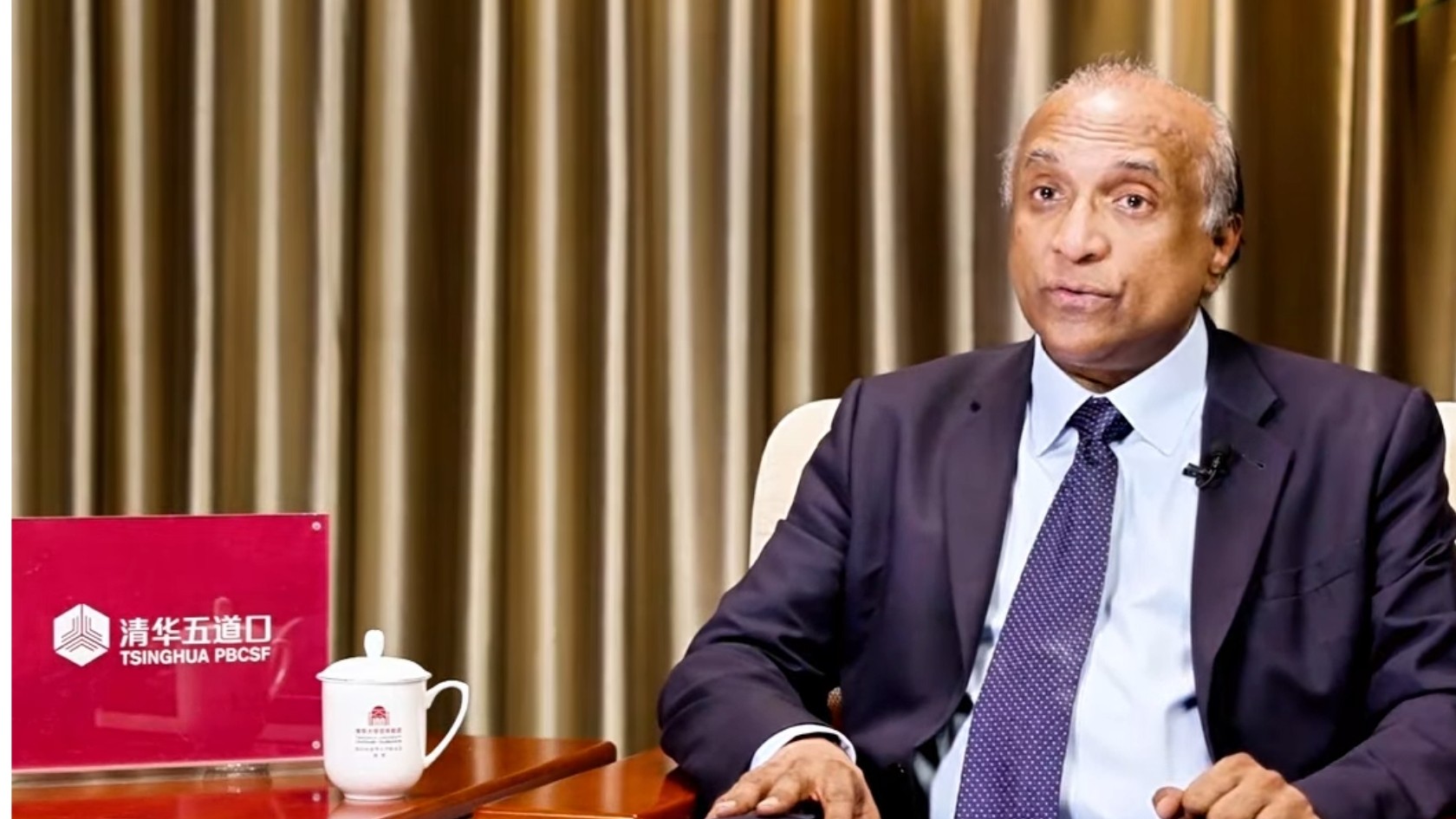
Joseph Cherian, CEO, president, dean and distinguished professor of the Asia School of Business expressed during a recent interview that US tariffs on Chinese goods are unwise, and ultimately raise the cost of these goods for American consumers. “They are the two biggest economies in the world, and the rest of the world and the US suffer if they don’t work together,” he said, adding: “I think at the end of the day, the US needs to work with China. There’s no doubt in my mind.

Originally published by China Daily.

During the third China International Supply Chain Expo held in Beijing, global attention was focused on what is next for regional coordination, industrial upgrading and the pivotal role of supply chains. 

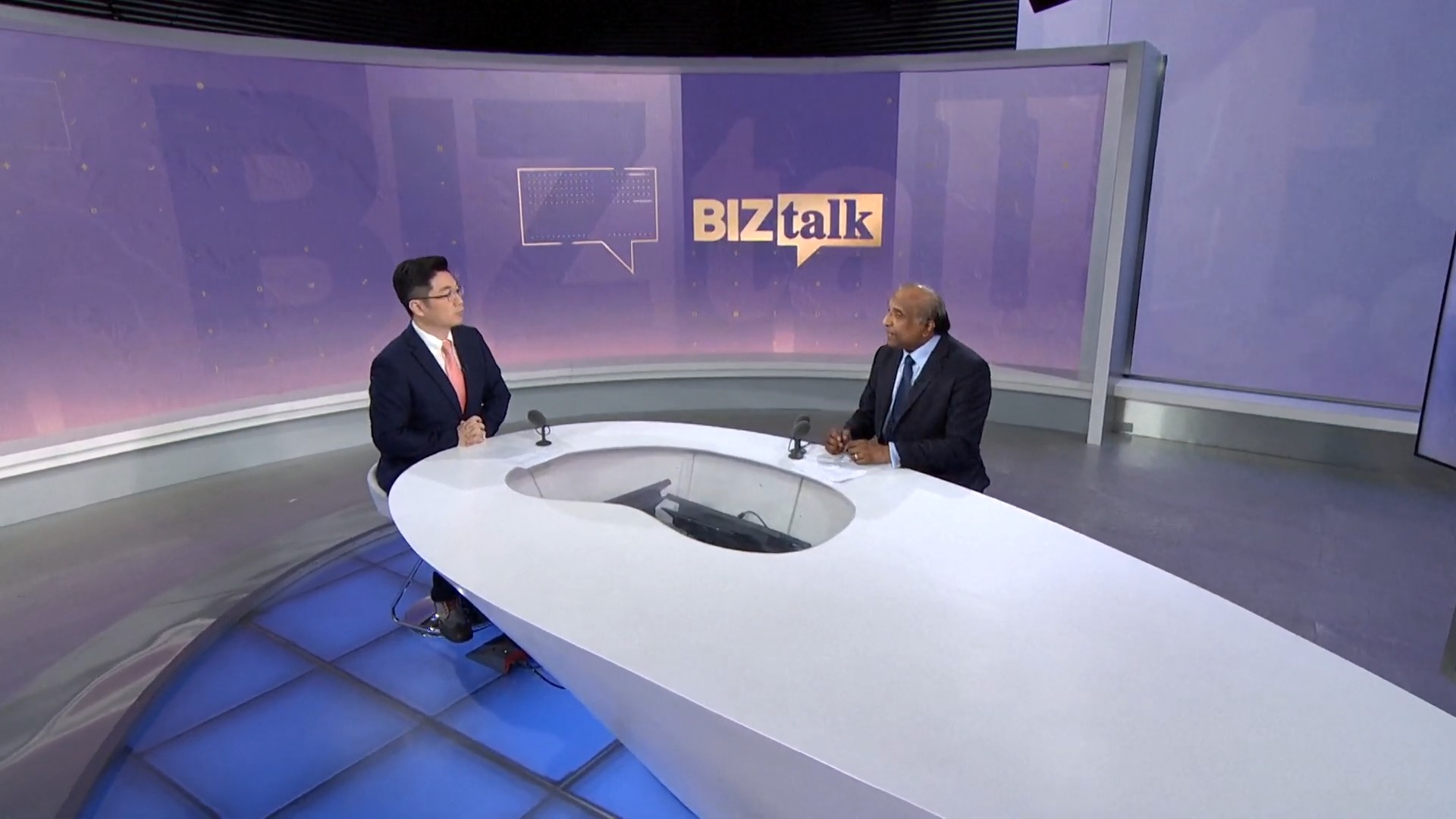
In this episode of BizTalk, CGTN’s Zheng Junfeng speaks with CP Group’s senior vice chairman Narong Chearavanont to learn how the Thai multinational is deepening its links with China and global markets – particularly how it is positive on China’s artificial intelligence and other technologies to upgrade food supply chains, efficiency and meet the evolving needs of consumers.

Also in this episode, Zheng interviews Joseph Cherian – CEO, dean and distinguished professor of Asia School of Business – to talk about China’s remarkable achievements in reforming its pension system and the synergies between China and ASEAN countries in trade, cross-border infrastructure and financial cooperation.

For the full interview, visit: https://news.cgtn.com/news/2025-07-25…
Originally published by CGTN.

To reach global environmental and social goals, such as the SDGs or the decarbonisation of the energy system, we need serious funding. Serious funding both in terms of scale (we need billions) and in terms of its source (from commercial finance). Commercial finance comes from financial institutions such as banks, pension funds, asset managers, corporates, private equity, and single or multi family offices, which together manage most of the world’s private capital.
 
While philanthropic or government grants can often help to start an initiative, serious funding (commercial finance) is needed to sustain and scale initiatives to the levels that society needs.
 
In many conversations about sustainable and social finance, the word “bankable” is often a kiss of death. “Yes, we agree this is a splendid initiative!” the bankers say, “it has great potential and would make a large impact!”, however they will wistfully add, “but it’s just not bankable!” Much gnashing of teeth and beating of chests follow.
 
The position of funders in these situations makes sense: they have an obligation to their investors and depositors to not lose money, and ideally, to make a steady return. They reach funding decisions by looking at certain financial metrics, typically a risk weighted return on investment. If those numbers do not look good, the project is not bankable.
 
Social and sustainable projects are often not bankable because they have no real business model, and because they are not setup in a way that makes sense for commercial funders. On paper, they seem far too risky.
Finding a business model

Every initiative that aims to attract commercial funding needs a business model. Many social or sustainability initiatives focus on the impact they want to make, but forget about how they will generate revenue to cover their costs.

There can be many potential streams of revenue. A nature conservation project could charge visitors. A recycling project could generate revenue by recovering materials, or generating energy. An infrastructure project could charge fees to users or residents who benefit, or generate a steady income from green mortgages extended to buyers of sustainable or energy-efficient homes. And so on. If these initiatives increase biodiversity or reduce greenhouse gas emissions, some kind of credit might also be issued and sold.

In many cases, such business models require some degree of regulatory support. Governments may need to give a concession to the project operator (charging visitors), allow parties to organise in certain ways (like a residents’ association), or they can incentivise firms to buy credits.

While gaining regulatory support may seem daunting, it is important to remember that social and sustainability projects often align with public policy goals. This makes governments more receptive to supporting social and sustainability initiatives, especially if they don’t require a budget allocation.

However, creating a viable business model is just a first step in securing commercial financing.

Speaking the language of finance

From a financial perspective, the bankability of a project depends significantly on how it is ‘structured’ or organised, and three pieces of financial theory can help understand how financial institutions think about social and sustainability projects.

The first is portfolio theory, which posits that a mix of investments, which offer returns spread out over time, is more attractive. If a project is organised so that it delivers both explicit and extrinsic benefits now and also in the future, over and above its cost of capital, it is more financially attractive. Many social and sustainability projects take too long to deliver results.

The second is real options theory, which considers that having an option to scale-down, scale-up, defer, or cancel a social or sustainability project, has a very large impact on its financial viability. Options, like an insurance policy, have positive value (‘premium’). Projects with flexibility embedded in them, and with a good ‘exit strategy’, are more financially attractive, as are projects which can scale.

Doing something for the first time is risky, and therefore investors can be reluctant to provide funding. However, once a project is successful, many investors are eager to jump in and profit margins are reduced. To induce investors to invest first, governments can also give them an exclusive ‘option’ to participate in scaling-up their solution. If an organization completes project ‘A’ first, it has the right to also complete projects ‘B’, ‘C’, and ‘D’. Such options can make the proposition to invest in project ‘A’ much more attractive.

The final theory is debt layering: while commercial investors may be unwilling to accept certain risks, philanthropic organisations and governments may be more accepting.

The first layer of potential losses could be absorbed by a philanthropic or policy investor. Such a ‘first-loss warranty’ is a form of credit enhancement that reduces the project’s downside risk and carries a positive value for investors. This could give commercial investors the assurances they need to fund the second layer of a project. This structure is beneficial to the policy investor too, because it allows them to mobilise more funding. For example, instead of spending US$1 billion directly, a guarantee of US$1 billion could lead to another US$9 billion of commercial funding.

Making it bankable

To support and scale social and sustainability initiatives, viewing them through the lens of business models and commercial finance is critically important. While bankers should understand the impact of projects better and think beyond narrow financial metrics, promoters of social and sustainability projects also need to learn the ‘language’ of business and finance if they want access to ‘serious’ funding.

Dr Pieter E Stek is a Senior Lecturer at the Asia School of Business 

Professor Joseph Cherian is CEO, President, Dean and Distinguished Professor at Asia School of Business 

Originally published by The Star.