Asia School of Business

Global Inquiry, Local Heart
FROM Tariffs to Turbulence: Building Resilience in Supply Chains
 
Global supply chains, once celebrated for their efficiency, are undergoing a fundamental transformation. What began as targeted U.S. tariffs on Chinese goods in 2018 has evolved into a structural shift in global manufacturing. Today, cost optimisation alone is no longer sufficient for competitive success. Firms that fail to build resilience alongside efficiency will increasingly find themselves structurally disadvantaged in an unpredictable trade environment.
Between 2018 and 2020, businesses scrambled to mitigate tariff-driven cost increases. The ‘China Plus One’ strategy accelerated, with Vietnam emerging as a favoured alternative due to competitive labour costs, political neutrality, and beneficial trade agreements such as the CPTPP and EU-Vietnam FTA. U.S. imports from Vietnam rose by approximately 35% during this period. Mexico benefited from nearshoring advantages under NAFTA frameworks, while Malaysia and Indonesia attracted new investments in electronics and rubber, although often tactically rather than strategically.
 
Since 2024, trade tensions have expanded beyond the U.S.-China axis. New tariffs now affect countries previously considered safe alternatives. Malaysia faces substantial tariffs on semiconductor exports. Vietnam thrives in furniture manufacturing but faces challenges in high-tech sectors. Mexico remains relatively protected through the USMCA framework. In this environment, reliance on any single manufacturing hub has become a strategic liability.
The Case for Restructuring Supply Chains
The vulnerabilities of traditional supply chain models have become increasingly visible. Industry analyses suggest that companies anchored to single-source strategies have faced input cost increases of up to 30 to 40% during major disruption periods, particularly in sectors such as electronics and automotive. Just-in-time systems, once lauded for their efficiency, now struggle with customs delays and shifting trade policies. Geographic concentration, previously an advantage, now exposes firms to cascading disruptions.
Organisations lacking multi-tier supplier visibility are particularly vulnerable.
 
Success today demands a new mindset. Cost efficiency must be complemented by ‘real options thinking’, which involves building flexibility, scalability, and geographic dispersion into supply networks. Investments must prioritise adaptability alongside optimisation.
Flexibility, or the ability to rapidly reconfigure sourcing, production, and logistics choices, will increasingly distinguish resilient firms from those anchored in rigid legacy models.
 
To help companies navigate this transition, the Multi-Hub Resilience Ladder offers a useful framework:
  • Stage 1: Single Hub, Cost-Focused (High Risk)
  • Stage 2: China Plus One (Tactical Diversification)
  • Stage 3: Regional Multi-Hub (Operational Resilience)
  • Stage 4: Global Distributed Network (Strategic Optionality)
Several strategies have proven effective in building resilience without sacrificing efficiency. Diversified multi-hub sourcing and strategically positioned buffer suppliers reduce localised risks. ‘Lean-plus’ inventory models preserve efficiency while embedding buffers. End-to-end digital visibility and predictive analytics enable better planning and faster disruption detection. Financial arrangements such as tariff clauses and risk-sharing agreements reinforce operational agility.
Regional Positioning and Strategic Opportunities
Leading companies show how this balance can be achieved. Apple’s relocation of selective assembly to India and Vietnam has evolved into full-scale ecosystem investments across India, Malaysia and Vietnam. Distributed manufacturing is now both contingency planning and a competitive strategy.
 
Similarly, Ford and GM have reconfigured supply networks, building resilient corridors that allow production volumes to shift rapidly while maintaining efficiency.
Malaysia, once overlooked, now holds a strategic advantage with approximately 13% of global semiconductor backend capacity. This is a vital position amid concerns over Taiwan’s stability. Malaysia’s trusted trade relationships and growing focus on sustainability strengthen its appeal. However, full capitalisation will require strategic investments in specialised clusters, workforce development, and logistics infrastructure.
 
Small and medium enterprises (SMEs) face disproportionate challenges. Without the reserves of multinationals, SMEs must leverage agility strategically. Emerging practices in Southeast Asia offer promising pathways. Malaysian SMEs in Penang form sourcing consortiums. Vietnamese manufacturers share logistics hubs. Indonesian textile SMEs use blockchain platforms to strengthen buyer trust. In this environment, structured collaboration, rather than ad hoc partnerships, will define SME resilience.
 
Like investment portfolios, supply chains become more vulnerable with concentration, while diversification mitigates systemic risk. Just as diversified portfolios withstand market shocks better, companies with distributed supply networks are more resilient against operational disruptions. Emerging analyses suggest that centralised supply chains could suffer margin erosion of 15 to 20% by 2028. This parallels the historical underperformance seen in concentrated financial portfolios.
 
What once made centralised supply chains a competitive advantage is now a strategic liability. The deliberate creation of multiple viable pathways across the network is becoming critical. Firms must embed this optionality and build flexibility into their next planning cycles.
 
As Professor Yossi Sheffi, a leading academic on supply chain resilience, aptly puts it: “Resilience is a hedge against uncertainty, not a bet on one outcome.”
In a world where volatility is the norm, supply chain flexibility is no longer a differentiator. It will be the minimum requirement for relevance.
 

Dr Asad Ata is an Associate Professor II of Operations and Supply Chain Management- Asia School of Business

Originally published by Astro AWANI.

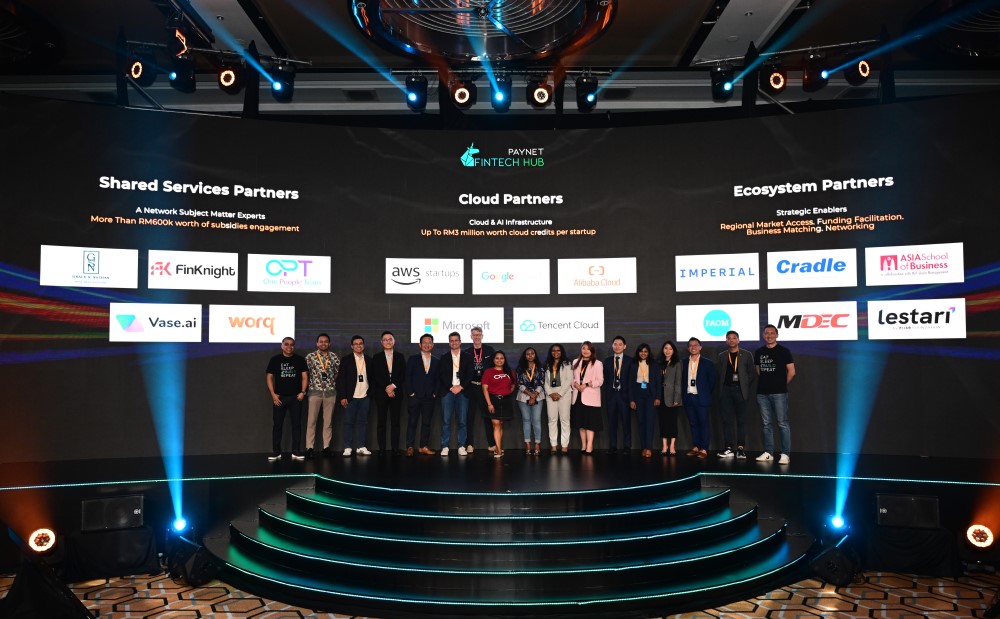
Payments Network Malaysia Sdn Bhd (PayNet), the national payments network and a central driver of Malaysia’s digital economy, has launched what it claims is the country’s first fintech-focused community and accelerator: the PayNet Fintech Hub. In a statement, the company said this platform will accelerate fintech growth in Malaysia by providing startups with direct access to capital, key industry connections, financial incentives, and opportunities to learn from and collaborate with global leaders.

Farhan Ahmad, group CEO of PayNet, said: “A thriving fintech industry is key to delivering future-ready and inclusive financial services that can advance Malaysia’s growth and innovation goals. Successful fintech innovation is one of the best ways to ensure that Malaysia keeps pace with the fast-evolving nature of financial services, particularly due to the rapid growth of AI.”

He added that the PayNet Fintech Hub marks a decisive step forward in enabling this vision.

The Hub is a highly selective programme built around two key pillars: community and catalyst. Fintechs selected for the community will gain access to:

  • A network of like-minded founders and ecosystem players for idea exchange and peer learning
  • Over 450 hours of hands-on mentorship from successful founders and domain experts
  • Major corporate players from banking, payments and tech for partnership opportunities
  • A pool of fintech investors offering mentorship, evaluation, and potential investment

All community members will also receive exclusive financial support, including:

  • More than US$238,000 (RM1 million) in PayNet value-added credits
  • Over US$141,000 (RM600,000) in sponsored advisory services across legal, finance, HR and market research
  • Up to US$706,000 (RM3 million) in cloud credits and support from major providers
  • Access to a fully sponsored co-working space

These curated benefits are designed to help founders manage costs, overcome challenges, refine business models, sharpen go-to-market strategies, raise funds, and define clear paths to successful exits.

In addition, the most promising startups from the community will be handpicked for the exclusive Catalyst programme.

This track, developed in partnership with leading global institutions, offers top Malaysian fintechs international exposure, resources and mentorship. Participants will take part in a fully sponsored ten-week accelerator hosted by Imperial College London, one of the world’s leading startup accelerators.

The programme includes a week-long trip to London to engage with Imperial faculty, European and American startups, and culminates in a demo day that offers exposure to venture capitalists and potential corporate partners. This bespoke accelerator, designed for Malaysian fintechs, is fully funded by PayNet.

The firm also announced an expanded Fintech Hub partnership with AWS, providing Catalyst participants with credits to access AWS cloud services through the newly launched AWS Asia Pacific (Malaysia) Region. Participants will also gain entry into the upcoming Fintech Innovation Sandbox, enabling secure and scalable growth.

“The PayNet Fintech Hub is a unique and transformative initiative dedicated to scaling startups beyond the foundational stage. It directly addresses the key challenges faced by fintechs in Malaysia and is expected to significantly accelerate industry growth,” Farhan added. “The Hub is our response to the global call for smarter collaboration and accelerated innovation—uniting a fragmented ecosystem to create real, scalable outcomes. We’re very excited about its potential.”

By offering direct access to essential resources, the PayNet Fintech Hub aims to fuel innovation, foster high-impact partnerships, and position Malaysia as a leading fintech destination in the region.

For more information or to apply as a fintech startup, visit https://fintechhub.paynet.my

Originally published by Digital News Asia.