Asia School of Business

Global Inquiry, Local Heart

From economic uncertainty to the rapid rise of artificial intelligence, businesses face a variety of challenges today. But perhaps the most fundamental is the need to transition to a green economy.

Increasing regulation and growing consumer consciousness are just some of the factors ensuring that, more than ever, businesses must assume responsibility for their impact on the planet and society.

According to a recent Capgemini report, the proportion of top executives who feel there is a strong business case for sustainability tripled between 2022 and 2023. The same report found that the majority of executives planned to increase investment in sustainability over the next 18 months.

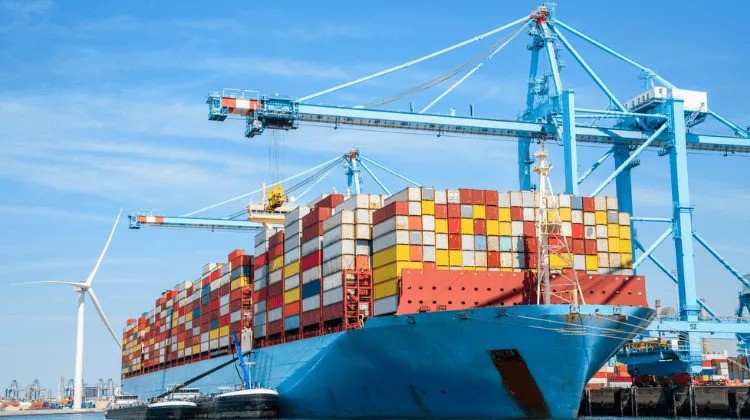
As companies endeavor to reduce their negative impact, supply chain—the mechanism by which organizations get their products into consumers’ hands—becomes increasingly fundamental to this transition.

What is a sustainable supply chain? 

A sustainable supply chain refers to a process whereby every part of a product’s life cycle is accounted for: from procurement of raw materials to the point where the product must be repaired, reused, or recycled.

Also referred to as ‘closed loop supply chains’, they contribute to the establishment of a circular economy—a system of consumption based on products and materials that can be reused for as long as possible.

“Basically, you’re not just thinking about how a product will function for the consumer or a company, but also what happens to the product at the end of its life,” explains Dr Shardul Phadnis, associate professor of Operations and Supply Chain Management at the Asia School of Business (ASB).

Why are sustainable supply chains important? 

Historically, there have been companies focused on operating within a sustainable business model which have taken steps to implement closed loop supply chains.

Outdoor clothing brand Patagonia, for example, began measuring and publishing the environmental impact of its clothing products back in the 1990s. The company also has a reverse distribution system allowing customers to return their products at end of life. However, companies like Patagonia have typically been the exception, rather than the rule.

“Traditionally, companies have not thought about it,” explains Dr Phadnis (pictured). “Instead it’s: ‘Okay, let’s make the product that consumers want, that is most appealing to them, and is most cost-efficient for us to produce’.”

However, heightened awareness of sustainability issues among businesses and consumers alike is bringing about change—even at an industry level.

Palm oil, a resource that from the 1990s onwards became integral in the production of a whole host of products ranging from lipstick to baby soap, developed a controversial image during the 2000s for industry practices that were detrimental to the environment, particularly deforestation.

However, since the industry came under scrutiny, palm oil firms have made efforts to change their ways. While the industry remains far from perfect, over the last decade palm oil deforestation has largely declined year-on-year, hitting record lows in 2021.

Another factor that’s helping drive a change in practices is the increasing move towards ESG (environmental, social, governance) regulation. Across the globe, there have been more than 1,200 new ESG regulations introduced since 2011.

Major initiatives—such as The EU Taxonomy, the Corporate Sustainability Reporting Directive (CSRD), and the UK’s Sustainability Disclosure Requirements (SDRs)—are forcing companies to provide increased transparency across all areas ranging from financial resources to hiring practices. Companies must also comply with regulations over their use of language in marketing material.

Compliance within this ever-increasing regulatory landscape means that making supply chains more sustainable—closing the loop—is therefore a key focus within business, particularly among larger companies, which face more public scrutiny.

How can businesses make their supply chains more sustainable? 

Developing a sustainable supply chain is a large focus within teaching of supply chain management on the ASB MBA program. For Dr Asad Ata (pictured), associate professor of Operations and Supply Chain Management at ASB, it starts with tracing the very beginnings of a product.

“Traceability is the core factor to even begin having a sustainable supply chain,” he explains.

He recommends those in charge of implementing supply chain changes start by focusing on the source materials—asking who the producers are and what practices they use. Understanding how a product’s life cycle begins can provide the framework to then map out the entire chain. Depending on the length of the chain, this mapping process can be laborious requiring significant time and multiple team members.

Once complete, the next stage is to enact positive changes within the various stages of the product life cycle.

“This almost always requires you to change the incentives in the system,” explains Dr Phadnis. “You have to change the incentive to change the behaviour.”

For example, this could be through relaxing the specifications on materials to reduce waste, or providing longer time windows for suppliers to maximize efficiency. At the early stages of the process, educating stakeholders on sustainability may also be necessary.

“Often some of these supply chains go back to mother nature. Farmers, fishermen, people who work in mines, some of these people are extremely poor and for them sustainability is not at the top of the agenda,” Dr Phadnis adds.

Encouraging all stakeholders within the supply chain to take responsibility, and implementing a process allowing this to be traced and held accountable, is fundamental in successfully developing a sustainable supply chain.

“You’d rather not take a reactive approach but take a responsible approach,” says Dr Ata. “You go back and do your due diligence all the way up, and through the process you have a supply chain where everybody understands that sustainability is their responsibility.”

How can business schools help the transition to a circular economy?

With sustainability in supply chain proving fundamental in achieving a circular economy, business leaders of today must understand how to close the loop. For this reason, the subject is taught within core and elective modules on the ASB MBA program.

However, theory is not necessarily enough to allow graduates to successfully navigate the problems that an organization may face when trying to implement supply chain changes, explains Dr Phadnis.

“For us at Asia School of Business, this matters a lot. We focus on these skills and not only do we teach them, we also talk about action learning. Our students actually work with companies and get to experience these issues first-hand. So when they go into the workplace, they are trained on the job.”

When working with stakeholders and attempting to implement changes, business school graduates benefit from the soft skills they have developed such as communication and negotiation, as well as the responsible mindset they develop throughout the experience.

This mindset shift places graduates in a strong position to not only lead but also bring about positive change once they enter the workplace, feels Dr Ata.

“Good education will inculcate within you a sense of responsibility,” he says.

Originally published by BusinessBecause.

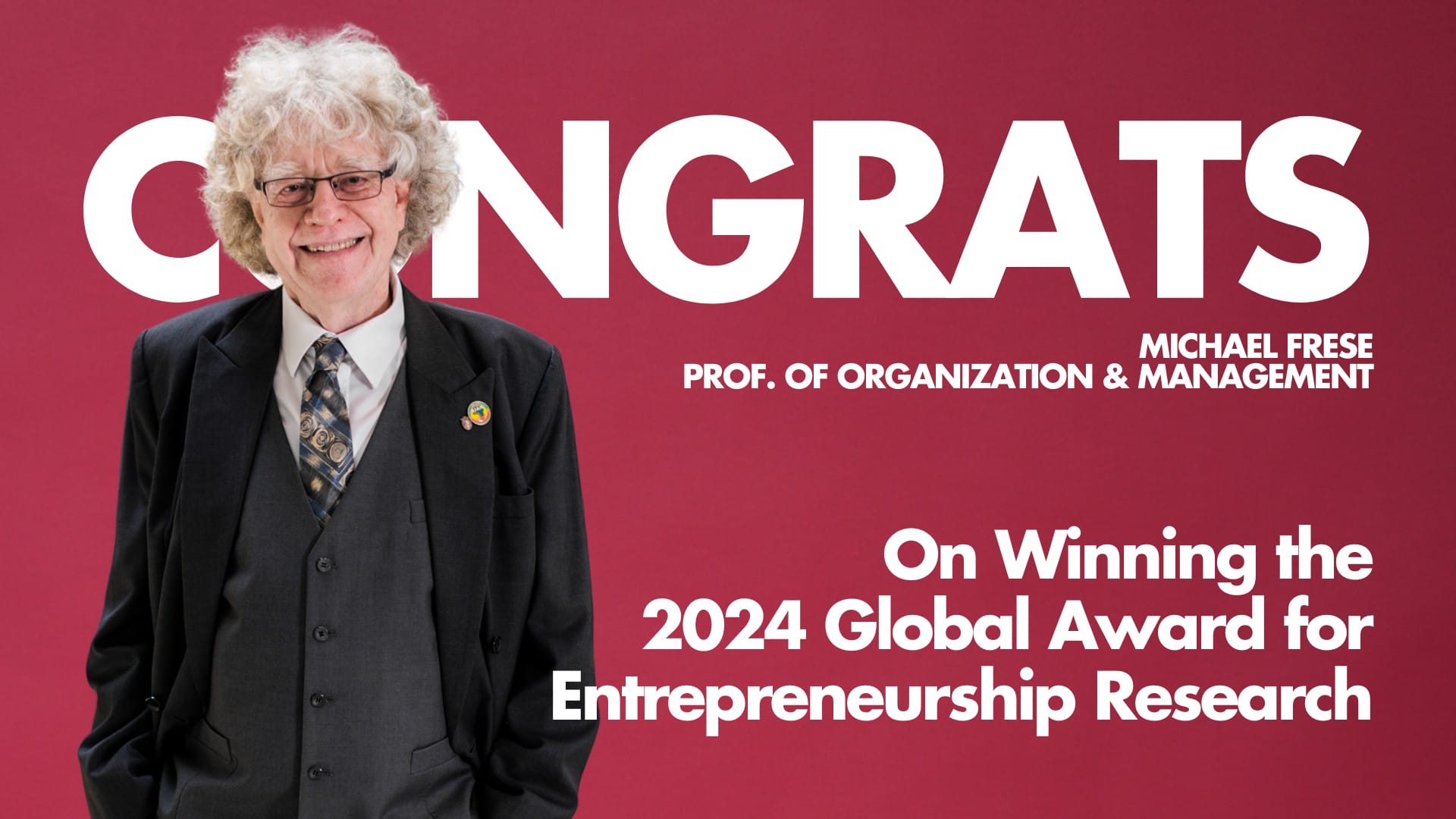
Kuala Lumpur, 6 March 2024 – Asia Business School’s Professor Michael Frese, a leading figure in the field of entrepreneurship research, has been awarded the prestigious Global Entrepreneurship Award in Stockholm, Sweden. Established in 1996, the Award celebrates exceptional research that has profoundly shaped the field, and acknowledges Professor Frese’s ground-breaking research and significant contribution of psychology to entrepreneurship theory and to small business development as well as training research for entrepreneurship.

“I am absolutely delighted to accept the Award,” said Professor Frese. Professor Frese’s research delves into the psychological factors that drive entrepreneurial actions and success. He pointed out that his personal motivation for his life’s work stems from his desire to use entrepreneurship research as a powerful tool for poverty reduction. “As a psychologist I wanted to contribute to the economic growth of less-privileged countries. I envisioned empowering individuals through entrepreneurship to actively participate in their country’s economic development,” he explained.

“I am interested in entrepreneurial actions and how to improve them with high motivation and skills by nurturing their self-starting mindsets and future-oriented thinking; a mindset that enables them to develop opportunities, and to anticipate and handle problems, especially in challenging economic environments. I also aimed to increase the number of entrepreneurs in poorer countries to enhance the number of job providers” Professor Frese added.

The Prize Committee that selects recipients for the Award each year, recognized Professor Frese for the originality, impact, and lasting contribution of his research to entrepreneurship scholarship. The prize committee gave the award this year also to Professor Robert Baron.

Professor Ivo Zander, Chair of the Prize Committee explained, “Professor Frese’s research embodies the spirit of the Global Entrepreneurship Award. His dedication to advancing our understanding of entrepreneurship has not only enriched the field and inspired new generations of entrepreneurship researchers, but also empowered countless individuals and communities around the world.”

This prestigious award further solidifies Professor Frese’s standing as the most influential entrepreneurship researcher in Asia and Europe. He contributed nearly 200 peer-reviewed articles to scholarly journals (such as Science, Academy of Management Journal, Journal of Applied Psychology, Journal of Business Venturing, Entrepreneurship Theory and Practice), about 200 book chapters, edited and wrote about 30 books and special issues. With over 78,000 citations (h-index=121) he is one of the most cited scholars in entrepreneurship and management worldwide, and his scientific influence counts among the top two percent of management scholars worldwide.

Professor Frese is an essential faculty member of Asia School of Business in Malaysia. His world-renowned entrepreneurship research is well aligned with ASB’s positioning as one of the top-tier business research centres helmed by forward-thinking faculty solving real world problems with its specialists in finance, central banking, fintech, pension funds and regional and global trade and supply chains. ASB also includes experts studying the region’s political economy, and its sustainability in agriculture and businesses.