Asia School of Business

Global Inquiry, Local Heart

When used with the best of intentions, social media can be a powerful tool to share wonderful human stories and stay informed about what’s happening in our world. It is also a great place to seek inspiration on what we can do, individually and collectively, to create a better future for everyone.

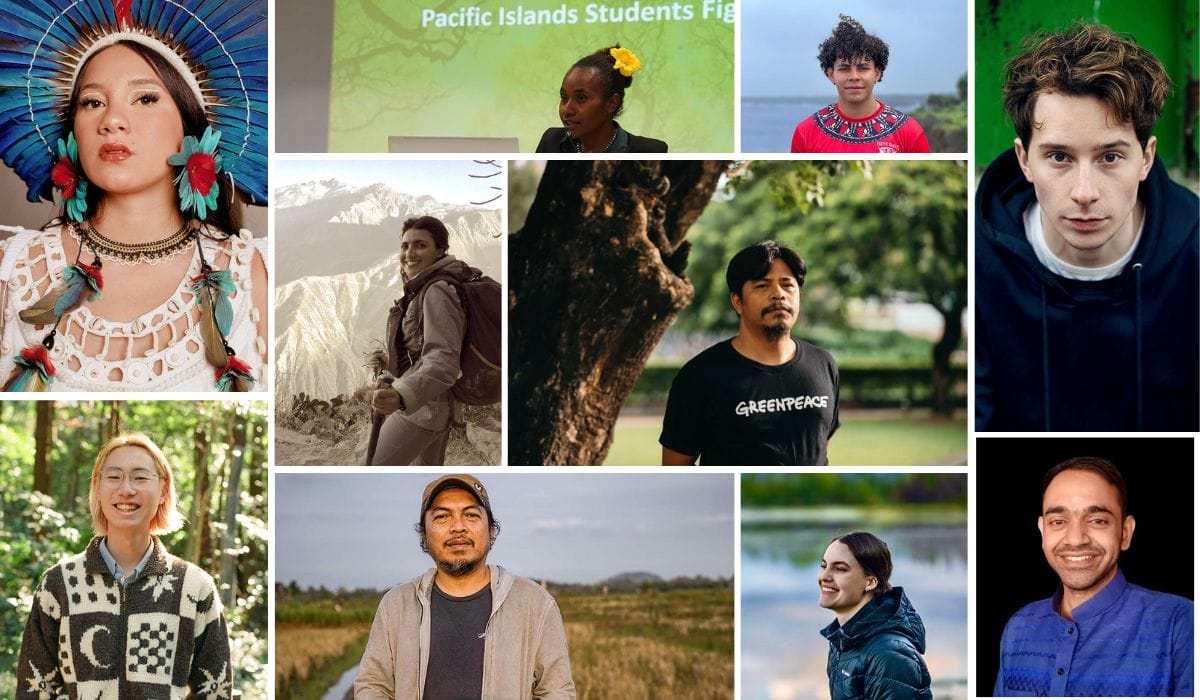
Climate Voices on Social Media features inspiring climate ambassadors around the globe who use their social media for good. They are all around us: activists, students, actors, artists, writers, photographers, content creators or even you! Here is a roundup of 12 inspiring voices we got to know last year:

1. Antonio Ripoll

A young man with Asperger’s Syndrome born in Montevideo, Uruguay, Antonio Ripoll combines his studies in natural resources conservation with passion for photography. He then fulfilled his dream by starring in National Geographic series Bichero, exploring nature and biodiversity, while using his social media to share content about nature and the importance of protecting it. “When I was little, I felt misunderstood.

I was bullied and I couldn’t connect with other people in a way that made me feel comfortable. At that point, animals saved my life and gave me a reason to keep going. So, all of my nature outreach work is a way of giving back that beautiful gesture that animals had for me. My goal is that we can learn from them so that we can all live together better,” Antonio said.

Follow Antonio on Instagram

2. Bea Dolores

A nature-loving Filipina with diverse advocacy work locally and internationally since 2016 who maintains a low-carbon lifestyle, Bea advocates for biodiversity and cultural identity. She is now doing research on improving walkability in local urban spaces through a year-long youth transport fellowship program. Using her social media, Bea shares her own eco-lifestyle hacks, transport concerns, and updates about the climate crisis.

She also has been a social media manager for different organisations throughout her 7 years of advocacy work. One of them is Renacimiento Manila (Rebirth Manila), the heritage and urban renewal organisation she helped start in early 2020, now has over 24,000 followers online.

Follow Bea on Instagram

3. Cynthia Houniuhi

Growing up in the Solomon Islands in the South Pacific and seeing how the islands and livelihoods are being threatened and their basic human rights being undermined, it has moved Cynthia Houniuhi to act. “I want to be able to have my children live on the islands my ancestors have lived and walked on and the environment I grew up in,” said Cynthia.

She is the President of Pacific Islands Students Fighting Climate Change (PISFCC) who campaigns to seek an advisory opinion from the International Court of Justice on climate and human rights. She believes that stories move hearts. That is why she uses social media to bring attention to PISFCC’s climate campaigns and share their stories, also to learn from and share with the other young climate activists around the world.

Follow Cynthia on X

4. Dylan Kava

Dylan is an environmental advocate and political activist from Fiji. He is a proud Pacific climate warrior and climate communicator using social media to highlight innovative solutions and initiatives coming out of the Pacific, showing the world that Pacific people are not merely victims but also solution holders.

He currently works with the Pacific Islands Climate Action Network specifically on the push for a global fossil fuel phaseout and a just transition in the region, as well as supporting the International Court of Justice Advisory Opinion on Climate Change Campaign. #WeAreNotDrowningWeAreFighting

Follow Dylan on Instagram and X

5. Ganesha Pillai

With experiences in the fields of sustainability, climate change mitigation and renewable energy, Ganesha uses his LinkedIn profile to share his voices and initiate discussions about climate. Now he is the Senior Research Associate in Asia School of Business, Kuala Lumpur, Malaysia. “I would say I try to fill the knowledge gap by posting relevant materials (about climate and sustainability) in social media to create more awareness and strike up interesting conversations with people,” he said.

Find Ganesha on Linkedin

6. Isao Sakai

Born in 2001 in Tokyo, Isao co-founded Fridays For Future Japan and has been involved with action and strategy planning to demand changes in the local government’s energy policy. Currently, Isao is studying Environmental Humanities and Peace Studies at Earlham College, United States, also working on publishing an independent magazine about decoloniality & East Asia, while using his social media channels to raise awareness about colonialism as one of the root causes of the climate crisis. He was on Forbes Japan 30 Under 30 in 2021.

Follow Isao on Instagram and X

7. Jonathan Berlin

Since 2019, Jonathan Berlin has combined his profession as an actor with climate activism. Most notably, he pleaded for a national climate emergency and initiated a letter to stop coal mining in the German village of Lützerath together with other colleagues at the German Bundestag (German federal parliament). Jonathan regularly uses his voice to draw attention to the climate crisis through social media, interviews and broadcasts. In the Arctic, he also filmed a short documentary on the state of glaciers as a seismograph of the climate crisis.

Follow Jonathan on Instagram

8. Kasan Kurdi

Driven by immense passion for photography, Kasan Kurdi, born and raised in Yogyakarta, Indonesia, has been working as a freelance videographer for 20 years. He is now actively involved in the local social community Akar Padi that has an annual event called “Ngaran Kite Festival” to talk about youth, agriculture, environment and climate through kites.

“In my work, I often witness how human greed has destroyed our environment. I hope that sharing my visual experiences through the power of social media can capture the hearts and minds of the people so they realise that our Earth is not doing well, so that they will reduce or even stop consuming products which have the potential to exacerbate the climate crisis. For the sake of our future generations after us, enough is enough!” said Kasan.

Follow Kasan on Instagram

9. Lamiaa Biaz

Lamiaa Biaz is a French-Moroccan activist who has been living plastic and waste-free since 2019. She uses art and engages in conversations with experts to raise awareness about plastic, waste, and agriculture crises on social media. She also founded the Captain Forest movement which aims to promote sustainable living in the community. Lamiaa stated: “Build a strong connection with nature, then start your ecological journey. Why? Because your actions should come from a place of love. Not fear. LOVE.”

Follow Lamiaa on LinkedIn

10. Louisa Schneider

A German journalist, climate activist, and storyteller, committed to fight the climate crisis and its consequences, Louisa Schneider is now the host of grad.jetzt, a project by Greenpeace Germany that aims to show connections between climate, tipping points, and biodiversity. In this project, she travels to global climate tipping points to show and explain the beauty of the planet as well as the dangerous effects of current climate developments. On social media, she shares her experiences and amplifies the voices of those who are already suffering the most from the effects of the climate crisis.

Follow Louisa on Instagram

11. Rodolfo “Jun” Sabayton Jr.

Rodolfo “Jun” Sabayton Jr.  is a filmmaker, curator, cultural worker, and also a member of several artist collectives and non-government organisations in the Philippines. An environmental advocate for almost two decades, Jun is known for his long-running collaboration with Greenpeace Philippines on various campaigns to promote plastic-free future and climate justice.

He said, “my work aims to cultivate a global community that embraces environmental stewardship and preservation of the earth. Through social media, I am able to share my art as well as show the beauty of our planet as well as the devastating impacts of human activity. This gives the opportunity to spark conversations, raise awareness and inspire collective action towards a sustainable future.”

Follow Jun on Instagram

12. Samela Sateré Mawé

Samela is a young Indigenous of the Sateré Mawé people. Born as an Amazonian, she uses her social media as a tool of struggle and resistance in defence of the Amazon biome and also all the people who live there. “The internet and social media channels for us, indigenous peoples, have become an important tool for deconstruction, decolonization, demystification and denunciation, especially talking about the indigenous and environmental agenda,” Samela stated.

Follow Samela on Instagram

Originally published by GreenPeace.

As Malaysia stands at the crossroads of an evolving economic landscape, the intricacies of pension systems and retirement planning have never been more critical. The conventional “pay-as-you-go” system, a staple in many countries, is facing challenges that make it seemingly unsustainable. Financed by the working population through taxation or government debt issuance, the cost burden of this system is exacerbated by demographic shifts, especially in a nation with a top-heavy population pyramid. In the Malaysian context, the challenges of a “pay-as-you-go” system are pronounced.

One academic estimate places the cost at more than RM40 billion per annum just to provide a basic wage of RM2,700 per month up to the 70th percentile of retirees. The economic strain is evident. The question that arises is clear: How can Malaysia navigate these challenges and create a sustainable retirement ecosystem? A viable alternative lies in the concept of a self-funded, pseudo-government-guaranteed public pension or social security savings fund — an approach successfully implemented by Malaysia’s Employees Provident Fund (EPF) and Singapore’s Central Provident Fund (CPF).

These self-funded pension plans operate on a co-contribution model, where both employees and employers contribute to the scheme. Individual ownership of accounts ensures a sense of responsibility, while a government guarantee sets a floor for returns, preventing them from falling below a specified level. In both Malaysia and Singapore’s case, the legislated minimum is 2.5% per annum in dividend or interest income respectively. While EPF employs a liability-driven investing (LDI) scheme, CPF follows an asset-liability management (ALM) approach. The nuanced differences in investment strategies highlight the need for continuous refinement and adaptation.

For example, ensuring a balance between risk and return in the LDI scheme becomes paramount, particularly in the context of globally interconnected financial and capital markets. Whereas in the case of CPF, all proceeds raised from the Special Singapore Government Securities (SSGS) issued to CPF from member subscriptions as part of the ALM scheme are handed over to GIC to manage in a total returns context. Singapore’s CPF, often lauded as a successful model and hailed by the Mercer CFA Institute Global Pension Index as the best in Asia, presents specific elements that could be seamlessly adapted for Malaysia’s retirement savings framework.

CPF LIFE, Singapore’s life annuity scheme for retirees upon retirement, offers a compelling income-in-retirement blueprint for Malaysia’s EPF. The automatic conversion of a Singapore retiree’s self-funded accumulated sum at the point of retirement into a lifelong steady income stream mirrors the functionality of traditional pension systems. Another noteworthy feature is the CPF/HDB Lease Buyback Scheme, allowing retired homeowners to monetise home equity into a lifelong retirement income stream. The success of these government-backed retirement initiatives lies in both their low-cost and subsidised nature, thus making them sufficient and efficient for retirees.

Market-based pricing checks emerge as a critical component in designing a robust retirement system. Platforms like ImmediateAnnuities.com in the US (previously known as Annuity Shopper Buyer’s Guide), where insurers bid for retirees’ annuity business, provide insights into the market pricing for annuities under free market competition. Access to such auctions, and the resulting price discovery and information, allows Malaysia to establish a market-based pricing mechanism for annuities, hence aligning premiums and payouts with market realities.

Safeguarding the integrity of individual pension contributions and preventing political interference is also imperative. While Malaysia’s retirement savings system is sound, the challenge lies in protecting against unforeseen events. Learning from global counterparts and adopting measures to fortify the system can ensure its resilience. The role of reverse mortgages in unlocking home equity for retirement, as was recently introduced in Malaysia by Cagamas, is noteworthy. However, integrating and pooling the reverse mortgage programme with the EPF savings scheme, akin to Singapore’s CPF Lease BuyBack programme, can potentially pool risks more efficiently and hence enhance payout rates.

Effective risk pooling becomes the linchpin for maximising the risk-return benefits of such schemes, ultimately securing more robust retirement income for Malaysians. Healthcare costs in retirement represent a significant concern globally, and Malaysia can take proactive steps to integrate healthcare coverage into its retirement savings framework. Creating a separate tax-advantaged Medisave account within EPF can cover insurance premiums for healthcare costs, with surpluses available for co-payments or enhanced private care.

The proposal for a goals-oriented approach to publicly mandated retirement savings offers a paradigm shift. By aligning investment strategies with the individual’s needs for retirement, Malaysia can create a more dynamic and personalised approach to members’ retirement savings. Relying solely on a balanced lifecycle fund in your EPF Account 1, which is the account that allows you to withdraw eligible funds to invest in mutual funds and unit trusts, might not suffice, especially in the face of market downturns, as witnessed during the 2008 global financial crisis.

As the conversation expands to encompass the recent developments in the Malaysian retirement planning dialogue, including the Flexible EPF, a nuanced perspective is crucial. While flexibility is akin to a financial option and holds intrinsic value, the impact of such flexibility, as seen in the multiple special withdrawals during the Covid-19 pandemic, and the attendant depletion in members’ retirement account values, necessitates careful consideration. Balancing flexibility with the long-term sustainability of retirement savings is paramount.

Private pension schemes emerge as a promising avenue, offering a self-funded and privately managed alternative. Countries like Malaysia, Singapore and the US have successfully implemented supplemental retirement schemes, which provide tax benefits and the potential to invest in diversified and cost-efficient products. The advantages of private pension schemes over pay-as-you-go systems become apparent with the passage of time. The latter offers individuals more control over their retirement savings and portfolios.

In conclusion, the future of Malaysia’s retirement conundrum lies in comprehensive reform. Drawing inspiration from successful models, integrating innovative approaches and prioritising individual needs can reshape the retirement landscape. Malaysia has the opportunity to create a sustainable, flexible and goal-oriented retirement system that meets the diverse needs of its citizens. The time is ripe for a transformation that ensures financial security and dignity for retirees in the years to come. To enable that, an EPF-led advisory panel on retirement should be set up to evaluate the best way forward for Malaysia’s retirement savings system, such that the principles of adequacy, sustainability and integrity are assured.

Originally published by The Edge.