



The world of business is changing fast. The International Data Corporation predicts a major upheaval in both the “mechanics and social attitudes” of work in the next five years, a result of technological advancements and an increasingly globalised economy. It’s very likely that organisations will move to adopt immersive metaverse conferencing services, low-code tools to build applications, automated processes, and more.
They’ll need executives who can seamlessly adapt — a trait that’s largely gained out of hands-on, action-oriented work experience. Still, understanding the theoretical principles behind these is just as crucial. “Theory gives you translatable insights to look at something in one area, then translate it to another,” says Sanjay Sarma, former Professor of Mechanical Engineering and Vice President for Open Learning at MIT.
In this, sports offer an unlikely but useful revelation. “When I began lessons in tennis, I realised that my racquet preparation was wrong. My posture was incorrect,” he says. “So the fact of the matter is that theory gives you the mental model of how to look at things because you won’t know what you’re doing wrong until you’re taught to understand it.”
Sarma has been involved in some of the greatest innovations — both at MIT and beyond. At MIT, he oversaw OpenCourseWare and the creation of MITx, which brought a range of thought-provoking courses to a more accessible, online platform. He was a co-founder and CTO of OATSystems, a provider of software for RFID — which he helped develop at MIT — as well.
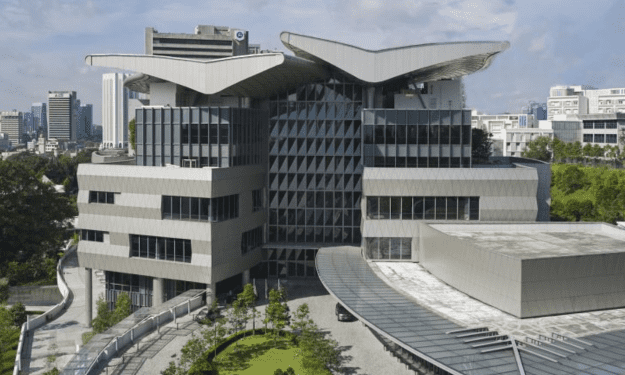
As the CEO, President and Dean of the Asia School of Business (ASB), Sarma is working on creating a one-year MBA Programme that strikes the ideal balance between theory and practice. It combines the pedagogy of the MIT Sloan School of Management with the expertise of the Central Bank of Malaysia, making for a business education that’s as distinctively globalised as it’s focused on the future.
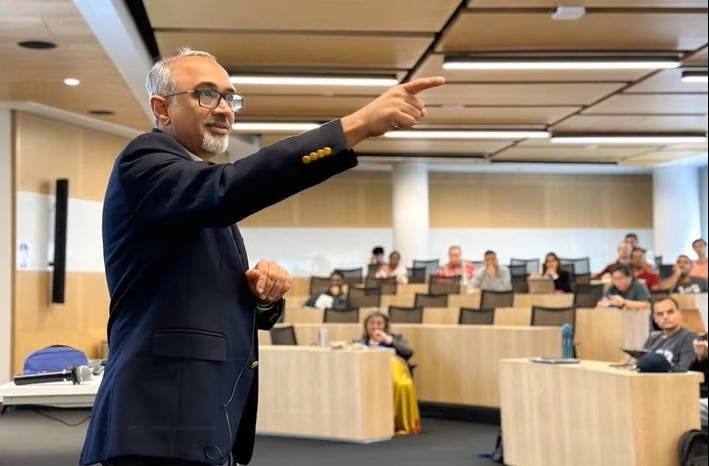
As CEO, President and Dean of ASB, Sanjay Sarma is working on creating an innovative “post-GPT” MBA for the future-focused student. Source: Asia School of Business It’s a necessary strategy. “It became very clear to me about 15 to 20 years ago that the way we teach is not how people want to learn,” he explains. “Learning something in short bursts is not always effective — you have to practise it, discuss it, mend it and break it.
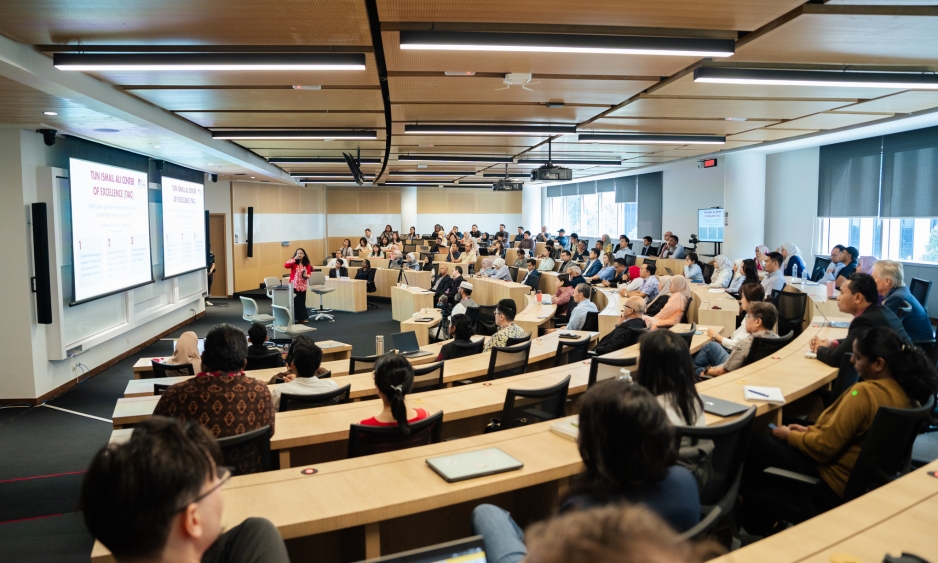
This is quite common in disciplines like engineering, but it turns out that the cognitive psychology of that is the same regardless of what you learn.” The ASB MBA focuses on Action Learning, giving students the chance to work on real, diverse and mission-driven projects in one of the fastest-growing regions in the world: Southeast Asia. Combining the mind, hand and heart grants students a more nuanced, more sophisticated understanding of how things work — a third of the ASB MBA curriculum is dedicated to this.
“Action Learning is a central tenet of the ASB MBA,” shares Sarma. “For example, you might learn the fundamentals of a large restaurant chain’s operations but fail to understand how it actually works. Why might a kitchen be slow to adapt if the menu changes? Why does procurement take a long time? How would you change the processes around this? Well, wouldn’t it be great if you could find out through first-hand exposure in a real restaurant setting?”
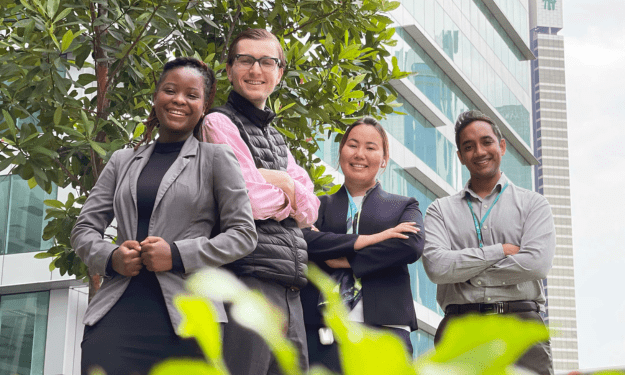
Students get real-world experience through Action Learning, where they work on diverse and mission-driven projects in the heart of Southeast Asia. Source: Asia School of Business Sarma submits that there’s another key differentiator to the ASB MBA, i.e. how it’s a “post-GPT” qualification. “Technology is going to have a profound impact on the planet,” he explains.
“We’re in the early stages of GPT, AI and language models, and we’re already seeing the effects of it on our work. The way you write code, create scenes, do art — everything’s changing very fast. We’re trying to create an MBA that responds to this.” To prepare for this, core modules immerse students in the Internet of Things, AI, biotechnology, blockchain, supply chain and more. Students learn from a cohort of thought leaders, combining the expertise of the MIT Sloan faculty with the regional knowledge of ASB staff.
It’s a rousing combination not found in the hallowed halls of Ivy Leagues. “There are more opportunities for social upliftment in Malaysia,” says Sarma. “For instance, Malaysia is a relatively rich country in Southeast Asia, but it has much more of an unorganised economy. You have the hawker sector, the gig economy — and so SDG issues are completely different. Then there’s the regional aspect of things, where you deal with the multiple cultures and religions, and different legal regimes that are put in place because of specific colonial paths.
It’s a wonderful petri dish that you won’t be exposed to if you’re in Cambridge.” Apart from learning from MIT Sloan staff – who regularly fly over to teach on the ASB campus — the MBA includes up to a three-week immersion in the MIT Sloan campus. Having spent 27 years at MIT, Sarma attests to the quality of teaching at the institution — and the transformative experiences that can come out of it.
“MIT is a pretty special place,” he says. “You’re exposed to the latest in technological and academic trends, all while learning alongside some of the brightest minds in the world. In my opinion, I do believe that any experience at MIT has a profound impact on your mindset.”
The best part? The combination of an ASB and MIT experience delivers both an outstanding education as well as equips students with a recognisable and reputable qualification, setting them up for seemingly endless possibilities. Some choose to continue their studies at MIT with a Master of Science in Management Studies (MSMS) or other Ivy League institutions. Others secure jobs with top companies on a global scale.
Either way, the ASB MBA plays a major role in elevating an individual from a student to an expert. “The point of an MBA is not that you have a business background — the point is that you’re prepared to do business,” affirms Sarma. “In a master’s programme, we take advantage of your experience both in life and work and help you utilise that to your advantage. It’s up to you to decide from there.”
Originally published by Study International.