

Asia School of Business

Global Inquiry, Local Heart

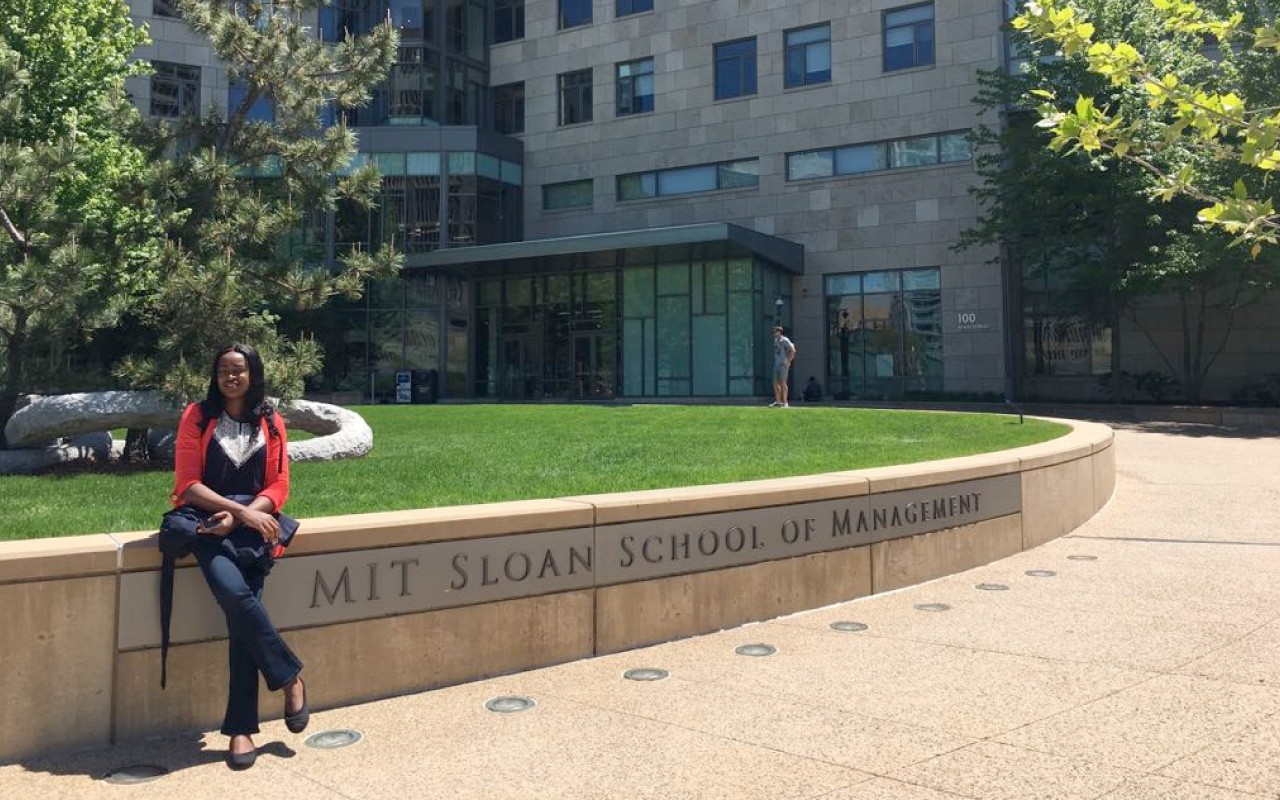
“Getting an education from MIT is like drinking from a firehose.” When I heard this quote during my first week at ASB, it sounded amusing at first. After two semesters, though, I’ve learned that it was no joke — and it has become my way of life. At MIT Sloan, the learning process was upgraded to drinking directly from a hydrant: we spent only four weeks on campus and had to take in as much as we could.

After an amazing two-week industry trek across Silicon Valley, New York City and Washington D.C., I arrived in Cambridge feeling sick and physically exhausted but determined not to let illness get in the way of this long-awaited experience. Of all the courses we took, I most enjoyed Entrepreneurship, System Dynamics and Negotiation. (This is not making light of the tremendous knowledge I gained from the other courses as well, which were superbly delivered by the MIT faculty.) Prior to taking the Entrepreneurship module, I was not convinced that I could be an entrepreneur.

However, after going through the 24 steps of entrepreneurship with Bill Aulet, my mindset shifted into understanding that is more than one way to be an entrepreneur. It was my first time taking a course in System Dynamics, and I was amazed at how the modelling tools could be applied to real life situations. Several scenarios were applicable to my previous job experience and I found myself wondering how past mistakes could have been avoided if this knowledge was available. I loved the Negotiation classes because of the simulated negotiations. I found myself negotiating from different positions and understanding the powers available to me at different times.

I also received constructive feedback from my classmates, which helped me improve my skills. I won’t forget the United Nations world climate simulation with Professor John Sterman. Before this class, I knew a little about climate change but not the extent to which the entire world was at risk. I was part of the U.S. delegation and was assigned to play the role of President Donald Trump — a part I hopefully played well. Neither will I forget the brilliant Professor Paul Asquith who taught us corporate finance whilst lying down on a bed (due to a back injury). He said, “The best form of learning is by repetition”, and he was right. I am better at corporate finance now than when I first arrived at ASB.

The cherry on top of the cake was the lecture given to us by the former UN secretary general Ban Ki Moon who, in an awesome stroke of fate, was residing in the same hotel as we were and graciously agreed to give a talk to our class. Words are not enough to convey the transformation I underwent in that one month. What I do know is that I left MIT a better person, more knowledgeable and more determined to make an impact in my world.
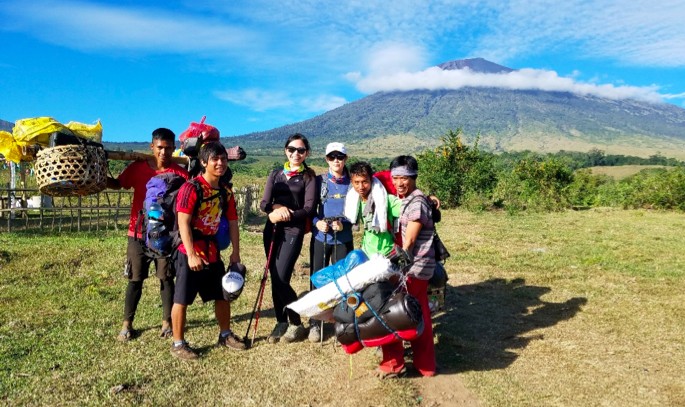
Rinjani is an active volcano also known as ‘Child of the Sea’, with a caldera on top which is partially filled by Segara Anak crater. Standing at 3726 metres above sea level, it is also Indonesia’s second highest peak. Those who have hiked up this peak will know the unspeakable joy of seeing this beauty up where it belongs. I can now say that I’ve scaled up and down this notoriously difficult mountain, and made it back to tell you my experience. To sum up the entire trekking experience in one sentence: It is not for the faint-hearted.

Here are some lessons learnt about this hike which will hopefully prepare me for my upcoming 20-month journey with Asia School of Business for an MBA:

Do something which will scare you every now and then.

Adapted from Eleanor Roosevelt’s quote, “Do one thing every day that scares you,” I’m a firm believer of challenging myself to do something every now and then which will terrify and scare the living daylights out of me. This hike did exactly that. While it was my own decision to hike this mountain, reading one hiking blog after another only made me ‘fear’ it even more. Every blog I read described it as the ‘most physically and mentally challenging hike’ you will ever do.

Like they say: if it scares you, it might be a good thing to try. Coming from a background in law, pursuing an MBA is a terrifying thing to do. It means saying goodbye (for now) to everything I know and am familiar with in litigation, legal jargon and court rooms. Saying yes to an MBA means opening myself up to the unknown, where I would have to familiarise myself with subjects like Math, Finance, Economics and Business Administration.

Don’t look too far ahead, concentrate on what is before you.

Runners and hikers know this best: it is imperative to look at your own two feet and watch your every step, instead of focusing too far ahead of you. This was especially true during the 2 a.m. hike up from Pelawangan II to the summit of Mount Rinjani. My heart would quicken when I looked too far ahead and saw the summit, which looked like it was close but never close enough.

I foresee the days as an MBA student, where all I may be asking myself is if I’m there yet, in reference to the finishing line at the end of the 20-month program. Having spoken to some of my seniors, I’ve been told that it will be a challenging and uphill climb just like Mount Rinjani — but thankfully, not utterly impossible. A line from the hike that I hope will keep me going through the tough times ahead will be, “Sarah, keep going – just one foot after the other.”

Trust your guide.

Jus Fardy, the guide, has hiked Mount Rinjani more than 100 times over the course of his “career” as a mountain guide. I trusted him completely for direction, safety, good meals, hiking tips and motivation. Similarly, as my future classmates and I will be the second class to ever graduate from ASB, we have learnt (and are continuing to learn) how to trust our school and its faculty and staff. Although ASB is a start-up business school, we are in very good hands because, as our Dean Charles Fine has stated: “[ASB is a very well-endowed start-up… We have two very successful and mature parents [Bank Negara and MIT Sloan].”

Since receiving our acceptance letters we have been in constant contact with ASB staff and faculty. They have worked very hard to ensure a smooth transition for us and we have been assured that our Dean and Professors are always readily available and are personally invested in our growth. The students in ASB’s inaugural Class of 2018 have also been an immense help to us, creating a buddy system between their class and ours to assist us with any of our queries or for advice.

You are stronger than you think.

This hike brought many challenges along the way. But there was no time to dwell on my muscles that were aching, lungs that were constantly gasping for air and legs that were screaming for rest. Every part of my body hurt, and yet I felt amazing. The hike made me go on a deep (albeit short) journey of reflection and self-discovery. There truly was something magical about scaling a mountain: it helped me redefine my purpose, realign my compass and set myself a clearer goal for the coming months ahead.

Hiking is largely a mind-over-matter battle. I just had to keep telling myself that something amazing is just around the corner and that it’s going to be worth it. And with that, I found that I was stronger than I thought. Hiking brings out the perseverance in me because I want to come out of it stronger and better, a value that I wish to carry with me into business school.

It doesn’t matter how slow you go, as long as you don’t stop.

Prior to putting in an application for the MBA program, I raised quite a few queries and concerns to both my seniors and the staff, feeling unsure if I was cut out for business school. Now that I’ve made the commitment to pursue it, this will be my solid reminder: “You. Just. Don’t. Quit.” Having met some of my incredibly talented and wildly passionate classmates, there is a certain level of intimidation from seeing how extraordinary they are.

Despite my fear of being unable to catch up, I just have to remind myself to follow my own pace and not to quit because, slowly but surely, I will get to where I want to be. When I finally reached the summit of Mount Rinjani the first thing I thought to myself was that this was physically and mentally the most challenging thing I’ve done thus far in my life. Immediately after that came, “What’s next?”

ASB, I’m ready for you.

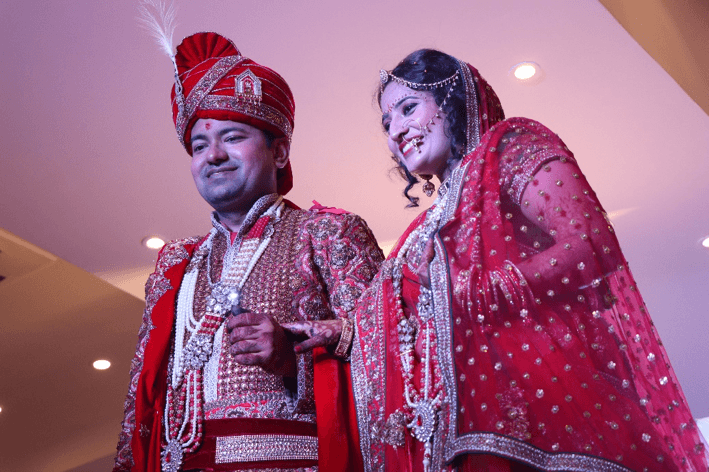
Last November, fifteen students from the class of MBA 2019 made a trip to Kolkata, India, to celebrate the union of our classmate Mounika Myudukur with Rahul Kanoi, her sweetheart of 11 years. It was the first time an ASB student was getting married during the program, so of course we had to make a big deal out of it! The stars truly aligned as everyone— students, professors and faculty—worked together to make this trip happen during our Thanksgiving break.

We traveled four and a half hours from Kuala Lumpur to the artistic and cultural city of Kolkata, the capital of West Bengal. There was something undeniably magical and heart-warming about witnessing the wedding ceremony of these two lovebirds, as they gathered in front of family and friends to perform their marriage rituals and vows. This trip was especially memorable because Mounika gave us the opportunity to perform a dance on stage during the Sangeet ceremony.

Imagine the crowd going wild when fifteen international students took over the stage and danced to Nachne De Saare and Kaala Chasma! Diversity was truly at its best, with each of us donning beautiful and brightly colored saris and sherwanis. It was a stunning affair which we wouldn’t have traded for anything else in the world!

Congratulations again, Mr and Mrs Kanoi, with love from your ASB family.

This entry is dedicated to mothers who are considering pursuing an MBA.

I have always been someone who constantly strives for self-improvement. As a working mother, I’ve always felt like I want to do more and achieve something bigger. That’s how the journey I am currently on began: with the search for a business school that would not only fulfil my ambition but at the same time enable me to grow in my role as a mother. When it comes to an MBA, the Ivy League schools in the US are the top choices by default. After eight years of living abroad, I wasn’t sure relocating for the second time was the right move for my family and me but I was still keen on a quality MBA degree. I am no superwoman, but I can say that the choice of pursuing my MBA degree at ASB makes it possible. So, why ASB?

I get to learn from the best in a small group where I could make an impact. The Professors are all from MIT Sloan and, being in a small group, these Professors get to concentrate on teaching individuals in addition to teaching a cohort.

It is not all about books. ASB practices Action Learning, where the students get the chance to apply what we learn in the classroom into the real world. I had no marketing experience in my 9 years of working, but through ASB I got to work on marketing projects with great companies.

The networking opportunity at ASB is amazing, especially with top business leaders in ASEAN. For someone like me who has chosen Kuala Lumpur as the place to settle down, such opportunities are amazing and valuable.

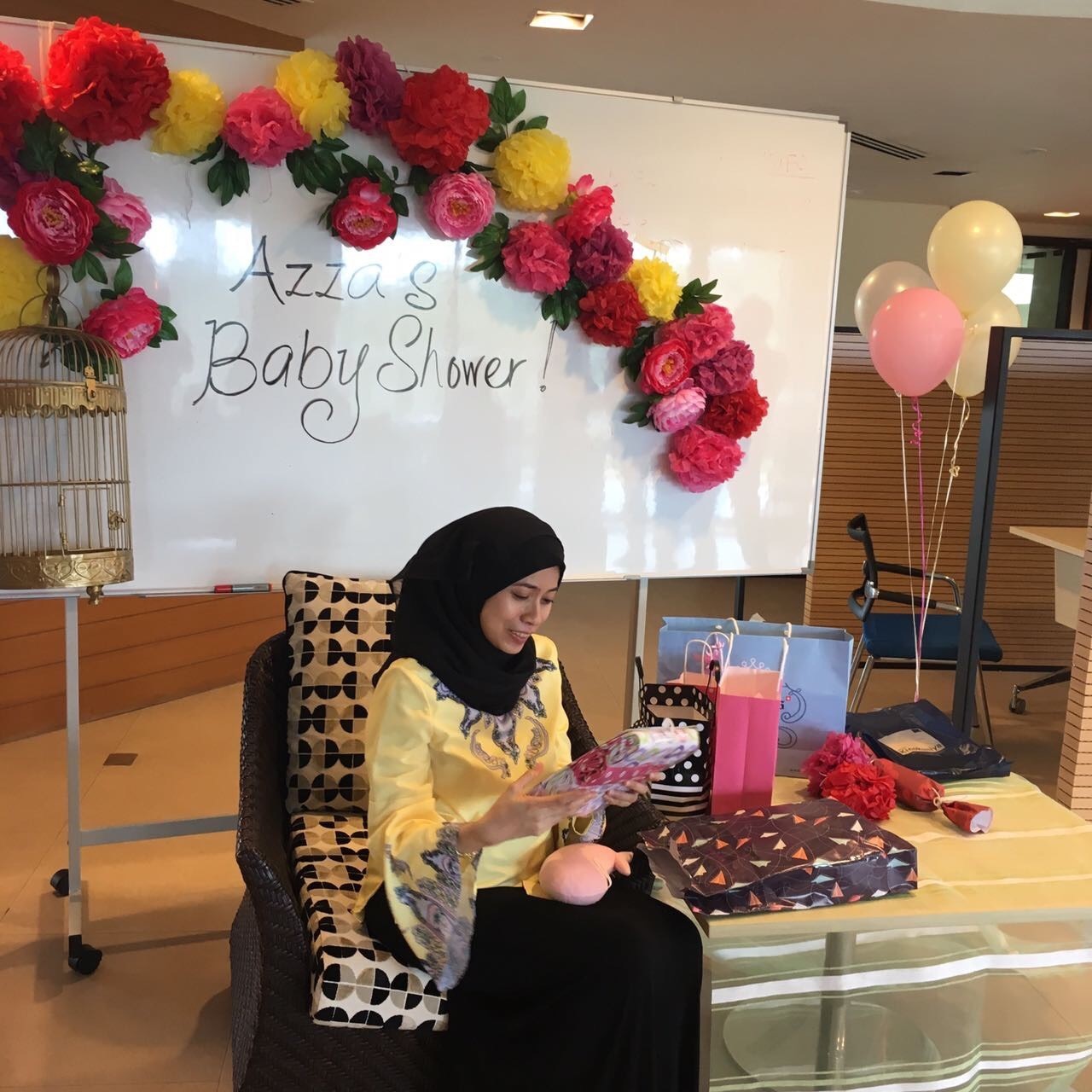
ASB grows with the students. The first ASB baby is due in June 2017. The school has been very supportive in making sure the mother, as a student at ASB, gets the support she needs. (That student is me.)

My typical school day begins at 6.30 am – I get my son ready for school, prepare breakfast for my husband, do some house chores and then head straight to my 9am class. Even though classes at ASB typically ends at 5pm, I usually stay back for another hour or two to avoid the traffic and to work on my assignments. I make time for dinner with my family, as I believe that a family who eats together stays together.

After putting my son to bed, I spend some time with my husband before returning to my MBA books. I usually cram my studies on the weekdays to make sure that my weekends are freed up for time with my loved ones. The first year of my MBA journey has been challenging but I enjoy every part of it – the challenges make me a better person and I look forward to the rest of my time as an MBA student at ASB.

“You think that because you understand “one” that you must therefore understand “two” because one and one make two. But you forget that you must also understand “and” … a simple lesson but one that we often ignore: the behavior of a system cannot be known just by knowing the elements of which the system is made.”
– Donella H. Meadows, Thinking in Systems: A Primer

What do ebola, chickens and eggs and business strategy have in common?
The answer: they can all be better understood and better managed through applying a System Dynamics approach.

If your next thought is to wonder what System Dynamics is, you wouldn’t be alone. Before I embarked on this intensive, three-day course as part of our Spring Immersion Program 2017 at MIT Sloan, I thought Systems Dynamics was another one of those fancy MBA buzzwords thrown around that basically meant analyzing and optimizing systems to get the best results. By the end of the three days with Professor Nelson Repenning, Distinguished Professor of System Dynamics and Organization Studies, my perspective completely changed.

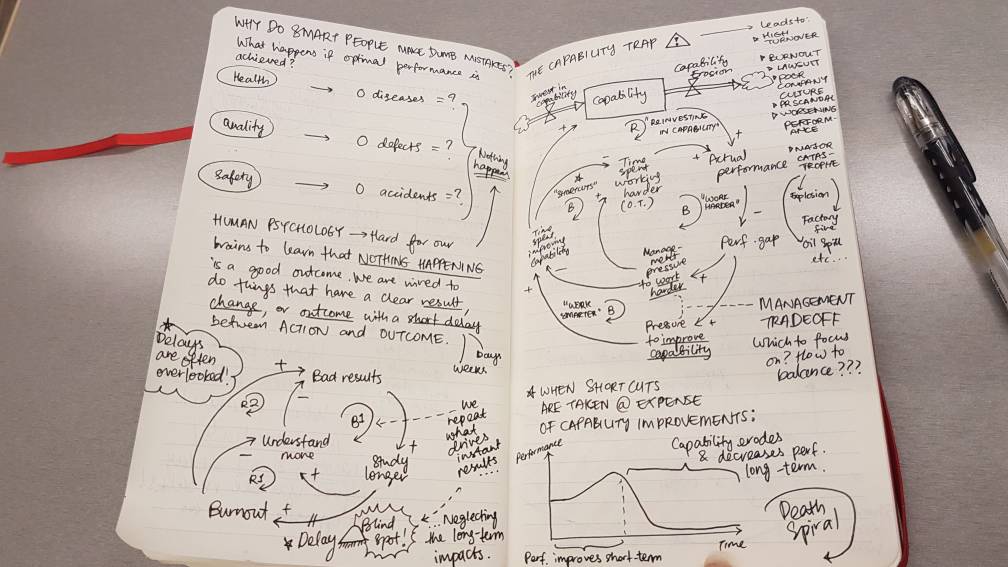
This course alone was worth my whole ASB-MIT education. What I thought would be a class about cold, rational adjustments to calibrate performance turned out to be a deep, almost philosophical exploration of human behavior — or, in simple terms, why smart people make dumb mistakes. We were taught not only how to build models showing cause-effect links, inflows and outflows of stock and how to use sophisticated modelling tools such as Vensim to run these models and project the future state of the system – but how, ultimately, every system in the world, be it a business, a political organization, a country, an ecosystem or even a family unit can be broken down and understood through System Dynamics.

I was introduced to a new way of looking at problems: an approach that is not linear in nature, but cyclical. From exploring how epidemics spread, to what causes someone to be stuck in a cycle of poverty, to how to analyze complex business models to understanding that extra cramming will not lead to better exam results, the applications are so stunningly infinite and hauntingly profound. (There were even a few chicken and egg and “why did the chicken cross the road?” jokes subtly and expertly woven in.)

It hit me that a better understanding of System Dynamics not only helps curb the spread of deadly diseases like Ebola, determine how to manage stock flow if you’re running a chicken farm or ensure that short-term performance-enhancing efforts in a company don’t ultimately lead to delayed negative impacts in the long run; it can also have tremendous positive impact at every level of society, from business to government to society.

These three intense days not only helped me understand better some of the challenges I observed in my previous workplaces, but also led me to reflect on shortcomings in my own personal life that could have been better managed by understanding that so many things in life are connected and have run-on effects — effects that we are often blind to or overlook, underestimating their significance.

Understanding system dynamics forces us to acknowledge how flawed and irrational the way we make decisions are, and how much of our approach is based on (incorrect) assumptions and mental models. It gives us a tool that, although not perfect, helps us challenge some of those assumptions and invite others to participate in helping us make better judgment calls.

To the future classes of ASB, this is the one course you don’t want to miss!

For many young professionals, pursuing an MBA is tantamount to bringing some level of certainty to one’s life. Whether this is in the form of personal validation, the need for a period in which to find one’s true calling in the world, or just a promise of a promotion, the degree seems to be a pathway to some mythic oasis of clarity. This is edified by the idea that the skills one would gain through their MBA coursework is, more or less, predictable – both the curriculum and the faculty are well-known, and there’s a clear understanding of which industries frequent which schools during recruiting season.

I myself was no exception in that I hoped to take a sharp turn that might steer my somewhat atypical career path into a more concrete corporate or academic future. Once I had arrived at ASB and the initial profusion of adrenaline – stemming, mind you, from the fact that I was working with young professionals from a different continent every day while living in a veritable tropical resort – had worn off, however, I had a somewhat sinking realization that a midlife layover at ASB would in no way lead me to a path of certainty (at least initially).

It was of course no secret that we would be the charter class for a new business school, but the degree to which ambiguity reigned became present in the most quotidian of circumstances: asking questions such as how to submit a form, or to whom I should speak to start a process were constantly met not with answers, but typically with more questions. This dynamic proved omnipresent throughout my first semester, permeating experiences in the classroom (which professor is coming this week?) to my Action Learning projects (what are we supposed to be doing, again?), and even to my personal life (why am I being deported? [just kidding]).

What started to differentiate my time at ASB from the anecdotes of my friends and colleagues at other business schools, however, was the extent to which faculty and administration here were aware of the work that remained to be done, and the intent with which they listened to our feedback. On more than one occasion, we met with the faculty to discuss an issue at hand, and the student feedback was incorporated immediately. It became clear that this looming specter of ambiguity was present on both sides of dean’s office, and that all of the school’s constituents were interested in working together to make the decisions that would help ensure that ASB developed into a world-class institution.

The upside of all of this has been that, since so little had been defined by the school (and that the faculty and administration were so committed to each and every one of us), opportunities tend to be only a proposal away: by way of allegory, it is perhaps true that filling a void tends to be an easier task than destroying and reconstructing an existing edifice. To this end, my first year resulted in me joining a faculty research project, working with two global FMCG companies, and securing a summer fellowship at MIT. I was also able to offer an opinion on any of the new student groups that emerged throughout campus, as well as the development of the administrative infrastructure necessary to ensure that these opportunities were viable and impactful.

In short, and perhaps ironically, I did gain some clarity at ASB via the message that clarity might not always be the greatest goal to which one should aspire. In fact, ambiguity examined a different way often resembles opportunity, and it is simply up to us to ensure that we have wherewithal and vigilance necessary to reach through it and the connect the dots in such a way that we fashion a constellation of actions that aligns with the goals to which either we or our communities aspire.

While it’s not yet certain whether this ethos of maximizing the output of uncertainty is a product of ASB’s unique culture or a function of the school’s startup state remains, I have watched as both my classmates and I have become practiced decisions-makers with a bias toward (thoughtful) action when unexpected ambiguity arises. I do hope that ASB continues to embrace this spirit, and I have no doubt that this is going to be a skill that we all bring to our future positions, and for which ASB develops a reputation of producing principled, transformative, and global leaders.