
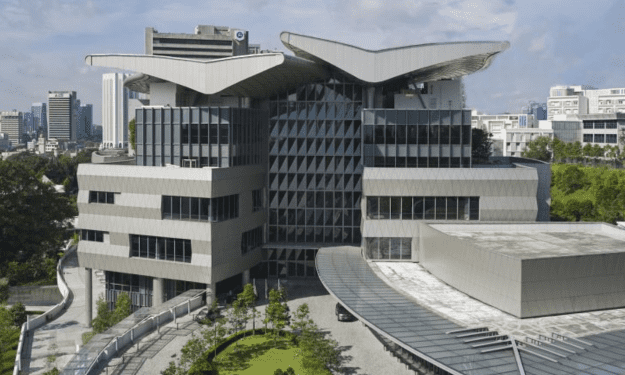
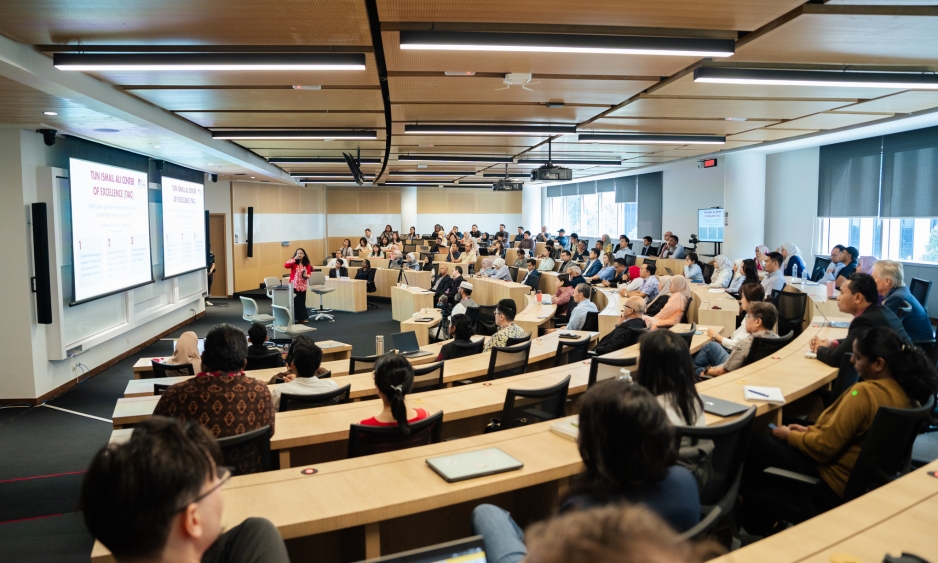
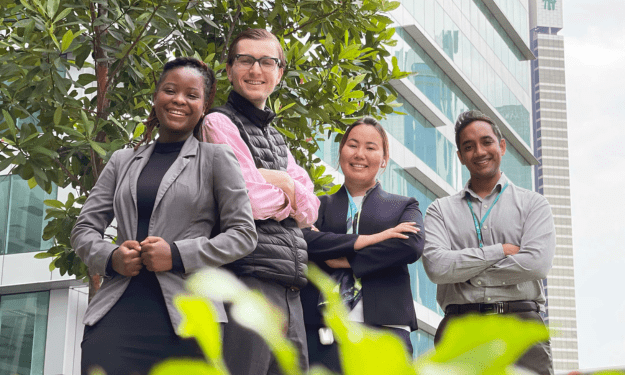



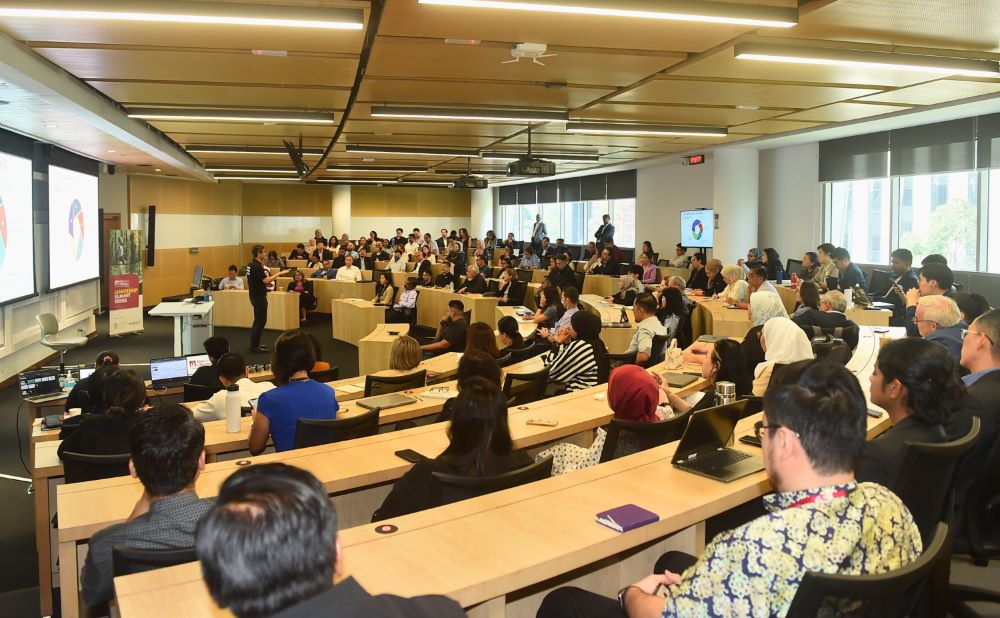
The Asia School of Business (ASB) recently hosted the Leadership Summit Series on the Future of People@Work, bringing together scholars, industry leaders, and HR professionals to address talent attraction, retention, and development challenges. Sponsored by Epsom College in Malaysia and ECM Libra Foundation, the event fostered dynamic discussions.
ASB CEO, President, and Dean Sanjay Sarma emphasized the transformative power of technology: “The future of work involves more than technology. It’s about reimagining how we connect, collaborate, and grow. AI has transformed industries by integrating Green Finance, Fintech, ESG, Sustainability Technology, IoT, and BioTech.”
FinTech Entrepreneur and BFM Radio Founder Malek Ali highlighted the need for agility and continuous learning: “Adaptability and ongoing upskilling, such as creativity, problem-solving, critical thinking, judgment, social and emotional intelligence, and curiosity, are our greatest assets amidst unprecedented changes. Malaysians are ready for AI because of our social system. However, we are not taking full advantage of it if it is not integrated into our education system. AI helps you know what you don’t know, moving you from unawareness to awareness.”
The Summit covered key topics, including “The Future of Work: AI, Innovation, and Continuous Learning” by Sanjay Sarma, “Is Malaysia Ready for the AI-Powered Workplace?” by Malek Ali, and “How to Train Your Employees: Cultivate Acceptance of Machines by Understanding Employees’ Mindsets” by ASB’s Associate Professor of Organizational Behavior, Alexander Eng. Leaders from TalentCorp, Bursa Malaysia, and Citi Malaysia shared insights on “Rethinking Work and Upskilling.”
Eng stressed the importance of AI strategy acceptance, noting that predicting how employees and customers will react to AI is crucial. Acceptance varies, whether it’s trusting AI recommendations or perceiving hiring algorithms as fair.
TalentCorp’s Group COO, Siva Kumeren A. Narayanan, addressed the challenge of increasing female workforce participation, despite a 63% female enrollment in universities. More women are joining the gig economy as personal shoppers, but this doesn’t always translate to formal labor force participation.
Ahmad Hezri Adnan, Bursa Malaysia’s Director of Group Sustainability, highlighted a significant shift towards transparency and accountability in environmental reporting since the Paris Agreement in 2015. Businesses, governments, and society are increasingly adopting sustainable practices.
Citi Malaysia’s Chief Human Resources Officer, Tooba Modassir, emphasized the need for flexibility and adaptability. The company is moving away from traditional job descriptions to focus on skills and competencies, fostering a culture of continuous learning and innovation.
The event concluded with interactive sessions on business transformation, talent management, AI, innovation, and workplace equity. Participants shared strategies to address technological disruptions, talent shortages, sustainability goals, and evolving workforce expectations.