



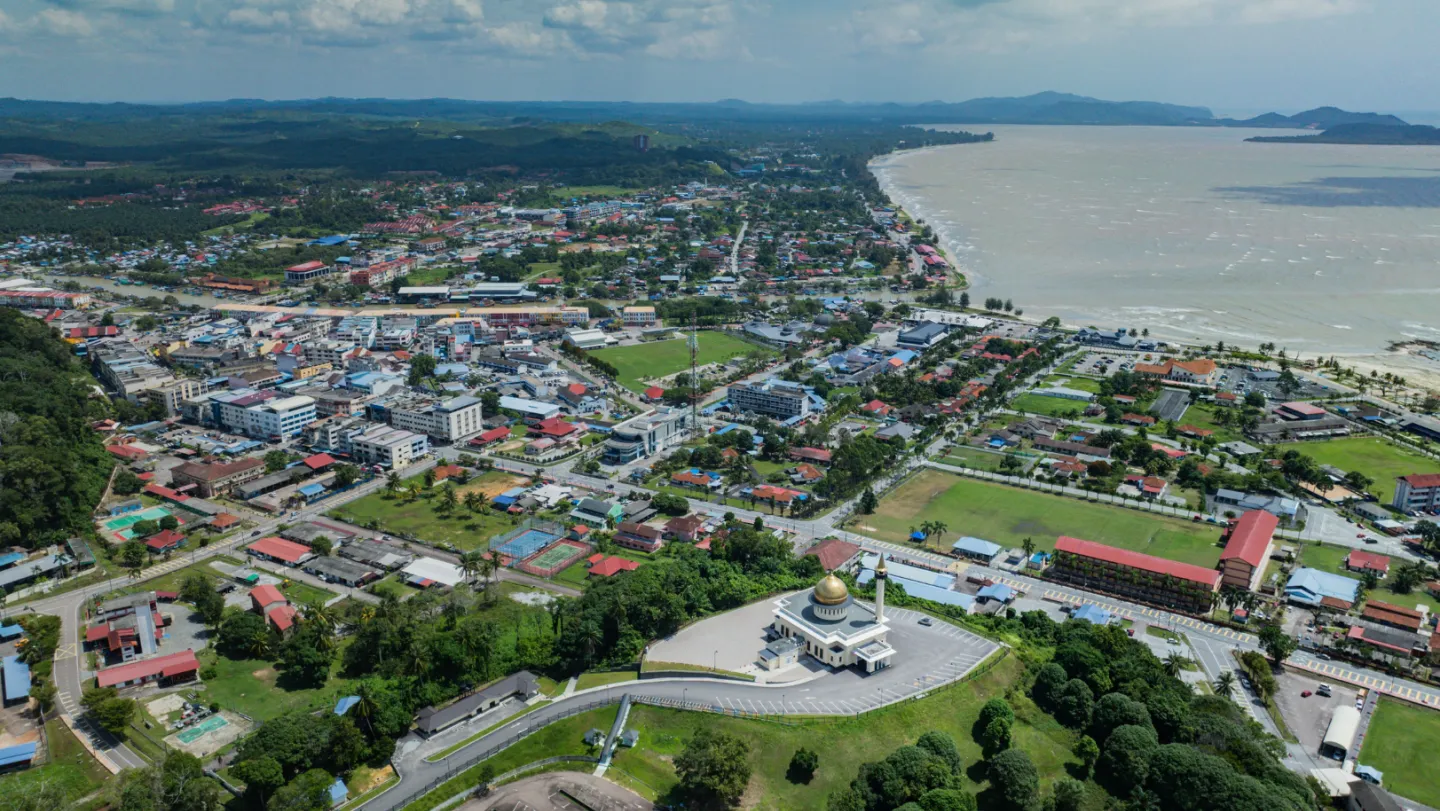
Famous for island hopping with beautiful beaches, coral reefs and rare wildlife, and officially designated as Malaysia’s pilot destination for the UN Tourism International Network of Sustainable Tourism Observatories (INSTO), the town of Mersing, Johor, is marketed as the ‘Gateway to Paradise’.
However, our research team from the ASEAN Research Center, Asia School of Business, recently visited Mersing, and we found that while efforts to make tourism environmentally sustainable are making great progress, work is needed to secure the social and economic sustainability of the tourism industry.
According to the unity, culture and heritage committee chairperson K. Raven Kumar, 10.63 million tourists visited Johor in 2025, comprising 7.38 million domestic visitors and 3.25 million international tourists who spent at least one night. The stated goal of the Visit Johor 2026 campaign is to increase this number to 12 million in 2026 and earn RM42.48 billion in tourism receipts across the state.
But simply increasing the numbers does not provide the necessary foundations for sustainable growth. The real question is how to develop a tourism ecosystem that provides sustainable and financially viable job opportunities for the local youth.
When talking to young people in Mersing, they do not see any real opportunities to build a future for themselves in the area.
Opportunities for post-secondary education are very limited in and around Mersing. That means that young people with educational ambitions must go to Johor Bahru, Kuala Lumpur or other major cities. Once they leave, only a few come back – and mostly if they can secure a government position or if they need to take care of ailing parents.
For the youth that stay behind in Mersing, they primarily find employment in the fishing industry, as boat operators and diving instructors taking tourists on island-hopping along the coast, or they try to make a small income selling food or handicrafts at local markets and street stalls. Many young people perceive full-time stable employment to be concentrated in the public sector, in jobs like teaching and administration.
No doubt, Mersing and the islands have a lot of potential for sustainable tourism. The beaches and coral reefs are already attracting visitors from near and far, while strong efforts are in place to protect the marine life and resources. Reef Check Malaysia and Tengah Island Conservation (TIC) are two of the organisations working alongside local communities to continuously improve conservation efforts in the area. Reef Check provides training and certifications for boat operators, diving instructors and resorts to minimize their negative impact on the environment. On Pulau Besar, TIC operates the Rumah Eko, a sustainable waste management system for the islands, and helps islanders create sustainable products and activities for tourists.
But the question remains whether the current tourism ecosystem can create enough financially viable job opportunities for Mersing youth to start planning and building their futures in town.
An important problem is embedded in the ‘gateway’-brand. Most tourists arrive in Mersing with one sole purpose: to pass through the gateway – either to Tioman or to join one of the numerous island-hopping tours that depart from the Mersing Jetty.
Despite numerous tourism agency offices located around the jetty and at the Mersing Harbour Centre, several local operators tell us that a majority of tourists arrive with a travel package fully booked through agencies elsewhere.
Agencies in Johor Bahru and Singapore are bigger, have a stronger presence online and abroad, and are therefore seen as more reliable by foreign tourists. Local agencies see only a fraction of actual booking numbers.
What this gateway problem entails is that despite the increasing tourist numbers, the main revenues from the island-hopping packages are not retained in Mersing. Agencies elsewhere are selling the packages, and tourists often spend only one night in Mersing – some even leaving on the same day. This results in limited spending on food and accommodation, meaning limited revenue for the local population in Mersing.
To create viable futures for the local youth in the tourism industry, the main challenge is not to increase the number of tourists but to create a tourism ecosystem that better captures the revenue.
Mersing needs to move from being a ‘gateway’ to becoming a destination in its own right. That means creating and marketing experiences that encourage visitors to arrive early for their island-hopping trip and potentially spend an extra night or two.
During our visit, we saw multiple opportunities to create such experiences, especially around Mersing’s fishing and seafood heritage, local handicrafts and cultural experiences, as well as activities and products already being developed on the islands in relation to conservation and recycling work. Travel packages including a variety of these local experiences in addition to island hopping could generate more local revenue without turning Mersing into a mass-tourism destination.
However, expanding the available tourism packages does not solve the entire problem. Local tourism operators need to compete with the larger agencies in Johor Bahru and Singapore in connecting local experiences to the global tourism market.
No single operator can achieve this alone. But if public authorities and private enterprises could work together and form a shared digital booking and marketing platform, allowing visitors to book directly from local operators, local businesses might start to see real positive change.
Government and district support could focus on providing digital infrastructure, training and certification, international marketing, and start-up funding, while local tourism agencies and entrepreneurs would be responsible for developing experiences and packages, updating information and supporting customers in the day-to-day operations.
This is where Mersing’s youth become a central part of the solution. The tourism jobs of the future cannot be limited to operating boats, serving food or working in hotels and resorts. Mersing will need educated and ambitious young people who can develop new products, run businesses, manage digital platforms, conduct marketing campaigns, coordinate conservation activities and connect local businesses to global markets.
In the process of creating these opportunities, the youth will need targeted training, mentoring and access to finance, thus it will require strong partnerships between local authorities, conservation and tourism organisations, educational institutions and businesses.
If Mersing can start turning the gateway tourists into longer-staying customers, young people might start to believe that they can build viable careers in town rather than needing to leave to find them elsewhere. And eventually, the ‘Gateway to Paradise’ could become not only a tourist destination, but a place where sustainable futures are built and local communities thrive.
Kirstine Rahma Stroeh Varming is a Postdoctoral Research Associate at ASEAN Research Center in Asia School of Business. The views expressed are the author’s own and do not necessarily reflect those of the Asia School of Business.